Boys' Casual Set Synthetic Fiber Shirt
CN → US| HS Code | Tariff Rate | Origin | Destination | Doc |
|---|---|---|---|---|
| 6105202030 | 49.5% | CN | US | Official Doc |
| 6105202020 | 49.5% | CN | US | Official Doc |
| 6205302040 | 0.0% | CN | US | Official Doc |
| 6205302020 | 0.0% | CN | US | Official Doc |
| 6205302020 | 0.0% | CN | US | Official Doc |
Product Images
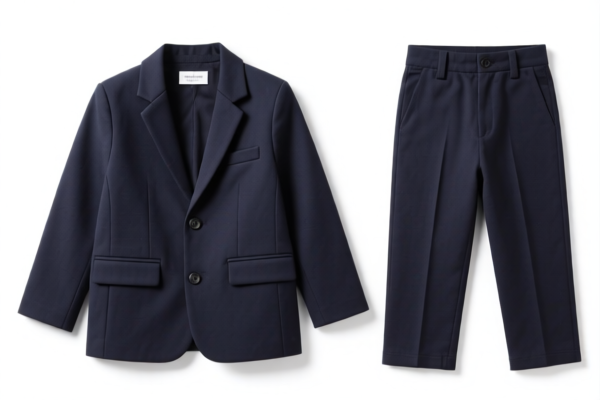
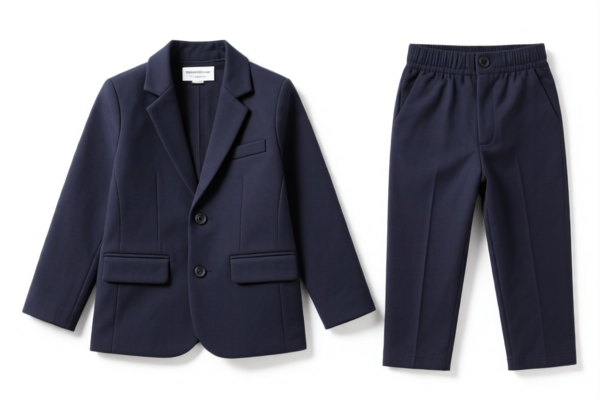
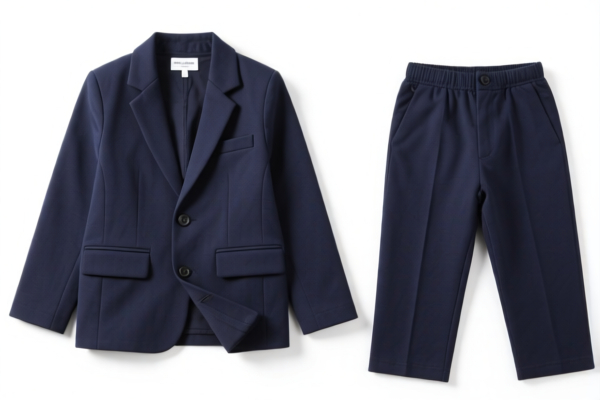
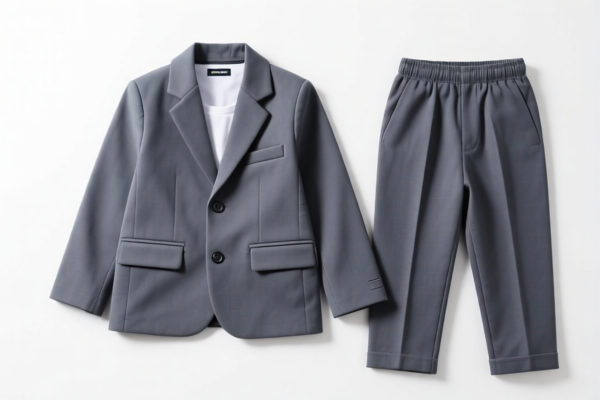
AI Analysis
👕 Boys' Casual Set: Synthetic Fiber Shirt
🌐 HS Code Reference & Customs Clearance Guide | 2026 Latest Tariff Analysis | Professional Clearance Strategy
📌 I. Product Definition & Classification: Do You Really Understand "Boys' Synthetic Fiber Shirts"?
The Boys' Casual Set Synthetic Fiber Shirt refers to casual shirts for boys (typically aged 2–14) made from synthetic fibers (e.g., polyester, nylon). In international trade, the critical distinction lies in whether the fabric is knitted or woven (non-knitted), which directly determines the HS Code, tariff rate, and clearance complexity.
⚠️ Key Distinction Point:
- Knitted Shirts: Made by interlocking loops of yarn. Soft, stretchy, common for casual/t-shirt style shirts. → Chapter 61
- Non-Knitted (Woven) Shirts: Made by weaving threads at right angles. Crisp, structured, common for button-down/collared shirts. → Chapter 62
📦 II. HS Code Classification Details (2026 Latest Tariff Authority Comparison)
| HS Code | Product Description | Applicable Scenario | Fabric Structure |
|---|---|---|---|
6105.20.20.30 |
Boys' Knitted Shirts, Synthetic Fiber | Casual knit tops, polo shirts, t-shirt style | ✅ Knitted |
6105.20.20.20 |
Other Boys' Knitted Shirts, Synthetic Fiber | General knitted casual shirts | ✅ Knitted |
6205.30.20.40 |
Boys' Non-Knitted Shirts, Synthetic Fiber | Standard woven button-downs, casual woven shirts | ❌ Non-Knitted (Woven) |
6205.30.20.20 |
Boys' Formal Woven Shirts, Synthetic Fiber | Dress shirts, formal wear for boys | ❌ Non-Knitted (Woven) |
🔍 Critical Note:
- Chapter 61 (Knitted) generally has a percentage-based tariff structure.
- Chapter 62 (Non-Knitted) often involves a compound tariff (specific duty per kg + ad valorem %), which can be significantly higher in total effective rate.
- Misclassification Risk: Declaring a woven shirt as knitted (or vice versa) is a major compliance error leading to audits, penalties, or shipment delays.
💰 III. 2026 Latest Tariff Rate Breakdown (Including Additional Taxes & Policy Surcharges)
✅ Applicable Country: United States (US)
✅ Origin: China (CN)
✅ Effective Date: Ongoing (Current Trade Policy)
🎯 1. 6105.20.20.30 & 6105.20.20.20 —— Boys' Knitted Shirts (Synthetic Fiber)
These two codes cover knitted synthetic shirts for boys. The tariff structure is identical.
| Item | Detail |
|---|---|
| Base Tariff | 32.0% (Ad Valorem) |
| Section 301 Surcharge | +7.5% |
| Section 122 Surcharge | +10.0% |
| Total Effective Rate | 49.5% |
| Tax Calculation | CIF Value × 49.5% |
| De Minimis Eligibility | ❌ Not Eligible (High duty rate excludes from §321 exemption) |
| Legal Basis Path | USITC:6105.20.20.30/20 → SECTION301:7.5% → SECTION122:10% |
📌 Explanation:
- The 32% base rate is the standard MFN (Most Favored Nation) duty for synthetic knitted shirts.
- The 7.5% is the Section 301 tariff imposed on Chinese imports.
- The 10% is the Section 122 tariff (often applied to broader categories or specific enforcement actions).
- Total: 49.5%. This is a very high tariff. Cost optimization must focus on supply chain or duty exemption programs.
🎯 2. 6205.30.20.40 & 6205.30.20.20 —— Boys' Non-Knitted (Woven) Shirts (Synthetic Fiber)
These codes cover woven synthetic shirts, including casual (20.40) and formal/dress (20.20) styles. The tax structure is a compound rate.
| Item | Detail |
|---|---|
| Base Tariff Structure | $0.291/kg + 25.9% (Ad Valorem) |
| Section 301 Surcharge | +7.5% |
| Section 122 Surcharge | +10.0% |
| Total Effective Rate | $0.291/kg + 43.4% (25.9% + 7.5% + 10%) |
| Tax Calculation | ($0.291 × Net Weight in KG) + (CIF Value × 43.4%) |
| De Minimis Eligibility | ❌ Not Eligible (Compound rates and high ad valorem % exclude from §321) |
| Legal Basis Path | USITC:6205.30.20.40/20 → SECTION301:7.5% → SECTION122:10% |
📌 Note:
- The compound tariff ($0.291/kg) adds a fixed cost regardless of item value. For lightweight shirts, the percentage rate dominates; for heavy items, the per-kg cost adds up.
- The ad valorem portion here is 43.4% (25.9% base + 17.5% additional taxes), which is slightly lower than the knitted version’s 49.5% in pure percentage terms, BUT the per-kg fee makes the total liability complex and often higher for bulk shipments.
- Both formal (20.20) and casual (20.40) woven shirts share the same tax detail.
🛠️ IV. Customs Clearance Practical Advice (Real-World Pitfall Avoidance Guide)
✅ 1. Required Documentation Checklist (Non-Negotiable)
| Document | Must Provide? | Explanation |
|---|---|---|
| ✅ Product Specification Sheet | ✔️ | Must clearly state: "Boys' Shirt," "Synthetic Fiber (e.g., 100% Polyester)," "Knitted OR Woven." |
| ✅ Fabric Composition Certificate | ✔️ | Crucial to prove it is synthetic (not cotton/wool). Mislabeling fiber content is a top reason for detention. |
| ✅ Product Photos | ✔️ | Clear images showing collar type, sleeve length, button/placket style, and fabric texture (to distinguish knit vs. weave). |
| ✅ Commercial Invoice | ✔️ | Must match HS Code description exactly. e.g., "Boy's Synthetic Knitted Shirt" vs. "Boy's Woven Shirt." |
| ✅ Packing List | ✔️ | Must include Net Weight and Gross Weight per carton. Required for the $0.291/kg calculation. |
| ✅ Origin Certificate | ✔️ | Proves Chinese origin. Required for applying (and paying) Section 301/122 duties. |
✅ 2. Declaration Tips (Key Mantra)
🔥 “Fabric Structure is King, Fiber Content is Queen, Weight is the Key!”
| Scenario | Correct Declaration | Incorrect Practice | Consequence |
|---|---|---|---|
| Knitted Shirt | 6105.20.20.30 (or .20.20) |
Declare as Woven (6205...) |
49.5% vs Compound Rate → Potential underpayment/audit |
| Woven Shirt | 6205.30.20.40 (or .20.20) |
Declare as Knitted (6105...) |
$0.291/kg + 43.4% → May be lower or higher depending on weight/value ratio |
| Mixed Fiber | Check % >50% for Synthetics | Declare as Cotton | Wrong HS Code → Penalties, Back-tariffs |
| "Casual Set" | Declare shirts separately | Declare as "Set" | Sets have different rules; items usually declared individually for apparel |
✅ 3. Special Case Handling
| Situation | Handling Advice |
|---|---|
| OEM/Private Label | Provide brand authorization or OEM contracts. Ensure labels match invoice descriptions. |
| "122 Tariff" Clarification | Section 122 duties are often temporary or policy-driven. Check current CBP notices to confirm if still active for your shipment date. |
| Low-Value Shipments | Even if value < $800, synthetic shirts from China are HIGH RISK for §321 exemption if misclassified. Best to declare formally. |
| Formal vs. Casual | Do not rely on the word "Casual" in the name to determine HS Code. A "casual woven shirt" is still 6205.30.20.40. |
🌍 V. Global Market Customs Comparison (2026 Latest)
| Country/Region | Recommended HS Code | Tariff (Approx.) | Certification | Notes |
|---|---|---|---|---|
| 🇺🇸 USA | 6105.20.20.30 (Knit) or 6205.30.20.40 (Woven) |
49.5% (Knit) / Compound + 43.4% (Woven) | CPSIA (if <12yo), Prop 65 | High Duty Market. No FTAA benefit for China. |
| 🇨🇳 China | 6105.20 / 6205.30 |
~10-15% | CCC (if applicable) | Import duty, no Section 301. |
| 🇪🇺 EU | 6105.20 / 6205.30 |
12% | CE (if toy-related), REACH | No Section 301. Standard EU tariff. |
| 🇬🇧 UK | 6105.20 / 6205.30 |
12% | UKCA | Post-Brexit standard rates. |
| 🇨🇦 Canada | 6105.20 / 6205.30 |
17.5% | CFIA | No Section 301. CUSMA benefits if from Mexico/Canada. |
📌 Conclusion:
- USA is the most expensive market due to Section 301 (7.5%) + Section 122 (10%) surcharges on top of standard duties.
- China is the primary source, so all shipments face these extra tariffs.
- No preferential tariffs are available for China-origin synthetics in the US market.
📌 VI. Common Errors & Pitfalls (Blood Lessons)
❌ Error 1: Mixing Knit and Woven items in one HS Code declaration.
👉 Result: CBP inspection → Seizure or forced reclassification → Delays + Storage Fees.
❌ Error 2: Ignoring the Net Weight in the invoice.
👉 Result: For woven shirts (6205.30.20.20/40), CBP will estimate weight and charge the $0.291/kg fee on a guessed higher weight → Overpayment.
❌ Error 3: Using "Synthetic" vaguely.
👉 Result: CBP may classify as "Other Textiles" → Higher Duty + Penalty. Specify "100% Polyester" or "Nylon."
❌ Error 4: Assuming "Casual Set" gets a special rate.
👉 Result: Appropriate "Set" rules may apply, but apparel is usually broken down by item. Declare shirts separately for accuracy.
✅ Correct Practice:
"Boy's Synthetic Knitted T-Shirt, 100% Polyester, Knitted Fabric, for Ages 4-8" →
6105.20.20.30
"Boy's Synthetic Woven Button-Down Shirt, 100% Polyester, Woven Fabric" →6205.30.20.40
🎯 VII. Conclusion: Precision in Classification, Savings in Clearance!
🎯 Remember the Mantra:
🔹 "Knit vs. Woven is the First Step, Fiber Content is Second, Weight is Critical for Woven!"
🔹 "49.5% for Knit, Compound for Woven, Both Face China Surcharges!"
🔹 "Declare Accurately, Avoid Audits, Protect Your Margin!"
📌 Pro Tip:
- If you are importing knitted shirts, the 49.5% is straightforward.
- If you are importing woven shirts, calculate the $0.291/kg carefully. For lightweight, high-value shirts, the percentage dominates. For heavy items, the per-kg cost adds up.
- Consider Duty Drawback or Free Trade Zones if applicable to your supply chain.
- Pre-clearance: Always provide detailed specs to your broker before shipment to avoid hold-ups.
📣 Immediate Action:
📞 Consult a Licensed Customs Broker to verify HS Code based on physical fabric samples.
🚀 Optimize Your Supply Chain: If possible, explore non-China origins to avoid Section 301 & 122 tariffs.
✨ Professional Clearance Starts with Accurate Classification!
💼 Every Percent Saved is Profit Earned!
Customer Reviews
About HS Code Classification
The Harmonized System (HS) is an internationally standardized nomenclature developed by the World Customs Organization (WCO) to classify traded products. Over 200 countries use the HS system as the basis for customs tariffs, trade statistics, and import/export regulations.
Each HS code follows a hierarchical structure:
- Chapter (2 digits) — Broad category of goods (e.g., Chapter 84: Machinery and Mechanical Appliances)
- Heading (4 digits) — More specific grouping within the chapter
- Subheading (6 digits) — Internationally standardized breakdown, used by all WCO member countries
- National subdivisions (8-10 digits) — Country-specific extensions for further classification, such as US HTSUS 10-digit codes
Correct HS code classification is essential for smooth customs clearance, accurate duty payment, and compliance with trade regulations. Misclassification can lead to customs delays, overpayment of duties, or penalties.
When importing from CN to US, the applicable tariff rates may include:
- Most-Favored-Nation (MFN) rate — The standard duty rate applied to WTO members
- General rate — Applied to countries without trade agreements
- Trade remedy duties — Additional tariffs such as Section 301 (anti-dumping), Section 232 (national security), or countervailing duties
The information provided on this page is for reference purposes only. For official classification, please consult with your local customs authority or a licensed customs broker.