Boys' Casual Vest
CN → US| HS Code | Tariff Rate | Origin | Destination | Doc |
|---|---|---|---|---|
| 6110202030 | 26.5% | CN | US | Official Doc |
| 6110303030 | 49.5% | CN | US | Official Doc |
| 6209205050 | 26.8% | CN | US | Official Doc |
| 6209303040 | 33.5% | CN | US | Official Doc |
| 6111203000 | 32.4% | CN | US | Official Doc |
| 6111303000 | 49.5% | CN | US | Official Doc |
Product Images
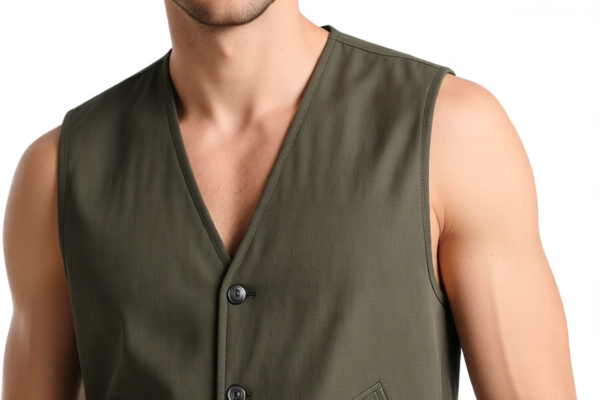

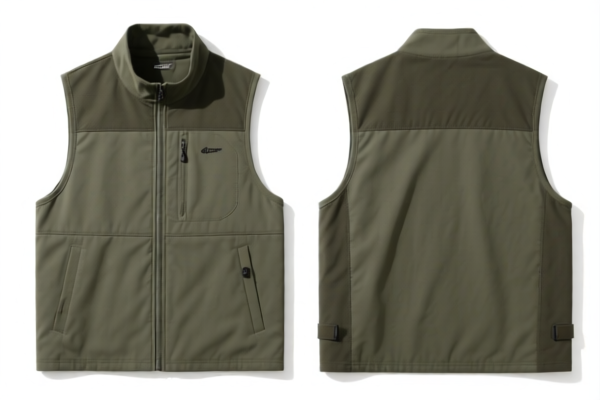
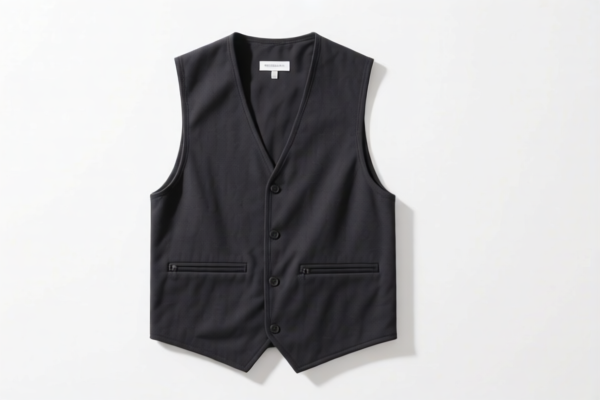
AI Analysis
🧥 Boys' Casual Vest (Boys' Outerwear)
🌐 HS Code Reference & Customs Clearance Guide | 2026 Latest Tariff Analysis | Professional Clearance Strategy
📌 I. Product Definition & Classification: Do You Really Know "Boys' Casual Vest"?
A boys' casual vest is a sleeveless upper garment designed for boys, typically worn as a layering piece for daily activities, school, or outdoor play. In international trade, the classification of a vest hinges on three critical factors: 1. Gender: Boys' (vs. Unisex/Adult). 2. Material: Fabric composition (e.g., Cotton, Polyester, Wool, Down, Synthetic). 3. Function: Outerwear vs. Underwear (Vests are generally considered outerwear unless they are sleeveless underwear).
⚠️ Key Distinction: - If it is a sleeveless jacket (e.g., padded, denim, wool, or synthetic shell) →归入 Chapter 61/62 (Knitted/Woven Outerwear). - If it is a sleeveless underwear (e.g., singlet, tank top) → 归入 Chapter 61/62 (Knitted/Woven Underwear) or Chapter 95 (if sports-specific). - Note: Most "Casual Vests" in commerce refer to Outerwear.
📦 II. HS Code Classification Details (2026 Latest Tariff Authority)
| HS Code | Product Description | Applicable Scenario | Fabric Type | Gender |
|---|---|---|---|---|
6110.20.50.00 |
Sweaters and pullovers (Vests included), knitted, of cotton | Knitted cotton vests (e.g., school cardigans, casual pullovers) | Cotton (Knitted) | Boys |
6110.30.60.00 |
Knitted, of man-made fibers | Knitted synthetic vests (e.g., fleece, polyester casual wear) | Synthetic (Knitted) | Boys |
6110.90.30.00 |
Other knitted vests (Wool, other textile materials) | Knitted wool or blended vests | Wool/Blend (Knitted) | Boys |
6211.43.00.00 |
Other garments, woven, of man-made fibers | Woven synthetic vests (e.g., Nylon shell, Polyester casual) | Synthetic (Woven) | Boys |
6211.33.00.00 |
Other garments, woven, of cotton | Woven cotton vests (e.g., Denim vest, Canvas vest) | Cotton (Woven) | Boys |
6211.42.00.00 |
Other garments, woven, of wool | Woven wool vests | Wool (Woven) | Boys |
6114.20.00.00 |
Other garments, knitted, of cotton (Including vests not elsewhere specified) | Special cases (e.g., costume vests, sport vests) | Cotton (Knitted) | Boys |
🔍 Critical Reminder: - Material Matters: A Knitted vest (soft, stretchy) goes to 6110, while a Woven vest (structured, like a jacket) goes to 6211. - Gender Specific: Ensure the description explicitly states "Boys'" to avoid misclassification as "Girls'" or "Adults'" (which have different HS subcodes in some jurisdictions). - Lining: If the vest has insulation (e.g., down or synthetic fill), it still falls under the same HS code if the outer shell material defines the classification, but may trigger additional safety/certification requirements.
💰 III. 2026 Latest Tariff Rate Analysis (Including Additional Taxes)
✅ Applicable Market: United States (US)
✅ Country of Origin: China (CN)
✅ Effective Date: November 10, 2025 onwards (Subject to Section 301 & IEEPA)
🎯 1. Knitted Cotton Vest (6110.20.50.00)
| Item | Content |
|---|---|
| Base Tariff | 16.5% (General MFN) |
| Section 301 (USITC) Surcharge | +25% |
| IEEPA Surcharge (China Specific) | +10% |
| Total Tariff Rate | 51.5% |
| Tax Calculation | CIF Value × 51.5% |
| De Minimis Exemption | ❌ Not Applicable (Deny) |
| Legal Path | USITC:6110.20.50.00 → Section 301:9903.88.01 → IEEPA:9903.01.25 |
📌 Explanation: - Knitted cotton apparel from China is heavily taxed due to Section 301 retaliatory tariffs. - The IEEPA 10% adds to the base, resulting in a massive 51.5% duty. - Strategy: Avoid sourcing from China if possible, or explore Vietnam/Mexico manufacturing for potential exemption.
🎯 2. Woven Synthetic Vest (6211.43.00.00)
| Item | Content |
|---|---|
| Base Tariff | 32.7% (General MFN for certain textiles) |
| Section 301 (USITC) Surcharge | +25% |
| IEEPA Surcharge (China Specific) | +10% |
| Total Tariff Rate | 67.7% |
| Tax Calculation | CIF Value × 67.7% |
| De Minimis Exemption | ❌ Not Applicable |
| Legal Path | USITC:6211.43.00.00 → Section 301:9903.88.01 → IEEPA:9903.01.25 |
📌 Note: - Woven synthetic garments often carry higher base tariffs than knitted ones due to textile quotas. - Total duty of 67.7% is prohibitively high for low-margin children's wear. - Critical: If the vest is 100% Cotton, it may fall under
6211.33.00.00(Base 18.6% + 25% + 10% = 53.6%), still very high.
🎯 3. Knitted Synthetic Vest (6110.30.60.00)
| Item | Content |
|---|---|
| Base Tariff | 16.5% |
| Section 301 (USITC) Surcharge | +25% |
| IEEPA Surcharge (China Specific) | +10% |
| Total Tariff Rate | 51.5% |
| Tax Calculation | CIF Value × 51.5% |
| De Minimis Exemption | ❌ Not Applicable |
📌 Note: - Similar to knitted cotton, synthetic knitted vests face the same Section 301 penalty. - Exception: If the product is Down Vest (e.g.,
6102.30.00.00for Down jackets/vests), the base tariff is often 25%, making the total 60% (25% Base + 25% + 10%).
🛠️ IV. Customs Clearance Practical Advice (Pitfall Avoidance Guide)
✅ 1. Document Checklist (Essential)
| Document | Required? | Explanation |
|---|---|---|
| ✅ Product Specification Sheet | ✔️ | Must list: Gender (Boys), Material % (e.g., 100% Cotton), Knitted/Woven, Closure Type. |
| ✅ Composition Label | ✔️ | Photos of the care label inside the vest are critical for material verification. |
| ✅ Fabric Test Report | ✔️ | Third-party test confirming fiber content (e.g., SGS, Intertek) to prevent "misdeclared material" penalties. |
| ✅ Commercial Invoice | ✔️ | Must explicitly state "Boys' Casual Vest" and HS Code. |
| ✅ Packing List | ✔️ | Must show quantity by size/color for customs sampling. |
| ✅ Country of Origin (CO) | ✔️ | If not from China, request CO for potential duty reduction (e.g., Vietnam, Bangladesh). |
| ✅ Safety Certificates | ✔️ | CPSIA (USA): Lead, Phthalates, Flammability (Critical for children's wear!). |
✅ 2. Declaration Strategy (Key Tips)
🔥 "Material First, Gender Second, Knit/Woven Third!"
| Scenario | Correct Declaration | Incorrect Practice |
|---|---|---|
| Knitted Cotton Vest | 6110.20.50.00 |
Report as 6211.33.00.00 (Woven) → Penalty + 15% tariff diff |
| Woven Nylon Vest | 6211.43.00.00 |
Report as 6110.30.60.00 (Knitted) → Penalty + 16% tariff diff |
| Boys' vs. Girls' | Explicitly state "Boys'" | Omit gender → Customs May Classify as "Adults" → Higher Tax |
| Insulated Vest | Declare as "Down/Synthetic Fill Vest" | Omit insulation → Customs May Classify as "Textile Only" → Safety Violation |
✅ 3. Special Situations
| Situation | Handling Advice |
|---|---|
| OEM/Private Label | Provide the brand owner's authorization; ensure the HS Code is consistent with the manufacturer's declaration. |
| Mixed Material (e.g., Cotton Shell + Polyester Lining) | Classify based on the outer shell material (Cotton) unless the lining defines the value/character (rare). |
| Children's Safety | Strict CPSIA Compliance Required. If flammability tests fail, goods will be seized/destroyed in US ports. |
| Sample Shipments | Even for samples, if value > $800 (de minimis for textiles), full duty applies. Do not under-value. |
🌍 V. Global Market Clearance Comparison (2026)
| Country/Region | Recommended HS Code | Tariff (China Origin) | Certification | Note |
|---|---|---|---|---|
| 🇺🇸 USA | 6110.20.50.00 / 6211.33.00.00 |
51.5% - 67.7% | CPSIA, CPSIA Flammability | Highest duty in world; avoid China sourcing. |
| 🇪🇺 EU | 6110.20.50.00 / 6211.33.00.00 |
10% - 12% (Standard) | CE, OEKO-TEX | Lower duty, but strict REACH chemical compliance. |
| 🇨🇦 Canada | 6110.20.50.00 / 6211.33.00.00 |
18% - 20% (MFN) | CPSIA-like standards | High duty; CPTPP may offer 0% if from member countries. |
| 🇯🇵 Japan | 6110.20.50.00 / 6211.33.00.00 |
14% - 16% | APPL (Textile Labeling) | Stricter labeling rules; must be in Japanese. |
| 🇦🇺 Australia | 6110.20.50.00 / 6211.33.00.00 |
5% (AFTA) | Australian Standards | Low duty if from China (via AFTA? No, China not in AFTA). |
📌 Conclusion: - USA is the most difficult market for Chinese boys' vests due to Section 301 tariffs. - EU and Japan have lower tariffs but stricter safety/chemical regulations. - Recommendation: Source from Vietnam or Bangladesh to avoid Section 301 and IEEPA surcharges (0-5% duty possible).
📌 VI. Common Errors & Pitfall Guide (Lessons Learned)
❌ Error 1: Calling a "Knitted Vest" a "Woven Vest" to lower tariffs.
👉 Consequence: Customs inspection reveals fabric type via micro-test → Penalty + Back Taxes + Fines!
❌ Error 2: Forgetting "Boys'" in the description.
👉 Consequence: Customs classifies as "Adults" or "Girls" → Higher duty rates or Rejection for misdeclaration.
❌ Error 3: Missing CPSIA Flammability Test for children's vests.
👉 Consequence: Seizure at US Port; goods destroyed; $10k+ in fines.
❌ Error 4: Mixing "Knitted" and "Woven" in one container without clear labeling.
👉 Consequence: Customs may charge the highest tariff rate for the entire shipment.
✅ Correct Practice:
"Boys' Casual Knitted Cotton Vest, 100% Cotton, Size 4-10, Certified CPSIA, Model XYZ, Made in Vietnam"
🎯 VII. Conclusion: Precision is Profit!
🎯 Remember the Mantra:
🔹 "Material First, Gender Second, Knit/Woven Third!"
🔹 "HS Code Defines Duty, Safety Defines Freedom!"
📌 Pro Tip:
If your boys' vest is Made in Vietnam, Cambodia, or Bangladesh, you can often qualify for 0% duty (or very low) in the US under Generalized System of Preferences (GSP) (if applicable) or avoid Section 301 entirely.
Action Step:
📞 Contact a professional customs broker immediately!
🚀 Request an Advance Ruling (CBP Ruling) for your specific vest type before shipping.
💼 Your profit margin depends on a 51.5% vs. 5% duty difference!
✨ Professional Clearance Starts with Accurate Classification!
💰 Every dollar saved in duty is pure profit!
Customer Reviews
About HS Code Classification
The Harmonized System (HS) is an internationally standardized nomenclature developed by the World Customs Organization (WCO) to classify traded products. Over 200 countries use the HS system as the basis for customs tariffs, trade statistics, and import/export regulations.
Each HS code follows a hierarchical structure:
- Chapter (2 digits) — Broad category of goods (e.g., Chapter 84: Machinery and Mechanical Appliances)
- Heading (4 digits) — More specific grouping within the chapter
- Subheading (6 digits) — Internationally standardized breakdown, used by all WCO member countries
- National subdivisions (8-10 digits) — Country-specific extensions for further classification, such as US HTSUS 10-digit codes
Correct HS code classification is essential for smooth customs clearance, accurate duty payment, and compliance with trade regulations. Misclassification can lead to customs delays, overpayment of duties, or penalties.
When importing from CN to US, the applicable tariff rates may include:
- Most-Favored-Nation (MFN) rate — The standard duty rate applied to WTO members
- General rate — Applied to countries without trade agreements
- Trade remedy duties — Additional tariffs such as Section 301 (anti-dumping), Section 232 (national security), or countervailing duties
The information provided on this page is for reference purposes only. For official classification, please consult with your local customs authority or a licensed customs broker.