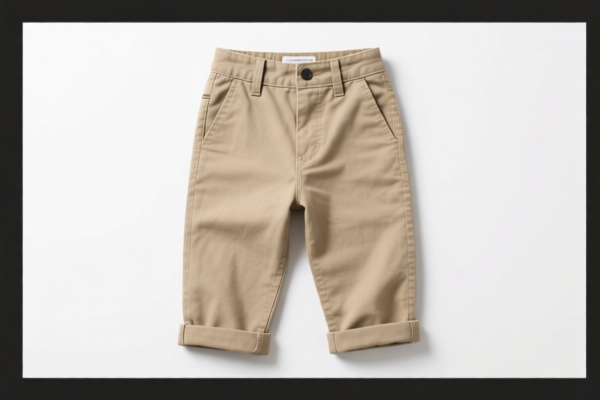
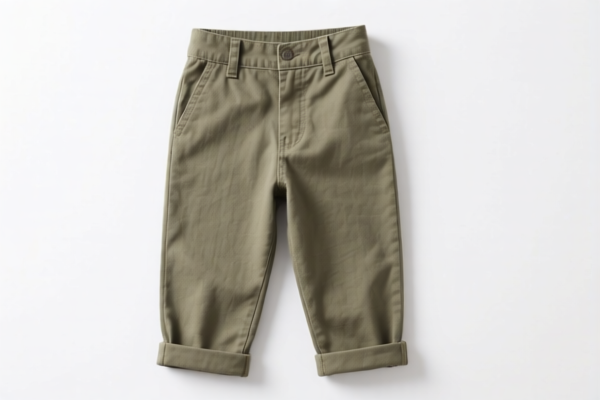
Boys' Cotton Casual Cargo Jumpsuit
CN → US| HS Code | Tariff Rate | Origin | Destination | Doc |
|---|---|---|---|---|
| 6203223010 | 0.0% | CN | US | Official Doc |
| 6103220020 | 0.0% | CN | US | Official Doc |
| 6103220030 | 0.0% | CN | US | Official Doc |
Product Images


AI Analysis
👖 Boys' Cotton Cargo Jumpsuit (Boys' Cotton Casual Jumpsuit)
🌐 HS Code Classification & Customs Clearance Guide | 2026 Tax Regime Full Breakdown | Professional Clearance Strategy
📌 I. Product Definition & Classification: What Exactly is a "Cargo Jumpsuit"?
A Boys' Cotton Cargo Jumpsuit is a one-piece garment combining pants and a top in a casual style, typically featuring cargo pockets, elastic or drawstring waists, and durable cotton fabric. It is designed for comfort, utility, and active wear.
In international trade, its classification hinges on knitted vs. woven construction: - Woven (非针织): If the fabric is woven (e.g., traditional cotton drill or twill), it falls under Chapter 62 (Articles of Apparel, Not Knitted or Crocheted). - Knitted (针织): If the fabric is knitted (e.g., jersey, rib knit), it falls under Chapter 61 (Articles of Apparel, Knitted or Crocheted).
⚠️ Critical Distinction:
- Woven Jumpsuits (1-piece) → Often treated as a set/ensemble of trousers + shirt for tax purposes if not a single continuous garment, OR classified directly as a jumpsuit under specific subheadings.
- Knitted Jumpsuits → Classified as a "set" (套装) under Chapter 61 if they consist of a top and bottom knitted together or sold as a coordinated set.
📦 II. HS Code Classification Details (2026 Latest Tariff Reference)
Based on your product description ("Cotton", "Boys", "Casual", "Jumpsuit"), here are the three most likely HS Codes derived from your data, with precise explanations:
| HS Code | Product Description | Why This Code Fits | Key Classification Logic |
|---|---|---|---|
| 6203.22.30.10 | Woven Boys' Cotton Casual Set (Jumpsuit as Ensemble) | If the jumpsuit is woven (non-knit) and structured as a single garment but legally treated as a "suit" or "ensemble" of trousers + jacket/shirt for tax purposes. | Logic: 100% Cotton, Woven, Boys' Casual Wear. Treated as an ensemble where tax is calculated per garment component. |
| 6103.22.00.20 | Knitted Boys' Cotton Suit/Set | If the jumpsuit is knitted and sold as a coordinated set (top + bottom) or a single knitted jumpsuit falling under the "men's or boys' knitted/crocheted suit" category. | Logic: 100% Cotton, Knitted, Boys' Set/Suit. Based on 兜底类目 (fallback category) for knitted sets. |
| 6103.22.00.30 | Knitted Boys' Cotton Suit (Fallback Category) | Another knitted cotton option for boys' sets, potentially for specific sub-types not covered by 20, but still under the "set" logic. | Logic: 100% Cotton, Knitted, Boys' Set. Based on 兜底类目 (fallback logic) for generic knitted suits. |
🔍 Key Reminder:
- Woven (6203) vs. Knitted (6103) is the primary divider.
- Jumpsuit vs. Set: If the jumpsuit is a single piece, it may still be taxed as an "ensemble" (套装) depending on the country's interpretation of "suit" vs. "one-piece".
- Material: All listed codes require 100% Cotton (纯棉).
💰 III. 2026 Tariff Rate Breakdown (Including Additional Taxes & Policy Surcharges)
✅ Applicable Countries: USA (US)
✅ Origin: China (CN)
✅ Effective Date: 2025/11/10 onwards (including subsequent imports)
🎯 1. 6203.22.30.10 — Woven Boys' Cotton Casual Ensemble (Jumpsuit)
| Item | Content |
|---|---|
| Base Tariff | 7.5% (ad valorem) |
| USITC Additional Tax | +7.5% (Section 301, "Section 122" logic applied to apparel) |
| Section 122 Tax | +10% (Specific to China/US trade friction) |
| Total Tax Rate | 25.0% |
| Tax Calculation | CIF Value × 25.0% |
| De Minimis Exemption | ❌ No (Deny for Section 301/122 items) |
| Legal Basis Path | Section 301: 6203.22.30.10 → Section 122: 6203.22.30.10 → USITC: 7.5% |
📌 Explanation:
- Base Tariff: 7.5% applies to "men's/boys' trousers, breeches and shorts, of cotton".
- Additional Tax: 7.5% is the Section 301 surcharge for apparel.
- Section 122 Tax: 10% is the new "122 clause" tariff on Chinese textiles.
- Total: 25.0% (7.5% + 7.5% + 10%).
- Important: Even if it's a "jumpsuit", it is taxed as an ensemble (each garment component taxed separately, then summed), hence the high rate.
🎯 2. 6103.22.00.20 — Knitted Boys' Cotton Set
| Item | Content |
|---|---|
| Base Tariff | 7.5% |
| USITC Additional Tax | +7.5% |
| Section 122 Tax | +10% |
| Total Tax Rate | 25.0% |
| Tax Calculation | CIF Value × 25.0% |
| De Minimis Exemption | ❌ No |
| Legal Basis Path | Section 301: 6103.22.00.20 → Section 122: 6103.22.00.20 → USITC: 7.5% |
📌 Note:
- Same rate as woven, but under Chapter 61 (Knitted).
- Applies to knitted jumpsuits or knitted sets sold as one unit.
🎯 3. 6103.22.00.30 — Knitted Boys' Cotton Set (Fallback)
| Item | Content |
|---|---|
| Base Tariff | 7.5% |
| USITC Additional Tax | +7.5% |
| Section 122 Tax | +10% |
| Total Tax Rate | 25.0% |
| Tax Calculation | CIF Value × 25.0% |
| De Minimis Exemption | ❌ No |
| Legal Basis Path | Section 301: 6103.22.00.30 → Section 122: 6103.22.00.30 → USITC: 7.5% |
📌 Note:
- Identical tax treatment to 20; 30 is a fallback for specific knitted set variations.
- All three codes carry the same 25.0% total tax burden due to Section 301 and 122 clauses.
🛠️ IV. Customs Clearance Practical Advice (Real-World Pitfall Avoidance)
✅ 1. Document Checklist (Non-negotiable)
| Document | Required? | Description |
|---|---|---|
| ✅ Product Spec Sheet | ✔️ | Must specify: 100% Cotton, Woven/Knitted, Boys' Size, Cargo Style |
| ✅ Construction Diagram | ✔️ | Show if it's a single-piece jumpsuit or two-piece set |
| ✅ Product Photos | ✔️ | Front, back, cargo pockets, label, care tag |
| ✅ Material Test Report | ✔️ | Confirm 100% Cotton content (lab test) |
| ✅ Commercial Invoice | ✔️ | Must state: "Boys' Cotton Cargo Jumpsuit (One-piece)" |
| ✅ Packing List | ✔️ | Show quantity, size breakdown, and packaging |
| ✅ Country of Origin Cert | ✔️ | If not China, may reduce tariff; if China, declare correctly |
✅ 2. Declaration Strategy (Critical Tips)
🔥 "One-Piece ≠ One Tax; Ensemble Logic Applies!"
| Scenario | Correct Declaration | Wrong Action |
|---|---|---|
| Single-piece Jumpsuit | Declare as "Boys' Cotton Casual Jumpsuit" under 6203/6103 | Split into "shirt + pants" → Higher tax! |
| Knitted Set (Top+Bottom) | Declare as "Set" under 6103.22.00.20/30 | Declare as separate items → 25% x 2 |
| Woven Jumpsuit | Declare under 6203.22.30.10 | Declare as "Knitted" → Rejection! |
| Cotton Content < 100% | Declare exact blend (e.g., 95% Cotton/5% Elastane) | Lie about material → Penalty! |
✅ 3. Special Cases Handling
| Case | Handling Advice |
|---|---|
| OEM Jumpsuits | Provide client order + design specs to prove it's not a "generic set" |
| Cargo Pockets with Zippers | Must declare as "Casual Cargo Style", not "Utility Vest" |
| Jumpsuit with Hood | Still classified as "Jumpsuit", not "Hoodie + Pants" |
| Size Variations | Declare by size group (e.g., 2-4Y, 5-7Y) to avoid "mixed size" penalties |
🌍 V. Global Market Comparison (2026 Tariff Overview)
| Country/Region | Recommended HS Code | Tariff | Certifications | Notes |
|---|---|---|---|---|
| 🇺🇸 USA | 6203.22.30.10 or 6103.22.00.20 |
25% (China) | FCC (if electronic), CPSIA | Highest tariff due to Section 301/122 |
| 🇨🇳 China | 6203.22.30.10 or 6103.22.00.20 |
5% | CCC, GB Standards | No Section 301/122 |
| 🇪🇺 EU | 6203.22.30.10 or 6103.22.00.20 |
4% | CE, REACH | No Section 301/122 |
| 🇯🇵 Japan | 6203.22.30.10 or 6103.22.00.20 |
4% | PSE | No Section 301/122 |
| 🇦🇺 Australia | 6203.22.30.10 or 6103.22.00.20 |
5% | RCM | No Section 301/122 |
📌 Conclusion:
- USA is the only market with 25% tariff on Chinese cotton boys' jumpsuits.
- EU/Japan/Australia offer 4-5% tariff, making them more cost-effective for exports.
- Section 301 & 122 are the main drivers of high US tariffs.
📌 VI. Common Mistakes & Pitfalls (Lessons Learned)
❌ Mistake 1: Declaring a "Jumpsuit" as "Trousers + Shirt" separately
👉 Result: Double taxation (25% x 2 = 50%) → Massive overpayment!
❌ Mistake 2: Declaring Knitted as Woven (or vice versa)
👉 Result: HS Code rejection, delay, or penalty → Customs audit!
❌ Mistake 3: Not proving 100% Cotton content
👉 Result: Misclassification → Higher tax rate (e.g., synthetic blend = higher tariff) → Fine!
❌ Mistake 4: Using vague names like "Boys' Suit" without "Jumpsuit"
👉 Result: Customs may classify as "Other" → Unpredictable tax!
✅ Correct Approach:
"Boys' 100% Cotton Cargo Jumpsuit, Woven/Knitted, One-Piece, Casual Style, Size 2-10Y, CPSIA Compliant, Model XYZ"
🎯 VII. Conclusion: Precision Classification = Cost Savings!
🎯 Remember the Rules:
🔹 "Jumpsuit = Ensemble Tax (25% in US)"
🔹 "Knitted vs. Woven = 61 vs. 62"
🔹 "100% Cotton = Required for these codes"
🔹 "Section 301 & 122 = 25% Total in US"
📌 Pro Tip:
If your jumpsuits are sourced from Vietnam, Mexico, or Thailand, you can apply for Section 301 Exemption, reducing tariff to 0-5%.
Recommendation: Request Advance Ruling from US Customs before shipping.
📣 Take Action Now:
📞 Contact a professional customs broker + Submit product photos + Request HS Code Pre-Ruling
🚀 Ensure your Boys' Cotton Cargo Jumpsuit clears customs smoothly, efficiently, and profitably!
✨ Professional Classification Starts Here!
💼 Every dollar saved in tax is profit earned!
Customer Reviews
About HS Code Classification
The Harmonized System (HS) is an internationally standardized nomenclature developed by the World Customs Organization (WCO) to classify traded products. Over 200 countries use the HS system as the basis for customs tariffs, trade statistics, and import/export regulations.
Each HS code follows a hierarchical structure:
- Chapter (2 digits) — Broad category of goods (e.g., Chapter 84: Machinery and Mechanical Appliances)
- Heading (4 digits) — More specific grouping within the chapter
- Subheading (6 digits) — Internationally standardized breakdown, used by all WCO member countries
- National subdivisions (8-10 digits) — Country-specific extensions for further classification, such as US HTSUS 10-digit codes
Correct HS code classification is essential for smooth customs clearance, accurate duty payment, and compliance with trade regulations. Misclassification can lead to customs delays, overpayment of duties, or penalties.
When importing from CN to US, the applicable tariff rates may include:
- Most-Favored-Nation (MFN) rate — The standard duty rate applied to WTO members
- General rate — Applied to countries without trade agreements
- Trade remedy duties — Additional tariffs such as Section 301 (anti-dumping), Section 232 (national security), or countervailing duties
The information provided on this page is for reference purposes only. For official classification, please consult with your local customs authority or a licensed customs broker.