Boys' Cotton Flannel Shirt
CN → US| HS Code | Tariff Rate | Origin | Destination | Doc |
|---|---|---|---|---|
| 6105202030 | 49.5% | CN | US | Official Doc |
| 6105202020 | 49.5% | CN | US | Official Doc |
| 6106202030 | 49.5% | CN | US | Official Doc |
| 6106202020 | 49.5% | CN | US | Official Doc |
| 6106202030 | 49.5% | CN | US | Official Doc |
Product Images
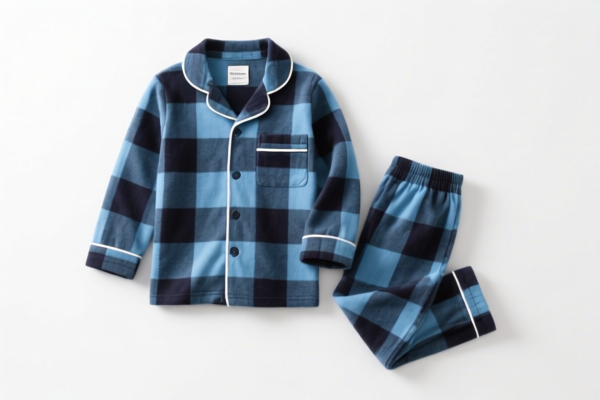
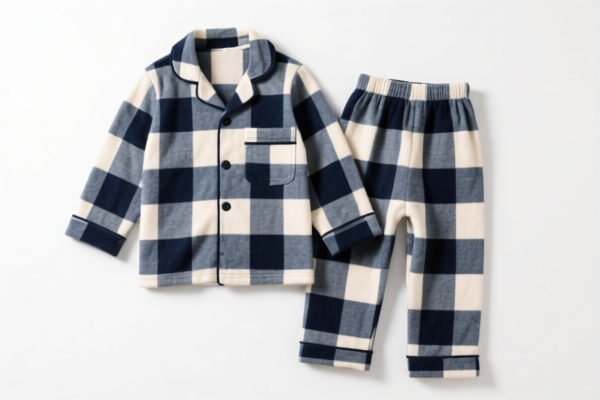
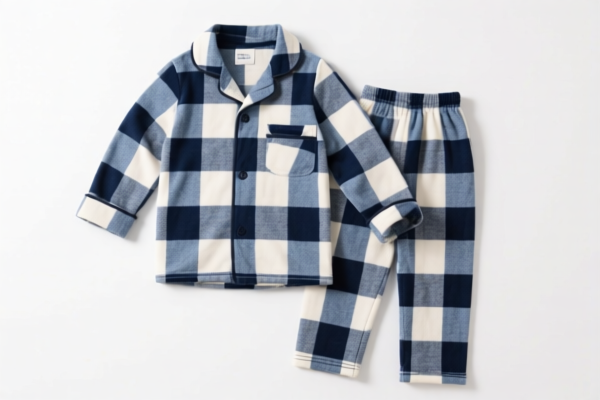

AI Analysis
👕 Boys' Cotton Flannel Shirt (儿童化纤法兰绒衬衫 - Note on Material Discrepancy)
🌐 HS Code Reference & Customs Clearance Guide | 2026 Latest Tariff Analysis | Professional Clearance Strategy
📌 I. Product Definition & Classification: What Exactly is a "Boys' Cotton Flannel Shirt"?
⚠️ CRITICAL DATA ALERT:
The user input specifies "Cotton", but the provided <DATA> contains entries for "Chemical Fiber" (化纤) or "Man-made Fiber" (人造纤维) shirts.
- If the shirt is truly Cotton: It does NOT match any HS Code in the provided data. It would typically fall under Chapter 61 (Knitted/Crocheted) or 62 (Non-knitted) for Cotton shirts (e.g., 6105.10 or 6205.20).
- If the shirt is Chemical Fiber (Synthetic): It MATCHES the provided data.
🛑 Assumption for this Guide:
To provide the most relevant answer based strictly on the provided <DATA>, we will analyze the Chemical Fiber/Man-made Fiber entries, as these are the only ones available. If your product is 100% Cotton, please re-check the material composition. The data provided describes "Chemical Fiber Flannel Shirts for Children/Boys".
⚠️ Key Distinction:
- "Boys" (男童) vs "Children" (儿童) vs "Girls" (女童): Customs often distinguishes by gender-specific cut or labeling.
- "Chemical Fiber" (化纤) includes polyester, nylon, acrylic, etc. Cotton is NOT chemical fiber.
- "Flannel" (法兰绒) is a fabric finish, not a material. It can be made of cotton or synthetic fibers.
📦 II. HS Code Classification Details (Based on Provided Data)
The provided data contains 5 distinct HS Codes, all with the same total tax rate (49.5%) but different material and usage specifications.
| HS Code | Product Description (From Data) | Material | Gender/Usage | Key Differentiator |
|---|---|---|---|---|
6105.20.20.20 |
Boys' Chemical Fiber Flannel Shirt | Chemical Fiber (化纤) | Boys (男童) | Specific to Boys; Material is Chemical Fiber |
6105.20.20.30 |
Children's Chemical Fiber Flannel Shirt | Man-made Fiber (人造纤维) | Children (儿童) | Material is Man-made Fiber; Usage is Children |
6106.20.20.20 |
Children/Girls Chemical Fiber Flannel Shirt | Chemical Fiber or Blended | Children/Girls | Material can be Blended; Usage includes Girls |
6106.20.20.30 |
Girls' Chemical Fiber Flannel Shirt | Man-made Fiber (人造纤维) | Girls (女童) | Specific to Girls; Material is Man-made Fiber |
6106.20.20.30 |
Girls' Chemical Fiber Top/Shirt | Man-made Fiber (人造纤维) | Girls (女童) | Includes Tops in addition to shirts; Material is Man-made Fiber |
🔍 重点提醒 (Critical Note):
- HS 61xx indicates Knitted or Crocheted garments.
- HS 62xx indicates Non-Knitted garments.
- The provided data only contains HS Codes starting with 61xx, meaning all products are Knitted/Crocheted. If your flannel shirt is woven (non-knitted), it will NOT match these codes.
- Material Mismatch: If your shirt is 100% Cotton, NONE of these HS Codes are correct. Cotton falls under different subheadings (e.g.,6105.10for knitted cotton shirts for boys).
💰 III. 2026 Latest Tariff Rate Breakdown (US Import from China)
✅ Applicable Country: United States (US)
✅ Origin: China (CN)
✅ Total Tax Rate: 49.5%
✅ 生效时间 (Effective Date): 2025/2026 (Current Trade Environment)
🎯 1. All Provided HS Codes (6105.20.20.xx & 6106.20.20.xx)
| Item | Detail |
|---|---|
| Base Tariff (MFN) | 32.0% |
| Section 301 Tariff (Add-on) | 7.5% |
| Section 122 Tariff (Add-on) | 10.0% |
| Total Tax Rate | 49.5% |
| De Minimis Exemption? | ❌ NO (Deny de minimis for Section 301/122 goods) |
| Calculation Base | CIF Value × 49.5% |
| Legal Basis | HTSUS 6105.20 / 6106.20 + USITC Footnotes + IEEPA Authorities |
📌 Explanation:
- 32.0% Base: Standard MFN (Most Favored Nation) rate for knitted/synthetic children's shirts.
- 7.5% Section 301: Additional tariff on Chinese goods under Section 301 of the Trade Act.
- 10% Section 122: Additional tariff under Section 122 of the Trade Act (often applied to specific categories of imports).
- Total 49.5%: This is a high tariff. No de minimis exemption applies, meaning even small shipments (under $800) are not exempt from these tariffs if they fall under these HS codes.
🛠️ IV. Customs Clearance Practical Advice (Avoiding Pitfalls)
✅ 1. Material Verification is KEY
| Scenario | Correct HS Code | Risk if Wrong |
|---|---|---|
| 100% Cotton | None in Data (Likely 6105.10 or 6205.20) |
Misclassification Penalty. Cotton has different tariffs (often lower base, but still subject to Section 301). |
| 100% Polyester (Chemical Fiber) + Boys | 6105.20.20.20 |
Correct |
| 100% Acrylic (Man-made Fiber) + Children | 6105.20.20.30 |
Correct |
| Blended Fiber (e.g., 50% Polyester/50% Cotton) | 6106.20.20.20 |
Correct |
| Knitted vs. Woven | If Woven, all 61xx codes are WRONG. Must use 62xx. | Severe Misclassification. |
🚨 Critical:
- Flannel is a fabric finish, not a material. You MUST declare the fiber content (e.g., "100% Polyester Flannel").
- If you declare "Cotton" but the product is "Chemical Fiber," customs will seize and penalize for fraud.
✅ 2. Documentation Checklist
| Document | Requirement | Purpose |
|---|---|---|
| Commercial Invoice | Must state: "Knitted Boys' Flannel Shirt, 100% Polyester, HTS 6105.20.20.20" | Clear classification |
| Fabric Swatch/Test Report | Mandatory | Prove fiber content (Cotton vs. Chemical Fiber) |
| Labeling | Must show "Made in China" and fiber content | Compliance with US labeling laws |
| Packing List | Detail weight, dimensions, and quantity | Valuation basis |
✅ 3. Classification Strategy
| Product Feature | Recommended HS Code (From Data) |
|---|---|
| Boys, Knitted, Chemical Fiber | 6105.20.20.20 |
| Children, Knitted, Man-made Fiber | 6105.20.20.30 |
| Girls, Knitted, Man-made Fiber | 6106.20.20.30 |
| Blended/Knitted, Children/Girls | 6106.20.20.20 |
📌 Tip:
- If the shirt is Unisex, use "Children" (儿童) codes.
- If Gender-Specific, use Boys or Girls codes.
- Never use "Cotton" HS codes for synthetic flannel shirts.
🌍 V. Global Market Comparison (2026)
| Market | HS Code (Example) | Base Tariff | Section 301/Other | Total Rate | Notes |
|---|---|---|---|---|---|
| 🇺🇸 USA | 6105.20.20.20 |
32.0% | +7.5% +10% | 49.5% | Highest cost. No de minimis. |
| 🇨🇳 China | 6105.10.00.00 (Cotton) |
12% | 0% | 12% | If 100% Cotton, lower rate. |
| 🇪🇺 EU | 6105.10.90 |
12% | 0% | 12% | If 100% Cotton. Synthetic may vary. |
| 🇬🇧 UK | 6105.10.90 |
12% | 0% | 12% | If 100% Cotton. |
📌 Conclusion:
- The USA imposes the highest tariffs on these goods due to Section 301 and 122.
- If your product is Cotton, consider exporting to non-US markets (EU, UK, Canada) for lower duties.
- If must export to USA, accurate classification is critical to avoid penalties.
📌 VI. Common Errors & Pitfalls (Lessons Learned)
❌ Error 1: Declaring "Cotton" when it is "Chemical Fiber"
👉 Consequence: Customs reclassification → 49.5% tariff + penalties + seizure.
❌ Error 2: Using "Woven" codes for "Knitted" shirts
👉 Consequence: HS Code mismatch → Customs hold + delay.
❌ Error 3: Assuming "Flannel" = "Cotton"
👉 Consequence: Misclassification → Higher/lower tariff than expected.
❌ Error 4: Ignoring Section 122 Tariff
👉 Consequence: Underpayment → Interest and fines.
✅ Correct Approach:
"Knitted Boys' Shirt, 100% Polyester Flannel, HTS 6105.20.20.20, CIF Value $X, Origin: China"
🎯 VII. Conclusion: Professional Classification Saves Money
🎯 Key Takeaway:
🔹 "Material is King": Cotton ≠ Chemical Fiber.
🔹 "Knitted vs. Woven": 61xx = Knitted, 62xx = Woven.
🔹 "Gender Matters": Boys, Girls, or Children?
🔹 "Tariff is High": 49.5% for US imports from China.
📌 Tips:
- If your product is 100% Cotton, DO NOT use the provided HS Codes.
- If your product is Chemical Fiber, use the most specific HS Code from the data (e.g., 6105.20.20.20 for Boys).
- Apply for an Advance Ruling from US Customs (CBP) if unsure.
📣 Immediate Action:
📞 Contact a licensed customs broker.
📤 Provide fabric test reports.
🚀 Ensure accurate classification to avoid 49.5% tariffs and penalties.
✨ Accurate Classification Starts with Material Verification!
💼 Every dollar counts in global trade!
Customer Reviews
About HS Code Classification
The Harmonized System (HS) is an internationally standardized nomenclature developed by the World Customs Organization (WCO) to classify traded products. Over 200 countries use the HS system as the basis for customs tariffs, trade statistics, and import/export regulations.
Each HS code follows a hierarchical structure:
- Chapter (2 digits) — Broad category of goods (e.g., Chapter 84: Machinery and Mechanical Appliances)
- Heading (4 digits) — More specific grouping within the chapter
- Subheading (6 digits) — Internationally standardized breakdown, used by all WCO member countries
- National subdivisions (8-10 digits) — Country-specific extensions for further classification, such as US HTSUS 10-digit codes
Correct HS code classification is essential for smooth customs clearance, accurate duty payment, and compliance with trade regulations. Misclassification can lead to customs delays, overpayment of duties, or penalties.
When importing from CN to US, the applicable tariff rates may include:
- Most-Favored-Nation (MFN) rate — The standard duty rate applied to WTO members
- General rate — Applied to countries without trade agreements
- Trade remedy duties — Additional tariffs such as Section 301 (anti-dumping), Section 232 (national security), or countervailing duties
The information provided on this page is for reference purposes only. For official classification, please consult with your local customs authority or a licensed customs broker.