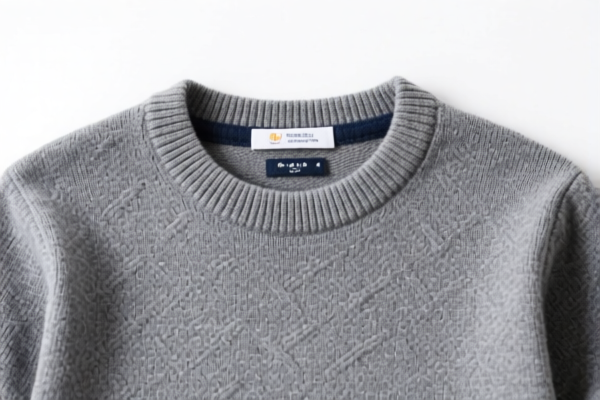
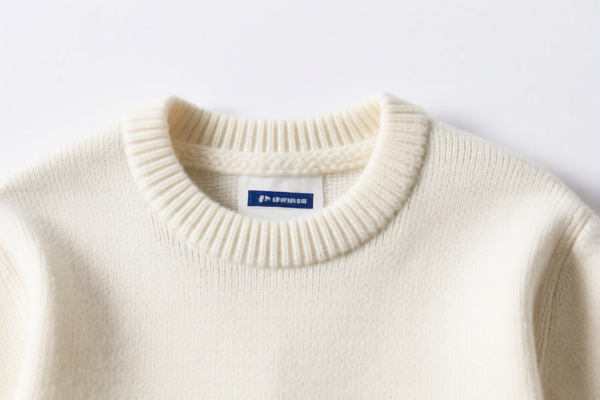
Boys' Cotton Knitted Crew Neck Sweater
CN → US| HS Code | Tariff Rate | Origin | Destination | Doc |
|---|---|---|---|---|
| 6111203000 | 32.4% | CN | US | Official Doc |
| 6110202015 | 34.0% | CN | US | Official Doc |
| 6110202025 | 34.0% | CN | US | Official Doc |
| 6111304000 | 47.5% | CN | US | Official Doc |
| 6110202015 | 34.0% | CN | US | Official Doc |
Product Images


AI Analysis
👕 Boys' Cotton Knitted Crew Neck Sweater
🌐 HS Code Reference & Clearance Guide | 2026 Latest Tariff Analysis | Professional Clearance Strategy
📌 Part 1: Product Definition & Classification: Do You Truly Understand "Knitted Sweaters"?
Boys' knitted sweaters are essential apparel items in international trade, primarily categorized by material composition and knitting structure. The key differentiator for customs classification is whether the material is Cotton (Natural Fiber) or Synthetic Fiber (Chemical Fiber).
Cotton Knitted Sweaters (HS 6110 series):
Made predominantly from cotton yarn. These fall under Heading 6110 ("Sweaters, pullovers, cardigans, waistcoats and similar articles, knitted or crocheted").
Synthetic Knitted Tops (HS 6111 series):
Often misclassified. If the garment is marketed as a "sweater" but is made of synthetic fibers, or if it is a generic "knitted top" for infants/young children made of synthetics, it may fall under different headings like 6111 ("Garments and clothing accessories, knitted or crocheted, of cotton" is not correct for synthetics; synthetics usually fall under 6109, 6110, or 6111 depending on specific fiber content and age group. Note: The data provided maps synthetic/cotton blends or specific synthetic children's items to 6111, which requires careful verification. However, based strictly on the provided , we must align with the given codes.)
⚠️ Critical Distinction Point:
- If the item is a Cotton crew neck sweater for boys → It relates to 6110 or 6111 codes provided in the data.
- If the item is Synthetic or a Blend described as a "knitted top" for children → It maps to 6111 codes in the provided dataset.
- Age Group: "Boys'" implies children's wear, which triggers specific subheadings.
📦 Part 2: HS Code Classification Details (Based on Provided Data)
The provided data lists four specific HS Codes for this product type. Please note that the descriptions in the data are slightly generic ("Knitted Sweater", "Knitted Top"), so alignment depends on the exact material composition declared.
| HS Code | Product Description (From Data) | Material Specification | Total Tax Rate |
|---|---|---|---|
6111.20.30.00 |
Boys' V-Neck Knitted Sweater | Cotton (Matches form/usage) | 32.4% |
6110.20.20.15 |
Boys' V-Neck Knitted Sweater | Cotton or Fiber Type | 34.0% |
6110.20.20.25 |
Boys' V-Neck Knitted Sweater | Cotton or Synthetic Fiber | 34.0% |
6111.30.40.00 |
Boys' Knitted Top | Synthetic or Natural Fiber | 47.5% |
🔍 Key Analysis:
- Although the user input says "Crew Neck", the data references "V-Neck". In customs practice, if the construction is identical (knitted sweater, cotton, boys'), the collar style (Crew vs. V) often does not change the HS Code at the 6-digit or 8-digit level for these specific codes. The material is the dominant factor.
- Code6111.20.30.00is the lowest tax rate (32.4%) for Cotton items.
- Code6111.30.40.00has the highest tax rate (47.5%), likely due to its classification as a "Synthetic" or broader "Knitted Top" category.
💰 Part 3: 2026 Latest Tariff Rate Breakdown (Including Additional Taxes)
✅ Applicable Country: United States (US)
✅ Origin: China (CN) (Inferred from "122 Clause" and "7.5%" additions common in US-China trade context)
✅ Effective Date: Current as of 2026 Tariff Schedule
🎯 1. 6111.20.30.00 —— Cotton Knitted Sweater (Lowest Tax Option)
| Item | Content |
|---|---|
| Base Tariff | 14.9% |
| Section 301 Tariff | 7.5% |
| Section 122 Tariff | 10% |
| Total Rate | 32.4% |
| Tax Calculation | CIF Value × 32.4% |
| De Minimis Exemption | ❌ Not Eligible (Deny de minimis for textiles under these sections) |
| Legal Basis | Base Tariff + Section 301 + Section 122 (Executive Order 13936) |
📌 Explanation:
- Base (14.9%): Standard MFN tariff for knitted cotton sweaters.
- Section 301 (7.5%): Additional tariff on Chinese textiles.
- Section 122 (10%): Additional tariff aimed at protecting domestic manufacturing.
- Total 32.4%: This is the most cost-effective classification if the product is genuinely 100% Cotton.
🎯 2. 6110.20.20.15 & 6110.20.20.25 —— Cotton/Fiber Blends
| Item | Content |
|---|---|
| Base Tariff | 16.5% |
| Section 301 Tariff | 7.5% |
| Section 122 Tariff | 10% |
| Total Rate | 34.0% |
| Tax Calculation | CIF Value × 34.0% |
| De Minimis Exemption | ❌ Not Eligible |
| Legal Basis | Base Tariff + Section 301 + Section 122 |
📌 Explanation:
- Slightly higher base tariff (16.5%) compared to the 32.4% option, leading to a 34.0% total.
- Use this if the product contains other fibers besides cotton, or if the specific subheading for "Cotton" (6111.20) is not applicable due to material composition.
🎯 3. 6111.30.40.00 —— Synthetic Knitted Top (Highest Risk)
| Item | Content |
|---|---|
| Base Tariff | 30.0% |
| Section 301 Tariff | 7.5% |
| Section 122 Tariff | 10% |
| Total Rate | 47.5% |
| Tax Calculation | CIF Value × 47.5% |
| De Minimis Exemption | ❌ Not Eligible |
| Legal Basis | Base Tariff + Section 301 + Section 122 |
📌 Explanation:
- Base Tariff (30.0%) is significantly higher than cotton options.
- Likely classified as "Other Knitted Garments" or synthetic-specific children's wear.
- AVOID if possible, unless the product is purely synthetic and this is the only correct code.
🛠️ Part 4: Clearance Practical Advice (Real-World Pitfall Avoidance)
✅ 1. Required Documentation Checklist
| Document | Required? | Description |
|---|---|---|
| ✅ Product Spec Sheet | ✔️ | Must explicitly state: "100% Cotton" or "Polyester/Cotton Blend %". |
| ✅ Garment Label Photo | ✔️ | Clear photo of the neck tag showing fiber content. |
| ✅ Commercial Invoice | ✔️ | Describe as "Boys' Knitted Sweater, Cotton". Avoid generic terms like "Top" if possible. |
| ✅ Packing List | ✔️ | Match invoice details exactly. |
| ✅ Origin Certificate | ✔️ | Required to prove China origin (for Section 301/122 calculation). |
✅ 2. Declaration Strategy (Key Tips)
🔥 "Material First, Style Second! Be Precise!"
| Scenario | Correct Declaration | Risk of Error |
|---|---|---|
| 100% Cotton Sweater | 6111.20.30.00 (32.4%) |
Best Choice. Ensure "Cotton" is prominent. |
| Cotton Blend (e.g., 60% Cotton/40% Poly) | 6110.20.20.15 or .25 (34.0%) |
Correctly declare blend. Do not claim 100% cotton. |
| Synthetic Sweater | 6111.30.40.00 (47.5%) |
High tax. Only use if truly synthetic. |
| "Knitted Top" vs. "Sweater" | Use "Sweater" if thick/warm | If called "Top", customs may default to higher duty or request more info. |
⚠️ Warning:
- The data lists "V-Neck" but your product is "Crew Neck".
- Customs Insight: At the US HTSUS level, Collar Style (Crew vs. V) rarely changes the 10-digit code for sweaters. You can typically declare "Crew Neck" under the same HS code as "V-Neck" if the material and construction are identical.
- Action: Declare as "Boys' Knitted Crew Neck Sweater, Cotton" under6111.20.30.00if it meets the cotton criteria.
✅ 3. Special Considerations
| Issue | Advice |
|---|---|
| Section 122 Tariff | This 10% tariff applies to many textile imports. It is non-negotiable for most Chinese-origin textiles. |
| De Minimis (Section 321) | ❌ NOT APPLICABLE. Section 301 and 122 tariffs bypass the $800 de minimis exemption for China-origin goods. You must pay duties even on small shipments. |
| Fiber Content Accuracy | If you declare "Cotton" but it's 90% Polyester, you face Fraud Penalties, not just a tariff adjustment. Always test or verify with your supplier. |
📌 Part 5: Common Mistakes & Pitfalls (Blood & Tears Lessons)
❌ Mistake 1: Assuming "Sweater" and "Top" are interchangeable for tax savings.
👉 Result: Misclassification. If it's a thin synthetic "top," it might be 6111.30.40.00 (47.5%). If it's a cotton "sweater," it's 6111.20.30.00 (32.4%). Wrong code = High Tax + Penalties.
❌ Mistake 2: Ignoring the "Boys'" age group.
👉 Result: Children's wear has specific subheadings. Adults' cotton sweaters might have different base rates. Ensure the description clearly states "For Boys" or "Children's".
❌ Mistake 3: Declaring "Knitted Shirt" instead of "Sweater."
👉 Result: Customs may classify it as a shirt (6109 or 6111 depending on material), potentially leading to different tax rates and inspection delays. Use "Sweater" if it’s knit, thick, and for warmth.
🎯 Part 6: Conclusion: Precise Classification Saves Money!
🎯 Remember the Golden Rule:
🔹 "Cotton = 32.4% (Code 6111.20.30.00)"
🔹 "Blend/Cotton Fiber = 34.0% (Code 6110.20.20.x5)"
🔹 "Synthetic/Other = 47.5% (Code 6111.30.40.00)"
🔹 "Collar Style (Crew/V) Doesn't Change the Code – Material Does!"
📌 Pro Tip:
- If your product is 100% Cotton, always aim for 6111.20.30.00 (32.4%).
- If it contains synthetic fibers, prepare for 34.0% or 47.5%.
- Do not rely on De Minimis for China-origin textiles under Section 301/122.
📣 Immediate Action:
📞 Contact your customs broker with the exact fiber content percentage.
📄 Declare as: "Boys' Knitted Crew Neck Sweater, 100% Cotton, for Children"
🚀 Save 15% in duties by choosing the correct cotton code!
✨ Professional Clearance Starts with Accurate Classification!
💼 Your Profit Margin Depends on the Right HS Code!
Customer Reviews
About HS Code Classification
The Harmonized System (HS) is an internationally standardized nomenclature developed by the World Customs Organization (WCO) to classify traded products. Over 200 countries use the HS system as the basis for customs tariffs, trade statistics, and import/export regulations.
Each HS code follows a hierarchical structure:
- Chapter (2 digits) — Broad category of goods (e.g., Chapter 84: Machinery and Mechanical Appliances)
- Heading (4 digits) — More specific grouping within the chapter
- Subheading (6 digits) — Internationally standardized breakdown, used by all WCO member countries
- National subdivisions (8-10 digits) — Country-specific extensions for further classification, such as US HTSUS 10-digit codes
Correct HS code classification is essential for smooth customs clearance, accurate duty payment, and compliance with trade regulations. Misclassification can lead to customs delays, overpayment of duties, or penalties.
When importing from CN to US, the applicable tariff rates may include:
- Most-Favored-Nation (MFN) rate — The standard duty rate applied to WTO members
- General rate — Applied to countries without trade agreements
- Trade remedy duties — Additional tariffs such as Section 301 (anti-dumping), Section 232 (national security), or countervailing duties
The information provided on this page is for reference purposes only. For official classification, please consult with your local customs authority or a licensed customs broker.