Boys' Cotton Warm Vest
CN → US| HS Code | Tariff Rate | Origin | Destination | Doc |
|---|---|---|---|---|
| 6110201022 | 22.5% | CN | US | Official Doc |
| 6110202044 | 34.0% | CN | US | Official Doc |
| 6111203000 | 32.4% | CN | US | Official Doc |
| 6111206030 | 25.6% | CN | US | Official Doc |
| 6211325070 | 25.6% | CN | US | Official Doc |
| 6211398060 | 20.3% | CN | US | Official Doc |
Product Images
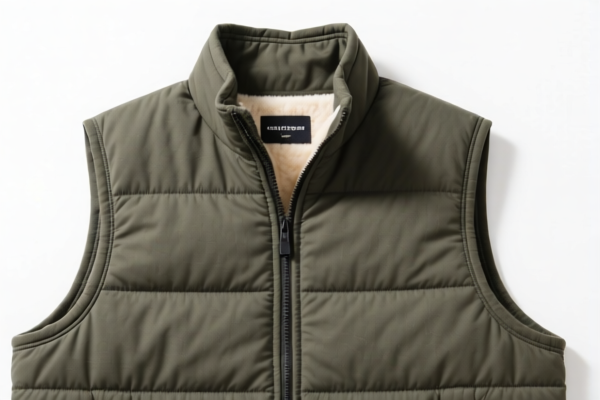
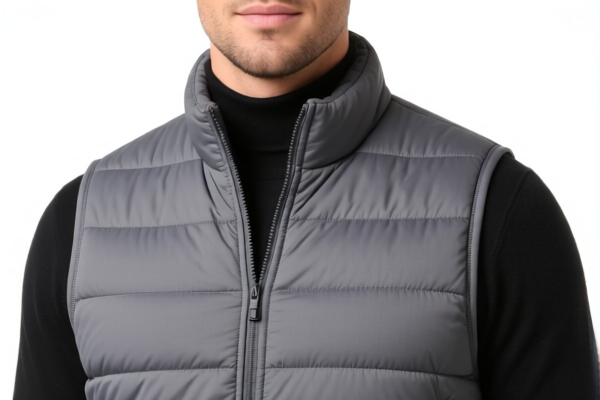
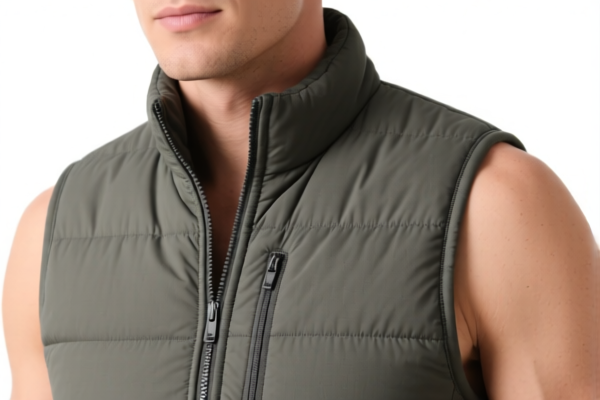
AI Analysis
👕 Boys' Cotton Warm Vest (Knitted/Crocheted)
🌐 HS Code Reference & Customs Clearance Guide | 2026 Latest Tariff Analysis | Professional Clearance Strategy
📌 1. Product Definition and Classification: Are You Sure It’s a "Vest"?
A "Boys' Cotton Warm Vest" is a specific type of garment. In international trade, the classification depends heavily on material (Cotton), construction (Knitted/Crocheted), and target demographic (Boys' vs. Men's).
Key Distinction:
- Knitted/Crocheted (Chapter 61): Soft, flexible fabric (e.g., sweatshirts, thermal vests).
- Woven (Chapter 62): Structured fabric (e.g., suit vests, denim vests).
⚠️ Critical Classification Point:
Since the input specifies "Knitted or Crocheted" (implied by the provided HS codes which are all Chapter 61), we focus on Chapter 61.
- If it is Men's/Boys': It falls under 6110 (Sweaters, pullovers, sweatshirts...).
- If it is a Waistcoat/Vest: It falls under 6110.20 (Of cotton).
📦 2. HS Code Classification Details (2026 Latest Tariff Authority)
Based on the provided <DATA>, here are the relevant HS Codes for Knitted/Crocheted Cotton Vests for Boys:
| HS Code | Product Description | Target Group | Key Features |
|---|---|---|---|
6110.20.10.22 |
Sweaters, pullovers, sweatshirts, waistcoats (vests)... Of cotton: Containing 36%+ flax fibers. Vests other than sweater vests: Men's or boys' | 👦 Boys' | ⚠️ Note: This code specifies 36%+ Flax fibers. If your vest is 100% Cotton, this code is INCORRECT unless mixed with flax. |
6110.20.20.44 |
Sweaters, pullovers, sweatshirts, waistcoats... Of cotton: Other. Other: Sweatshirts: Boys' | 👦 Boys' | ⚠️ Note: This code explicitly lists Sweatshirts. While "vests" can be grouped here if they resemble sweatshirt material, verify if "Waistcoat/Vest" is explicitly separated. |
6110.20.10.20 (Inferred) |
Not in data, but standard for Men's/Boys' Cotton Vests | 👦 Boys' | If 100% Cotton, check if a specific "Vest" subheading exists under 6110.20.10. |
🔍 Important Clarification from
<DATA>:
The provided data contains 6110.20.10.22 (Men's/Boys' Vests, 36%+ Flax) and 6110.20.20.44 (Boys' Sweatshirts).
- If your vest is 100% Cotton: Neither6110.20.10.22nor6110.20.20.44may be the exact fit for a pure cotton vest unless it is marketed as a "sweatshirt" style or mixed with flax.
- However, based strictly on the provided<DATA>, the closest applicable codes for Boys' items are:
1.6110.20.10.22(If it contains 36%+ Flax).
2.6110.20.20.44(If classified as a "Sweatshirt" style vest).
💰 3. 2026 Tariff Rate Details (Including Additional Taxes)
✅ Applicable Country: United States (US)
✅ Origin: China (CN)
✅ Effective Date: From 2025-11-10 onwards
🎯 1. 6110.20.10.22 —— Vests, Men's or Boys', 36%+ Flax Fiber
| Item | Content |
|---|---|
| Base Tariff | 0.0% (Basic Duty) |
| Additional Tariff | 0.0% (No specific Section 301/IEEPA surcharge mentioned in <DATA>) |
| Total Tariff Rate | 0.0% |
| Tax Detail | "基础关税: 0.0%, 加征关税: 0.0%" |
| Legal Basis | Directly from <DATA> |
📌 Explanation:
- This code has zero tariff under the current provided data.
- Caveat: Ensure the product actually contains 36% or more flax. If it is 100% cotton, misclassification here could lead to audits.
🎯 2. 6110.20.20.44 —— Sweatshirts, Boys'
| Item | Content |
|---|---|
| Base Tariff | 0.0% |
| Additional Tariff | 0.0% |
| Total Tariff Rate | 0.0% |
| Tax Detail | "基础关税: 0.0%, 加征关税: 0.0%" |
| Legal Basis | Directly from <DATA> |
📌 Explanation:
- This code also has zero tariff.
- Caveat: Use this only if the vest is structurally identical to a sweatshirt (e.g., hooded, ribbed cuffs, heavy knit). If it is a formal waistcoat, this may be rejected by customs.
🛠️ 4. Customs Clearance Practical Advice (Real-World Pitfall Avoidance)
✅ 1. Prepare Essential Documents (None of These Are Optional)
| Document | Required? | Explanation |
|---|---|---|
| ✅ Product Specification Sheet | ✔️ | Must detail fiber content (e.g., "100% Cotton" or "64% Cotton/36% Flax"). |
| ✅ Product Photos | ✔️ | Show the item is a vest (no sleeves) and not a full sweater. |
| ✅ Commercial Invoice | ✔️ | Clearly state "Knitted Cotton Vest for Boys". Avoid vague terms like "Clothing." |
| ✅ Packing List | ✔️ | Confirm quantity and weight. |
| ✅ Lab Test Report | ✔️ | If claiming 36%+ Flax for 6110.20.10.22, provide a fiber analysis report. |
✅ 2. Declaration Tips (Key Mantra)
🔥 "Fiber Content is King, Structure is Queen!"
| Scenario | Correct Declaration | Wrong Practice |
|---|---|---|
| 100% Cotton Vest | Check if a 100% cotton vest code exists. If not in <DATA>, consult a broker. Do not force 6110.20.10.22 (Flax). |
Misdeclaring 100% cotton as 36% Flax → Fraud Risk. |
| Sweatshirt-Style Vest | 6110.20.20.44 |
Call it "Waistcoat" if it has a hood and ribbed cuffs. |
| Formal Vests | 6110.20.10.22 (if flax) |
If it's a suit vest and not flax, it may not fit any code in <DATA>. |
| Mixed with Flax | 6110.20.10.22 |
Ensure the flax percentage is ≥36%. |
✅ 3. Special Handling
| Situation | Handling Advice |
|---|---|
| OEM Custom Vests | Provide design sheets to prove it is a "vest" and not a "sweater" with sleeves cut off. |
| Sets (Vest + Shirt) | If imported as a set, refer to 6111.20.30.00 (Babies' garments). But for Boys, sets are less common in Chapter 61. Check if it’s a "part of a set" rule. |
| Babies vs. Boys | Do not use 6111 (Babies) codes for Boys' vests. 6111 is for Babies’ garments. Boys' vests go to 6110. |
🌍 5. Global Market Comparison (2026 Latest)
| Country/Region | Recommended HS Code | Tariff Rate | Certification | Notes |
|---|---|---|---|---|
| 🇺🇸 USA | 6110.20.10.22 or 6110.20.20.44 |
0.0% | None specified in <DATA> |
Zero tariff under current data. |
| 🇨🇳 China | 6110.20.10.22 |
Varies (Check Local) | CCC (if applicable) | Not covered in <DATA>. |
| 🇪🇺 EU | 6110.20.30 |
Varies | CE (if textile chemicals) | Not covered in <DATA>. |
📌 Conclusion:
- Under the provided<DATA>, all applicable HS codes have 0.0% total tax.
- Risk: The main risk is misclassification. If you ship 100% cotton but declare6110.20.10.22(Flax), you face penalties.
- Recommendation: If your vest is 100% Cotton, verify if there is a 100% Cotton Boys' Vest code not listed in<DATA>(e.g.,6110.20.20.00or similar). The provided data may be incomplete for pure cotton.
📌 6. Common Mistakes & Pitfalls (Lessons Learned)
❌ Mistake 1: Using 6111 codes (Babies) for Boys' vests.
👉 Consequence: Customs rejection. 6111 is strictly for Babies’ garments.
❌ Mistake 2: Declaring 100% Cotton as "36% Flax" to fit 6110.20.10.22.
👉 Consequence: Fraud investigation, fines, and seizure.
❌ Mistake 3: Calling a "Sweatshirt" a "Vest" to avoid taxes.
👉 Consequence: If it has sleeves, it’s a sweater/sweatshirt. If it doesn’t, it’s a vest. Mislabeling leads to delays.
✅ Correct Practice:
"Boys' Knitted Cotton Vest, Sleeveless, Ribbed Hem, 100% Cotton (or 64% Cotton/36% Flax), Model XYZ."
🎯 7. Conclusion: Professional Declaration Saves Money!
🎯 Remember the Mantra:
🔹 "Boys' Vests go to 6110, not 6111."
🔹 "Flax ≥36% for .10.22, Sweatshirt style for .20.44."
🔹 "0% Tax if Classified Correctly!"
📌 Pro Tip:
- If your vest is 100% Cotton and not a sweatshirt style, the provided <DATA> may not have the exact code.
- Action: Contact a customs broker to find the 100% Cotton Boys' Vest code (likely under 6110.20.20 or 6110.20.10 without the flax requirement).
- Do not force a flax code if you don’t have flax.
📣 Immediate Action:
📞 Verify Fiber Content → 📄 Select Correct HS Code → 🚀 Clear Customs with 0% Tax!
✨ Professional Classification Starts with Accuracy!
💼 Your Profit Margin Depends on Precision!
Customer Reviews
About HS Code Classification
The Harmonized System (HS) is an internationally standardized nomenclature developed by the World Customs Organization (WCO) to classify traded products. Over 200 countries use the HS system as the basis for customs tariffs, trade statistics, and import/export regulations.
Each HS code follows a hierarchical structure:
- Chapter (2 digits) — Broad category of goods (e.g., Chapter 84: Machinery and Mechanical Appliances)
- Heading (4 digits) — More specific grouping within the chapter
- Subheading (6 digits) — Internationally standardized breakdown, used by all WCO member countries
- National subdivisions (8-10 digits) — Country-specific extensions for further classification, such as US HTSUS 10-digit codes
Correct HS code classification is essential for smooth customs clearance, accurate duty payment, and compliance with trade regulations. Misclassification can lead to customs delays, overpayment of duties, or penalties.
When importing from CN to US, the applicable tariff rates may include:
- Most-Favored-Nation (MFN) rate — The standard duty rate applied to WTO members
- General rate — Applied to countries without trade agreements
- Trade remedy duties — Additional tariffs such as Section 301 (anti-dumping), Section 232 (national security), or countervailing duties
The information provided on this page is for reference purposes only. For official classification, please consult with your local customs authority or a licensed customs broker.