Boys' Coveralls
CN → US| HS Code | Tariff Rate | Origin | Destination | Doc |
|---|---|---|---|---|
| 6114200048 | 28.3% | CN | US | Official Doc |
| 6114200044 | 28.3% | CN | US | Official Doc |
| 6111205000 | 32.4% | CN | US | Official Doc |
| 6114303044 | 32.4% | CN | US | Official Doc |
| 6210109010 | 26.0% | CN | US | Official Doc |
Product Images
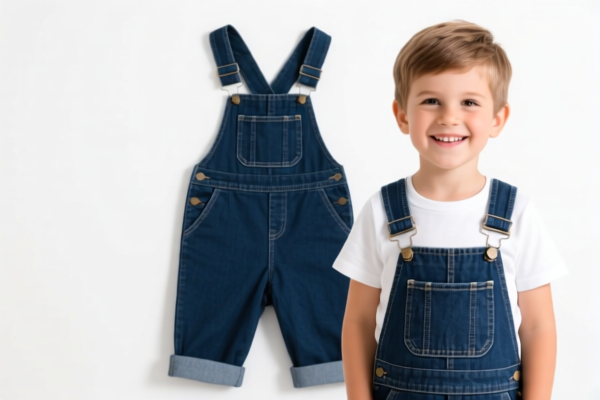


AI Analysis
👕 Boys' Coveralls: The Ultimate HS Code & Tariff Breakdown (USA/China Trade)
🌐 HS Code Reference & Clearance Guide | 2026 Latest Tariff Analysis | Professional Customs Strategy
📌 I. Product Definition: What Exactly Are "Boys' Coveralls"?
Boys' coveralls are one-piece garments worn by children (typically males) that cover the torso and legs. In international trade, classification hinges on three critical factors: 1. Material Composition: Cotton, Synthetic (Man-made fibers), or Wool? 2. Knitted vs. Woven: Are they knitted (elastic/stretchy, e.g., Jersey) or woven (sturdy, e.g., Denim/Workwear)? 3. Function/Style: Casual wear vs. Industrial Workwear.
⚠️ Critical Distinction:
- Knitted Coveralls (e.g., Rompers, Casual Jumpsuits): Generally fall under Chapter 61.
- Woven Coveralls (e.g., Denim Overalls, Industrial Dungarees): Generally fall under Chapter 62.
- Workwear vs. Casual: Specific "Workwear" codes exist but often share the same tariff rates as casual wear in these specific subheadings, though documentation matters.
📦 II. HS Code Classification Matrix (Based on Provided Data)
The following HS Codes are extracted directly from the provided dataset. They cover Cotton, Cotton Blends, and Synthetic Materials.
| HS Code | Material Type | Product Description & Key Features | Primary Use |
|---|---|---|---|
| 6114.20.00.48 | Cotton | Boys' casual workwear coveralls; Cotton; One-piece/Jumpsuit form. | Boys' Casual |
| 6114.20.00.44 | Cotton / Blends | Boys' casual workwear coveralls; Cotton or Cotton Blends; One-piece form. | Boys' Casual |
| 6111.20.50.00 | Cotton / Blends | Children's coveralls; Cotton or Cotton Blends; Pants-category. | General Children's |
| 6114.30.30.44 | Synthetic (Non-Wool) | One-piece workwear; Non-Wool Man-made Fibers (e.g., Polyester/Nylon). | Industrial/Casual |
| 6210.10.90.10 | Any Material | One-piece workwear; Jumpsuit/Workwear form. | Workwear/General |
🔍 Key Insight:
- Codes starting with 6114 typically denote Knitted coveralls.
- Codes starting with 6210 typically denote Woven coveralls (often classified under "Garments of fabrics of heading 56.02, 56.03, 59.03, 59.06 or 59.11" or similar textile rules, but here specifically listed as workwear form).
- 6111 is a broader category for infants/children, often used for softer, casual cotton coveralls.
💰 III. 2026 Tariff Rate Breakdown (USA Imports from China)
✅ Destination: United States (US)
✅ Origin: China (CN)
✅ Effective Date: Rates include Base, Section 301 (Added), and Section 122 (if applicable) tariffs.
🎯 1. Cotton-Based Coveralls (HS Codes: 6114.20.00.48 & 6114.20.00.44)
| Item | Details |
|---|---|
| Base Tariff | 10.8% |
| Section 301 Added Tariff | 7.5% |
| Section 122 Tariff | 10% |
| Total Effective Rate | 28.3% |
| Calculation Basis | CIF Value × 28.3% |
| De Minimis Exemption? | ❌ NO (High tariff rates exclude these from the $800 de minimis exemption) |
📌 Explanation:
- These cotton coveralls are subject to a multi-layered tariff structure.
- 10.8% is the standard Most Favored Nation (MFN) rate.
- 7.5% is the additional tariff under Section 301 (China-specific).
- 10% is the additional tariff under Section 122 (often applied to specific textile/apparel categories or as a supplementary duty).
- Total: 28.3% is a significant cost factor.
🎯 2. Cotton/Cotton-Blend Children's Coveralls (HS Code: 6111.20.50.00)
| Item | Details |
|---|---|
| Base Tariff | 14.9% |
| Section 301 Added Tariff | 7.5% |
| Section 122 Tariff | 10% |
| Total Effective Rate | 32.4% |
| Calculation Basis | CIF Value × 32.4% |
| De Minimis Exemption? | ❌ NO |
📌 Explanation:
- This code has a higher base rate (14.9%) compared to the 6114.20 series.
- It is often used for younger children or softer, less structured "jumper" styles.
- Total: 32.4% makes this the most expensive option among cotton options.
🎯 3. Synthetic/Non-Wool Workwear (HS Code: 6114.30.30.44)
| Item | Details |
|---|---|
| Base Tariff | 14.9% |
| Section 301 Added Tariff | 7.5% |
| Section 122 Tariff | 10% |
| Total Effective Rate | 32.4% |
| Calculation Basis | CIF Value × 32.4% |
| De Minimis Exemption? | ❌ NO |
📌 Explanation:
- Man-made fibers (polyester, nylon) often carry higher base tariffs than cotton in certain subheadings.
- The tariff structure mirrors the 6111.20.50.00 code.
🎯 4. General Workwear/Jumpsuits (HS Code: 6210.10.90.10)
| Item | Details |
|---|---|
| Base Tariff | 16.0% |
| Section 301 Added Tariff | 0.0% |
| Section 122 Tariff | 10% |
| Total Effective Rate | 26.0% |
| Calculation Basis | CIF Value × 26.0% |
| De Minimis Exemption? | ❌ NO |
📌 Explanation:
- Unique Benefit: This code has 0% Section 301 tariff.
- Why? It may fall under a different exclusion or classification logic for "workwear" vs. "casual wear."
- Total: 26.0% is the LOWEST total tariff among all listed options.
- Strategy: If the product qualifies as "Workwear" (e.g., reinforced knees, pockets, branded for labor), this code offers the best savings.
🛠️ IV. Customs Clearance Practical Advice
✅ 1. Documentation Checklist (Must-Haves)
| Document | Requirement | Purpose |
|---|---|---|
| Product Specification Sheet | ✔️ | Must detail: Material %, Knitted/Woven, Age Group (Boys/Children). |
| Commercial Invoice | ✔️ | Clearly state: "Boys' Cotton Coveralls" or "Synthetic Workwear Jumpsuit." Avoid vague terms like "Garment." |
| Bill of Lading | ✔️ | Ensure HS Codes are listed if possible, or at least consistent with invoice. |
| Labeling | ✔️ | Fiber Content (e.g., "100% Cotton") and Care Instructions must be in English for US entry. |
| Photos | ✔️ | Show overall look: One-piece? Zippers? Buttons? Pockets? Helps distinguish between 6114 (Casual) and 6210 (Workwear). |
✅ 2. Classification Strategy & Savings
🔥 Golden Rule: "If it looks like workwear, declare it as workwear!"
| Scenario | Recommended HS Code | Total Tax | Savings vs. Cotton Casual |
|---|---|---|---|
| Casual Romper/Jumpsuit (Cotton) | 6114.20.00.48 or 44 |
28.3% | Baseline |
| Soft/Cute Children's Coverall (Cotton) | 6111.20.50.00 |
32.4% | -$4.1% more expensive |
| Synthetic Play Coverall | 6114.30.30.44 |
32.4% | -$4.1% more expensive |
| Durable Workwear Jumpsuit (Any Material) | 6210.10.90.10 |
26.0% | +$2.3% SAVING |
📌 Why Choose 6210.10.90.10?
- It avoids the 7.5% Section 301 tariff.
- Even though the base rate is higher (16% vs 10.8%), the absence of Section 301 makes it cheaper overall.
- Proof Required: Show that the garment is designed for work/labor (e.g., heavy-duty fabric, tool pockets, reinforced stitching).
✅ 3. Avoiding Common Mistakes
❌ Mistake 1: Labeling everything as "Children's Clothing" without specifying material.
👉 Risk: Customs may assign the highest base rate (14.9%) + 301 tariff = 32.4%.
❌ Mistake 2: Using 6114.20.00.48 for a synthetic polyester jumpsuit.
👉 Risk: Misclassification. Synthetic items should ideally be under 6114.30 or 6210.
❌ Mistake 3: Ignoring Section 122.
👉 Risk: Unexpected charges. All codes in the dataset include a 10% Section 122 tariff. Ensure your CIF value includes freight and insurance correctly.
🌍 V. Market Comparison (2026)
| Market | HS Code Example | Base Tariff | Additional Taxes | Total Est. |
|---|---|---|---|---|
| 🇺🇸 USA (China Origin) | 6114.20.00.48 |
10.8% | +7.5% (301) +10% (122) | 28.3% |
| 🇨🇳 China (Export) | 6114.20.00 |
0% (VAT/Consumption may apply) | None | 0% |
| 🇪🇺 EU (China Origin) | 6114.20 |
~12% | No Section 301/122 | ~12% |
| 🇦🇺 Australia | 6114.20 |
5% | No Section 301/122 | ~5% + GST |
📌 Conclusion:
- The USA is the most expensive market due to Section 301 and 122 tariffs.
- EU and Australia are significantly cheaper.
- Strategy for USA: Optimize product design to qualify for 6210.10.90.10 (Workwear) to save 2.3% in tariffs, or consider third-country manufacturing (Vietnam, Mexico) to avoid China-specific tariffs entirely.
📌 VI. Final Recommendations
- Verify Material: Ensure your invoice explicitly states "100% Cotton" or "100% Polyester." Mislabeling leads to penalties.
- Design for 6210: If possible, add workwear features (multiple pockets, durable fabric) to justify using 6210.10.90.10 and save on the 7.5% Section 301 tariff.
- Calculate Landed Cost: Include the 26.0% - 32.4% tariff in your pricing model. Do not overlook the 10% Section 122 tariff.
- Pre-Ruling: For large shipments, consider applying for a Binding Tariff Ruling from US CBP to confirm the HS Code before shipment.
🎯 Pro Tip:
"Textiles are tricky: Material matters, Knit vs. Woven matters, and 'Workwear' can save you money!"
✨ Professional Clearance Starts with Precise Classification!
💼 Every Percent of Tariff is Pure Profit Lost. Classify Correctly.
Customer Reviews
About HS Code Classification
The Harmonized System (HS) is an internationally standardized nomenclature developed by the World Customs Organization (WCO) to classify traded products. Over 200 countries use the HS system as the basis for customs tariffs, trade statistics, and import/export regulations.
Each HS code follows a hierarchical structure:
- Chapter (2 digits) — Broad category of goods (e.g., Chapter 84: Machinery and Mechanical Appliances)
- Heading (4 digits) — More specific grouping within the chapter
- Subheading (6 digits) — Internationally standardized breakdown, used by all WCO member countries
- National subdivisions (8-10 digits) — Country-specific extensions for further classification, such as US HTSUS 10-digit codes
Correct HS code classification is essential for smooth customs clearance, accurate duty payment, and compliance with trade regulations. Misclassification can lead to customs delays, overpayment of duties, or penalties.
When importing from CN to US, the applicable tariff rates may include:
- Most-Favored-Nation (MFN) rate — The standard duty rate applied to WTO members
- General rate — Applied to countries without trade agreements
- Trade remedy duties — Additional tariffs such as Section 301 (anti-dumping), Section 232 (national security), or countervailing duties
The information provided on this page is for reference purposes only. For official classification, please consult with your local customs authority or a licensed customs broker.