Boys' Fashion Pajama Set
CN → US| HS Code | Tariff Rate | Origin | Destination | Doc |
|---|---|---|---|---|
| 6107220015 | 33.5% | CN | US | Official Doc |
| 6111305020 | 33.5% | CN | US | Official Doc |
| 6107210020 | 26.4% | CN | US | Official Doc |
| 6107220025 | 33.5% | CN | US | Official Doc |
| 6107210020 | 26.4% | CN | US | Official Doc |
Product Images
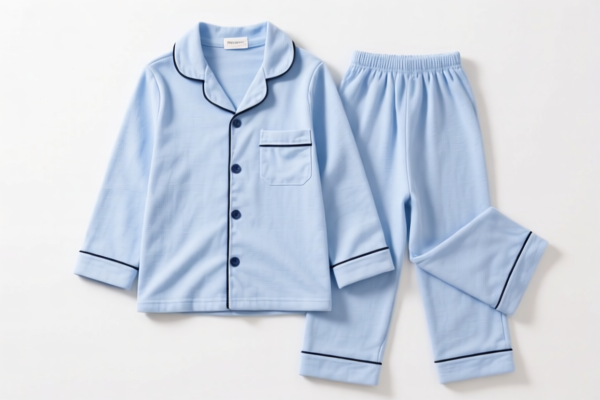
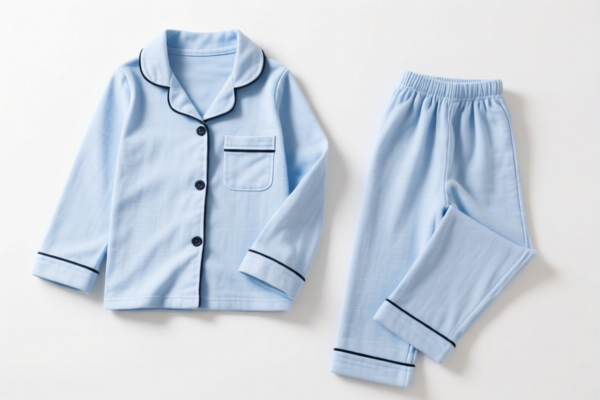

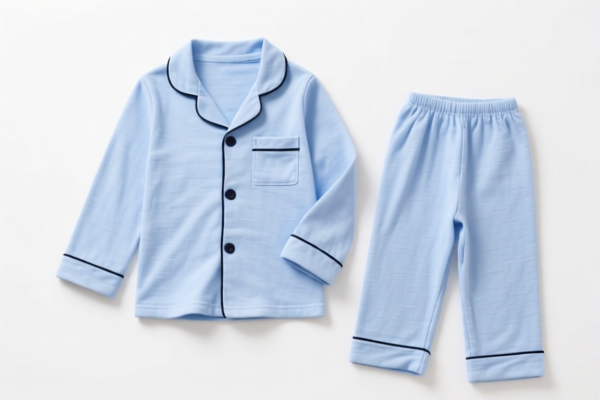
AI Analysis
👕 Boys' Fashion Pajama Set (Knitted/Crocheted)
🌐 HS Code Reference & Customs Clearance Guide | 2026 Latest Tariff Analysis | Professional Compliance Strategy
📌 I. Product Definition & Classification: Are You Ready for the Details?
Boys' fashion pajama sets are intimate apparel designed for sleep or loungewear, typically consisting of a top and bottom. In international trade, the classification hinges critically on material composition (Cotton vs. Synthetic/Man-made fibers) and manufacturing method (Knitted vs. Crocheted).
⚠️ Key Distinction Point:
- If the fabric is 100% Cotton, it falls under the lower tariff bracket (6107.21).
- If the fabric is Synthetic Fibers (e.g., Polyester) or Artificial Fibers, it falls under the higher tariff bracket (6107.22).
- Note: The data provided indicates two primary HS Codes based on material inference: 6107.22.00.15/25 (Synthetic/Artificial) and 6107.21.00.20 (Cotton).
📦 II. HS Code Classification Details (2026 Latest Tariff Authority Match)
| HS Code | Product Description | Material Basis | Tax Rate | Status |
|---|---|---|---|---|
6107.21.00.20 |
Boys' Knitted/Crocheted Pajama Sets | Cotton | 26.4% | ✅ Active |
6107.22.00.15 |
Boys' Knitted/Crocheted Pajama Sets | Synthetic Fibers | 33.5% | ✅ Active |
6107.22.00.25 |
Boys' Knitted/Crocheted Pajama Sets | Artificial Fibers or Cotton Blend | 33.5% | ✅ Active |
6111.30.50.20 |
Boys' Clothing Sets | Synthetic or Natural Fiber (Inferred) | 33.5% | ✅ Active |
🔍 Critical Reminder:
- The data contains a duplicate entry for6107.21.00.20with different descriptions. This likely represents an inference variation, but the tax rate remains consistent at 26.4%.
- Do not misclassify synthetic fabrics as cotton to avoid the 33.5% rate.
- 6111.30.50.20 is listed for "Boys' Clothing Sets," which may apply if the item is categorized broadly as a set rather than specific pajamas, but it shares the same high tariff rate.
💰 III. 2026 Latest Tariff Rate Breakdown (Including Additional Duties)
✅ Applicable Region: USA (US)
✅ Origin: China (CN) (Inferred from "122 Clause" and "Section 301" context in tax details)
✅ Effective Date: Current
🎯 1. 6107.22.00.15 / 6107.22.00.25 / 6111.30.50.20 —— Synthetic/Artificial Fibers & Clothing Sets
| Item | Detail |
|---|---|
| Base Duty Rate | 16.0% (Ad Valorem) |
| Additional Duty (Section 301) | +7.5% |
| 122 Clause Duty | +10.0% |
| Total Effective Rate | 33.5% |
| Calculation Basis | CIF Value × 33.5% |
| De Minimis Exemption | ❌ Not Eligible (Due to additional duties) |
| Legal Path | HTSUS:6107.22.00.15 → Section 301:7.5% → 122 Clause:10% |
📌 Explanation:
- Base Duty (16%): Standard US import duty for knitted synthetic pajamas.
- Section 301 (7.5%): Additional tariff imposed on Chinese goods under Section 301 of the Trade Act.
- 122 Clause (10%): Specific additional duty clause applied to certain textile/apparel imports from China.
- Total: 33.5% is a high-risk rate. Misclassification as cotton could lead to audits and penalties.
🎯 2. 6107.21.00.20 —— Cotton Knitted/Crocheted Pajama Sets
| Item | Detail |
|---|---|
| Base Duty Rate | 8.9% (Ad Valorem) |
| Additional Duty (Section 301) | +7.5% |
| 122 Clause Duty | +10.0% |
| Total Effective Rate | 26.4% |
| Calculation Basis | CIF Value × 26.4% |
| De Minimis Exemption | ❌ Not Eligible |
| Legal Path | HTSUS:6107.21.00.20 → Section 301:7.5% → 122 Clause:10% |
📌 Explanation:
- Base Duty (8.9%): Lower standard duty for cotton textiles.
- Additional Duties: Same as above, applying to Chinese origin.
- Total: 26.4% is significantly lower than the synthetic rate, making material verification crucial.
🛠️ IV. Customs Clearance Practical Advice (Avoiding Pitfalls)
✅ 1. Required Documentation Checklist
| Document | Mandatory? | Notes |
|---|---|---|
| ✅ Product Specification Sheet | ✔️ | Must clearly state fiber content (e.g., 100% Cotton, 100% Polyester). |
| ✅ Lab Test Report | ✔️ | Third-party lab report confirming fiber composition is critical to avoid misclassification. |
| ✅ Commercial Invoice | ✔️ | Must specify "Boys' Pajama Set, Knitted, [Material]" |
| ✅ Packing List | ✔️ | Detail the number of pieces per set (Top + Bottom). |
| ✅ Origin Certificate | ✔️ | Required to confirm China origin and apply correct additional duties. |
✅ 2. Declaration Tips (Key Mantra)
🔥 "Material First, Type Second, Duty Third!"
| Scenario | Correct Declaration | Error Consequence |
|---|---|---|
| 100% Cotton | 6107.21.00.20 |
Declare as synthetic → Overpay 7.1% |
| 100% Polyester | 6107.22.00.15 |
Declare as cotton → Underpay 7.1% + Penalties |
| Blended Fabric | Check dominant fiber | Ambiguous declaration → Customs Audit |
| Set vs. Single Piece | Declare as "Set" | Declare as single shirt → Valuation Dispute |
✅ 3. Special Cases
| Situation | Handling Advice |
|---|---|
| Mixed Material | If >50% cotton, use 6107.21.00.20. If >50% synthetic, use 6107.22.00.15. |
| Crocheted vs. Knitted | Both fall under 6107, but ensure the description matches the manufacturing process. |
| OEM Private Label | Provide brand authorization if required, but tax rate depends on material, not brand. |
🌍 V. Global Market Comparison (2026 Update)
| Country/Region | Recommended HS Code | Tariff (China Origin) | Notes |
|---|---|---|---|
| 🇺🇸 USA | 6107.21.00.20 (Cotton) / 6107.22.00.15 (Synthetic) |
26.4% (Cotton) / 33.5% (Synthetic) | High additional duties apply. |
| 🇨🇳 China | 6107.21.00.20 / 6107.22.00.15 |
Varies (Import Duty) | Check current Chinese import tariffs. |
| 🇪🇺 EU | 6107.22 / 6107.21 |
12% (Typical) | No Section 301 equivalent. |
📌 Conclusion:
- The USA imposes significant additional tariffs (Section 301 + 122 Clause), making material classification extremely important.
- Cotton pajamas are 7.1% cheaper in total duty than synthetic ones.
- Always verify fiber content with a lab test before shipment.
📌 VI. Common Errors & Pitfalls (Blood & Tears Lessons)
❌ Error 1: Assuming all pajamas are the same tax rate.
👉 Consequence: Paying 33.5% when you should have paid 26.4% (or vice versa).
❌ Error 2: Ignoring the "122 Clause" duty.
👉 Consequence: Unexpected cost surge of 10% on the CIF value.
❌ Error 3: Mislabeling synthetic fabric as cotton.
👉 Consequence: Customs audit, seizure, or heavy fines for undervaluation.
❌ Error 4: Not specifying "Knitted" in the description.
👉 Consequence: Potential misclassification to non-knitted categories with different rates.
✅ Correct Approach:
"Boys' Knitted Pajama Set, 100% Cotton, Top and Bottom, Brand: XYZ, Lab Test Report Attached."
🎯 VII. Conclusion: Precision in Classification Saves Money!
🎯 Remember the Mantra:
🔹 "Cotton is 26.4%, Synthetic is 33.5%. Check the label, don't rely on the eye!"
🔹 "Section 301 and 122 Clause add 17.5%. Know your origin and material!"
📌 Pro Tip:
- If your pajama set is blended, ensure the major fiber is correctly identified.
- For high-value shipments, consider applying for a Binding Ruling from CBP to confirm the HS Code and duty rate before shipping.
📣 Immediate Action:
📞 Contact your freight forwarder + Provide lab test results + Verify fiber content.
🚀 Ensure accurate classification to avoid clearance delays and unexpected costs!
✨ Professional clearance starts with precise classification!
💼 Every percentage point counts in your profit margin!
Customer Reviews
About HS Code Classification
The Harmonized System (HS) is an internationally standardized nomenclature developed by the World Customs Organization (WCO) to classify traded products. Over 200 countries use the HS system as the basis for customs tariffs, trade statistics, and import/export regulations.
Each HS code follows a hierarchical structure:
- Chapter (2 digits) — Broad category of goods (e.g., Chapter 84: Machinery and Mechanical Appliances)
- Heading (4 digits) — More specific grouping within the chapter
- Subheading (6 digits) — Internationally standardized breakdown, used by all WCO member countries
- National subdivisions (8-10 digits) — Country-specific extensions for further classification, such as US HTSUS 10-digit codes
Correct HS code classification is essential for smooth customs clearance, accurate duty payment, and compliance with trade regulations. Misclassification can lead to customs delays, overpayment of duties, or penalties.
When importing from CN to US, the applicable tariff rates may include:
- Most-Favored-Nation (MFN) rate — The standard duty rate applied to WTO members
- General rate — Applied to countries without trade agreements
- Trade remedy duties — Additional tariffs such as Section 301 (anti-dumping), Section 232 (national security), or countervailing duties
The information provided on this page is for reference purposes only. For official classification, please consult with your local customs authority or a licensed customs broker.