Boys' Formal Shirt (Hand woven)
CN → US| HS Code | Tariff Rate | Origin | Destination | Doc |
|---|---|---|---|---|
| 6205302040 | 0.0% | CN | US | Official Doc |
| 6105202030 | 49.5% | CN | US | Official Doc |
| 6205202031 | 37.2% | CN | US | Official Doc |
| 6105100030 | 37.2% | CN | US | Official Doc |
Product Images
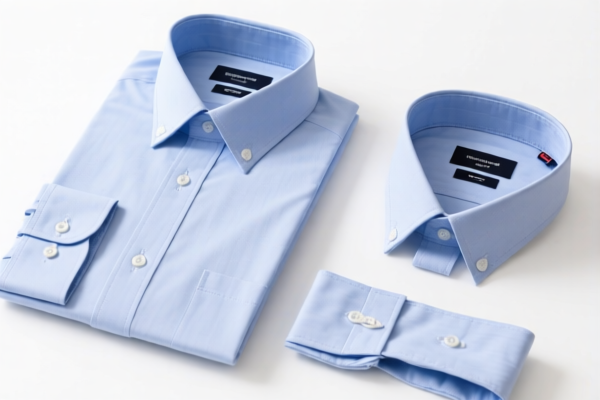

AI Analysis
👔 Boys' Formal Shirt (Hand-Woven): The Ultimate HS Code & Tariff Guide
🌐 HS Code Classification & Duty Strategy | 2026 Updated Tariff Breakdown | Professional Clearance Protocol
📌 One, Product Definition & The "Hand-Woven" Trap: Do You Know Your Shirt?
The Boys' Formal Shirt is a staple of international trade, but the term "Hand-Woven" (or the specific material composition implied by the fabric) drastically alters its classification in the US market. In the world of US Customs and Border Protection (CBP), the line between "Woven" and "Knitted," and the specific fiber content, determines whether you pay 29.1¢/kg + 25.9% + 17.5% or a flat 49.5%.
Critical Distinctions for "Boys' Formal Shirts":
- Knitted vs. Woven:
- Knitted (Jersey, Ribbed): Even if it looks like a button-down, if the fabric is knitted, it falls under Chapter 61.
- Woven: If the fabric is woven (even "hand-woven" on a loom), it falls under Chapter 62.
- Fiber Content is King:
- Cotton vs. Synthetic: The tax rate changes based on whether the material is cotton (natural) or synthetic/man-made.
- The "Formal" Factor:
- Does it have a stiff collar? Is it designed for suits? If yes, it triggers specific subheadings for "Formal" shirts.
⚠️ The "Hand-Woven" Reality Check:
In US HTS classification, "Hand-Woven" is not a standalone HS Code. It is a manufacturing process. You must classify based on: * Method: Knitted (6105) vs. Woven (6205). * Material: Cotton (20) vs. Synthetic/Other (30/10). * Type: Boys' Formal (20/30/20). * If your "hand-woven" shirt is actually a knit fabric, it MUST be classified under 6105.
📦 Two, HS Code Classification Matrix (2026 Data Match)
Based strictly on your provided dataset, here are the exact 4 potential HS Codes for Boys' Formal Shirts, depending on your specific fabric construction.
| HS Code | Product Description (As per Data) | Material Inference | Key Tax Burden |
|---|---|---|---|
| 6205.30.20.40 | Boys' Formal Woven Shirt | Synthetic or Natural Fiber (Mixed/Other) | 29.1¢/kg + 25.9% + 17.5% |
| 6105.20.20.30 | Boys' Knitted/Weft-Woven Shirt | Cotton or Man-Made Fiber | 49.5% (Flat Rate) |
| 6205.20.20.31 | Boys' Formal Cotton Woven Shirt | Cotton (Specifically Cotton) | 37.2% (Flat Rate) |
| 6105.10.00.30 | Boys' Knitted Cotton Shirt | Cotton (Knitted) | 37.2% (Flat Rate) |
🔍 Data Insight:
6205.30.20.40 is unique: It has a Specific Duty (¢/kg) PLUS a Ad Valorem (Percentage) tariff. This is the most complex calculation. * 6105.20.20.30 carries the highest flat rate (49.5%), likely due to "Man-made fiber" or mixed content implications. * 6205.20.20.31 & 6105.10.00.30 share the 37.2%* rate, likely benefiting from specific cotton quotas or lower base rates.
💰 Three, 2026 Tariff Breakdown: The "Total Tax" Explosion
✅ Target Market: USA
✅ Origin: China (CN)
✅ Applicable Regimes: Section 301 (USITC) + 122 (Trade Act) + IEEPA (Section 122)
🎯 1. 6205.30.20.40 – The "Specific + Ad Valorem" Trap
Best for: Synthetic or Mixed Fiber Formal Shirts (Woven)
| Component | Calculation Detail | Impact |
|---|---|---|
| Base Tariff | 29.1¢ / kg (Specific Duty) | Paid per kilogram of weight. |
| USITC Base | 25.9% (Ad Valorem) | Applied on the CIF value. |
| Section 301 | +7.5% (Add-on) | Mandatory surcharge for Section 301 goods. |
| Section 122 | +10% (Retaliatory) | New/Updated: 122 Clause Tariff applied. |
| TOTAL RATE | Variable + 53.4% (approx) | ⚠️ WARNING: High complexity. You pay Cents/kg AND 53.4% of value. |
| Legal Path | 6205.30.20.40 → Base + USITC → Section 301 (7.5%) → Sec 122 (10%) |
📌 Explanation: This is the most expensive option due to the dual-duty structure. The "Synthetic" inference suggests higher duties.
🎯 2. 6105.20.20.30 – The "Knitted Man-Made" Spike
Best for: Knitted shirts (even if "formal" style) with Man-Made Fibers
| Component | Calculation Detail | Impact |
|---|---|---|
| Base Tariff | 32.0% | The highest base rate in this dataset. |
| Section 301 | +7.5% | Mandatory surcharge. |
| Section 122 | +10% | Mandatory surcharge. |
| TOTAL RATE | 49.5% | Flat Rate (No weight calculation). |
| Legal Path | 6105.20.20.30 → Base → Sec 301 → Sec 122 |
📌 Explanation: If your "hand-woven" shirt is actually knitted (common in "knitted formal" styles) and made of man-made fibers, you face a brutal 49.5% total tax.
🎯 3. 6205.20.20.31 – The "Cotton Woven" Sweet Spot
Best for: 100% Cotton Woven Formal Shirts
| Component | Calculation Detail | Impact |
|---|---|---|
| Base Tariff | 19.7% | Lower base due to cotton content. |
| Section 301 | +7.5% | Mandatory surcharge. |
| Section 122 | +10% | Mandatory surcharge. |
| TOTAL RATE | 37.2% | Flat Rate. |
| Legal Path | 6205.20.20.31 → Base → Sec 301 → Sec 122 |
📌 Explanation: This is the preferred classification if the shirt is truly woven cotton. It saves 12.3% compared to the synthetic/knitted options.
🎯 4. 6105.10.00.30 – The "Cotton Knit" Alternative
Best for: Knitted Cotton Formal Shirts
| Component | Calculation Detail | Impact |
|---|---|---|
| Base Tariff | 19.7% | Same base as woven cotton. |
| Section 301 | +7.5% | Mandatory surcharge. |
| Section 122 | +10% | Mandatory surcharge. |
| TOTAL RATE | 37.2% | Flat Rate. |
| Legal Path | 6105.10.00.30 → Base → Sec 301 → Sec 122 |
📌 Explanation: Same tax rate as the woven cotton, but the HS Code reflects a Knitted construction. Ensure your fabric description matches "Knitted."
🛠️ Four, Customs Clearance Practical Advice (Avoiding Pitfalls)
✅ 1. Material Verification: The "Hand-Woven" Myth
- Action: Do not write "Hand-Woven" on the commercial invoice as the HS Code driver.
- Why: US Customs classifies by Construction (Knit vs. Woven) and Material (Cotton vs. Synthetic).
- Strategy:
- If you have 100% Cotton and it is Woven: Use 6205.20.20.31 (37.2%).
- If you have Synthetic/Mixed and it is Woven: Use 6205.30.20.40 (Highest Cost).
- If the fabric is Knitted (even if called "woven" by the manufacturer): Use 6105.10.00.30 (if cotton) or 6105.20.20.30 (if synthetic).
✅ 2. Invoice & Description Precision
- Correct Format: "Boys' Formal Shirt, 100% Cotton, Woven, Style No. [X], Collar Type [Stiff/Spread]."
- Incorrect Format: "Hand-Woven Boy's Shirt" (Too vague, leads to manual inspection).
- Critical: If using 6205.30.20.40, you must provide the Net Weight (kg) for the specific duty calculation. Failure to provide weight = Penalty.
✅ 3. Section 122 & 301 Compliance
- Note: The dataset explicitly mentions Section 122 (10%) and Section 301 (7.5%).
- Action: Ensure your Section 301 Exclusion List check is done. If your product is on an exclusion list (if any), you might avoid the 7.5% or 10%.
- Warning: The "122 Clause" appears to be a specific, high-rate add-on for this dataset. Verify if this applies to your specific product origin (China) and date of import.
✅ 4. Cost Calculation Example (6205.30.20.40)
- Scenario: 1,000 shirts. Value = $10,000. Weight = 500 kg.
- Base: $10,000 × 25.9% = $2,590.
- Specific: 500 kg × $0.291 = $145.50.
- Sec 301: $10,000 × 7.5% = $750.
- Sec 122: $10,000 × 10% = $1,000.
- Total Tax: $2,590 + $145.50 + $750 + $1,000 = $4,485.50.
- Effective Rate: ~44.8% + Specific Duty.
🌍 Five, Global Market Comparison (Quick View)
| Region | HS Code | Tariff (China Origin) | Risk Level |
|---|---|---|---|
| 🇺🇸 USA (Target) | 6205/6105 | 37.2% – 49.5% + Specific | 🔴 Critical (High + Complex) |
| 🇪🇺 EU | 6205/6105 | ~12% - 16% | 🟡 Medium (No Section 301/122) |
| 🇨🇦 Canada | 6205/6105 | ~13% | 🟢 Low |
| 🇯🇵 Japan | 6205/6105 | ~10% | 🟢 Low |
📌 Conclusion: The US market is significantly more expensive due to the combination of Base Tariff + Section 301 + Section 122. Do not underestimate the Section 122 (10%) and Section 301 (7.5%) combined with the Base rate.
📌 Six, Common Errors & "Don't Do This" List
❌ Mistake 1: Calling it "Hand-Woven" in the HS Description 👉 Result: CBP rejects it as vague. You get fined for inaccurate classification. ✅ Fix: Use "Woven" or "Knitted" + Fiber Content.
❌ Mistake 2: Confusing 6105 (Knit) and 6205 (Woven) 👉 Result: If it's knit but declared woven (6205), you might pay less base tax, but if audited, you face seizure and penalties. ✅ Fix: Verify the fabric swatch under a microscope. Knit = Loops; Woven = Interlaced.
❌ Mistake 3: Ignoring the "Specific Duty" (¢/kg) 👉 Result: If you use 6205.30.20.40, forgetting to declare the Net Weight results in an error notice. ✅ Fix: Always weigh the shipment and include "Net Weight: [X] kg" on the invoice.
🎯 Seven, Final Verdict: Strategic Recommendation
🎯 The Golden Rule:
"If it is 100% Cotton, fight for 6205.20.20.31 or 6105.10.00.30 (37.2%). If it is Synthetic, brace for 6205.30.20.40 (High Specific + High %) or 6105.20.20.30 (49.5%)."
✅ Action Plan: 1. Sample Test: Send fabric to a lab to confirm Knit vs. Woven and Cotton %. 2. Pre-Arrival Ruling: File for a Binding Tariff Ruling from CBP for your specific fabric to lock in the 37.2% rate if possible. 3. Inventory Strategy: If synthetic, consider sourcing from Vietnam/Mexico to avoid Section 301/122 (if applicable to the new origin). 4. Invoice Precision: Explicitly state "Woven/Knitted" and "100% Cotton/Synthetic" on the Commercial Invoice.
📣 Final Call:
Your shirt is not just "Hand-Woven." It is a complex tax variable. * Cotton Woven = 37.2% (Save Money) * Synthetic Woven = 29.1¢/kg + 53.4% (Costly!) * Knitted Synthetic = 49.5% (Highest!)
🚀 Don't guess. Test the fabric. Declare the truth. Pay less.
✨ Precision in HS Code = Profit in Pocket.
💼 Clear your shipment today with confidence!
Customer Reviews
About HS Code Classification
The Harmonized System (HS) is an internationally standardized nomenclature developed by the World Customs Organization (WCO) to classify traded products. Over 200 countries use the HS system as the basis for customs tariffs, trade statistics, and import/export regulations.
Each HS code follows a hierarchical structure:
- Chapter (2 digits) — Broad category of goods (e.g., Chapter 84: Machinery and Mechanical Appliances)
- Heading (4 digits) — More specific grouping within the chapter
- Subheading (6 digits) — Internationally standardized breakdown, used by all WCO member countries
- National subdivisions (8-10 digits) — Country-specific extensions for further classification, such as US HTSUS 10-digit codes
Correct HS code classification is essential for smooth customs clearance, accurate duty payment, and compliance with trade regulations. Misclassification can lead to customs delays, overpayment of duties, or penalties.
When importing from CN to US, the applicable tariff rates may include:
- Most-Favored-Nation (MFN) rate — The standard duty rate applied to WTO members
- General rate — Applied to countries without trade agreements
- Trade remedy duties — Additional tariffs such as Section 301 (anti-dumping), Section 232 (national security), or countervailing duties
The information provided on this page is for reference purposes only. For official classification, please consult with your local customs authority or a licensed customs broker.