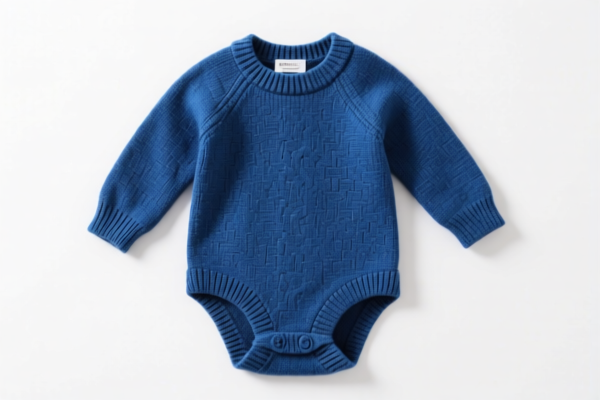
Boys' Knitted Garment
CN → US| HS Code | Tariff Rate | Origin | Destination | Doc |
|---|---|---|---|---|
| 6109100023 | 34.0% | CN | US | Official Doc |
| 6109100014 | 34.0% | CN | US | Official Doc |
| 6111203000 | 32.4% | CN | US | Official Doc |
| 6110202015 | 34.0% | CN | US | Official Doc |
| 6110303015 | 49.5% | CN | US | Official Doc |
Product Images


AI Analysis
👕 Boys' Knitted Garment (Kids' Sweaters & T-shirts)
🌐 HS Code Reference & Customs Clearance Guide | 2026 Latest Tariff Analysis | Professional Clearance Strategy
📌 I. Product Definition & Classification: Do You Really Understand "Knitted Boys' Wear"?
Boys' knitted garments are a broad category covering items such as T-shirts, pullovers, sweaters, and vests made from knitted or crocheted fabrics. In international trade, the critical distinction lies in the material composition (Cotton vs. Synthetic) and the specific garment type (T-shirt vs. Sweater), which directly dictates the HS Code and, consequently, the tariff burden.
Two Main Categories: 1. T-shirts & Singlets (Chapter 6109): Typically lightweight, short-sleeved or sleeveless, often used as undershirts or casual wear. 2. Sweaters & Pullovers (Chapter 6110/6111): Thicker knitted garments, including cardigans, pullovers, and baby wear (if for infants, though "Boys" usually implies older children).
⚠️ Key Distinction Point:
- If the item is a T-shirt (lightweight, jersey knit) → Look at 6109.
- If the item is a Sweater/Pullover (heavier knit) → Look at 6110.
- If the item is Baby Wear (usually for children under 2, but sometimes included in "Boys") → Look at 6111.
- Material is King: Cotton attracts different duties than Synthetic Fibers (Polyester/Nylon).
📦 II. HS Code Classification Details (Based on Provided Data)
Based on the provided <DATA> content, here are the specific HS Codes, their applicability, and the inferred material logic.
| HS Code | Product Description | Application Scenario | Inferred Material & Logic |
|---|---|---|---|
6109.10.00.23 |
T-shirts, singlets, of cotton, for boys | Casual T-shirts, undershirts for boys | Cotton. Explicitly matches "Boys' clothing purpose" and infers cotton based on common sense. |
6109.10.00.14 |
T-shirts, singlets, for boys | Boys' T-shirts | Cotton or Synthetic. Matches "Knitted form and usage," infers either cotton or synthetic fiber. |
6111.20.30.00 |
Baby garments, knitted, of cotton | Baby wear (often overlaps with young boys) | Cotton. Matches "Knitted form and boys' usage," infers high possibility of cotton content. |
6110.20.20.15 |
Pullovers, cardigans, for boys | Sweaters, pullovers for boys | Cotton. Matches "Knitted form and boys' usage," infers cotton material. |
6110.30.30.15 |
Pullovers, cardigans, for boys | Sweaters, pullovers for boys | Synthetic or Artificial Fiber. Matches "Knitted form and boys' usage," infers synthetic materials. |
🔍 Important Note:
- 6109 covers T-shirts.
- 6110 covers Sweaters/Pullovers.
- 6111 covers Baby Garments (if the "boys" category includes infants).
- Cotton generally has a lower base tariff (14.9%-16.5%) compared to Synthetics (32.0%).
💰 III. 2026 Latest Tariff Rate Details (Including Surtaxes & Policy Add-ons)
✅ Applicable Country: United States (US)
✅ Country of Origin: China (CN)
✅ Effective Time: Current rates apply (see details below)
🎯 1. 6109.10.00.23 & 6109.10.00.14 —— Boys' T-shirts (Cotton/Synthetic Mix)
| Item | Content |
|---|---|
| Base Tariff | 16.5% (Ad Valorem) |
| Surtax (301) | +7.5% (Section 301 Tariff) |
| Section 122 Tariff | +10% (Specific Clause 122) |
| Total Rate | 34.0% |
| Tax Calculation | CIF Value × 34% |
| De Minimis Exemption | ❌ Not Available |
| Legal Basis Path | Base: 16.5% → Surtax: 7.5% → Sec 122: 10% |
📌 Explanation:
- Base Tariff (16.5%): Standard MFN rate for knitted T-shirts.
- Surtax (7.5%): Part of the ongoing Section 301 tariffs on Chinese goods.
- Section 122 Tariff (10%): A specific additional duty applicable to this category.
- Total 34%: A significant barrier to entry. Cost calculation must include all three components.
🎯 2. 6111.20.30.00 —— Baby Knitted Garments (Cotton)
| Item | Content |
|---|---|
| Base Tariff | 14.9% |
| Surtax (301) | +7.5% |
| Section 122 Tariff | +10% |
| Total Rate | 32.4% |
| Tax Calculation | CIF Value × 32.4% |
| De Minimis Exemption | ❌ Not Available |
| Legal Basis Path | Base: 14.9% → Surtax: 7.5% → Sec 122: 10% |
📌 Note:
- This code offers a 1.6% saving compared to the T-shirt codes (6109) due to a lower base tariff (14.9% vs. 16.5%).
- Applicable if the garment is classified as "Baby Wear" (often for younger children). Ensure the product description aligns with baby wear standards to qualify.
🎯 3. 6110.20.20.15 —— Boys' Cotton Sweaters/Pullovers
| Item | Content |
|---|---|
| Base Tariff | 16.5% |
| Surtax (301) | +7.5% |
| Section 122 Tariff | +10% |
| Total Rate | 34.0% |
| Tax Calculation | CIF Value × 34% |
| De Minimis Exemption | ❌ Not Available |
| Legal Basis Path | Base: 16.5% → Surtax: 7.5% → Sec 122: 10% |
📌 Explanation:
- Cotton sweaters (6110.20) follow the same tariff structure as cotton T-shirts (6109.10).
- Base tariff is 16.5%.
- Total rate is 34%.
🎯 4. 6110.30.30.15 —— Boys' Synthetic Sweaters/Pullovers
| Item | Content |
|---|---|
| Base Tariff | 32.0% |
| Surtax (301) | +7.5% |
| Section 122 Tariff | +10% |
| Total Rate | 49.5% |
| Tax Calculation | CIF Value × 49.5% |
| De Minimis Exemption | ❌ Not Available |
| Legal Basis Path | Base: 32.0% → Surtax: 7.5% → Sec 122: 10% |
📌 Critical Warning:
- Synthetic fibers (Polyester, Nylon, etc.) have a much higher base tariff (32.0%) compared to cotton (16.5%).
- Total Rate: 49.5%. This is a very high tariff.
- If your product is a polyester sweater, the cost impact is nearly 15.5 percentage points higher than cotton.
- Recommendation: If possible, source or produce cotton-based knitted garments to benefit from the lower 34% rate.
🛠️ IV. Customs Clearance Practical Advice (Real-World Pitfall Guide)
✅ 1. Preparation Checklist (Missing Documents Lead to Delays)
| Document | Required? | Explanation |
|---|---|---|
| ✅ Product Specification Sheet | ✔️ | Must include fabric composition (e.g., "100% Cotton" vs. "100% Polyester"). This is the #1 factor for HS Code selection. |
| ✅ Fabric Swatch/Label | ✔️ | Physical proof of material. Customs may demand a lab test report if composition is disputed. |
| ✅ Product Photos | ✔️ | Show the item, labels, and stitching to distinguish between T-shirt (6109) and Sweater (6110). |
| ✅ Commercial Invoice | ✔️ | Clearly state "Boys' Knitted T-Shirt" or "Boys' Cotton Pullover." Avoid generic terms like "Kids' Clothes." |
| ✅ Packing List | ✔️ | Detail quantities, weights, and dimensions. |
| ✅ Country of Origin Certificate | ✔️ | To confirm China origin for surtax application. |
✅ 2. Declaration Tips (Key Mantra)
🔥 "Material First, Type Second, Name Precise, Tariff Clear!"
| Scenario | Correct Declaration | Common Mistake |
|---|---|---|
| 100% Cotton T-shirt | 6109.10.00.23 (Boys' Cotton T-shirt) |
Mislabel as "Synthetic" → Higher tariff confusion. |
| Polyester Sweater | 6110.30.30.15 (Boys' Synthetic Pullover) |
Mislabel as "Cotton" → Severe Penalty + Back Tax! |
| Mixed Fabric (80% Cotton/20% Poly) | Check local rules, but likely 6109.10.00.14 or 6110.20.20.15 |
Vague label "Knitted Garment" → Customs detention. |
| Baby Suit (0-2 Years) | 6111.20.30.00 (Baby Knitted) |
Label as "Boys' Sweater" → Miss out on lower base tariff (14.9% vs 16.5%). |
⚠️ Warning:
- Do NOT use generic terms like "Clothing" or "Knitted Garment" in the description.
- Be Specific: "Boys' 100% Cotton Knitted T-Shirt" or "Boys' 100% Polyester Knitted Pullover."
✅ 3. Special Cases & Handling
| Situation | Handling Advice |
|---|---|
| OEM/Custom Design | Provide design files and fabric composition certs. Ensure the final product matches the declared HS Code. |
| Garment with Embroidery/Print | Still classified under 6109 or 6110. Embroidery does not change the fundamental classification. |
| Set of Clothes (e.g., Shirt + Shorts) | Usually classified by the principal item or as a set. If T-shirt is principal, use 6109. If mixed, consult a specialist. |
| High-Value Luxury Knitwear | Same HS Code, but ensure accurate CIF value declaration to avoid under-valuation penalties. |
🌍 V. Global Market Comparison (2026 Update)
| Country/Region | Recommended HS Code | Estimated Duty (China Origin) | Notes |
|---|---|---|---|
| 🇺🇸 USA | 6109.10.00.23 / 6110.20.20.15 |
34% (Cotton) 49.5% (Synthetic) |
High surtaxes (7.5% + 10%). |
| 🇪🇺 EU | 6109.10 / 6110.20 |
12% (Cotton) | No Section 122 or 301 surtax. |
| 🇨🇳 China | 6109.10 / 6110.20 |
12%-16% | Depends on exact subheading. |
| 🇦🇺 Australia | 6109.10 / 6110.20 |
5% - 10% | Lower base duties, no major surtaxes. |
| 🇬🇧 UK | 6109.10 / 6110.20 |
12% | Post-Brexit tariffs may vary slightly. |
📌 Conclusion:
- The USA has the highest duty burden for Chinese-made boys' knitted garments due to the combination of base tariffs, Section 301 surtaxes, and Section 122 tariffs.
- Cotton is significantly cheaper to import than Synthetics in the US market (34% vs. 49.5%).
- For other markets (EU, AU), duties are much lower, making the US market uniquely challenging.
📌 VI. Common Errors & Pitfall Guide (Lessons from Experience)
❌ Error 1: Misidentifying Material
👉 Result: Declaring Polyester as Cotton to save tax → Customs audit, fines, and seizure.
✅ Fix: Always verify fabric composition with the supplier.
❌ Error 2: Confusing T-shirts (6109) with Sweaters (6110)
👉 Result: Incorrect HS Code → Delayed clearance, potential reclassification fines.
✅ Fix: T-shirts are lightweight jersey; Sweaters are heavier knits. Check the GSM (grams per square meter).
❌ Error 3: Ignoring Section 122 Tariff
👉 Result: Budgeting only for base + 301 tax → Unexpected 10% cost increase.
✅ Fix: Always include the 10% Section 122 tariff in cost calculations for US-bound knitted goods.
❌ Error 4: Vague Product Description
👉 Result: Customs holds shipment for "Clarification" → Demurrage charges.
✅ Fix: Use precise descriptions: "Boys' 100% Cotton Knitted T-Shirt, Size 6-8, Color Red."
🎯 VII. Conclusion: Smart Classification, Smarter Profits!
🎯 Remember the Mantra:
🔹 "Cotton is King (34%), Synthetic is Expensive (49.5%)."
🔹 "T-shirt is 6109, Sweater is 6110."
🔹 "Be Specific, Save Money, Avoid Delays!"
📌 Pro Tip:
If your boys' garments are knitted from cotton, aim for HS Code 6109.10.00.23 or 6110.20.20.15 to keep the total duty at 34%. Avoid synthetic fibers unless absolutely necessary, as the duty jumps to 49.5%.
For US-bound goods, always factor in the 17.5% in surtaxes (7.5% + 10%) on top of the base tariff.
📣 Immediate Action:
📞 Contact your customs broker with the exact fabric composition.
📄 Request a Pre-Ruling if unsure about the classification.
🚀 Optimize your supply chain by choosing cotton over synthetic to reduce the 15.5% duty difference.
✨ Professional Clearance Starts with Precise Classification!
💼 Your Profit Margin Depends on Your HS Code!
Customer Reviews
About HS Code Classification
The Harmonized System (HS) is an internationally standardized nomenclature developed by the World Customs Organization (WCO) to classify traded products. Over 200 countries use the HS system as the basis for customs tariffs, trade statistics, and import/export regulations.
Each HS code follows a hierarchical structure:
- Chapter (2 digits) — Broad category of goods (e.g., Chapter 84: Machinery and Mechanical Appliances)
- Heading (4 digits) — More specific grouping within the chapter
- Subheading (6 digits) — Internationally standardized breakdown, used by all WCO member countries
- National subdivisions (8-10 digits) — Country-specific extensions for further classification, such as US HTSUS 10-digit codes
Correct HS code classification is essential for smooth customs clearance, accurate duty payment, and compliance with trade regulations. Misclassification can lead to customs delays, overpayment of duties, or penalties.
When importing from CN to US, the applicable tariff rates may include:
- Most-Favored-Nation (MFN) rate — The standard duty rate applied to WTO members
- General rate — Applied to countries without trade agreements
- Trade remedy duties — Additional tariffs such as Section 301 (anti-dumping), Section 232 (national security), or countervailing duties
The information provided on this page is for reference purposes only. For official classification, please consult with your local customs authority or a licensed customs broker.