Boys' Knitted Vest
CN → US| HS Code | Tariff Rate | Origin | Destination | Doc |
|---|---|---|---|---|
| 6209205050 | 26.8% | CN | US | Official Doc |
| 6111303000 | 49.5% | CN | US | Official Doc |
| 6110303030 | 49.5% | CN | US | Official Doc |
| 6111303000 | 49.5% | CN | US | Official Doc |
| 6209909000 | 20.3% | CN | US | Official Doc |
Product Images


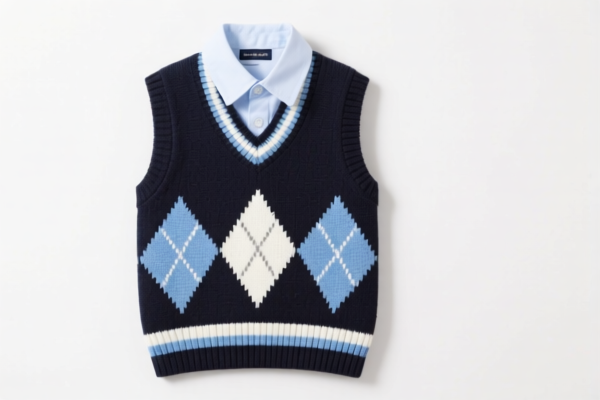

AI Analysis
👕 Boys' Knitted Vest (Children's Outerwear)
🌐 HS Code Reference & Clearance Guide | 2026 Tariff Breakdown | Professional Customs Strategy
📌 1. Product Definition & Classification: Do You Know What "Knitted Vest" Means?
A Boys' Knitted Vest is a sleeveless garment designed for children (typically ages 2–16), knitted from natural fibers (like cotton) or synthetic fibers (like polyester/nylon blends). In international trade, its classification hinges on two critical factors:
- Material Composition: Is it primarily Cotton or Synthetic Fibers?
- Knitting vs. Weaving: Is it Knitted (looped stitches, stretchy) or Woven (interlaced threads, rigid)?
⚠️ Critical Distinction:
- Knitted (Looped) → Falls under Chapter 61 (Knitted or Crocheted).
- Woven (Stitched) → Falls under Chapter 62 (Not Knitted).
- Synthetic vs. Cotton → Drastically changes the tariff rate in the US.
📦 2. HS Code Classification Details (2026 Tariff Authority)
Based on the input product "Boys' Knitted Vest," the following HS Codes and Tax Scenarios apply:
| HS Code | Product Description | Material Inference | Applicable Scenario |
|---|---|---|---|
| 6110.30.30.30 | Knitted Vests, Boys | Synthetic Fibers | Knitted boys' vests made of polyester, acrylic, etc. |
| 6111.30.30.00 | Knitted Vests, Children | Synthetic Fibers | General children's knitted vests (synthetic). |
| 6209.20.50.50 | Non-Knitted Vests, Boys | Cotton/Blended | Note: Woven boys' vests (if mistakenly classified as knitted in summary) |
| 6209.90.90.00 | Other Children's Apparel, Vests | Textile/General | Non-specified textile vests for children (mixed material). |
🔍 Key Insight:
- The term "Knitted" primarily points to Chapter 61 (Codes6110...and6111...).
- Synthetic materials (Chapter 61/62 sub-categories) attract higher base tariffs than cotton.
- Woven vests (Chapter 62) have lower base tariffs but are subject to specific "Children's Wear" codes.
💰 3. 2026 Latest Tariff Rate Analysis (US Market - China Origin)
✅ Applicable Market: United States (US)
✅ Country of Origin: China (CN)
✅ Effective Date: Current (2025-2026 Period)
✅ Total Tax Burden: Ranges from 20.3% to 49.5% depending on material.
🎯 Scenario A: Synthetic Fibers (High Tax)
Target Codes: 6110.30.30.30, 6111.30.30.00
Inference: Knitted vests made of synthetic fibers (Polyester, Nylon, etc.)
| Item | Details |
|---|---|
| Base Tariff | 32.0% |
| Section 301 (Additional) | +7.5% |
| Section 122 Tariff | +10.0% |
| Total Tariff | 49.5% |
| Tax Calculation | CIF Value × 49.5% |
| De Minimis Exemption | ❌ NO (High-value classification) |
| Legal Path | USITC:6110.30.30.30 → 301:7.5% → 122:10% |
📌 Explanation:
- 32.0% Base: High rate for synthetic fibers in children's apparel.
- 7.5% Section 301: US retaliatory tariff on specific Chinese textile categories.
- 10% Section 122: Additional tariff targeting specific textile sectors (often linked to trade remedies).
- Total 49.5%: This is an extremely high cost. Synthetic knitted vests are heavily penalized.
🎯 Scenario B: Cotton / Blended / Woven (Lower Tax)
Target Codes: 6209.20.50.50, 6209.90.90.00
Inference: If the vest is Woven (not knitted) or primarily Cotton.
| Item | Details |
|---|---|
| Base Tariff | 2.8% - 9.3% |
| Section 301 (Additional) | +7.5% |
| Section 122 Tariff | +10.0% |
| Total Tariff | 20.3% - 26.8% |
| Tax Calculation | CIF Value × 20.3%~26.8% |
| De Minimis Exemption | ❌ NO |
| Legal Path | USITC:6209... → 301:7.5% → 122:10% |
📌 Explanation:
- Base Tariff (2.8% - 9.3%): Significantly lower for cotton or woven goods.
- Total Tax: Even with the 17.5% (7.5+10) in extra tariffs, the base is low, bringing the total to ~20-27%.
- Strategic Win: If the vest is Cotton or Woven, it saves ~23% in tax compared to Synthetic Knitted.
🛠️ 4. Practical Clearance Suggestions (Avoid Pitfalls)
✅ 1. Material Verification (The #1 Risk Factor)
The "Knitted vs. Synthetic" Trap:
- If you declare a Polyester Knitted Vest as6110.30.30.30, you pay 49.5%.
- If you declare a Cotton Woven Vest as6209.20.50.50, you pay 26.8%.
Action: Check your Fabric Content Label. If it says "100% Polyester," you cannot avoid the 49.5% unless you change the material to Cotton or switch to Woven.
✅ 2. Declaration Tips (Critical Keywords)
| Situation | Correct Declaration | Wrong Declaration (Risk) |
|---|---|---|
| Knitted + Synthetic | "Boys' Knitted Synthetic Vest" | "Boys' Vest" (Ambiguous → Audit) |
| Knitted + Cotton | "Boys' Knitted Cotton Vest" | "Men's Vest" (Age mismatch → Seizure) |
| Woven + Cotton | "Boys' Woven Cotton Vest" | "Knitted Vest" (Incorrect classification) |
| Mixed Material | "Boys' Knitted Vest (55% Cotton/45% Poly)" | "Synthetic Vest" (Under-declaring Cotton) |
🔥 Golden Rule:
"State Material + State Construction (Knit/Woven) + State Age Group."
Example: "Boys' Knitted Vest, 100% Cotton."
✅ 3. Documentation Checklist
| Document | Requirement | Why? |
|---|---|---|
| Fabric Composition Sheet | Must be signed by manufacturer | To prove % of Cotton vs. Synthetic. |
| Technical Data Sheet (TDS) | Show knitting method (Loop vs. Weave) | To distinguish Chapter 61 vs. 62. |
| Commercial Invoice | Clearly state "Boys' Knitted Vest" | Match HS Code description exactly. |
| Packing List | Separate by material if mixed | Avoid "mixed bag" confusion. |
🌍 5. Global Market Comparison (2026 Outlook)
| Region | Preferred HS Code | Tariff (China) | Notes |
|---|---|---|---|
| 🇺🇸 USA | 6110.30.30.30 (Synth) |
49.5% | Avoid if possible. Use Cotton/Woven. |
| 🇺🇸 USA | 6209.20.50.50 (Cotton) |
26.8% | Preferred. Lower base rate. |
| 🇪🇺 EU | 6110.30.30.30 |
~12% | No 301/122 tariffs, but VAT applies. |
| 🇨🇳 China | 6110.30.30.30 |
0-5% | Export to China? No extra tax. |
| 🇯🇵 Japan | 6110.30.30.30 |
~8% | Moderate tax, no extra tariffs. |
📌 Conclusion:
The US Market is the only one imposing the 49.5% burden on synthetic knitted vests.
Strategy: For US export, switch to Cotton or Woven construction to reduce tax from ~50% to ~27%.
📌 6. Common Mistakes & Solutions (Lessons Learned)
❌ Mistake 1: Declaring a Synthetic Knitted Vest as 6209... (Woven) to avoid tax.
👉 Result: Customs audit, seizure, and penalties for misdeclaration.
❌ Mistake 2: Ignoring the "122 Clause".
👉 Result: Underestimating the 10% surcharge, leading to profit margin loss.
❌ Mistake 3: Vague descriptions like "Kids Vest."
👉 Result: Customs forces a higher default classification (usually Synthetic + Knit).
✅ Solution:
"Declare the Truth: Material + Construction + Age."
Example: "Boys' Knitted Vest, 100% Cotton" →6209.20.50.50→ 26.8% Tax.
🎯 7. Final Verdict: Strategic Recommendation
🚀 Action Plan:
1. Check Material: If >50% Synthetic + Knitted = High Risk (49.5%).
2. Switch Material: If possible, use Cotton (or Cotton blend >50%).
3. Switch Construction: If possible, use Woven (Chapter 62) instead of Knitted.
4. Apply Pre-Ruling: If the product is complex (mixed materials), file for an Advance Ruling with CBP to confirm the exact HS Code before shipping.💡 Pro Tip:
"A 23% tax difference can make or break your profit. Don't guess the HS Code—verify the fiber!"
✨ Professional Customs Clearance Starts with Precision!
💼 Every Percent Saved is Pure Profit!
Customer Reviews
About HS Code Classification
The Harmonized System (HS) is an internationally standardized nomenclature developed by the World Customs Organization (WCO) to classify traded products. Over 200 countries use the HS system as the basis for customs tariffs, trade statistics, and import/export regulations.
Each HS code follows a hierarchical structure:
- Chapter (2 digits) — Broad category of goods (e.g., Chapter 84: Machinery and Mechanical Appliances)
- Heading (4 digits) — More specific grouping within the chapter
- Subheading (6 digits) — Internationally standardized breakdown, used by all WCO member countries
- National subdivisions (8-10 digits) — Country-specific extensions for further classification, such as US HTSUS 10-digit codes
Correct HS code classification is essential for smooth customs clearance, accurate duty payment, and compliance with trade regulations. Misclassification can lead to customs delays, overpayment of duties, or penalties.
When importing from CN to US, the applicable tariff rates may include:
- Most-Favored-Nation (MFN) rate — The standard duty rate applied to WTO members
- General rate — Applied to countries without trade agreements
- Trade remedy duties — Additional tariffs such as Section 301 (anti-dumping), Section 232 (national security), or countervailing duties
The information provided on this page is for reference purposes only. For official classification, please consult with your local customs authority or a licensed customs broker.