Boys' Knitted or Crochet Leather Blend Jacket
CN → US| HS Code | Tariff Rate | Origin | Destination | Doc |
|---|---|---|---|---|
| 6114303060 | 32.4% | CN | US | Official Doc |
| 6112120010 | 45.7% | CN | US | Official Doc |
| 6112201010 | 45.7% | CN | US | Official Doc |
| 6103332000 | 45.7% | CN | US | Official Doc |
| 6114303044 | 32.4% | CN | US | Official Doc |
Product Images
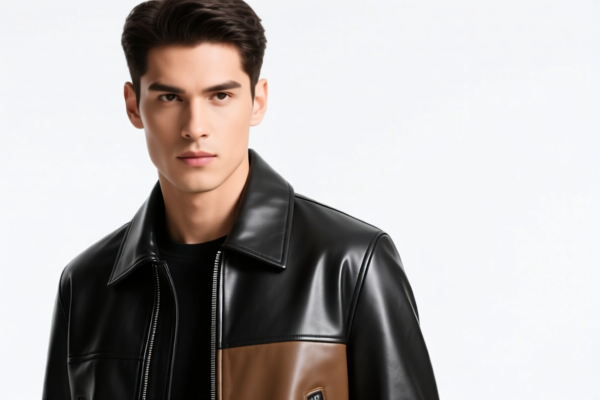
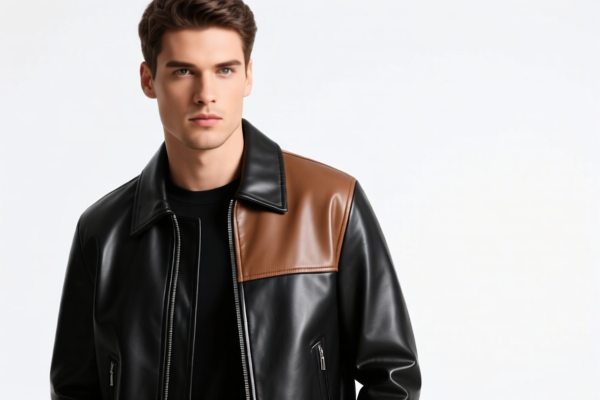
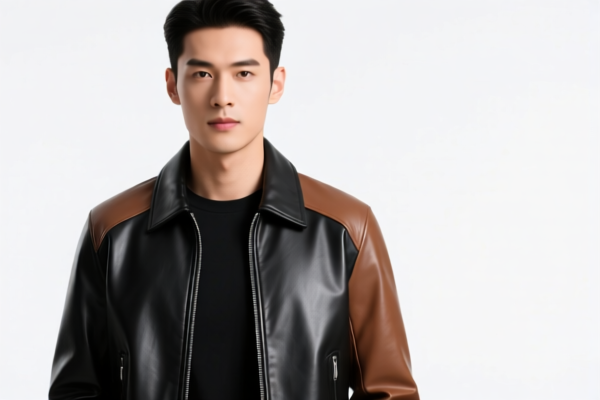
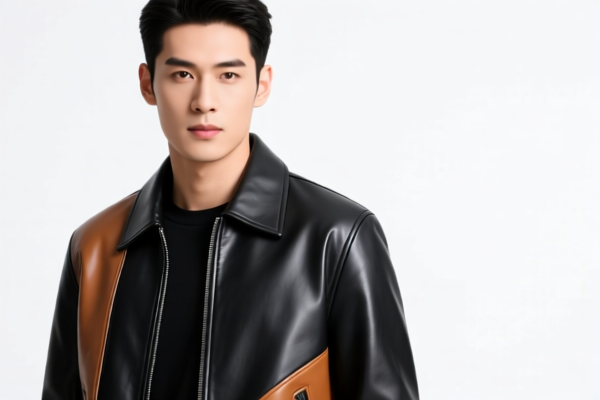
AI Analysis
👕 Boys' Knitted/Crochet Leather Blend Jacket
🌐 HS Code Reference & Customs Clearance Guide | 2026 Latest Tariff Analysis | Professional Clearance Strategy
📌 I. Product Definition & Classification: Do You Really Understand "Leather Blend Jackets" for Boys?
Boys' knitted or crochet jackets made from leather blends are children's apparel items that combine aesthetic appeal (leather texture) with functional comfort (knit structure). In international trade, these products fall under Chapter 61: Articles of Apparel and Clothing Accessories, Knitted or Crocheted.
The classification hinges on two critical factors:
1. Material Composition: "Leather Blend" usually implies a mix of Synthetic Fibers (e.g., polyester) and Artificial/Man-Made Fibers (e.g., polyurethane-coated fabric imitating leather).
2. Use Case: Is it a general outerwear jacket, sportswear, or part of a suit?
⚠️ Key Classification Logic:
- If the jacket is primarily Synthetic Fiber (e.g., polyester with leather-like finish), it may fall under sportswear or general outerwear codes.
- If the jacket is primarily Artificial/Man-Made Fiber (e.g., PU leather knit), it falls under different subheadings.
- Note: True leather jackets fall under Chapter 41, but knitted/crochet leather blends are explicitly classified under Chapter 61 as knitwear.
📦 II. HS Code Classification Matrix (2026 Latest Tariff Authority)
| HS Code | Product Description | Applicable Scenario | Material Basis |
|---|---|---|---|
6114.30.30.60 |
Boys' Knitted/Crochet Jacket, Artificial Fiber, for Boys' Jackets | General outerwear, non-sport use | Artificial Fiber |
6112.12.00.10 |
Boys' Knitted/Crochet Jacket, Synthetic Fiber, for Sportswear | Athletic, active wear | Synthetic Fiber |
6112.20.10.10 |
Boys' Knitted/Crochet Jacket, Artificial Fiber, for Jackets | General jacket, mixed use | Artificial Fiber |
6103.33.20.00 |
Boys' Knitted/Crochet Jacket, Synthetic Fiber, for Suits | Suit sets, formal wear | Synthetic Fiber |
6114.30.30.44 |
Boys' Knitted/Crochet Jacket, Artificial Fiber, for Boys' Clothing | General boys' apparel | Artificial Fiber |
🔍 Critical Distinction:
- Synthetic vs. Artificial:
- Synthetic (e.g., Polyester, Nylon) → Often associated with sportswear (6112) or suits (6103).
- Artificial (e.g., PU, Viscose blends) → Often associated with general fashion jackets (6114).
- Use Case Matters: A jacket labeled as "sportswear" gets6112.12.00.10, even if made of similar materials. A jacket labeled as "general jacket" gets6114.30.30.60or6114.30.30.44.
💰 III. 2026 Latest Tariff Rate Breakdown (Including Additional Duties & Policy Surcharges)
✅ Applicable Country: United States (US)
✅ Origin: China (CN)
✅ Effective Date: 2025–2026 (Current Import Regime)
🎯 1. 6114.30.30.60 & 6114.30.30.44 —— Artificial Fiber Jackets (Fashion/General)
| Item | Content |
|---|---|
| Base Tariff | 14.9% (Ad Valorem) |
| Section 301 Surtax | +7.5% |
| Section 122 Surtax | +10% (Targeting de minimis imports) |
| Total Tariff | 32.4% |
| Tax Calculation | CIF Value × 32.4% |
| De Minimis Exemption | ❌ Not Applicable (Due to Section 122) |
| Legal Basis | HTSUS 6114.30.30.60/44 + Section 301 Footnotes + Section 122 (19 U.S.C. 1301 note) |
📌 Explanation:
- These codes apply to artificial fiber jackets (e.g., PU leather-like knits) for general boys' wear.
- Total Rate: 32.4%. High due to the 10% Section 122 surcharge, which targets low-value imports to prevent circumvention of tariffs.
🎯 2. 6112.12.00.10 & 6112.20.10.10 & 6103.33.20.00 —— Synthetic Fiber Jackets (Sportswear/Suits)
| Item | Content |
|---|---|
| Base Tariff | 28.2% |
| Section 301 Surtax | +7.5% |
| Section 122 Surtax | +10% |
| Total Tariff | 45.7% |
| Tax Calculation | CIF Value × 45.7% |
| De Minimis Exemption | ❌ Not Applicable |
| Legal Basis | HTSUS 6112/6103 + Section 301 + Section 122 |
📌 Explanation:
- These codes apply to synthetic fiber jackets, especially those classified as sportswear (6112) or suit components (6103).
- Total Rate: 45.7%. Significantly higher due to the higher base tariff (28.2%) for synthetic sportswear/suits compared to artificial fashion wear (14.9%).
🛠️ IV. Customs Clearance Practical Advice (Battle-Tested Pitfall Avoidance)
✅ 1. Documentation Checklist (All Required)
| Document | Required | Notes |
|---|---|---|
| ✅ Product Specification Sheet | ✔️ | Must specify: Knitted/Crochet, Material % (Synthetic vs. Artificial), Leather Blend Composition |
| ✅ Composition Declaration | ✔️ | Clearly state if "Leather" is actual hide (Chapter 41) or PU/Synthetic (Chapter 61). This example is Chapter 61. |
| ✅ Product Photos | ✔️ | Show front, back, labels, and close-ups of the knit texture and leather-like surface |
| ✅ Commercial Invoice | ✔️ | Must match HS Code description exactly (e.g., "Boys' Knitted Jacket, Artificial Fiber") |
| ✅ Packing List | ✔️ | Item count, net/gross weight, carton dimensions |
| ✅ Origin Certificate | ✔️ | Required for Section 301 and Section 122 applicability |
✅ 2. Declaration Tips (Key Mantra)
🔥 "Material Defines Code, Use Defines Subcode, 'Leather' Does Not Mean Chapter 41!"
| Scenario | Correct Declaration | Wrong Practice |
|---|---|---|
| PU Leather Knit Jacket | 6114.30.30.60 (Artificial Fiber) |
Declare as "Leather Jacket" (Chapter 41) → Misclassification Risk |
| Polyester Sport Jacket | 6112.12.00.10 (Synthetic, Sportswear) |
Declare as "General Jacket" → May face audit for incorrect use |
| Suit Jacket Set | 6103.33.20.00 (Synthetic, Suit) |
Declare as "Single Jacket" → Rate discrepancy |
| Mixed Material (Artificial) | 6114.30.30.44 |
Declare as "Synthetic" → Higher base tariff (28.2% vs 14.9%) |
📌 Critical Note:
- "Leather Blend" in Knitwear: If the outer surface is PU/polyurethane (artificial), use Artificial Fiber codes (6114).
- Sportswear Classification: If the jacket is marketed as "athletic," "track," or "gym," Customs may force6112.12.00.10, raising your tax to 45.7%. Avoid "sport" keywords in marketing if you aim for the lower 32.4% rate.
✅ 3. Special Handling Scenarios
| Scenario | Handling Advice |
|---|---|
| De Minimis (Section 122) Risk | Section 122 imposes a 10% surcharge on de minimis imports. Do not rely on $800 exemption to avoid Section 301. It will still apply. |
| Material Testing | Provide a fiber composition test report from a third-party lab (e.g., SGS, Intertek) to prove "Artificial" vs. "Synthetic" if disputed. |
| OEM/Private Label | Ensure the invoice lists the actual manufacturer and brand, not just a trading company, to avoid origin fraud flags. |
| Kit/Jacket + Pants Sets | If sold as a set, the jacket determines classification. Ensure the invoice separates items if possible. |
🌍 V. Global Market Comparison (2026 Latest)
| Country/Region | Recommended HS Code | Tariff | Certification | Notes |
|---|---|---|---|---|
| 🇺🇸 USA | 6114.30.30.60 / 6112.12.00.10 |
32.4% – 45.7% | N/A | High due to Section 301 + 122 |
| 🇨🇳 China | 6114.30.30.60 / 6112.12.00.10 |
~5% – 10% | CCC (if applicable) | Lower base tariffs |
| 🇪🇺 EU | 6114.30.30.60 / 6112.12.00.10 |
~12% – 16% | CE, REACH | No Section 301/122 surcharges |
| 🇨🇦 Canada | 6114.30.30.60 / 6112.12.00.10 |
~17.5% | N/A | MFN rate applies |
| 🇬🇧 UK | 6114.30.30.60 / 6112.12.00.10 |
~12% | UKCA | Post-Brexit rates vary |
📌 Conclusion:
- USA is the most expensive market due to Section 301 (7.5%) and Section 122 (10%) surcharges.
- EU and Canada offer lower total tariffs but require strict compliance with REACH/UKCA.
- Artificial Fiber (6114) is cheaper than Synthetic Sportswear (6112) in the US.
📌 VI. Common Errors & Pitfall Guide (Blood-Stained Lessons)
❌ Error 1: Classifying PU Leather Knit as "Leather Apparel" (Chapter 41)
👉 Consequence: Wrong Chapter → Delay, Inspection, or Rejection. Knitwear is always Chapter 61.
❌ Error 2: Using "Sportswear" Keywords for General Fashion Jackets
👉 Consequence: Customs reclassifies to 6112.12.00.10 → Tariff jumps from 32.4% to 45.7%.
❌ Error 3: Ignoring Section 122
👉 Consequence: Assuming de minimis ($800) avoids all tariffs → Still subject to 10% surcharge + 7.5% Section 301.
❌ Error 4: Vague Material Description ("Leather Blend")
👉 Consequence: Customs demands fiber test → Clearance Delay (7–14 days).
✅ Correct Description:
"Boys' Knitted Jacket, Outer: 100% Polyurethane-Coated Polyester (Artificial Fiber), Inner: Polyester Lining. For General Use."
🎯 VII. Conclusion: Precision Classification, Cost Control, Smooth Clearance!
🎯 Remember the Mantra:
🔹 "Knit is Chapter 61, Not Leather (Ch. 41)"
🔹 "Artificial (32.4%) beats Synthetic Sportswear (45.7%)"
🔹 "Section 122 Never Sleeps: 10% Extra for De Minimis"
📌 Pro Tip:
If your origin is Vietnam, Mexico, or Thailand, you may avoid Section 301 and Section 122 surcharges, reducing tariffs to ~12–15%.
Consider origin shifting or third-country processing if US market entry is critical.
📣 Immediate Action:
📞 Engage a Licensed Customs Broker + Provide Fiber Test Report + Apply for Advance Ruling
🚀 Ensure Your Boys' Leather Blend Jacket Clears Smoothly, Minimizes Cost, and Maximizes Profit!
✨ Professional Clearance Starts with Accurate Classification!
💼 Every Percentage Point in Tariff is a Percentage Point in Profit!
Customer Reviews
About HS Code Classification
The Harmonized System (HS) is an internationally standardized nomenclature developed by the World Customs Organization (WCO) to classify traded products. Over 200 countries use the HS system as the basis for customs tariffs, trade statistics, and import/export regulations.
Each HS code follows a hierarchical structure:
- Chapter (2 digits) — Broad category of goods (e.g., Chapter 84: Machinery and Mechanical Appliances)
- Heading (4 digits) — More specific grouping within the chapter
- Subheading (6 digits) — Internationally standardized breakdown, used by all WCO member countries
- National subdivisions (8-10 digits) — Country-specific extensions for further classification, such as US HTSUS 10-digit codes
Correct HS code classification is essential for smooth customs clearance, accurate duty payment, and compliance with trade regulations. Misclassification can lead to customs delays, overpayment of duties, or penalties.
When importing from CN to US, the applicable tariff rates may include:
- Most-Favored-Nation (MFN) rate — The standard duty rate applied to WTO members
- General rate — Applied to countries without trade agreements
- Trade remedy duties — Additional tariffs such as Section 301 (anti-dumping), Section 232 (national security), or countervailing duties
The information provided on this page is for reference purposes only. For official classification, please consult with your local customs authority or a licensed customs broker.