Boys' Knitted or Crocheted Leather Blend Coat
CN → US| HS Code | Tariff Rate | Origin | Destination | Doc |
|---|---|---|---|---|
| 6201904960 | 21.7% | CN | US | Official Doc |
| 6113001005 | 21.3% | CN | US | Official Doc |
| 6101302010 | 45.7% | CN | US | Official Doc |
| 6113009025 | 24.6% | CN | US | Official Doc |
Product Images
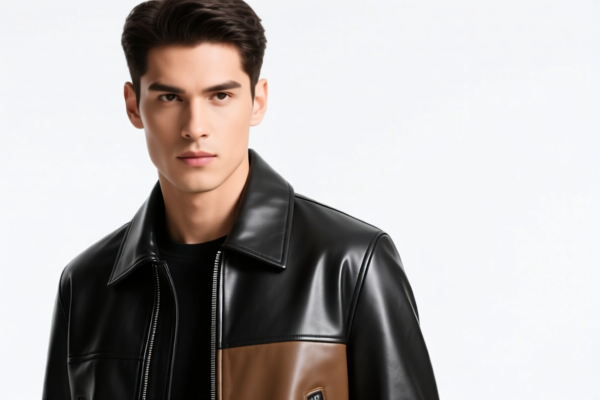
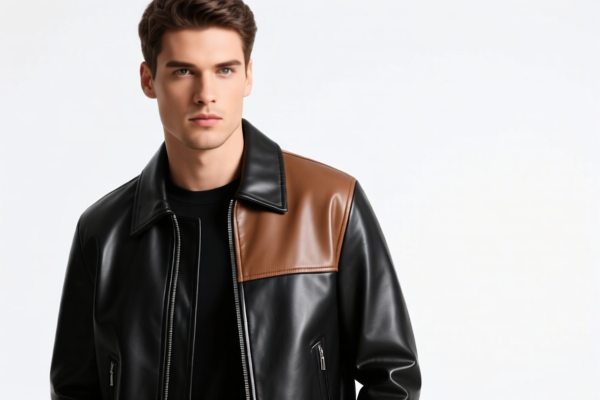


AI Analysis
🧥 Boys' Knitted or Crocheted Leather Blend Windbreaker
🌐 HS Code Reference & Customs Clearance Guide | 2026 Latest Tariff Breakdown | Strategic Entry Strategies
📌 I. Product Definition & Classification: Do You Truly Understand "Leather Blend"?
A Boys' Knitted or Crocheted Leather Blend Windbreaker is a specialized outerwear garment designed for male youth, combining the durability of leather with the flexibility of knitted textiles. In international trade, precise classification depends heavily on: 1. Construction Method: Knitted or crocheted? 2. Primary Material: Is it a blend? If so, which fiber dominates? 3. Coating/Backing: Does it have a coated surface or backing layer? 4. Final Form: Is it a full windbreaker, jacket, or part of a suit?
⚠️ Critical Classification Distinction:
- If the fabric is knitted/crocheted AND contains a significant leather content but is classified under "Other Textiles" due to specific blends → It may fall under Chapter 61 (Knitted/Crocheted). - If it has a coated/covered leather surface → It may fall under 6113.00 (Garments made of impregnated, coated, covered, or laminated textile fabric). - If it is considered a windproof outer garment made of specific fiber mixes → It may fall under 6101.30 (Windproof jackets of synthetic fibers or other textiles).
📦 II. Detailed HS Code Classification Matrix (2026 Authorized Data)
| HS Code | Product Description | Key Features | Total Tax Rate | Tax Breakdown |
|---|---|---|---|---|
6201.90.49.60 |
Men's (Boys') Windbreakers, Other (Leather Blend) | Outerwear; Windbreaker function; Leather blend material; Classified under "Other Materials" | 21.7% | Base: 4.2% Add'l: 7.5% (Section 301) Section 122: 10% |
6113.00.10.05 |
Men's (Boys') Knitted/Crocheted Coated Leather Blend Windbreaker | Outerwear; Men's style; Knitted/Crocheted form; Material fits Coated/Covered characteristic | 21.3% | Base: 3.8% Add'l: 7.5% (Section 301) Section 122: 10% |
6101.30.20.10 |
Men's (Boys') Knitted/Crocheted Windbreaker (Synthetic/Other Fiber Mix) | Men's use; Knitted/Crocheted form; Windbreaker use; Material contains fiber components (likely synthetic blend) | 45.7% | Base: 28.2% Add'l: 7.5% (Section 301) Section 122: 10% |
6113.00.90.25 |
Men's (Boys') Knitted/Crocheted Leather Blend Jacket (Other) | Outerwear/Jacket form; Men's use; Leather blend material; Classified under "Other Categories" | 24.6% | Base: 7.1% Add'l: 7.5% (Section 301) Section 122: 10% |
🔍 Key Insight:
- The Base Tariff varies significantly from 3.8% to 28.2% depending on the specific subheading interpretation (Coated vs. Other vs. Synthetic Blend). - The Section 122 (10%) and Section 301 (7.5%) are fixed penalties for Chinese-origin goods in this dataset. - Total Tax ranges from 21.3% to 45.7%. Choosing the wrong HS Code can lead to a ~24% difference in tax liability.
💰 III. 2026 Tariff Rate Detailed Analysis (USA Imports from China)
✅ Applicable Country: United States (US)
✅ Origin: China (CN)
✅ Effective Date: 2025/2026 Tariff Schedule
🎯 1. 6113.00.10.05 —— Lowest Tax Option: Coated Leather Blend
| Item | Content |
|---|---|
| Base Tariff | 3.8% |
| USITC Add'l (Sec 301) | +7.5% |
| Section 122 Tariff | +10% |
| Total Effective Rate | 21.3% |
| Calculation | CIF Value × 21.3% |
| De Minimis Exemption | ❌ Not Applicable (Deny De Minimis for Sec 301/122 goods) |
| Legal Path | USITC:6113.00.10.05 → FOOTNOTE:SEC122 → USITC:SEC301 |
📌 Explanation:
- This classification relies on the product being "Coated or Covered". If the leather blend has a polymer coating or lamination, this is the most favorable rate. - Crucial: Must prove the "coated" nature via material specs.
🎯 2. 6201.90.49.60 —— Mid-Range: Other Windbreakers (Leather Blend)
| Item | Content |
|---|---|
| Base Tariff | 4.2% |
| USITC Add'l (Sec 301) | +7.5% |
| Section 122 Tariff | +10% |
| Total Effective Rate | 21.7% |
| Calculation | CIF Value × 21.7% |
| De Minimis Exemption | ❌ Not Applicable |
| Legal Path | USITC:6201.90.49.60 → FOOTNOTE:SEC122 → USITC:SEC301 |
📌 Explanation:
- Falls under Chapter 62 (Not Knitted/Crocheted). If the garment is woven but still a leather blend windbreaker, this applies. - Slightly higher base than 6113.00.10.05, but still competitive.
🎯 3. 6113.00.90.25 —— Mid-High: Other Coated/Covered Garments
| Item | Content |
|---|---|
| Base Tariff | 7.1% |
| USITC Add'l (Sec 301) | +7.5% |
| Section 122 Tariff | +10% |
| Total Effective Rate | 24.6% |
| Calculation | CIF Value × 24.6% |
| De Minimis Exemption | ❌ Not Applicable |
| Legal Path | USITC:6113.00.90.25 → FOOTNOTE:SEC122 → USITC:SEC301 |
📌 Explanation:
- Used when the product is knitted/crocheted and coated, but doesn't fit the specific 10.05 subheading. - "Other Categories" implies it's not a standard windbreaker but a jacket/blazer type.
🎯 4. 6101.30.20.10 —— Highest Tax: Synthetic/Other Fiber Windbreaker
| Item | Content |
|---|---|
| Base Tariff | 28.2% |
| USITC Add'l (Sec 301) | +7.5% |
| Section 122 Tariff | +10% |
| Total Effective Rate | 45.7% |
| Calculation | CIF Value × 45.7% |
| De Minimis Exemption | ❌ Not Applicable |
| Legal Path | USITC:6101.30.20.10 → FOOTNOTE:SEC122 → USITC:SEC301 |
📌 Explanation:
- AVOID this classification if possible. It applies if the product is deemed a synthetic fiber windbreaker or if the leather content is ignored due to specific blend rules. - The 28.2% Base is punitive. Only use if the product strictly matches "Knitted Windbreaker of Synthetic Fibers" and cannot be classified as leather-blend or coated.
🛠️ IV. Customs Clearance Practical Advice (Avoiding Pitfalls)
✅ 1. Documentation Checklist (Mandatory)
| Document | Required | Purpose |
|---|---|---|
| ✅ Product Specification Sheet | ✔️ | Details: Fiber composition %, knit/crochet type, coating presence |
| ✅ Material Lab Report | ✔️ | Confirms "Leather Blend" vs. "Synthetic" vs. "Coated" |
| ✅ High-Res Photos | ✔️ | Show texture, lining, stitching, and labels |
| ✅ Commercial Invoice | ✔️ | Must state: "Boys' Knitted Leather Blend Windbreaker" |
| ✅ Bill of Lading | ✔️ | Match HS Code and description |
| ✅ Country of Origin Cert | ✔️ | Essential for Sec 301/122 assessment |
✅ 2. Declaration Tips (Golden Rules)
🔥 "Classify by Material, Not Just Name! Coated = Lower Base, Synthetic = Higher Tax!"
| Scenario | Recommended HS Code | Why? |
|---|---|---|
| Product has a polymer coating on the leather blend | 6113.00.10.05 |
Lowest base (3.8%) |
| Product is woven leather blend windbreaker | 6201.90.49.60 |
Mid base (4.2%), safe for woven |
| Product is knitted but not coated, generic leather blend | 6113.00.90.25 |
Mid-high base (7.1%) |
| Product is knitted but classified as synthetic (low leather %) | 6101.30.20.10 |
High Base (28.2%) – Avoid if possible |
✅ 3. Special Case Handling
| Case | Strategy |
|---|---|
| Low Leather Content (<10%) | Customs may reclassify as synthetic (6101.30.20.10) → Tax Jumps to 45.7%!💡 Action: Ensure spec sheet clearly defines "Leather Blend" and meets threshold. |
| Knitted vs. Woven | If knitted, Chapter 61 applies. If woven, Chapter 62. 💡 Action: Provide weave/knit structure diagrams. |
| Windbreaker Function | Must prove windproofing (e.g., tight knit, coating, or membrane). 💡 Action: Include wind-test reports. |
🌍 V. Global Market Comparison (2026)
| Market | Recommended HS Code | Est. Total Tax (CN Origin) | Notes |
|---|---|---|---|
| 🇺🇸 USA | 6113.00.10.05 |
21.3% | Best rate if coated. Sec 122 & 301 apply. |
| 🇺🇸 USA | 6101.30.20.10 |
45.7% | Worst case if misclassified as synthetic. |
| 🇪🇺 EU | 6101.30 (Varies) |
~12% | No Sec 122/301. Lower base tariffs. |
| 🇨🇳 China | 6101.30 |
~5-10% | Import duties lower, no Section 122. |
📌 Conclusion:
- USA is the highest-cost market due to Section 122 (10%) and Section 301 (7.5%) on top of base tariffs. - Classification as "Coated" (6113.00.10.05) is the optimal strategy for minimizing duty in the US.
📌 VI. Common Errors & Pitfalls (Lessons Learned)
❌ Mistake 1: Calling it "Leather Jacket" when it's Knitted Blend
👉 Result: Misclassification → Potential penalty or audit.
✅ Fix: Use "Knitted Leather Blend Windbreaker."
❌ Mistake 2: Ignoring the Coating
👉 Result: If coated, but declared as uncoated (6113.00.90.25), you pay 7.1% base instead of 3.8%.
✅ Fix: Declare "Coated" if applicable.
❌ Mistake 3: Overlooking Fiber Composition
👉 Result: If leather % is low, customs may force 6101.30.20.10 → Tax spikes to 45.7%.
✅ Fix: Ensure spec sheet reflects accurate blend % that supports your chosen HS Code.
🎯 VII. Final Recommendations
🎯 Strategy:
1. Prioritize "Coated" Classification: If your product can be legally described as having a coated or covered surface, aim for6113.00.10.05(21.3%).
2. Avoid "Synthetic" Trap: Do not allow customs to reclassify as synthetic windbreaker (6101.30.20.10) – the 45.7% tax is devastating.
3. Document Everything: Keep lab reports proving the "Leather Blend" nature and "Knitted" structure.🔹 Remember:
"Coated wins (3.8% base), Woven follows (4.2% base), Synthetic loses (28.2% base). Choose wisely!"
📌 Pro Tip:
If your supply chain allows, consider assembling in Vietnam or Mexico to avoid Section 301/122 tariffs (0%~5% total).
For US imports, pre-classification rulings are highly recommended to lock in the 21.3% rate.
📣 Action Now:
📞 Consult a Customs Broker with product samples.
📄 Prepare Lab Reports for fiber analysis.
🚀 Optimize for6113.00.10.05to save thousands in duties.
✨ Smart Classification = Maximum Profit!
💼 Your Cost Control Starts with the Right HS Code!
Customer Reviews
About HS Code Classification
The Harmonized System (HS) is an internationally standardized nomenclature developed by the World Customs Organization (WCO) to classify traded products. Over 200 countries use the HS system as the basis for customs tariffs, trade statistics, and import/export regulations.
Each HS code follows a hierarchical structure:
- Chapter (2 digits) — Broad category of goods (e.g., Chapter 84: Machinery and Mechanical Appliances)
- Heading (4 digits) — More specific grouping within the chapter
- Subheading (6 digits) — Internationally standardized breakdown, used by all WCO member countries
- National subdivisions (8-10 digits) — Country-specific extensions for further classification, such as US HTSUS 10-digit codes
Correct HS code classification is essential for smooth customs clearance, accurate duty payment, and compliance with trade regulations. Misclassification can lead to customs delays, overpayment of duties, or penalties.
When importing from CN to US, the applicable tariff rates may include:
- Most-Favored-Nation (MFN) rate — The standard duty rate applied to WTO members
- General rate — Applied to countries without trade agreements
- Trade remedy duties — Additional tariffs such as Section 301 (anti-dumping), Section 232 (national security), or countervailing duties
The information provided on this page is for reference purposes only. For official classification, please consult with your local customs authority or a licensed customs broker.