Boys' Knitted or Crocheted Sets (Other Textile Materials)
CN → US| HS Code | Tariff Rate | Origin | Destination | Doc |
|---|---|---|---|---|
| 6107292000 | 26.0% | CN | US | Official Doc |
| 6107299000 | 23.1% | CN | US | Official Doc |
| 6208199000 | 26.2% | CN | US | Official Doc |
| 6208299030 | 24.6% | CN | US | Official Doc |
| 6307909891 | 24.5% | CN | US | Official Doc |
Product Images
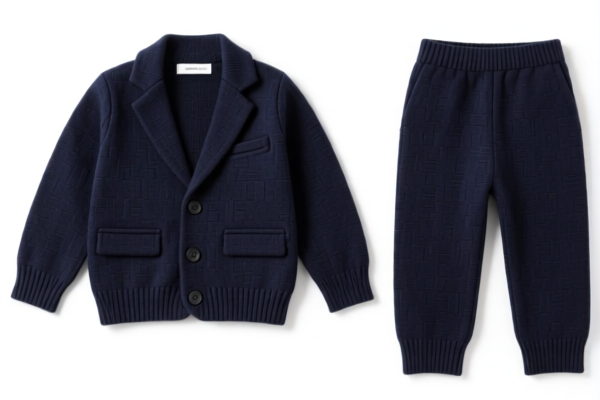
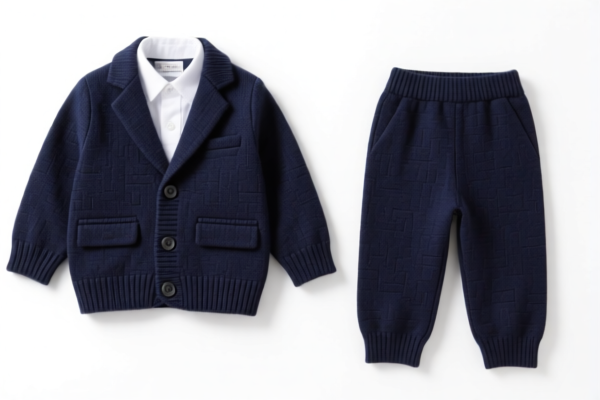
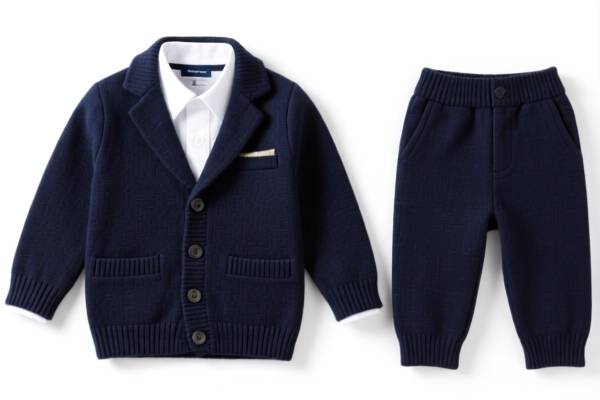
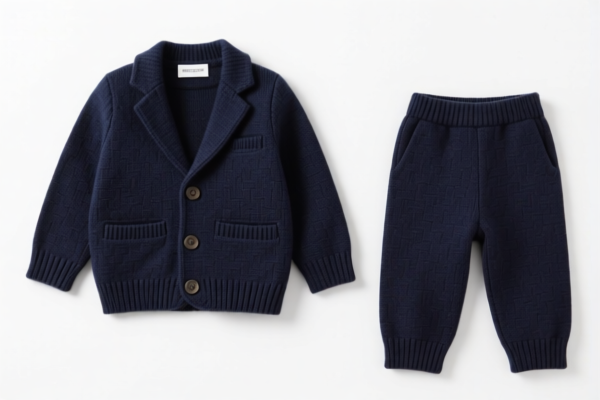
AI Analysis
👕 Boys' Knitted or Crocheted Pajama Sets (Other Textile Materials)
🌐 HS Code Reference & Customs Clearance Guide | 2026 Latest Tariff Analysis | Professional Entry Strategies
📌 I. Product Definition & Classification: Do You Really Understand "Boys' Pajamas"?
Boys' knitted or crocheted pajama sets are sleepwear garments designed for male children, typically constructed from non-wool textile materials such as cotton, polyester, blends, or other synthetic fibers. In international trade, these items are classified based on their manufacturing method (knitted/crocheted vs. woven) and material composition.
Key Distinctions: * Knitted/Crocheted (Chapter 61): Made from looped yarns (e.g., jersey, fleece). These are generally more elastic and comfortable for sleepwear. * Woven (Chapter 62): Made from interlaced threads (e.g., flannel, cotton broadcloth). These offer a crisp, structured feel. * "Other Textile Materials": Refers to fabrics other than wool or fine animal hair. This is the dominant category for mass-market children's sleepwear.
⚠️ Critical Classification Point:
- If the item is knitted or crocheted, it must fall under Chapter 61 (e.g., 6107).
- If the item is woven, it falls under Chapter 62 (e.g., 6208).
- Misclassification between Chapter 61 and 62 leads to significant tariff differences and potential customs penalties.
📦 II. HS Code Classification Details (2026 Latest Tariff Authority Comparison)
Based on the provided data, here are the potential HS Codes for Boys' Knitted or Crocheted Pajama Sets (Other Textile Materials) and their corresponding tax implications.
| HS Code | Product Description | Tax Rate | Tax Detail Breakdown |
|---|---|---|---|
| 6107.29.20.00 | Boys' knitted or crocheted pajama sets, other textile materials, fits non-wool pajama category | 26.0% | Base: 8.5% Additional: 7.5% Section 301: 10% |
| 6107.29.90.00 | Boys' knitted or crocheted pajama sets, other textile materials, fully matches usage & material features | 23.1% | Base: 5.6% Additional: 7.5% Section 301: 10% |
| 6208.19.90.00 | Boys' pajama sets, other textile materials, matches "other textile materials" dimension | 26.2% | Base: 8.7% Additional: 7.5% Section 301: 10% |
| 6208.29.90.30 | Boys' pajama sets, other textile materials, explicitly corresponds to other textile materials classification | 24.6% | Base: 7.1% Additional: 7.5% Section 301: 10% |
| 6307.90.98.91 | Boys' pajama sets, other textile materials, fits "other made-up articles" catch-all category | 24.5% | Base: 7.0% Additional: 7.5% Section 301: 10% |
🔍 Key Insight:
- 6107.29.90.00 offers the lowest total tax rate (23.1%) for knitted/crocheted items, suggesting it is the most favorable classification if the product strictly meets its criteria.
- 6208 codes apply to woven items. If your product is knitted but declared as 6208, it risks misclassification.
- 6307.90.98.91 is a "catch-all" category. Use only if the item does not fit specific apparel definitions, but be prepared for customs scrutiny.
💰 III. 2026 Latest Tariff Rate Breakdown (Including Surcharges & Policy Add-ons)
✅ Applicable Country: United States (US)
✅ Country of Origin: China (CN)
✅ Effective Date: From 2025-11-10 (and subsequent imports)
🎯 1. 6107.29.20.00 – Boys' Knitted/Crocheted Pajama Sets (Non-Wool)
| Item | Details |
|---|---|
| Base Tariff Rate | 8.5% (ad valorem) |
| USITC Additional Tariff | +7.5% (Section 301/Other Applicable Surcharges) |
| Section 301 Tariff | +10% (Specific 122 Clause Tariff) |
| Total Tax Rate | 26.0% |
| Tax Calculation | CIF Value × 26.0% |
| De Minimis Exemption | ❌ Not Eligible (Subject to full duty assessment) |
| Legal Basis Path | HTSUS:6107.29.20.00 → Section 301: 122 Clause → Additional Tariff: 7.5% |
📌 Explanation:
- The 8.5% base tariff is the standard MFN rate for knitted boys' pajamas.
- The 7.5% additional tariff reflects current US trade policy surcharges.
- The 10% Section 301 tariff is a specific levy on Chinese-origin goods under "122 Clause" provisions.
- Total 26.0% is a significant cost factor. Accurate classification is crucial to avoid overpayment or penalties.
🎯 2. 6107.29.90.00 – Boys' Knitted/Crocheted Pajama Sets (Other Textile Materials)
| Item | Details |
|---|---|
| Base Tariff Rate | 5.6% (ad valorem) |
| USITC Additional Tariff | +7.5% |
| Section 301 Tariff | +10% |
| Total Tax Rate | 23.1% |
| Tax Calculation | CIF Value × 23.1% |
| De Minimis Exemption | ❌ Not Eligible |
| Legal Basis Path | HTSUS:6107.29.90.00 → Section 301: 122 Clause → Additional Tariff: 7.5% |
📌 Note:
- This code has a lower base rate (5.6%) compared to 6107.29.20.00, making it the most cost-effective option for knitted pajama sets if the product fully matches its description.
- The additional and Section 301 tariffs remain constant.
- Ensure the product description ("fully matches usage & material features") aligns with actual product specifications.
🎯 3. 6208.19.90.00 – Boys' Woven Pajama Sets (Other Textile Materials)
| Item | Details |
|---|---|
| Base Tariff Rate | 8.7% (ad valorem) |
| USITC Additional Tariff | +7.5% |
| Section 301 Tariff | +10% |
| Total Tax Rate | 26.2% |
| Tax Calculation | CIF Value × 26.2% |
| De Minimis Exemption | ❌ Not Eligible |
| Legal Basis Path | HTSUS:6208.19.90.00 → Section 301: 122 Clause → Additional Tariff: 7.5% |
📌 Note:
- Woven pajamas fall under Chapter 62.
- Higher base rate (8.7%) makes this the most expensive option among the listed codes.
- Only use if the product is woven, not knitted. Misdeclaring knitted items as woven is a serious customs violation.
🎯 4. 6208.29.90.30 – Boys' Woven Pajama Sets (Explicitly Other Textile Materials)
| Item | Details |
|---|---|
| Base Tariff Rate | 7.1% (ad valorem) |
| USITC Additional Tariff | +7.5% |
| Section 301 Tariff | +10% |
| Total Tax Rate | 24.6% |
| Tax Calculation | CIF Value × 24.6% |
| De Minimis Exemption | ❌ Not Eligible |
| Legal Basis Path | HTSUS:6208.29.90.30 → Section 301: 122 Clause → Additional Tariff: 7.5% |
📌 Note:
- Another option for woven pajamas.
- Moderate base rate (7.1%) offers a middle ground between 6208.19.90.00 and 6107.29.90.00.
- Must clearly correspond to "other textile materials" classification.
🎯 5. 6307.90.98.91 – Other Made-Up Articles (Catch-All for Pajama Sets)
| Item | Details |
|---|---|
| Base Tariff Rate | 7.0% (ad valorem) |
| USITC Additional Tariff | +7.5% |
| Section 301 Tariff | +10% |
| Total Tax Rate | 24.5% |
| Tax Calculation | CIF Value × 24.5% |
| De Minimis Exemption | ❌ Not Eligible |
| Legal Basis Path | HTSUS:6307.90.98.91 → Section 301: 122 Clause → Additional Tariff: 7.5% |
📌 Note:
- This is a fallback category for items that don't fit specific apparel headings.
- Not recommended for standard pajama sets unless they have unusual features (e.g., novelty items, non-apparel sleepwear accessories).
- Using this for standard pajamas may trigger customs audits for misclassification.
🛠️ IV. Customs Clearance Practical Advice (Battle-Tested Pitfall Avoidance Guide)
✅ 1. Documentation Checklist (Absolutely Essential)
| Document | Required | Details |
|---|---|---|
| ✅ Product Specifications | ✔️ | Material composition (e.g., 100% Cotton, 60% Poly/40% Cotton), construction method (knitted/woven), size range. |
| ✅ Tech Pack / Diagrams | ✔️ | Shows garment structure, seams, and any special features (pockets, elastic, etc.). |
| ✅ Product Photos | ✔️ | Clear images of front, back, labels, and tags showing fiber content and care instructions. |
| ✅ Commercial Invoice | ✔️ | Must explicitly state: "Boys' Knitted Pajama Set, Cotton, HS Code XXXX.00.00". |
| ✅ Packing List | ✔️ | Details packaging, quantity, and weight to ensure consistency with invoice. |
| ✅ Certificate of Origin | ✔️ | If applicable, to support origin claims and verify Section 301 applicability. |
| ✅ Test Reports | ✔️ | Fiber content verification from an accredited lab (e.g., SGS, Intertek). |
✅ 2. Declaration Tips (Key Mnemonics)
🔥 "Knit is 61, Woven is 62, Material Matters, Section 301 is Real!"
| Scenario | Correct Declaration | Wrong Practice |
|---|---|---|
| Knitted Pajamas (Cotton) | 6107.29.90.00 |
Misdeclaring as woven 6208 → 26.2% tax |
| Woven Pajamas (Polyester) | 6208.19.90.00 or 6208.29.90.30 |
Misdeclaring as knitted 6107 → 23.1% (but wrong product) |
| Mixed Material Set | Based on principal material | Vague description → Customs detention |
| Novelty/Accessory | 6307.90.98.91 |
Standard pajama set → High risk of penalty |
✅ 3. Special Case Handling
| Scenario | Handling Advice |
|---|---|
| OEM Custom Pajamas | Provide customer PO, design specs, and label proofs to confirm classification. |
| Mixed Material Sets | If >50% by weight is one material, that material dictates the chapter. |
| Sets with Accessories | If pajamas are the main item, declare as pajamas. Do not split. |
| Pre-Import Testing | Conduct fiber content tests before shipment to avoid misclassification penalties. |
🌍 V. Global Market Comparison for Children's Sleepwear (2026)
| Country/Region | Recommended HS Code | Tariff (China Origin) | Certification | Remarks |
|---|---|---|---|---|
| 🇺🇸 USA | 6107.29.90.00 |
23.1% | CPSIA, ASTM F1919 | High duties due to Section 301. |
| 🇨🇳 China | 6107.29.00.00 |
~8-15% (Varies) | CCC (if applicable) | Lower base tariffs, no Section 301. |
| 🇪🇺 EU | 6107.22.10 |
0-12% (MFN) | CE, REACH | No Section 301 equivalent. |
| 🇬🇧 UK | 6107.22.10 |
0-12% (MFN) | UKCA, REACH | Post-Brexit tariffs may vary. |
| 🇦🇺 Australia | 6107.22.10 |
5% | ACCC, AS/NZS | Moderate duties. |
📌 Conclusion:
- USA has the highest effective duty (23.1%-26.2%) due to Section 301 surcharges.
- EU and UK generally have lower or zero tariffs for children's clothing if preferential agreements apply.
- Compliance with safety standards (CPSIA in USA, REACH in EU) is equally critical as tariff classification.
📌 VI. Common Mistakes & Pitfall Guide (Lessons Learned)
❌ Mistake 1: Declaring knitted pajamas as woven to avoid Section 301
👉 Consequence: Misclassification, fines, and potential seizure.
✅ Correct: Classify based on actual construction method.
❌ Mistake 2: Using vague descriptions like "Children's Clothes"
👉 Consequence: Customs delays, additional inspections, and higher estimated duties.
✅ Correct: Use precise descriptions: "Boys' Knitted Cotton Pajama Set, Size 2T-5T."
❌ Mistake 3: Ignoring fiber content verification
👉 Consequence: If actual content differs from declaration, penalties apply.
✅ Correct: Provide lab test reports matching the declared material.
❌ Mistake 4: Splitting a pajama set into pants and top for lower duty
👉 Consequence: Customs may still assess them as a set, leading to back-taxes and penalties.
✅ Correct: Declare as a complete set under the appropriate HS code.
🎯 VII. Conclusion: Professional Declaration for Cost Efficiency
🎯 Remember:
🔹 "Knit is 61, Woven is 62, Material is Key."
🔹 "Section 301 adds 10%, Don't Miss It."
🔹 "6107.29.90.00 is the Sweet Spot for Knitted Sets."
📌 Pro Tip:
If your pajama sets are originating from Vietnam, Thailand, or Malaysia, you may be eligible for lower or zero Section 301 duties. Consider supply chain diversification to reduce costs.
📣 Call to Action:
📞 Consult a Customs Broker + Provide Product Specs + Apply for Advance Ruling (if needed)
🚀 Ensure Smooth Clearance, Maximize Profit, and Stay Compliant!
✨ Professional Classification, Starts with Precision!
💼 Every Dollar Saved Counts!
Customer Reviews
About HS Code Classification
The Harmonized System (HS) is an internationally standardized nomenclature developed by the World Customs Organization (WCO) to classify traded products. Over 200 countries use the HS system as the basis for customs tariffs, trade statistics, and import/export regulations.
Each HS code follows a hierarchical structure:
- Chapter (2 digits) — Broad category of goods (e.g., Chapter 84: Machinery and Mechanical Appliances)
- Heading (4 digits) — More specific grouping within the chapter
- Subheading (6 digits) — Internationally standardized breakdown, used by all WCO member countries
- National subdivisions (8-10 digits) — Country-specific extensions for further classification, such as US HTSUS 10-digit codes
Correct HS code classification is essential for smooth customs clearance, accurate duty payment, and compliance with trade regulations. Misclassification can lead to customs delays, overpayment of duties, or penalties.
When importing from CN to US, the applicable tariff rates may include:
- Most-Favored-Nation (MFN) rate — The standard duty rate applied to WTO members
- General rate — Applied to countries without trade agreements
- Trade remedy duties — Additional tariffs such as Section 301 (anti-dumping), Section 232 (national security), or countervailing duties
The information provided on this page is for reference purposes only. For official classification, please consult with your local customs authority or a licensed customs broker.