Boys' Knitted/Crocheted Casual Set
CN → US| HS Code | Tariff Rate | Origin | Destination | Doc |
|---|---|---|---|---|
| 6110202015 | 34.0% | CN | US | Official Doc |
| 6112110010 | 32.4% | CN | US | Official Doc |
| 6112110030 | 32.4% | CN | US | Official Doc |
| 6117909003 | 32.1% | CN | US | Official Doc |
| 6110909067 | 23.5% | CN | US | Official Doc |
Product Images
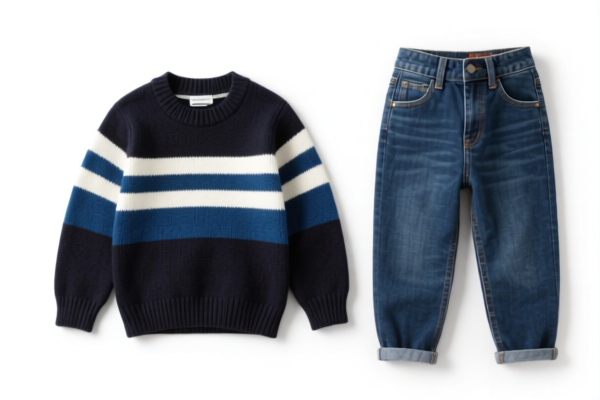
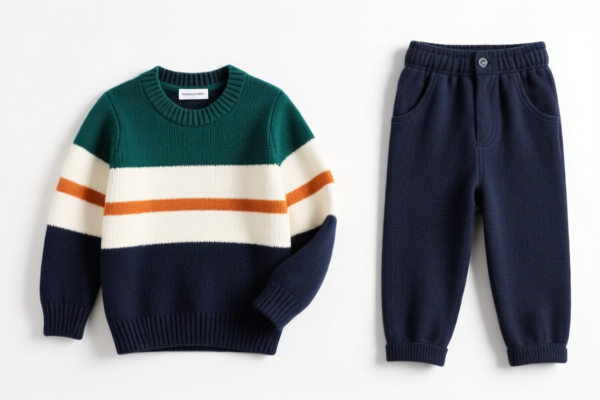
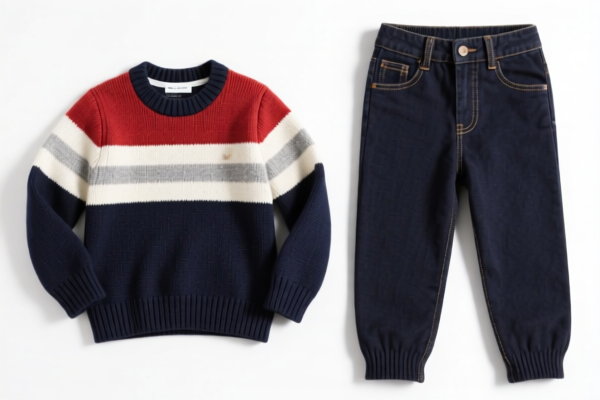
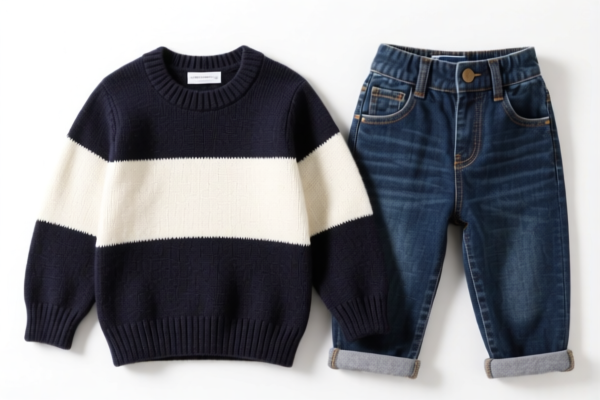
AI Analysis
👕 Boys' Knitted/Crocheted Casual Set
🌐 HS Code Reference & Customs Clearance Guide | 2026 Latest Tariff Analysis | Professional Compliance Strategy
📌 I. Product Definition & Classification: What Exactly Is a "Casual Set"?
A Boys' Knitted/Crocheted Casual Set typically refers to a coordinated outfit (usually two-piece, such as a sweater/cardigan and pants/shorts) made from knitted or crocheted fabric, designed for informal wear.
In international trade, the classification depends heavily on the primary material (Cotton), gender specification (Boys'), and construction method (Knitted/Crocheted).
⚠️ Critical Distinction:
- If the set includes sweaters/jumpers → Classified under Chapter 61, Heading 6110.
- If the set includes sports/recreational tracksuits → Classified under Chapter 61, Heading 6112.
- If the item is just a component (e.g., just the sleeve or panel) → Classified under Heading 6117.
- If it does not meet the standard definition of a sweater or sportswear (e.g., specific restricted styles) → May fall under Heading 6110.90 (Other).
📦 II. HS Code Classification Details (2026 Latest Tariff Authority Alignment)
Based on the provided data, here are the exact HS Codes applicable to Boys' Knitted/Crocheted Casual Sets, categorized by their specific sub-type and purpose.
| HS Code | Product Description | Key Features | Applicable Scenario |
|---|---|---|---|
6110.20.20.15 |
Boys'/Children's Knitted/Crocheted Sweaters | Cotton material, sweater form | Casual sweater sets (Sweater + Pants) |
6112.11.00.10 |
Boys'/Children's Knitted/Crocheted Sports/Leisure Wear | Cotton, sports/leisure style | Tracksuits, active casual sets |
6112.11.00.30 |
Boys'/Children's Knitted/Crocheted Sports/Leisure Apparel | Cotton, matches classification standards | Alternative tracksuit/leisure code |
6117.90.90.03 |
Parts of Knitted/Crocheted Sweaters | Cotton, component parts | Only for sweater parts, not full sets |
6110.90.90.67 |
Other Boys'/Children's Knitted/Crocheted Sweaters | Cotton, specific restrictions apply | Non-standard casual sets not fitting 6110.20 or 6112.11 |
🔍 Key Clarification:
- Sweater vs. Sportswear: If the top is a pullover or cardigan with a neckline suitable for everyday wear → 6110. If it has a zip-up front, elastic cuffs, and is marketed as "sporty" or "athleisure" → 6112.
- Set Declaration: Customs often requires declaring the most significant component. If the set is 50% sweater and 50% pants, the classification usually follows the sweater (6110) or sportswear (6112) rule, not a separate "set" code.
- Parts Code (6117.90...): ⚠️ Do NOT use this for a full set. This is for components (e.g., a detached sleeve). Using it for a full outfit will result in misdeclaration penalties.
💰 III. 2026 Latest Tariff Rate Breakdown (Including Surcharges & Policy Adjustments)
✅ Applicable Country: United States (US)
✅ Country of Origin: China (CN)
✅ Effective Date: 2025/2026 (Including subsequent imports)
🎯 1. 6110.20.20.15 —— Boys'/Children's Cotton Knitted/Crocheted Sweaters
| Item | Content |
|---|---|
| Base Duty Rate | 16.5% (Ad valorem) |
| Section 301 Surcharge | +7.5% |
| Section 122 Surcharge | +10% |
| Total Tariff Rate | 34.0% |
| Tax Calculation | CIF Value × 34.0% |
| De Minimis Exemption | ❌ Not Eligible (Value threshold applies, but surcharges often exempt de minimis) |
| Legal Basis Path | Section 301: 9903.01.25 → Section 122 → USITC:6110.20.20.15 |
📌 Explanation:
- This is the standard tariff for casual sweater sets.
- The 34.0% total rate is high due to the cumulative effect of Base Duty + Section 301 + Section 122.
- No preferential treatment is available for Chinese-origin goods under this code.
🎯 2. 6112.11.00.10 & 6112.11.00.30 —— Cotton Knitted/Crocheted Sports/Leisure Sets
| Item | Content |
|---|---|
| Base Duty Rate | 14.9% (Ad valorem) |
| Section 301 Surcharge | +7.5% |
| Section 122 Surcharge | +10% |
| Total Tariff Rate | 32.4% |
| Tax Calculation | CIF Value × 32.4% |
| De Minimis Exemption | ❌ Not Eligible |
| Legal Basis Path | Section 301: 9903.01.24 → Section 122 → USITC:6112.11.00.10/30 |
📌 Explanation:
- If your "Casual Set" is marketed as sportswear (e.g., joggers + zip-up hoodie), it falls here.
- Slightly lower total rate (32.4%) than standard sweaters (34.0%), but still significant.
- Note: The difference between.10and.30is minimal; both have the same tax rate. Ensure your product description matches "Sports/Leisure" to use this code.
🎯 3. 6117.90.90.03 —— Parts of Knitted/Crocheted Sweaters
| Item | Content |
|---|---|
| Base Duty Rate | 14.6% |
| Section 301 Surcharge | +7.5% |
| Section 122 Surcharge | +10% |
| Total Tariff Rate | 32.1% |
| Tax Calculation | CIF Value × 32.1% |
| De Minimis Exemption | ❌ Not Eligible |
| Legal Basis Path | Section 301: 9903.01.24 → Section 122 → USITC:6117.90.90.03 |
⚠️ Warning:
- Only for parts. If you import a full set, using this code is misclassification.
- Consequence: Customs may reassess, charge higher duties, and impose penalties.
- Use Case: Importing just knitted sleeves, collars, or unfinished sweater panels for assembly.
🎯 4. 6110.90.90.67 —— Other Boys'/Children's Knitted/Crocheted Sweaters (Restricted)
| Item | Content |
|---|---|
| Base Duty Rate | 6.0% |
| Section 301 Surcharge | +7.5% |
| Section 122 Surcharge | +10% |
| Total Tariff Rate | 23.5% |
| Tax Calculation | CIF Value × 23.5% |
| De Minimis Exemption | ❌ Not Eligible |
| Legal Basis Path | Section 301: 9903.01.25 → Section 122 → USITC:6110.90.90.67 |
📌 Explanation:
- This code is for non-standard or restricted knitted items that do not fit the main "sweater" (6110.20) or "sportswear" (6112) categories.
- Lower base duty (6.0%) results in a significantly lower total rate (23.5%).
- Risk: If your product clearly looks like a standard sweater or tracksuit, using this code may trigger an audit. Only use if the item has unique features (e.g., unconventional cut, specific restricted fabric blend, or non-standard design) that justify "Other."
🛠️ IV. Customs Clearance Practical Advice (Pitfall Avoidance Guide)
✅ 1. Required Documentation Checklist (Non-Negotiable)
| Document | Mandatory? | Description |
|---|---|---|
| ✅ Product Spec Sheet | ✔️ | Material composition (e.g., 100% Cotton), knitting type, size chart |
| ✅ Product Photos | ✔️ | Front, back, inside label, and overall set view |
| ✅ Commercial Invoice | ✔️ | Must specify "Boys' Knitted Casual Set" and HS Code |
| ✅ Packing List | ✔️ | Detail contents per carton (e.g., 1 Sweater + 1 Pant = 1 Set) |
| ✅ Origin Certificate | ✔️ | Prove origin is China (for accurate tariff calculation) |
| ✅ Label Info | ✔️ | Fiber content, country of origin, care instructions |
✅ 2. Declaration Tips (Key Mantra)
🔥 "Be Specific, Don't Generalize! 'Set' is Not a Code!"
| Scenario | Correct Declaration | Wrong Practice |
|---|---|---|
| Full Sweater Set | Boys' Cotton Knitted Sweater and Pants Set → 6110.20.20.15 |
Vague term "Clothing Set" |
| Sports Tracksuit Set | Boys' Cotton Knitted Sports Set → 6112.11.00.10 |
Calling it a "Suit" |
| Partial Components | Knitted Sweater Parts → 6117.90.90.03 |
Declaring parts as a full set |
| Non-Standard Item | Other Knitted Apparel → 6110.90.90.67 |
Forcing it into 6110.20 |
📌 Critical Tip:
- Always declare the primary item if the set is uneven (e.g., 70% value in sweater).
- If the set is separately priced, declare each item with its own HS Code.
- Do not use "General Clothing" (9503.90) or other broad codes for knitted items.
✅ 3. Special Cases & Handling
| Situation | Handling Advice |
|---|---|
| Mixed Material (e.g., Cotton/Polyester) | If Cotton > 50%, still 6110 or 6112. If < 50%, check other chapters (e.g., 6109 for T-shirts). |
| Embroidered/Printed | Still classified under the same HS Code. Ensure description mentions "Embroidered" for accuracy. |
| Size: Infant vs. Boy | "Boys'" typically covers sizes > infant. If labeled "Infant," ensure HS Code allows (6110 covers both Boys' and Children's). |
| OEM/Private Label | Provide brand authorization if necessary to avoid IP issues at customs. |
🌍 V. Global Market Comparison (2026 Latest)
| Country/Region | Recommended HS Code | Total Tariff (China Origin) | Certification Requirements | Notes |
|---|---|---|---|---|
| 🇺🇸 USA | 6110.20.20.15 / 6112.11.00.10 |
32.4% - 34.0% | CPSC, CPSIA, Prop 65 | High tariffs due to Section 301 & 122 |
| 🇨🇳 China | 6110.20.20 |
~10-15% | GB Standards | Lower duties, no surcharges |
| 🇪🇺 EU | 6110.20.20 |
12% | CE (if functional), REACH | No Section 301/122 equivalents |
| 🇬🇧 UK | 6110.20.20 |
12% | UKCA, REACH | Post-Brexit alignment with EU |
| 🇯🇵 Japan | 6110.20.20 |
16% | STC (Textile Standards) | Moderate tariffs, stable policy |
📌 Conclusion:
- USA is the most expensive market for Chinese knitted casual sets due to Section 301 (7.5%) and Section 122 (10%) surcharges on top of base duties.
- EU/UK/Japan have no such surcharges, making them more cost-effective for Chinese manufacturers.
- Strategy: Consider diversifying supply chains to ASEAN countries (Vietnam, Thailand) to avoid US surcharges, or explore Section 122 exemptions if applicable.
📌 VI. Common Mistakes & Pitfall Guide (Lessons Learned)
❌ Mistake 1: Declaring a full set as "Parts" (6117.90.90.03)
👉 Consequence: Customs rejects declaration, demands reclassification, delays shipment.
❌ Mistake 2: Using 6110.90.90.67 for a standard sweater set
👉 Consequence: Audit risk. Customs may argue it fits 6110.20.20.15 and charge back-tariffs + penalties.
❌ Mistake 3: Ignoring "Boys'" vs. "Children's" distinction
👉 Consequence: Minor, but can cause confusion in statistics and potential misclassification if age ranges overlap ambiguously.
❌ Mistake 4: Failing to mention "Knitted/Crocheted"
👉 Consequence: Customs may classify as "Woven" (6210 or 6211), which has different tariff rates (potentially higher or lower, but incorrect).
✅ Correct Practice:
"Boys' 100% Cotton Knitted Casual Set: 1 Sweater + 1 Pair of Pants, Size 8-10, Model XYZ, CPSC Compliant"
🎯 VII. Conclusion: Professional Declaration for Cost Efficiency
🎯 Remember the Mantra:
🔹 "Sweater Set: 34%, Sport Set: 32.4%, Parts Only: 32.1%, Non-Standard: 23.5%. Don't Guess!"
🔹 "Cotton Knitted is Key, Gender Matters, Surcharge Adds 17.5%!"
📌 Pro Tip:
- If your products qualify for Section 122 Exemptions (if any remain), apply in advance.
- For high-value sets, consider Advance Rulings from US CBP to lock in the HS Code and avoid disputes.
- Diversify: If tariffs remain high, explore near-shoring or third-country assembly (e.g., Vietnam) to bypass US surcharges.
📣 Immediate Action:
📞 Consult a Licensed Customs Broker + Provide Product Samples + Apply for Pre-Ruling
🚀 Ensure Smooth Clearance, Minimize Tariff Burden, Maximize Profit!
✨ Professional Clearance Starts with Accurate Classification!
💼 Every Cent Saved is Pure Profit!
Customer Reviews
About HS Code Classification
The Harmonized System (HS) is an internationally standardized nomenclature developed by the World Customs Organization (WCO) to classify traded products. Over 200 countries use the HS system as the basis for customs tariffs, trade statistics, and import/export regulations.
Each HS code follows a hierarchical structure:
- Chapter (2 digits) — Broad category of goods (e.g., Chapter 84: Machinery and Mechanical Appliances)
- Heading (4 digits) — More specific grouping within the chapter
- Subheading (6 digits) — Internationally standardized breakdown, used by all WCO member countries
- National subdivisions (8-10 digits) — Country-specific extensions for further classification, such as US HTSUS 10-digit codes
Correct HS code classification is essential for smooth customs clearance, accurate duty payment, and compliance with trade regulations. Misclassification can lead to customs delays, overpayment of duties, or penalties.
When importing from CN to US, the applicable tariff rates may include:
- Most-Favored-Nation (MFN) rate — The standard duty rate applied to WTO members
- General rate — Applied to countries without trade agreements
- Trade remedy duties — Additional tariffs such as Section 301 (anti-dumping), Section 232 (national security), or countervailing duties
The information provided on this page is for reference purposes only. For official classification, please consult with your local customs authority or a licensed customs broker.