Boys' Knitted/Crocheted Cotton Round Neck Sweater Set
CN → US| HS Code | Tariff Rate | Origin | Destination | Doc |
|---|---|---|---|---|
| 6114909045 | 15.6% | CN | US | Official Doc |
| 6114909070 | 15.6% | CN | US | Official Doc |
| 6110202015 | 34.0% | CN | US | Official Doc |
| 6110909014 | 23.5% | CN | US | Official Doc |
| 6111206020 | 25.6% | CN | US | Official Doc |
Product Images
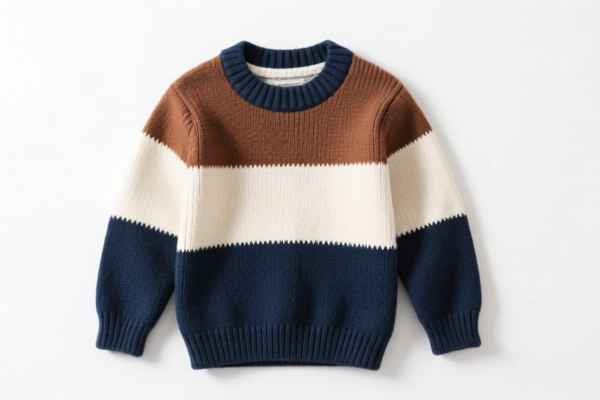
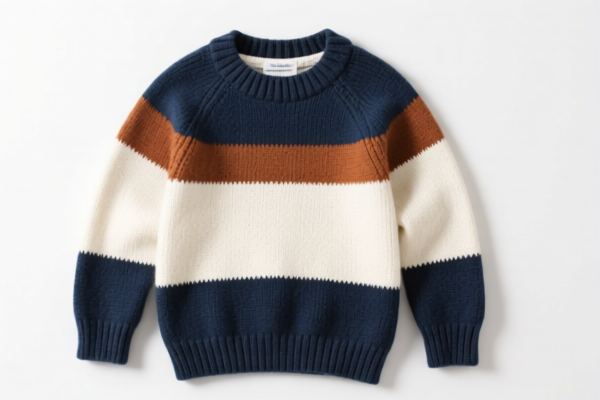
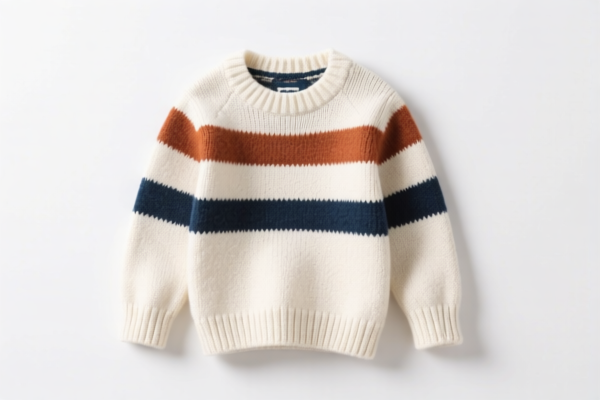
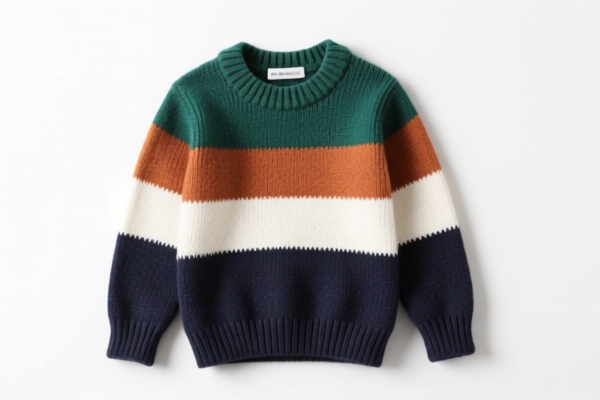
AI Analysis
👕 Boys' Knitted/Crocheted Cotton Round Neck Sweater Set
🌐 HS Code Reference & Customs Clearance Guide | 2026 Latest Tariff Breakdown | Professional Clearance Strategy
📌 I. Product Definition & Classification: Do You Really Know "Sweater Sets"?
A Boys' Knitted/Crocheted Cotton Round Neck Sweater Set typically refers to a matching outfit (usually a top and bottom) or a multi-piece ensemble designed for male children, characterized by: * Material: Primarily Cotton (or cotton blends); * Manufacturing Method: Knitted or Crocheted; * Style: Round neck (pullover style); * Target Group: Boys/Infants.
In international trade, the classification depends heavily on whether the item is considered a "Suit" (Set), a "Pullover" (Sweater), or an "Infant Garment", and whether it constitutes a single functional unit.
⚠️ Key Distinction Points:
- If the item is a matching top and bottom sold together as one unit → Classified as a Suit (Set) under 6114 or 6111.
- If it is a single top (even if round neck) → Classified as a Pullover/Sweater under 6110.
- If the child is infant (usually ≤2 years) → May qualify for Infant Specific rates under 6111.
- Material Composition plays a critical role in determining the specific sub-heading.
📦 2. HS Code Classification Details (2026 Latest Tariff Authority Comparison)
Based on the provided data for Chinese-origin goods imported into the US, here are the potential classifications and their tax implications:
| HS Code | Product Description | Applicable Scenario | Total Tax Rate |
|---|---|---|---|
6114.90.90.45 |
Knitted/Crocheted Suits, Made of Other Textile Materials & Cotton | Matching sets (top+bottom) with mixed/cotton material, fitting "Other" suit criteria | 15.6% |
6114.90.90.70 |
Knitted/Crocheted Pullovers/Sweaters, Made of Cotton | Single tops or sets where the top is dominant, categorized as "Other" knitted/crocheted apparel | 15.6% |
6110.20.20.15 |
Men's/Boys' Knitted Pullovers, Cotton, Round Neck | Single round-neck pullovers for boys, specifically listed under cotton sweaters | 34.0% |
6110.90.90.14 |
Knitted/Crocheted Pullovers, Other Materials (incl. Cotton blends) | Fits the definition of knitted/crocheted pullovers for boys, general category | 23.5% |
6111.20.60.20 |
Cotton Knitted/Crocheted Infant Suits | Specifically for infants (≤2 yrs), cotton knitted suits | 25.6% |
🔍 Key Observation:
- Suits (6114) generally attract lower base tariffs (5.6%) compared to Pullovers (6110) which can have higher base rates (16.5% for specific cotton categories).
- Infant Clothing (6111) offers a middle ground with an 8.1% base rate but carries a 7.5% additional tariff.
- The 122 Clause Tariff adds a flat 10% to all categories listed above.
💰 3. 2026 Latest Tariff Rate Breakdown (Including Additional Taxes)
✅ Applicable Country: United States (US)
✅ Origin: China (CN)
✅ Effective Time: Current regulations (includes Section 301 & 122 Clause implications)
🎯 1. 6114.90.90.45 & 6114.90.90.70 — Knitted/Crocheted Suits & Other Apparel
| Item | Detail |
|---|---|
| Base Tariff | 5.6% (Ad Valorem) |
| Section 301 Additional Tariff | 0.0% (Note: Data indicates 0% for these specific sub-codes, likely due to recent exclusions or specific product codes) |
| Section 122 Clause Tariff | +10% (Applicable to de minimis shipments or specific low-value imports under recent regulatory changes) |
| Total Tax Rate | 15.6% |
| Tax Calculation | CIF Value × 15.6% |
| De Minimis Exemption | ⚠️ Check Compliance: Section 122 implies scrutiny; standard $800 de minimis may not apply if flagged. |
| Legal Basis | HTSUS 6114.90.90 + Trade Act Provisions |
📌 Interpretation:
- This is the most cost-effective classification for sets, with the lowest total tax burden (15.6%).
- The absence of Section 301 tariffs (0.0%) is a significant advantage compared to other apparel categories.
- Ensure the product is truly a "Set" (matched top and bottom) to justify this code.
🎯 2. 6111.20.60.20 — Cotton Knitted Infant Suits
| Item | Detail |
|---|---|
| Base Tariff | 8.1% (Ad Valorem) |
| Section 301 Additional Tariff | +7.5% |
| Section 122 Clause Tariff | +10% |
| Total Tax Rate | 25.6% |
| Tax Calculation | CIF Value × 25.6% |
| De Minimis Exemption | ❌ Not Recommended: High scrutiny on infant goods. |
| Legal Basis | HTSUS 6111.20.60 + Trade Act Provisions |
📌 Interpretation:
- If your product is for infants (≤2 years), this code applies.
- While the base rate (8.1%) is higher than the suit code (5.6%), the total (25.6%) is still lower than the boy's pullover code (34.0%).
- Critical: Must provide clear age indication (e.g., "Infant", "0-24 Months") to qualify.
🎯 3. 6110.20.20.15 — Men's/Boys' Knitted Pullovers, Cotton
| Item | Detail |
|---|---|
| Base Tariff | 16.5% (Ad Valorem) |
| Section 301 Additional Tariff | +7.5% |
| Section 122 Clause Tariff | +10% |
| Total Tax Rate | 34.0% |
| Tax Calculation | CIF Value × 34.0% |
| De Minimis Exemption | ❌ High Risk: Highest tax burden. |
| Legal Basis | HTSUS 6110.20.20 + Trade Act Provisions |
📌 Interpretation:
- This code carries the highest tax rate (34.0%).
- Applies if the item is classified strictly as a pullover rather than a suit/set, and specifically falls under this cotton category.
- Avoid this classification if possible by proving the item is a "Set" or fits into other broader categories.
🎯 4. 6110.90.90.14 — Other Knitted/Crocheted Pullovers
| Item | Detail |
|---|---|
| Base Tariff | 6.0% (Ad Valorem) |
| Section 301 Additional Tariff | +7.5% |
| Section 122 Clause Tariff | +10% |
| Total Tax Rate | 23.5% |
| Tax Calculation | CIF Value × 23.5% |
| De Minimis Exemption | ⚠️ Moderate Risk |
| Legal Basis | HTSUS 6110.90.90 + Trade Act Provisions |
📌 Interpretation:
- A middle-ground option if the product doesn't fit "Cotton" specifics but is still a pullover.
- Lower base rate (6.0%) than6110.20, resulting in a 23.5% total, which is better than the 34.0% but worse than the suit codes.
🛠️ 4. Customs Clearance Practical Advice (Real-World Pitfall Avoidance)
✅ 1. Documentation Checklist (Non-Negotiable)
| Document | Required | Explanation |
|---|---|---|
| ✅ Product Composition Label | ✔️ | Must clearly state "100% Cotton" or blend percentages. Critical for HS Code accuracy. |
| ✅ Style Number & Tech Pack | ✔️ | To prove if it is a "Set" (matched pieces) vs. individual items. |
| ✅ Age Specification | ✔️ | Explicitly state "Boys" or "Infant (0-24M)" to determine if 6111 applies. |
| ✅ Photos of Garment | ✔️ | Show round neck, knitted texture, and any matching bottom piece. |
| ✅ Commercial Invoice | ✔️ | Describe as "Boys' Knitted Cotton Sweater Set" not just "Sweater". |
| ✅ Packing List | ✔️ | Detail quantity of tops and bottoms to support "Set" classification. |
✅ 2. Declaration Tips (Key Mantras)
🔥 “Set vs. Top, Age Matters, Cotton Defines!”
| Scenario | Correct Declaration | Wrong Practice |
|---|---|---|
| Matching Top + Bottom | 6114.90.90.45 (Suit) | Declare as "Sweater" → 34.0% Tax |
| Single Top, Boys | 6110.90.90.14 (Pullover) | Declare as "Infant" without proof → 25.6% or penalty |
| Infant Set (≤2 yrs) | 6111.20.60.20 (Infant Suit) | Declare as "Boys" → Higher tax or misclassification |
| Mixed Material | 6114.90.90.45 (Other Textile) | Declare as "100% Cotton" if inaccurate → Fine/Seizure |
✅ 3. Special Cases Handling
| Case | Handling Advice |
|---|---|
| OEM Custom Sets | Provide design sheets showing the "Set" nature. Ensure packaging implies they are sold together. |
| Round Neck vs. V-Neck | Does not significantly change HS Code for knitted goods, but consistency in description is key. |
| Infant vs. Boy | If age range is 1-3 years, it may still be classified as "Boys" (6110/6114) rather than "Infant" (6111). Check HTSUS notes. |
| High-Value Shipments | Section 301 and 122 tariffs apply fully. No de minimis exemption. |
🌍 5. Global Market Comparison (2026 Latest)
| Country/Region | Recommended HS Code | Total Tax (China Origin) | Certification | Notes |
|---|---|---|---|---|
| 🇺🇸 USA | 6114.90.90.45 |
15.6% | None required for apparel | Best rate for suits. |
| 🇪🇺 EU | 6114.90.90 |
12% | REACH, OEKO-TEX | Lower base, but no 122 clause. |
| 🇨🇳 China | 6114.90.90 |
9% | CCC (if applicable) | Export duty may apply. |
| 🇬🇧 UK | 6114.90.90 |
12% | UKCA | Post-Brexit rules apply. |
📌 Conclusion:
- The US market imposes significant additional tariffs (Section 301/122), making classification accuracy critical to minimize costs.
- Suits (6114) are significantly cheaper than Pullovers (6110) in the US due to lower base rates and/or exemptions.
- Infant goods (6111) offer a middle ground but require strict age verification.
📌 6. Common Errors & Pitfalls (Lessons Learned)
❌ Error 1: Declaring a Set as a single Sweater
👉 Consequence: Tax jumps from 15.6% to 34.0% → 18.4% extra cost!
❌ Error 2: Mislabeling Boys' Garments as Infant to access different rates
👉 Consequence: Customs inspection, penalty for false declaration, or forced reclassification.
❌ Error 3: Ignoring Section 122 Clause (10% Additional Tariff)
👉 Consequence: Unexpected tax burden on low-value shipments; compliance risk.
❌ Error 4: Vague Description ("Men's Sweater")
👉 Consequence: Customs assigns generic code → Highest possible tax rate.
✅ Correct Practice:
"Boys' 2-Piece Knitted Cotton Sweater Set, Round Neck, Style #XYZ, Origin China"
🎯 7. Conclusion: Professional Declaration Saves Money!
🎯 Remember the Mantra:
🔹 "Suits Save Money, Pullovers Cost More, Infant Codes Need Proof!"
🔹 "HS Code is King, Tax Difference is Huge, Accuracy is Survival!"
📌 Pro Tip:
If your product is a Set, always try to classify under 6114 (Suits) for the lowest tax rate (15.6%).
Avoid 6110.20 (Boys' Pullovers) at 34.0% unless necessary.
Apply for an Advance Ruling if unsure about the "Set" vs. "Single Item" classification.
📣 Immediate Action:
📞 Consult with a licensed customs broker.
📄 Provide tech packs and material composition sheets.
🚀 Ensure your commercial invoice clearly states "Set" and "Cotton" to leverage lower tariffs.
✨ Professional Clearance Starts with Precise Classification!
💼 Every Percent Saved is Pure Profit!
Customer Reviews
About HS Code Classification
The Harmonized System (HS) is an internationally standardized nomenclature developed by the World Customs Organization (WCO) to classify traded products. Over 200 countries use the HS system as the basis for customs tariffs, trade statistics, and import/export regulations.
Each HS code follows a hierarchical structure:
- Chapter (2 digits) — Broad category of goods (e.g., Chapter 84: Machinery and Mechanical Appliances)
- Heading (4 digits) — More specific grouping within the chapter
- Subheading (6 digits) — Internationally standardized breakdown, used by all WCO member countries
- National subdivisions (8-10 digits) — Country-specific extensions for further classification, such as US HTSUS 10-digit codes
Correct HS code classification is essential for smooth customs clearance, accurate duty payment, and compliance with trade regulations. Misclassification can lead to customs delays, overpayment of duties, or penalties.
When importing from CN to US, the applicable tariff rates may include:
- Most-Favored-Nation (MFN) rate — The standard duty rate applied to WTO members
- General rate — Applied to countries without trade agreements
- Trade remedy duties — Additional tariffs such as Section 301 (anti-dumping), Section 232 (national security), or countervailing duties
The information provided on this page is for reference purposes only. For official classification, please consult with your local customs authority or a licensed customs broker.