Boys' Knitted/Crocheted Set (Non Cotton Sweater)
CN → US| HS Code | Tariff Rate | Origin | Destination | Doc |
|---|---|---|---|---|
| 6105202030 | 49.5% | CN | US | Official Doc |
| 6105100030 | 37.2% | CN | US | Official Doc |
| 6109100014 | 34.0% | CN | US | Official Doc |
| 6109901009 | 49.5% | CN | US | Official Doc |
| 6110202015 | 34.0% | CN | US | Official Doc |
Product Images
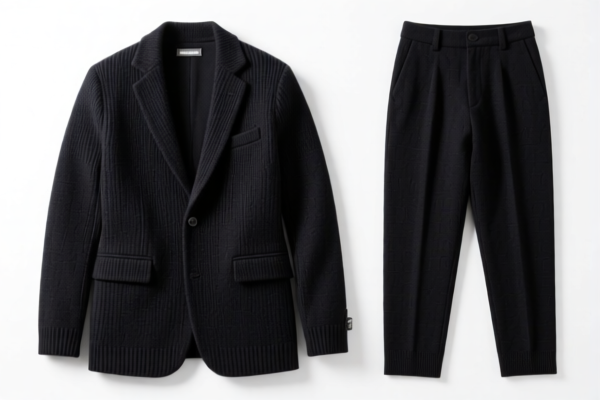
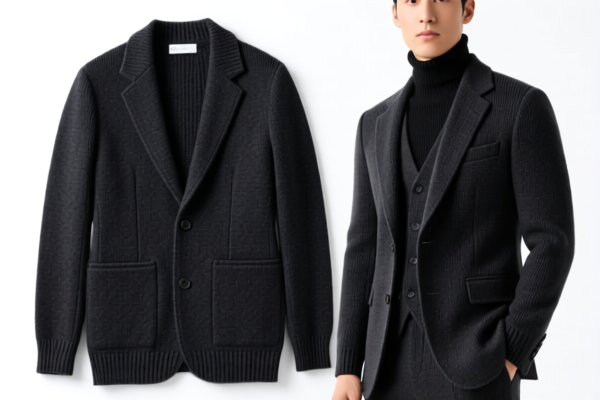
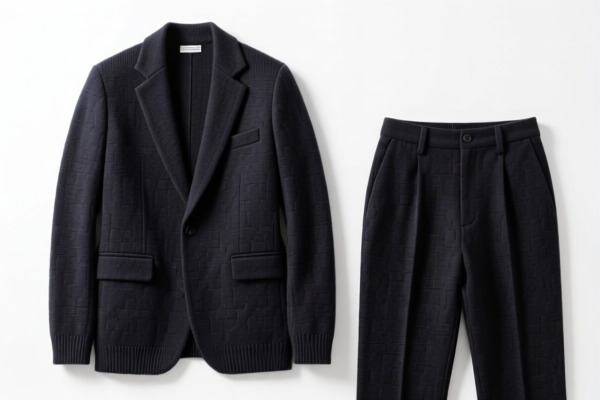
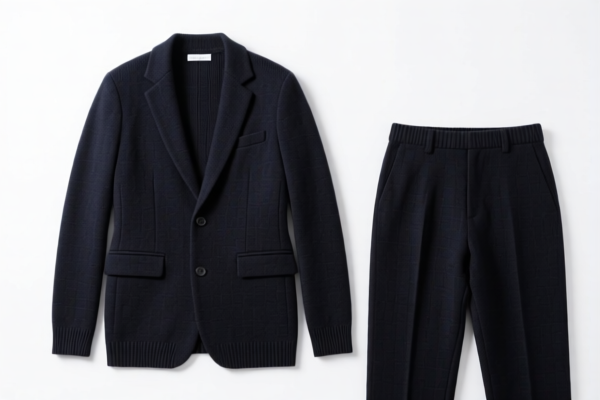
AI Analysis
👕 Boys' Knitted/Crocheted Set (Non-Cotton Sweater)
🌐 HS Code Reference & Customs Clearance Guide | 2026 Latest Tariff Analysis | Professional Clearance Strategy
📌 I. Product Definition & Classification: Do You Really Understand "Boys' Knitted Sets"?
A "Boys' Knitted/Crocheted Set" in this context refers to a matching garment set (typically a sweater and pants or shorts) designed for male children. The critical classification factor is the material composition, specifically excluding cotton. In international trade, these are primarily categorized under Chapter 61 (Articles of Apparel and Clothing Accessories, knitted or crocheted).
Key Classification Drivers: 1. Knitted/Crocheted: The manufacturing method places it in Chapter 61. 2. Boys': Determines the gender-specific subheading (usually 6105, 6109, or 6110 depending on the specific item type, though the provided data aggregates them under general "Boys' Knitted" summaries). 3. Material (Non-Cotton): This is the most critical variable. Whether it is synthetic fiber, wool, or other textiles drastically changes the Base Tariff, which in turn affects the Total Tax.
⚠️ Key Distinction Point:
- Cotton vs. Non-Cotton: Cotton items generally attract lower base tariffs (e.g., 19.7% for shirts). Non-cotton items (synthetics, wool, etc.) often face higher base tariffs (32.0%) or specific subheadings (16.5%) depending on the exact weave and fiber type.
- Set vs. Separate Items: If declared as a "set," the component determining the essential character dictates the HS Code. However, the provided data lists specific HS codes for "Shirts/Sweaters" individually. We must map the user's "Set" to the most relevant component codes provided in the data.
📦 II. HS Code Classification Details (Based on Provided Data)
The provided data lists 5 specific HS codes related to boys' knitted/crocheted tops (shirts/sweaters). We will map the "Non-Cotton Sweater Set" to these codes based on material inference.
| HS Code | Product Description (From Data) | Material Inference | Total Tax | Key Tax Components |
|---|---|---|---|---|
6105.20.20.30 |
Boys' Knitted/Crocheted Shirt, Material Inferred as Fiber Type | Synthetic/Other Fiber | 49.5% | Base: 32.0%, Add-on: 7.5%, Sec 301: 10% |
6105.10.00.30 |
Boys' Knitted/Crocheted Shirt, Material Inferred as Cotton | Cotton | 37.2% | Base: 19.7%, Add-on: 7.5%, Sec 301: 10% |
6109.10.00.14 |
Boys' Knitted/Crocheted Shirt, Meets Material/Usage Requirements | Specific/T-shirt Type | 34.0% | Base: 16.5%, Add-on: 7.5%, Sec 301: 10% |
6109.90.10.09 |
Boys' Knitted/Crocheted Shirt, Material Inferred as Other Textile | Other Textile | 49.5% | Base: 32.0%, Add-on: 7.5%, Sec 301: 10% |
6110.20.20.15 |
Boys' Knitted/Crocheted Sweater, Material Inferred as Cotton or Similar | Cotton/Similar | 34.0% | Base: 16.5%, Add-on: 7.5%, Sec 301: 10% |
🔍 Critical Analysis for "Non-Cotton":
Since the user explicitly stated "Non Cotton", we must exclude: - ❌6105.10.00.30(Inferred Cotton) - ❌6110.20.20.15(Inferred Cotton or Similar)Remaining Candidates for Non-Cotton: - ✅
6105.20.20.30(Fiber Type) → 49.5% - ✅6109.10.00.14(Specific Requirements) → 34.0% - ✅6109.90.10.09(Other Textile) → 49.5%
💰 III. 2026 Latest Tariff Rate Detailed Explanation (Including Surcharges)
✅ Applicable Country: United States (US)
✅ Country of Origin: China (CN) (Inferred from "Section 301" and "122 Clause" which are US-specific measures against China)
✅ Effective Date: 2025 onwards (based on data structure)
🎯 1. 6105.20.20.30 —— Boys' Knitted Shirt (Synthetic/Fiber)
| Item | Content |
|---|---|
| Base Tariff | 32.0% (Ad Valorem) |
| Section 301 Tariff | +10% (Specific "122 Clause" provision) |
| USITC Additional Duty | +7.5% |
| Total Tariff Rate | 49.5% |
| Calculation | CIF Value × 49.5% |
| De Minimis Exemption | ❌ Not Applicable (High tariff rates usually exclude Section 321 benefits) |
| Legal Basis | HTSUS 6105.20.20.30 + Section 301 Footnotes |
📌 Explanation:
- This code applies if the garment is classified as a "shirt" made from synthetic fibers (e.g., polyester, acrylic).
- The 32% base rate is high for textiles.
- Combined with 7.5% USITC and 10% Section 301, the total burden is nearly 50% of the CIF value.
🎯 2. 6109.10.00.14 —— Boys' T-shirt/Tank Top (Specific Material)
| Item | Content |
|---|---|
| Base Tariff | 16.5% (Ad Valorem) |
| Section 301 Tariff | +10% |
| USITC Additional Duty | +7.5% |
| Total Tariff Rate | 34.0% |
| Calculation | CIF Value × 34.0% |
| De Minimis Exemption | ❌ Not Applicable |
| Legal Basis | HTSUS 6109.10.00.14 + Section 301 Footnotes |
📌 Explanation:
- This code is likely for T-shirts or sleeveless tops made of specific non-cotton fibers (possibly synthetic blends meeting certain weight/thickness criteria).
- Significantly cheaper than6105.20.20.30(34% vs 49.5%).
- Strategy: If the "sweater" in the set can be technically classified as a "T-shirt" or "lightweight knit" under6109, this saves 15.5% in taxes.
🎯 3. 6109.90.10.09 —— Boys' T-shirt (Other Textile)
| Item | Content |
|---|---|
| Base Tariff | 32.0% (Ad Valorem) |
| Section 301 Tariff | +10% |
| USITC Additional Duty | +7.5% |
| Total Tariff Rate | 49.5% |
| Calculation | CIF Value × 49.5% |
| De Minimis Exemption | ❌ Not Applicable |
| Legal Basis | HTSUS 6109.90.10.09 + Section 301 Footnotes |
📌 Explanation:
- This covers "Other" T-shirts made from textiles not specified elsewhere (e.g., wool, silk, or complex blends).
- Same high tax burden as6105.20.20.30.
🛠️ IV. Customs Clearance Practical Advice (Real-World Pitfall Guide)
✅ 1. Material Declaration is Critical
| Material | Recommended HS Code | Total Tax | Risk Level |
|---|---|---|---|
| Polyester/Acrylic (Synthetic) | 6105.20.20.30 or 6109.90.10.09 |
49.5% | 🔴 High Cost |
| Wool/Animal Hair | Check 6110 or 6105 specific wool codes |
Likely 49.5%+ | 🔴 High Cost |
| Blended Non-Cotton | 6109.10.00.14 (if T-shirt type) |
34.0% | 🟢 Lower Cost |
| Cotton (Incorrectly Declared) | 6105.10.00.30 |
37.2% | 🟡 Medium Cost |
⚠️ Warning:
- Do not declare a non-cotton sweater as6110.20.20.15(Cotton) to save tax. Customs labs will test the fabric. If found to be synthetic, you face penalties, back taxes, and potential seizure.
✅ 2. Declaration Tips (Key Mantra)
🔥 "Fabric Content First, Style Second. Don't Hide the Blend, Declare it Clean."
| Situation | Correct Declaration | Incorrect Declaration | Consequence |
|---|---|---|---|
| Polyester Sweater | "Boys' Knitted Sweater, 100% Polyester, Non-Cotton" | "Boys' Sweater, Cotton" | ❌ Audit, Penalty, 49.5% + Back Tax |
| T-shirt Style Sweater | "Boys' Knitted T-shirt, Synthetic" | "Boys' Shirt" | ✅ May qualify for 6109.10.00.14 (34%) |
| Set Packaging | Declare the Top item primarily if it defines character | Split into shirt + pants | ❌ Complex, higher scrutiny |
✅ 3. Special Case Handling
| Situation | Handling Advice |
|---|---|
| "Non-Cotton" Ambiguity | If the material is a blend (e.g., 60% Polyester, 40% Cotton), it is still classified by the major fiber. If >50% Cotton, use Cotton codes. If >50% Synthetic, use Non-Cotton codes. |
| T-shirt vs. Sweater | If the garment is lightweight and short-sleeved, argue for 6109 (T-shirt) under 6109.10.00.14 (34%) instead of 6105 (Shirt) or 6110 (Sweater). This is a major cost-saving strategy. |
| Section 301 Exemptions | Check if the specific HTSUS code has an Exclusion List number. If your code is excluded from Section 301, the 10% surcharge may be removed, lowering the total from 49.5% to ~39.5%. |
🌍 V. Global Market Comparison (2026 Latest)
| Country/Region | Recommended HS Code (Non-Cotton) | Estimated Tariff | Notes |
|---|---|---|---|
| 🇺🇸 USA | 6109.10.00.14 (Optimized) or 6105.20.20.30 |
34% - 49.5% | High due to Section 301 & USITC. |
| 🇨🇳 China | 6105.20 / 6109.10 | ~10-15% | No Section 301. Much cheaper. |
| 🇪🇺 EU | 6105.20 / 6109.10 | ~12-16% | No additional trade war tariffs. |
| 🇯🇵 Japan | 6105.20 / 6109.10 | ~10-12% | Stable rates. |
📌 Conclusion:
- The USA is the most expensive market due to Section 301 (10%) and USITC (7.5%) surcharges.
- Optimization Strategy: If possible, design the "sweater" component of the set to meet the definition of a T-shirt (6109) with synthetic fibers, reducing the tax from 49.5% to 34.0%.
📌 VI. Common Mistakes & Pitfall Guide (Lessons from Blood)
❌ Mistake 1: Declaring "Non-Cotton" as "Cotton" to get 37.2% instead of 49.5%
👉 Consequence: Customs lab test fails → Penalty + Back Tax + Storage Fees.
❌ Mistake 2: Ignoring the USITC 7.5% surcharge
👉 Consequence: Under-calculating CIF value for duty → Audit Risk.
❌ Mistake 3: Using 6110.20.20.15 (Cotton) for a Polyester Sweater
👉 Consequence: Wrong HS Code. 6110 is for "Sweaters, pullovers...". If material is wrong, it's misclassification. Use 6105 (Shirts) or 6109 (T-shirts) depending on cut.
✅ Correct Approach:
"Boys' Knitted Set: Top is 100% Polyester T-shirt style (
6109.10.00.14), Bottom is Poly Shorts. Total Duty: 34%."
🎯 VII. Conclusion: Precise Classification Saves Money!
🎯 Remember the Mantra:
🔹 "Non-Cotton? Check 6109 first. If T-shirt style, pay 34%. If Shirt/Sweater, pay 49.5%."
🔹 "Material is King. Declare it right, or pay the penalty."
📌 Pro Tip:
If your "Non-Cotton" sweater is made from Recycled Polyester, check if there are any Green Trade incentives or lower rates in specific free trade agreements (though US-China currently has none).
Always request a Pre-Ruling from CBP if the material composition is a blend.
📣 Immediate Action:
📞 Verify the exact fiber content.
📝 If it's a T-shirt style, use6109.10.00.14.
🚀 Save 15.5% in taxes by choosing the right HS Code!
✨ Professional Clearance Starts with Accurate Classification!
💼 Every percentage point counts in your profit margin!
Customer Reviews
About HS Code Classification
The Harmonized System (HS) is an internationally standardized nomenclature developed by the World Customs Organization (WCO) to classify traded products. Over 200 countries use the HS system as the basis for customs tariffs, trade statistics, and import/export regulations.
Each HS code follows a hierarchical structure:
- Chapter (2 digits) — Broad category of goods (e.g., Chapter 84: Machinery and Mechanical Appliances)
- Heading (4 digits) — More specific grouping within the chapter
- Subheading (6 digits) — Internationally standardized breakdown, used by all WCO member countries
- National subdivisions (8-10 digits) — Country-specific extensions for further classification, such as US HTSUS 10-digit codes
Correct HS code classification is essential for smooth customs clearance, accurate duty payment, and compliance with trade regulations. Misclassification can lead to customs delays, overpayment of duties, or penalties.
When importing from CN to US, the applicable tariff rates may include:
- Most-Favored-Nation (MFN) rate — The standard duty rate applied to WTO members
- General rate — Applied to countries without trade agreements
- Trade remedy duties — Additional tariffs such as Section 301 (anti-dumping), Section 232 (national security), or countervailing duties
The information provided on this page is for reference purposes only. For official classification, please consult with your local customs authority or a licensed customs broker.