Boys' Knitted/Crocheted Set (Non swimwear) Polyester Jacket
CN → US| HS Code | Tariff Rate | Origin | Destination | Doc |
|---|---|---|---|---|
| 6203392020 | 44.8% | CN | US | Official Doc |
| 6114303044 | 32.4% | CN | US | Official Doc |
| 6203292020 | 0.0% | CN | US | Official Doc |
| 6114303060 | 32.4% | CN | US | Official Doc |
| 6103391000 | 32.4% | CN | US | Official Doc |
Product Images
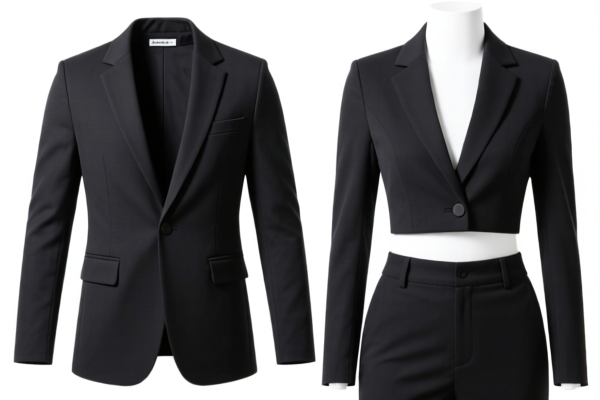
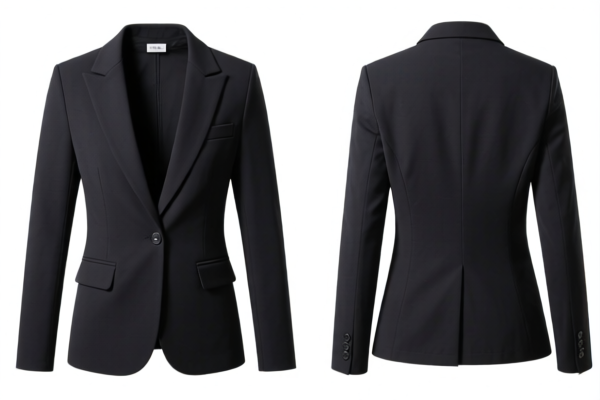
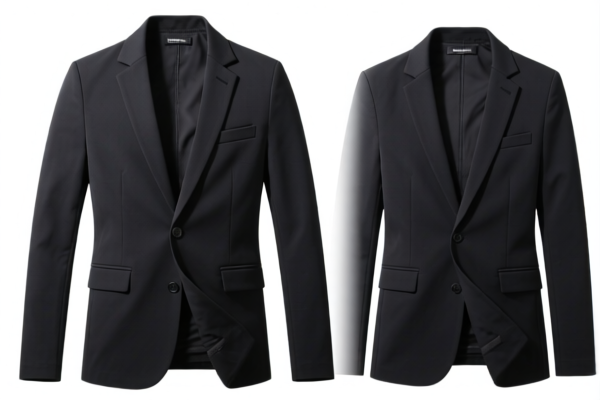
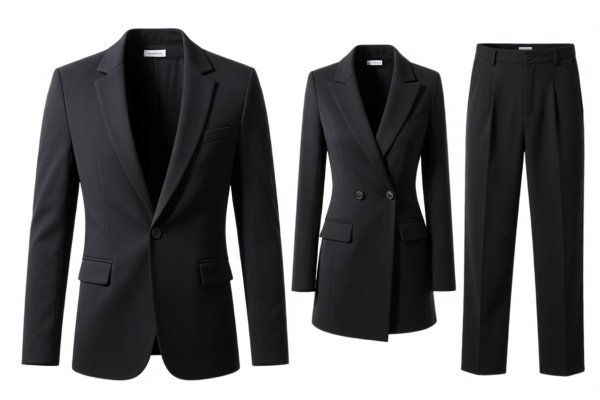
AI Analysis
👕 Boys' Knitted/Crocheted Set (Non-swimwear) Polyester Jacket
🌐 HS Code Reference & Customs Clearance Guide | 2026 Latest Tariff Analysis | Professional Clearance Strategy 📌 I. Product Definition & Classification: Do You Really Understand "Boys' Sets"?
This product refers to a coordinated outfit for boys, typically consisting of a knitted or crocheted jacket and matching bottoms (such as trousers or shorts), made primarily from man-made fibers (polyester).
In international trade, the key to classification lies in determining whether the items constitute an "Ensemble" (Set) or separate garments, and specifically identifying the fabric structure (Knitted vs. Woven) and material (Polyester).
⚠️ Key Classification Point:
- If the items are knitted or crocheted (flexible, looped fabric) → Chapter 61
- If the items are woven (traditional fabric weave) → Chapter 62
- If they form a single set/ensemble sold together → Specific "Set" codes apply.
- Non-swimwear is explicitly stated, excluding Chapter 61/62 swimwear subheadings.
📦 II. HS Code Classification Details (2026 Latest Tariff Authority对照)
Based on the provided data, the product falls under Chapter 61 (Articles of Apparel and Clothing Accessories, Knitted or Crocheted). Here is the precise mapping:
| HS Code | Product Description | Applicable Scenario | Total Tax Rate | Tax Breakdown |
|---|---|---|---|---|
6114.30.30.44 |
Boys' Knitted/Crocheted Man-Made Fiber Polyester Set (Non-swimwear) | Standard boys' knit sets (jacket + pants), non-swimwear | 32.4% | Base: 14.9%, Section 301: 7.5%, Section 122: 10% |
6114.30.30.60 |
Boys' Knitted/Crocheted Man-Made Fiber Polyester Garments (Non-swimwear Style) | Individual knit polyester garments (if not classified as a set) or similar styles | 32.4% | Base: 14.9%, Section 301: 7.5%, Section 122: 10% |
🔍 Critical Note:
- Why Chapter 61? The input specifies "Knitted/Crocheted". If the jacket were woven, it would fall under Chapter 62 (e.g.,6203.39.20.20with 44.8% tax).
- Why 6114? This subheading covers "Other garments, knitted or crocheted," which includes sets and other apparel not specified elsewhere (like suits or coats under 6103/6104).
- Section 122 Tariff: The 10% surcharge is a critical recent addition (likely related to specific labor or trade enforcement provisions) that significantly impacts the total cost.
💰 III. 2026 Latest Tariff Rate Detailed Breakdown (Including Surcharges)
✅ Applicable Country: United States (US)
✅ Country of Origin: China (CN)
✅ Effective Date: Current (Post-2025 Adjustments)
🎯 1. 6114.30.30.44 — Boys' Knitted/Crocheted Polyester Set (Non-swimwear)
| Item | Content |
|---|---|
| Base Tariff | 14.9% (Ad Valorem) |
| Section 301 Tariff (Trade War) | +7.5% |
| Section 122 Tariff | +10% |
| Total Effective Rate | 32.4% |
| Tax Calculation | CIF Value × 32.4% |
| De Minimis Exemption? | ❌ No (Likely excluded due to Section 301/122 status) |
| Legal Basis Path | HTSUS:6114.30.30.44 → Section 301: 7.5% → Section 122: 10% |
📌 Explanation:
- Base Rate (14.9%): Standard MFN rate for knitted polyester garments for boys.
- Section 301 (7.5%): Ongoing tariffs on Chinese manufactured goods.
- Section 122 (10%): A specific additional duty. Note: Section 122 often relates to specific trade remedies or enforcement actions. Ensure your supplier confirms this applicability.
- Total (32.4%): This is a high-cost classification. Profit margins must account for this.
🛠️ IV. Customs Clearance Practical Advice (Battle-Tested Pitfall Guide)
✅ 1. Documentation Checklist (Non-Negotiable)
| Document | Required | Notes |
|---|---|---|
| ✅ Product Description | ✔️ | Must clearly state: "Boys' Knitted Set, Polyester, Non-Swimwear" |
| ✅ Fabric Composition | ✔️ | Confirm 100% Polyester or blend ratio. "Knitted" must be explicit. |
| ✅ Set Definition | ✔️ | Prove items are sold together as a set (e.g., same packaging, SKU). |
| ✅ Commercial Invoice | ✔️ | Value must reflect CIF (Cost, Insurance, Freight). |
| ✅ Packing List | ✔️ | Detail contents (Jacket + Pants/Shoes/etc. if part of set). |
| ✅ Origin Certificate | ✔️ | If claiming any preferential treatment (though unlikely for CN-US trade). |
✅ 2. Classification Strategy (Key Mantra)
🔥 “Knitted = 61, Woven = 62. Set vs. Separate = Tax Difference! Check Section 122!”
| Scenario | Correct HS Code | Risk if Wrong |
|---|---|---|
| Knitted Set | 6114.30.30.44 (32.4%) |
Misclassifying as Woven (6203...) → 44.8% Tax → Overpayment |
| Woven Set | 6203.39.20.20 (44.8%) |
Misclassifying as Knitted → Underpayment → Audit/Fines |
| Individual Jacket | 6114.30.30.60 (32.4%) |
If sold separately, do not use "Set" code. |
⚠️ Warning:
- Do NOT classify as "Swimwear" (6111...) unless it is explicitly for swimming. The input says "Non-swimwear."
- Do NOT confuse with "Suits" (6103...). Suits typically refer to formal jackets + trousers with specific construction. Knitted "sets" are casual wear, falling under 6114.
🌍 V. Global Market Comparison (2026 Latest)
| Country/Region | Recommended HS Code | Tariff (China Origin) | Certification | Notes |
|---|---|---|---|---|
| 🇺🇸 USA | 6114.30.30.44 |
32.4% | None (General) | High due to Sec 122/301. |
| 🇨🇳 China | 6114.30.30 |
~14-16% | None | Lower import duty into China. |
| 🇪🇺 EU | 6114.30.30 |
~12-14% | CE/REACH | No Section 122 equivalent. |
| 🇬🇧 UK | 6114.30.30 |
~12-14% | UKCA | Post-Brexit alignment. |
| 🇨🇦 Canada | 6114.30.30 |
~17-20% | None | No Section 301/122. |
📌 Conclusion:
- The USA market is the most expensive for this product due to the cumulative 32.4% tariff.
- Europe and Canada offer significantly lower duty rates (~12-20%), but compliance costs (CE/REACH) may vary.
- Strategy: If targeting the US, consider supply chain diversification (e.g., Vietnam/Bangladesh) to avoid Section 301/122 tariffs, or negotiate price sharing with customers.
📌 VI. Common Errors & Pitfalls (Lessons Learned)
❌ Error 1: Classifying Knitted Sets as Woven (6203...)
👉 Consequence: 44.8% Tax instead of 32.4% → Overpayment by 12.4% on every unit.
❌ Error 2: Classifying as "Swimwear" to avoid certain tariffs (if applicable)
👉 Consequence: Rejected by Customs → Goods detained → Fines + Storage Fees.
❌ Error 3: Ignoring "Section 122"
👉 Consequence: Underpayment → Customs audit → Back taxes + Penalties.
❌ Error 4: Not defining "Knitted" clearly
👉 Consequence: Customs may assume "Woven" → Wrong HS Code → Delay.
✅ Correct Approach:
"Boys' Knitted Polyester Set (Jacket & Trousers), Non-Swimwear, 100% Polyester, Knitted Fabric"
🎯 VII. Conclusion: Precision Classification, Cost Optimization!
🎯 Remember the Mantra:
🔹 "Knitted = 61, Woven = 62. Set = 6114. Non-Swimwear = Explicit. Section 122 = 10% Extra!"
🔹 "HS Code Saves Money, Wrong Code Costs You 32.4%+!"
📌 Pro Tip:
- For US Imports, the 32.4% total tariff is significant.
- Action: Verify if your supplier has any Section 301 Exclusions or if you can utilize Foreign Trade Zones (FTZs) to defer duties.
- Recommendation: Apply for an Advance Ruling from CBP if the product's "knitted" nature or "set" definition is ambiguous.
📣 Immediate Action:
📞 Contact a Licensed Customs Broker
📤 Provide Fabric Swatch + Product Photos
✅ Confirm Section 122 applicability with your forwarder
🚀 Clear Customs Smoothly, Boost Profits, Expand Global Reach!
✨ Professional Clearance Starts with Accurate Classification!
💼 Every Percent Counts in Global Trade!
Customer Reviews
About HS Code Classification
The Harmonized System (HS) is an internationally standardized nomenclature developed by the World Customs Organization (WCO) to classify traded products. Over 200 countries use the HS system as the basis for customs tariffs, trade statistics, and import/export regulations.
Each HS code follows a hierarchical structure:
- Chapter (2 digits) — Broad category of goods (e.g., Chapter 84: Machinery and Mechanical Appliances)
- Heading (4 digits) — More specific grouping within the chapter
- Subheading (6 digits) — Internationally standardized breakdown, used by all WCO member countries
- National subdivisions (8-10 digits) — Country-specific extensions for further classification, such as US HTSUS 10-digit codes
Correct HS code classification is essential for smooth customs clearance, accurate duty payment, and compliance with trade regulations. Misclassification can lead to customs delays, overpayment of duties, or penalties.
When importing from CN to US, the applicable tariff rates may include:
- Most-Favored-Nation (MFN) rate — The standard duty rate applied to WTO members
- General rate — Applied to countries without trade agreements
- Trade remedy duties — Additional tariffs such as Section 301 (anti-dumping), Section 232 (national security), or countervailing duties
The information provided on this page is for reference purposes only. For official classification, please consult with your local customs authority or a licensed customs broker.