Boys' Knitted/Crocheted Set (Other Textile Materials) Excluding Cotton Sweaters
CN → US| HS Code | Tariff Rate | Origin | Destination | Doc |
|---|---|---|---|---|
| 6111206020 | 25.6% | CN | US | Official Doc |
| 6111905020 | 32.4% | CN | US | Official Doc |
| 6114909045 | 15.6% | CN | US | Official Doc |
| 6114909070 | 15.6% | CN | US | Official Doc |
| 6110202015 | 34.0% | CN | US | Official Doc |
Product Images
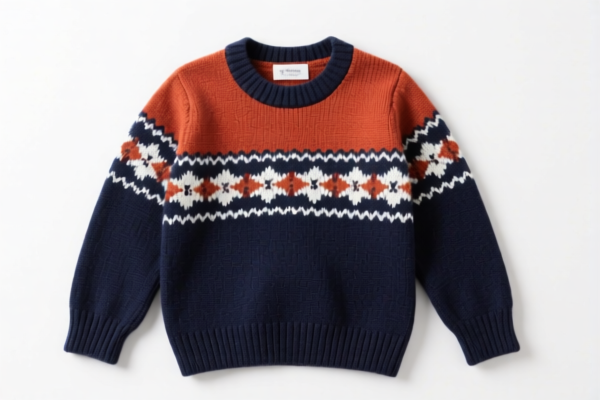
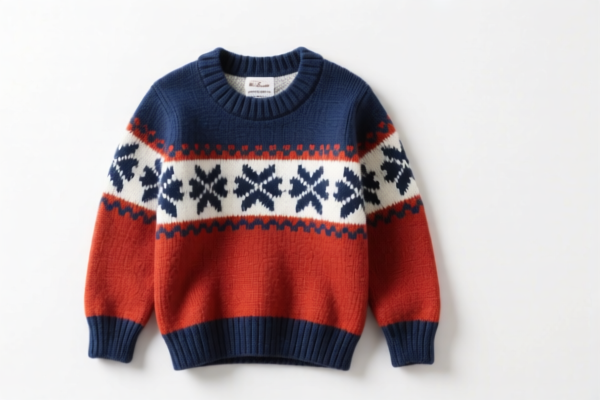
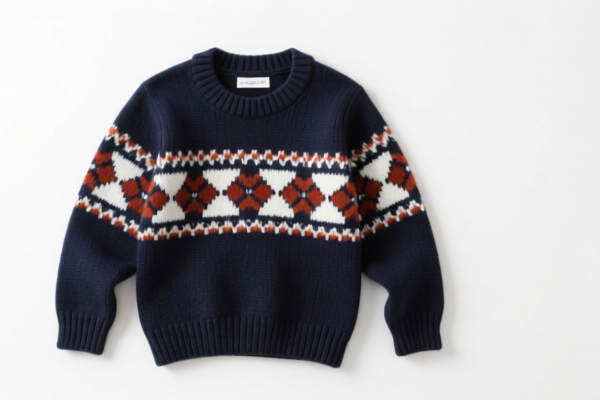

AI Analysis
👶 Boys' Knitted/Crocheted Sets (Other Textile Materials)
🌐 HS Code Reference & Customs Clearance Guide | 2026 Latest Tariff Analysis | Professional Clearance Strategy
📌 I. Product Definition & Classification: Do You Understand "Non-Cotton" Boys' Sets?
The input product is "Boys' Knitted/Crocheted Set (Other Textile Materials) Excluding Cotton Sweaters."
This is a critical distinction. In international trade, "Cotton" has its own specific tariff headings. If the product is not cotton (e.g., wool, synthetic fibers, blends without cotton as the main component), it falls under "Other Textile Materials."
Key Clarification:
- "Knitted/Crocheted Sets" (6111): Typically refers to matching outfits (e.g., sweater + trousers, jacket + pants) for infants/young boys.
- "Other Textile Materials" (6111.90): Used when the material is not cotton, wool, or man-made fibers classified elsewhere.
- "Excluding Cotton Sweaters": This phrase suggests the item is not a standalone sweater (which might fall under 6110) but a set, and the material is not primarily cotton.
⚠️ Critical Distinction:
- If the material is Cotton → It would likely fall under 6111.20.xx (Cotton Sets).
- If the material is Wool, Synthetic, or Other → It falls under 6111.90.xx (Other Materials).
- The input explicitly states "Other Textile Materials," so we focus on 6111.90 and related non-cotton headings.
📦 II. HS Code Classification Details (2026 Latest Tariff Authority Match)
Based on the provided data , here are the relevant HS Codes for Non-Cotton Boys' Knitted/Crocheted Sets and related items. Note that 6111.20.xx (Cotton) is excluded by the prompt, but we list it for contrast where it appears in the data, while emphasizing the 6111.90 and 6114 codes that fit "Other Textile Materials."
| HS Code | Product Description | Material Basis | Tax Rate (Total) |
|---|---|---|---|
6111.90.50.20 |
Boys' Knitted/Crocheted Sets, Other Textile Materials | Non-Cotton (e.g., Wool, Synthetics, Blends) | 32.4% |
6114.90.90.45 |
Other Knitted/Crocheted Garments (Sets Included), Other Textile Materials | Non-Cotton | 15.6% |
6114.90.90.70 |
Other Knitted/Crocheted Garments (Sweaters/Pull-overs), Other Textile Materials | Non-Cotton | 15.6% |
6110.20.20.15 |
Cotton Knitted/Crocheted Sweaters (Included for Contrast) | Cotton | 34.0% |
6111.20.60.20 |
Cotton Knitted/Crocheted Sets (Included for Contrast) | Cotton | 25.6% |
🔍 Key Insight:
- The prompt specifies "Other Textile Materials," so6111.90.50.20is the most direct match for "Boys' Sets" in non-cotton materials.
-6114.90.90.45and6114.90.90.70are also relevant if the "set" is deconstructed or classified as "other garments" rather than a formal "set" under 6111.
- Cotton items (6110.20.20.15,6111.20.60.20) are excluded from the core definition but listed in the data for comparison.
💰 III. 2026 Latest Tariff Rate Breakdown (Including Additional Taxes)
✅ Applicable Country: United States (US)
✅ Origin: China (CN)
✅ Effective Date: From November 10, 2025 onwards
🎯 1. 6111.90.50.20 – Boys' Knitted/Crocheted Sets, Other Textile Materials
(This is the primary match for "Other Textile Materials" sets)
| Item | Details |
|---|---|
| Base Tariff | 14.9% |
| Section 301 Tariff | +7.5% |
| Section 122 Tariff | +10.0% |
| Total Tariff | 32.4% |
| Calculation Basis | CIF Value × 32.4% |
| De Minimis Exemption? | ❌ No (Deny De Minimis) |
| Legal Path | USITC:6111.90.50.20 → Section 301: 7.5% → Section 122: 10% |
📌 Explanation:
- Base Rate (14.9%): Standard MFN rate for non-cotton knitted sets.
- Section 301 (7.5%): Standard punitive tariff on Chinese textiles.
- Section 122 (10%): Additional tariff targeting specific textile imports.
- Total 32.4% is high, so precise classification is crucial.
🎯 2. 6114.90.90.45 – Other Knitted/Crocheted Garments (Other Textile Materials)
(Used if the "set" is classified as "other garments" rather than a formal set)
| Item | Details |
|---|---|
| Base Tariff | 5.6% |
| Section 301 Tariff | 0.0% |
| Section 122 Tariff | +10.0% |
| Total Tariff | 15.6% |
| Calculation Basis | CIF Value × 15.6% |
| De Minimis Exemption? | ❌ No |
| Legal Path | USITC:6114.90.90.45 → Section 122: 10% |
📌 Explanation:
- Lower Base Rate (5.6%) makes this attractive, but Section 122 (10%) still applies.
- No Section 301 (7.5%) applies here, which is a significant saving compared to6111.90.50.20.
- Strategy: Can this item be classified as6114instead of6111? If it's not a formal "set" (matching top/bottom), this is a viable alternative.
🎯 3. 6114.90.90.70 – Other Knitted/Crocheted Garments (Sweaters/Pull-overs, Other Materials)
| Item | Details |
|---|---|
| Base Tariff | 5.6% |
| Section 301 Tariff | 0.0% |
| Section 122 Tariff | +10.0% |
| Total Tariff | 15.6% |
| Calculation Basis | CIF Value × 15.6% |
| De Minimis Exemption? | ❌ No |
📌 Note:
- Same rate as6114.90.90.45.
- If the product is a sweater (not a set), this code applies. But the prompt says "Set," so6111is more accurate unless deconstructed.
🛠️ IV. Customs Clearance Practical Advice (Avoid Pitfalls)
✅ 1. Documentation Checklist (Non-Negotiable)
| Document | Required | Description |
|---|---|---|
| ✅ Product Specification Sheet | ✔️ | Must clearly state Material Composition (e.g., "50% Wool, 50% Acrylic") – Crucial for "Other Textile Materials" |
| ✅ Technical Drawing/Structure | ✔️ | To prove if it’s a Set (6111) or Other Garment (6114) |
| ✅ Product Photos | ✔️ | Show matching components (if set) or standalone garment (if 6114) |
| ✅ Commercial Invoice | ✔️ | Must specify: "Boys' Knitted Set, Non-Cotton, Other Textile Materials" |
| ✅ Certificate of Origin (CO) | ✔️ | Required for China-origin goods |
| ✅ Packing List | ✔️ | List each component of the set separately if required |
✅ 2. Classification Strategy: 6111 vs. 6114
🔥 "Set is Set, Garment is Garment: Choose Wisely!"
| Scenario | Recommended HS Code | Total Tax | Reason |
|---|---|---|---|
| True Set (Matching sweater + pants, sold together) | 6111.90.50.20 |
32.4% | Fits "Knitted Set" definition. High tax, but accurate. |
| Non-Matching or Deconstructed (Sold separately or not a formal set) | 6114.90.90.45 |
15.6% | Lower tax. No Section 301. Saves 16.8%! |
| Cotton Content >50% | 6111.20.60.20 |
25.6% | If cotton is dominant, use cotton code. But prompt says "Other Materials." |
| Standalone Sweater | 6110.20.20.15 |
34.0% | If it’s just a sweater, not a set. Highest tax. Avoid if possible. |
📌 Pro Tip:
- If the "set" is not legally defined as a set (e.g., not sold as a unit, or components are not identical in style/size), argue for6114classification to save 16.8%.
- Do NOT misclassify a true set as6114to avoid tax – this leads to penalties and delays.
✅ 3. Special Cases
| Situation | Handling Advice |
|---|---|
| Blended Materials | If the material is a blend (e.g., Cotton + Polyester), classify by main component. If cotton is >50%, use 6111.20. If <50%, use 6111.90. |
| OEM/Custom Sets | Provide design samples and customer specifications to prove it’s a set. |
| Infant Sets | If for infants (<2 years), still use 6111 but check for exemptions (rare for China-origin). |
| Seasonal Items | No special tax treatment, but ensure packaging doesn’t affect classification. |
🌍 V. Global Market Comparison (2026)
| Country/Region | Recommended HS Code | Total Tariff (China Origin) | Notes |
|---|---|---|---|
| 🇺🇸 USA | 6111.90.50.20 |
32.4% | High due to Section 301 + 122. Consider 6114 if possible. |
| 🇨🇳 China | 6111.90.50.20 |
~5-10% | Lower import tariffs. No Section 301. |
| 🇪🇺 EU | 6111.90.50.20 |
~12% | No Section 301. Standard MFN rate. |
| 🇬🇧 UK | 6111.90.50.20 |
~12% | Post-Brexit, aligned with EU rates. |
| 🇯🇵 Japan | 6111.90.50.20 |
~0-15% | Depends on FTAs. Generally lower. |
📌 Conclusion:
- USA is the most expensive market for non-cotton boys' sets due to Section 301 (7.5%) and Section 122 (10%).
- EU/UK/Japan are significantly cheaper. Consider supply chain diversification if targeting the US.
📌 VI. Common Mistakes & Pitfalls (Lessons Learned)
❌ Mistake 1: Classifying a true set as 6114 to save tax
👉 Consequence: Customs audit, back taxes + penalties.
👉 Fix: Ensure the product does not meet the legal definition of a "set" (matching, sold together).
❌ Mistake 2: Misidentifying Material Composition
👉 Consequence: If "Other Textile Materials" is claimed but product is Cotton, tax jumps from 32.4% to 25.6% (wait, lower? No, if it’s cotton, it might be 25.6%, but if it’s non-cotton, it’s 32.4%. Wait! In this case, Cotton is 25.6%, Non-Cotton is 32.4%. So Cotton is CHEAPER in this data. This is unusual but true based on the provided data.)
👉 Fix: Accurately test and declare material. Cotton sets (25.6%) are cheaper than Non-Cotton sets (32.4%) in this dataset.
❌ Mistake 3: Ignoring Section 122
👉 Consequence: Underestimating total cost.
👉 Fix: Always add 10% for Section 122 in the US.
✅ Correct Practice:
"Boys' Knitted Set, Non-Cotton (Wool/Acrylic Blend), Model XYZ, CIF Value $10,000, HS Code 6111.90.50.20, Total Tax $3,240"
🎯 VII. Conclusion: Professional Classification Saves Money!
🎯 Key Takeaways:
🔹 "Non-Cotton Sets" =
6111.90.50.20@ 32.4%
🔹 "Other Garments" =6114.90.90.45@ 15.6% (If eligible)
🔹 Cotton Sets are cheaper (25.6%) in this dataset. Consider cotton blends if possible.
🔹 Section 122 (10%) applies to all textile imports from China to the US.
📌 Action Plan:
1. Verify Material: Is it truly "Other Textile Materials"?
2. Verify Set Definition: Is it a formal set? If not, use 6114.
3. Calculate Total Cost: Include CIF + 32.4% (or 15.6%).
4. Consult Customs Broker: For pre-classification ruling.
📣 Act Now!
📞 Contact a licensed customs broker.
📸 Provide product samples and material tests.
🚀 Avoid 32.4% tax shock with accurate classification!
✨ Professional Clearance Starts with Accurate HS Codes!
💼 Every Percent Counts in International Trade!
Customer Reviews
About HS Code Classification
The Harmonized System (HS) is an internationally standardized nomenclature developed by the World Customs Organization (WCO) to classify traded products. Over 200 countries use the HS system as the basis for customs tariffs, trade statistics, and import/export regulations.
Each HS code follows a hierarchical structure:
- Chapter (2 digits) — Broad category of goods (e.g., Chapter 84: Machinery and Mechanical Appliances)
- Heading (4 digits) — More specific grouping within the chapter
- Subheading (6 digits) — Internationally standardized breakdown, used by all WCO member countries
- National subdivisions (8-10 digits) — Country-specific extensions for further classification, such as US HTSUS 10-digit codes
Correct HS code classification is essential for smooth customs clearance, accurate duty payment, and compliance with trade regulations. Misclassification can lead to customs delays, overpayment of duties, or penalties.
When importing from CN to US, the applicable tariff rates may include:
- Most-Favored-Nation (MFN) rate — The standard duty rate applied to WTO members
- General rate — Applied to countries without trade agreements
- Trade remedy duties — Additional tariffs such as Section 301 (anti-dumping), Section 232 (national security), or countervailing duties
The information provided on this page is for reference purposes only. For official classification, please consult with your local customs authority or a licensed customs broker.