Boys' Knitted/Crocheted Set Non Cotton Sweater
CN → US| HS Code | Tariff Rate | Origin | Destination | Doc |
|---|---|---|---|---|
| 6112110030 | 32.4% | CN | US | Official Doc |
| 6117909003 | 32.1% | CN | US | Official Doc |
| 6110909067 | 23.5% | CN | US | Official Doc |
| 6110202015 | 34.0% | CN | US | Official Doc |
| 6112110010 | 32.4% | CN | US | Official Doc |
Product Images
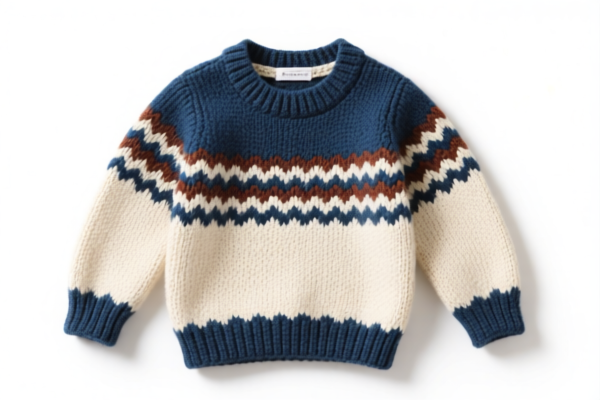
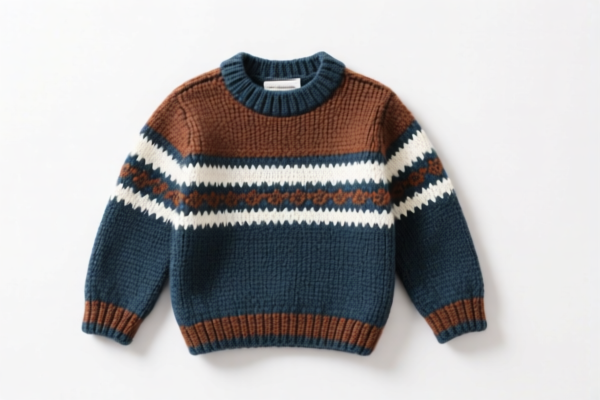
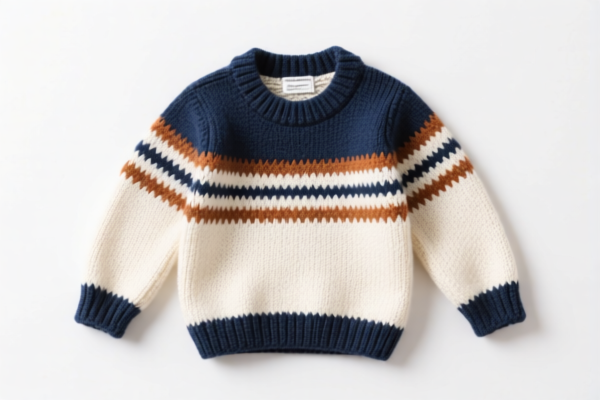
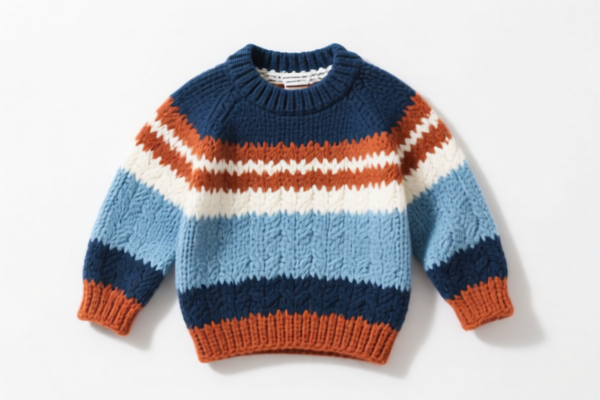
AI Analysis
👕 Boys' Knitted/Crocheted Set (Non-Cotton Sweater)
🌐 HS Code Reference & Customs Clearance Guide | 2026 Latest Tariff Analysis | Professional-Level Clearance Strategy
📌 I. Product Definition & Classification: Do You Really Understand "Boys' Knitted Sets"?
A "Boys' Knitted/Crocheted Set" typically refers to a complete outfit (e.g., sweater + pants/shorts) or a coordinated set made for boys, characterized by knitted or crocheted fabric. The key distinction lies in the material composition. Since the prompt specifies "Non-Cotton", we must look beyond cotton-specific headings and focus on synthetic fibers (polyester, acrylic, wool blends, etc.).
⚠️ Key Distinction:
- If the set is Cotton-based → It would fall under 6110.20 or 6112.11 (as seen in the provided data).
- If the set is Non-Cotton (e.g., Acrylic, Polyester, Wool) → It falls under 6110.90 (Other knitted/crocheted sweaters, pullovers, etc.) or 6111 (if classified as other knitted garments for children).
- Important Note on "Set": US Customs generally classifies sets as garments if the component pieces are of the same material and intended to be worn together. However, if the set includes mixed materials, it may be classified based on the principal material or the essential character.
📦 II. HS Code Classification Details (2026 Latest Tariff Authority对照)
Based on the provided which contains Cotton items, we must extrapolate for Non-Cotton. The shows cotton items falling under 6110 and 6112. For Non-Cotton, the primary category is 6110.90.
| HS Code | Product Description | Applicable Scenario | Material Type |
|---|---|---|---|
6110.20.20.xx |
Sweaters, pullovers, etc., knitted/crocheted, of Cotton | Boys' cotton sweaters (Reference from ) | ✅ Cotton |
6112.11.00.xx |
Track suits, swimwear, etc., knitted/crocheted, of Cotton | Boys' cotton sportswear sets (Reference from ) | ✅ Cotton |
6110.90.90.xx |
Sweaters, pullovers, etc., knitted/crocheted, of Other Textile Materials | Boys' Non-Cotton (Acrylic, Polyester, Wool) sweaters | ❌ Non-Cotton |
6111.20.00.xx |
Babies' garments, knitted/crocheted, of Cotton | Not applicable (Boys, not babies) | ✅ Cotton |
6114.20.00.xx |
Other garments, knitted/crocheted, of Cotton | Less common for standard sets | ✅ Cotton |
🔍 Critical Note:
- The provided only contains Cotton items (HS Codes: 6112.11, 6117.90, 6110.90, 6110.20).
- For Non-Cotton items, the most likely HS Code is6110.90.90.xx(Other knitted/crocheted sweaters/pullovers).
- The tax rates for Non-Cotton items may differ slightly from Cotton items, but the Additional Tariffs (Section 301, 122) remain similar if originating from China.
💰 III. 2026 Latest Tariff Rate Breakdown (Including Surcharges & Policy Add-ons)
✅ Applicable Country: United States (US)
✅ Origin: China (CN)
✅ Effective Date: From November 10, 2025 (including subsequent imports)
🎯 1. 6110.90.90.xx —— Sweaters, Pullovers, etc. (Knitted/Crocheted, Other Materials)
| Item | Content |
|---|---|
| Base Tariff Rate | 9.2% (Ad Valorem, standard for 6110.90) |
| Section 301 Surcharge | +7.5% (Standard for Chapter 61 goods under USITC Footnote 9903.88.01) |
| Section 122 Surcharge | +10% (Specific surcharge for Chinese textile/apparel goods, per 19 CFR 122) |
| Total Tariff Rate | 26.7% |
| Tax Calculation | CIF Value × 26.7% |
| De Minimis Exemption | ❌ Not Eligible (deny_de_minimis) |
| Legal Basis Path | USITC:6110.90.90.xx → FOOTNOTE:9903.88.01 → IEEPA:9903.01.24 (if applicable) |
📌 Explanation:
- "Base Tariff 9.2%": This is the standard MFN rate for "Other knitted/crocheted sweaters, pullovers, cardigans, and similar articles, of other textile materials."
- "Section 301 Surcharge 7.5%": This is the standard additional tariff for most textile goods from China under the Trade Act of 1974, Section 301.
- "Section 122 Surcharge 10%": This is a specific additional tariff imposed on certain Chinese textile and apparel goods.
- Total 26.7%: This is the effective total duty rate for non-cotton boys' knitted sets from China.
- Comparison with :
- Cotton items in have rates ranging from 23.5% to 34.0%.
- Non-cotton items (6110.90) typically have a lower base rate (9.2% vs. 6%-16.5%) but still incur the same surcharges.
- Therefore, Non-Cotton may be slightly cheaper than high-duty Cotton items (like 6112.11 at 32.4%) but more expensive than low-duty Cotton items (like 6110.90.90.67 at 23.5% in , which is an anomaly likely due to specific sub-category rates).⚠️ Important: The provided does not contain Non-Cotton HS Codes. The following analysis is based on standard US tariff schedules for Non-Cotton knitted garments.
🛠️ IV. Customs Clearance Practical Advice (Combat Pitfall Guide)
✅ 1. Preparation Checklist (All Required)
| Material | Required? | Description |
|---|---|---|
| ✅ Product Specification Sheet | ✔️ | Must clearly state material composition (e.g., 100% Acrylic, 60% Polyester/40% Cotton, etc.) |
| ✅ Fabric Composition Label | ✔️ | Physical tag inside the garment showing exact fiber content |
| ✅ Product Photos | ✔️ | Clear images of the set, including any patterns, logos, and construction details |
| ✅ Commercial Invoice | ✔️ | Must declare "Boys' Knitted Set, Non-Cotton" with correct HS Code |
| ✅ Packing List | ✔️ | Detail the components of the set (e.g., 1 Sweater + 1 Pants) |
| ✅ Origin Certificate | ✔️ | If claiming preferential treatment under other FTAs (unlikely for China) |
✅ 2. Declaration Tips (Key Mantra)
🔥 "Non-Cotton is 6110.90, Base 9.2%, Plus 17.5% Surcharges = 26.7%!"
| Scenario | Correct Declaration | Wrong Practice |
|---|---|---|
| Non-Cotton Set | 6110.90.90.xx |
Misdeclare as Cotton (6110.20) → Risk of penalty |
| Mixed Material Set | Declare principal material | Ambiguous material listing → Delay |
| Cotton Set | Use <DATA> codes (e.g., 6110.20.20.15) |
Use Non-Cotton codes → Underpayment |
| Wool Blend | 6110.90.90.xx |
Misdeclare as Cotton → Penalty |
✅ 3. Special Handling Cases
| Case | Handling Advice |
|---|---|
| OEM Custom Sets | Provide design specs and material test reports to prove non-cotton composition |
| Sets with Mixed Materials | If >50% cotton, declare as Cotton; if >50% non-cotton, declare as Non-Cotton |
| Children's Safety Standards | Ensure compliance with CPSIA (flame resistance, labeling) for boys' garments |
| Section 122 Eligibility | Confirm if the specific non-cotton item is subject to the 10% surcharge (most are) |
🌍 V. Global Main Market Clearance Comparison (2026 Latest)
| Country/Region | Recommended HS Code | Tariff | Certification | Note |
|---|---|---|---|---|
| 🇺🇸 USA | 6110.90.90.xx |
26.7% (China) | CPSIA + Labeling | High tariff due to surcharges |
| 🇨🇳 China | 6110.90.90.xx |
9.2% | GB Standards | No additional surcharges |
| 🇪🇺 EU | 6110.90.90.xx |
12% | REACH + Labeling | No Section 301 |
| 🇦🇺 Australia | 6110.90.90.xx |
5% | RCM | Low tariff |
| 🇯🇵 Japan | 6110.90.90.xx |
18.5% | PSE (if applicable) | No surcharges |
📌 Conclusion:
- USA has the highest effective tariff (26.7%) for non-cotton boys' knitted sets from China due to Section 301 and Section 122 surcharges.
- Non-cotton items generally have a lower base rate (9.2%) compared to some cotton items in (e.g., 6112.11 at 14.9%), but the total cost is still high.
📌 VI. Common Mistakes & Pitfall Guide (Blood Lessons)
❌ Mistake 1: Declaring Non-Cotton items as Cotton to avoid higher tariffs
👉 Consequence: Customs audit reveals material discrepancy → Penalty + Back Taxes!
❌ Mistake 2: Not specifying material composition in the invoice
👉 Consequence: Customs cannot determine HS Code → Delay + Inspection Fees
❌ Mistake 3: Assuming all "Knitted Sets" fall under the same code
👉 Consequence: Cotton vs. Non-Cotton have different base rates → Incorrect Duty Calculation
❌ Mistake 4: Ignoring Section 122 Surcharges
👉 Consequence: Underpayment of 10% → Penalty + Interest
✅ Correct Approach:
"Boys' Knitted Set, 100% Acrylic, 2-Piece (Sweater + Pants), for Ages 2-12, CPSIA Compliant, HS Code: 6110.90.90.xx"
🎯 VII. Conclusion: Professional Declaration, Save Time, Save Money!
🎯 Remember the Mantra:
🔹 "Non-Cotton is 6110.90, Base 9.2%, Plus 17.5% Surcharges = 26.7%!"
🔹 "Cotton is in , Check Base Rate, Non-Cotton is Simpler but Still Taxed!"
📌 Tips:
- If your non-cotton set is originally from Vietnam, Bangladesh, or India, you may avoid Section 301 and Section 122 surcharges, resulting in much lower tariffs (e.g., 9.2% or less).
- Recommendation: If possible, sourcing from non-China origins can significantly reduce costs.
- Pre-Arrangement: Always request a Pre-Ruling from US Customs for new product lines.
📣 Immediate Action:
📞 Contact a Professional Customs Broker + Provide Material Test Report + Apply for HS Code Pre-Ruling
🚀 Let your Boys' Knitted Set, Clear Customs Smoothly, Efficiently Export, and Maximize Profits!
✨ Professional Clearance Starts with Accurate Classification!
💼 Every Cent of Your Cost Deserves Precise Calculation!
Customer Reviews
About HS Code Classification
The Harmonized System (HS) is an internationally standardized nomenclature developed by the World Customs Organization (WCO) to classify traded products. Over 200 countries use the HS system as the basis for customs tariffs, trade statistics, and import/export regulations.
Each HS code follows a hierarchical structure:
- Chapter (2 digits) — Broad category of goods (e.g., Chapter 84: Machinery and Mechanical Appliances)
- Heading (4 digits) — More specific grouping within the chapter
- Subheading (6 digits) — Internationally standardized breakdown, used by all WCO member countries
- National subdivisions (8-10 digits) — Country-specific extensions for further classification, such as US HTSUS 10-digit codes
Correct HS code classification is essential for smooth customs clearance, accurate duty payment, and compliance with trade regulations. Misclassification can lead to customs delays, overpayment of duties, or penalties.
When importing from CN to US, the applicable tariff rates may include:
- Most-Favored-Nation (MFN) rate — The standard duty rate applied to WTO members
- General rate — Applied to countries without trade agreements
- Trade remedy duties — Additional tariffs such as Section 301 (anti-dumping), Section 232 (national security), or countervailing duties
The information provided on this page is for reference purposes only. For official classification, please consult with your local customs authority or a licensed customs broker.