Boys' Knitted/Crocheted Set of Cotton Constrained Sweater
CN → US| HS Code | Tariff Rate | Origin | Destination | Doc |
|---|---|---|---|---|
| 6105100030 | 37.2% | CN | US | Official Doc |
| 6109901009 | 49.5% | CN | US | Official Doc |
| 6109100014 | 34.0% | CN | US | Official Doc |
| 6110202015 | 26.5% | CN | US | Official Doc |
| 6105202030 | 49.5% | CN | US | Official Doc |
Product Images
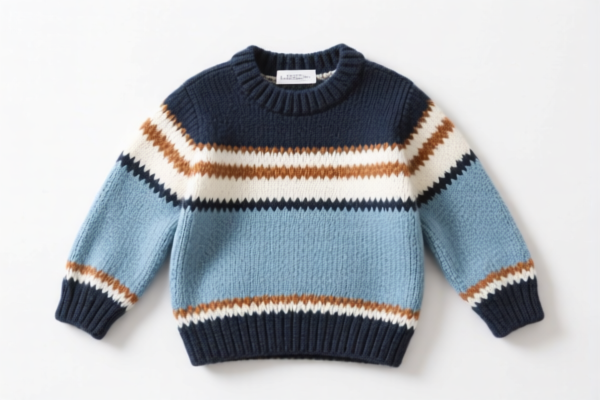

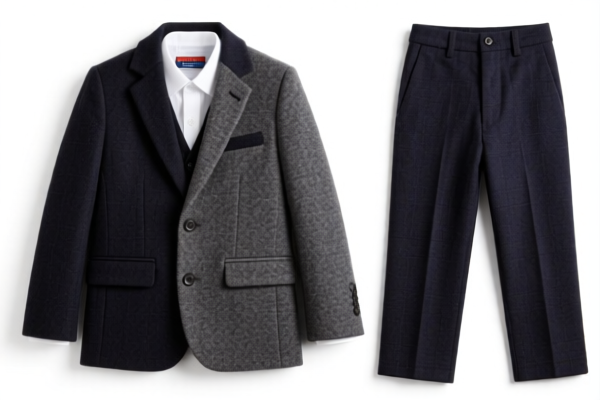

AI Analysis
🧶 Boys' Knitted/Crocheted Cotton Sweater Set (Constrained Style)
🌐 HS Code Reference & Customs Clearance Guide | 2026 Tariff Breakdown | Expert Strategy for US Imports
📌 I. Product Definition & Classification: What Exactly is a "Constrained Sweater Set"?
"Boys' Knitted/Crocheted Set of Cotton Constrained Sweater" refers to a coordinated children's garment set, typically comprising a knitted or crocheted top (sweater/shirt) made primarily from cotton fibers, designed specifically for boys, and featuring a "constrained" fit or design (often implying a tailored, structured, or form-fitting silhouette, possibly with specific garment construction like collars, cuffs, or buttoned fronts).
⚠️ Critical Distinction:
- If the set is 100% Cotton and classified as a shirt (collared, buttoned) → 6105.10.00.30
- If the set includes a T-shirt or similar (no collar/buttons) → 6109.10.00.14
- If the material is NOT 100% Cotton (e.g., wool, synthetic blends) → 6105.20.20.30 or 6110.20.20.15
- If the set is Knitted Sweater (pullover style) made of Cotton → 6110.20.20.15
📦 II. HS Code Classification Details (2026 Tariff Authority)
Based on your product description, here are the matching HS Codes from your provided data, along with their tax breakdowns:
| HS Code | Product Summary | Material/Use Inference | Total Tax Rate | Tax Breakdown (Base + Additional) |
|---|---|---|---|---|
6105.10.00.30 |
Knitted/Crocheted Shirt, Boys, Cotton | 100% Cotton Shirts (Collared/Buttoned) | 37.2% | Base: 19.7% + Section 301 (7.5%) + Section 122 (10%) |
6109.90.10.09 |
Knitted/Crocheted Shirt, Boys, Other Material | Non-Cotton (e.g., Synthetic Blends) | 49.5% | Base: 32.0% + Section 301 (7.5%) + Section 122 (10%) |
6109.10.00.14 |
Knitted/Crocheted Shirt, Boys, Cotton (T-Shirt Style) | 100% Cotton T-Shirts (No Collar) | 34.0% | Base: 16.5% + Section 301 (7.5%) + Section 122 (10%) |
6110.20.20.15 |
Knitted/Crocheted Sweater, Boys, Cotton | 100% Cotton Pullover Sweaters | 26.5% | Base: 16.5% + Section 301 (0.0%) + Section 122 (10%) |
6105.20.20.30 |
Knitted/Crocheted Shirt, Boys, Fiber Blends | Cotton Blends or Non-Cotton Fibers | 49.5% | Base: 32.0% + Section 301 (7.5%) + Section 122 (10%) |
🔍 Key Logic for Selection:
- "Constrained Sweater" usually implies a Sweater (6110) or a Shirt (6105) depending on the exact cut.
- Cotton is the most common material for "constrained" children's wear to ensure comfort.
- Section 122 (10%) applies to ALL categories listed (likely related to specific US trade enforcement measures).
- Section 301 (7.5%) applies to Cotton Shirts (6105) but NOT to Cotton Sweaters (6110) (0.0%).
💰 III. 2026 Tariff Rate Deep Dive (US Import Rules)
✅ Target Market: United States (US)
✅ Country of Origin: China (CN)
✅ Effective Date: Current (2025-2026 Trade Period)
🎯 Case A: 6110.20.20.15 – Best Option for "Constrained Sweater"
Why? This code specifically covers Knitted/Crocheted Sweaters of Cotton. If your product is a pullover or cardigan-style sweater, this is the correct classification.
Tax Component Rate Description Base Duty 16.5% Standard Most-Favored-Nation (MFN) rate for cotton sweaters. Section 301 (USITC) 0.0% ZERO additional tariff for cotton sweaters under current enforcement. Section 122 10.0% Specific trade remedy tariff (often related to anti-dumping or national security measures). TOTAL TAX 26.5% Lowest possible rate in your list! 📌 Strategy: If your product is a sweater (not a collared shirt),
6110.20.20.15is the winner. It saves you 10.7% compared to cotton shirts (37.2%)!
🎯 Case B: 6105.10.00.30 – If "Constrained" Means Collared Shirt
Why? If the "constrained" design includes a collar, buttons, and a formal cut, it is a Shirt (6105), not a sweater.
Tax Component Rate Description Base Duty 19.7% Standard MFN rate for cotton shirts. Section 301 (USITC) 7.5% Additional tariff on cotton shirts (highly enforced). Section 122 10.0% Additional trade remedy tariff. TOTAL TAX 37.2% High cost due to combined Section 301 + Base.
🚨 Case C: Non-Cotton or Blended (6109.90.10.09 / 6105.20.20.30)
Avoid if possible!
- Total Tax: 49.5% (Highest rate).
- Reason: These codes attract 32.0% Base Duty (higher than cotton) + 7.5% Section 301 + 10% Section 122.
- Risk: Misclassifying a cotton product as "other material" to get a lower base rate is illegal and leads to audits/seizures.
🛠️ IV. Customs Clearance & Practical Advice (Action Plan)
✅ 1. Classification Strategy: "Sweater" vs. "Shirt"
The term "Constrained" is ambiguous in trade.
- If it's a Pullover/Cardigan (No Collar/Buttons) → Declare as 6110.20.20.15 (Sweater).
- Benefit: 0% Section 301 tariff. Total = 26.5%.
- If it's a Collared/Buttoned Top → Declare as 6105.10.00.30 (Shirt).
- Cost: 7.5% Section 301 added. Total = 37.2%.
🔥 Pro Tip: If you can slightly modify the design to remove the collar or buttons, you can shift from 37.2% to 26.5%, saving 10.7% on every $100 of goods!
✅ 2. Documentation Checklist (Mandatory)
To prove 100% Cotton and Knitted status: - Fiber Content Label: Must clearly state "100% Cotton". - Construction Photo: Show the knitted/crocheted texture (not woven). - Style Description: Explicitly state "Boys' Pullover Sweater" or "Collared Shirt" in the invoice. - Bill of Materials (BOM): Confirm no synthetic blends (unless using the higher tax code).
✅ 3. Section 122 & 301 Compliance
- Section 122 (10%): Applies to ALL your codes. No avoidance possible.
- Section 301 (7.5%): ONLY applies to Shirts (
6105) and T-shirts (6109). - CRITICAL: If you classify as Sweater (
6110), this tax DOES NOT APPLY.
📌 V. Common Pitfalls & How to Avoid Them
| ❌ Mistake | ⚠️ Consequence | ✅ Correct Approach |
|---|---|---|
| Calling a collared shirt a "sweater" | Seizure/Recall: Wrong classification, 0% Section 301 claimed incorrectly. | Verify collar/buttons. If present, use 6105.10.00.30. |
| Mislabeling blends as "Cotton" | Penalties: If tested as synthetic, base duty jumps to 32% + 7.5% + 10% = 49.5%. | Test fabric. If >95% cotton, use 6105/6109. If mixed, use 6105.20.20.30. |
| Missing Section 122 | Underpayment: 10% tax owed + interest + fines. | Always add 10% to the total tax calculation for these codes. |
| Not specifying "Boys'" | Wrong HS Code: Adults' wear has different tax rates. | Clearly state "Boys' Knitted/Crocheted Set". |
🎯 VI. Final Recommendation
-
Check the Design: Is it a Pullover/Sweater (no collar)?
- YES →
6110.20.20.15(Total Tax: 26.5%). Best Choice! - NO (Collared/Buttoned) →
6105.10.00.30(Total Tax: 37.2%).
- YES →
-
Verify Material: Ensure it is 100% Cotton.
- If Not Cotton, prepare for 49.5% total tax (
6105.20.20.30or6109.90.10.09).
- If Not Cotton, prepare for 49.5% total tax (
-
Invoice Description:
> "Boys' Knitted/Crocheted 100% Cotton Sweater Set (Constrained Fit), Style: Pullover, Origin: China."
> (Avoid ambiguous terms like "Shirt" if it's actually a sweater)
🚀 Action Step Now!
📞 Contact your supplier to confirm:
1. Is the garment Collared or Collarless?
2. Is the fiber 100% Cotton?📉 Potential Savings:
- Switching from Shirt (6105) to Sweater (6110) = 10.7% Tax Reduction.
- On a $10,000 shipment, that's $1,070 saved!
✨ Smart Classification = Lower Costs + Faster Clearance!
💼 Don't guess the HS Code – calculate the tax first!
Customer Reviews
About HS Code Classification
The Harmonized System (HS) is an internationally standardized nomenclature developed by the World Customs Organization (WCO) to classify traded products. Over 200 countries use the HS system as the basis for customs tariffs, trade statistics, and import/export regulations.
Each HS code follows a hierarchical structure:
- Chapter (2 digits) — Broad category of goods (e.g., Chapter 84: Machinery and Mechanical Appliances)
- Heading (4 digits) — More specific grouping within the chapter
- Subheading (6 digits) — Internationally standardized breakdown, used by all WCO member countries
- National subdivisions (8-10 digits) — Country-specific extensions for further classification, such as US HTSUS 10-digit codes
Correct HS code classification is essential for smooth customs clearance, accurate duty payment, and compliance with trade regulations. Misclassification can lead to customs delays, overpayment of duties, or penalties.
When importing from CN to US, the applicable tariff rates may include:
- Most-Favored-Nation (MFN) rate — The standard duty rate applied to WTO members
- General rate — Applied to countries without trade agreements
- Trade remedy duties — Additional tariffs such as Section 301 (anti-dumping), Section 232 (national security), or countervailing duties
The information provided on this page is for reference purposes only. For official classification, please consult with your local customs authority or a licensed customs broker.