Boys' Knitted/Crocheted Suit
CN → US| HS Code | Tariff Rate | Origin | Destination | Doc |
|---|---|---|---|---|
| 6105202030 | 49.5% | CN | US | Official Doc |
| 6109901009 | 49.5% | CN | US | Official Doc |
| 6105100030 | 37.2% | CN | US | Official Doc |
| 6109100014 | 34.0% | CN | US | Official Doc |
| 6110202015 | 34.0% | CN | US | Official Doc |
Product Images
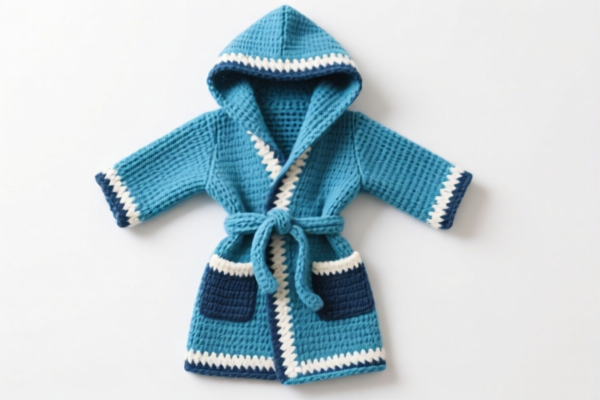
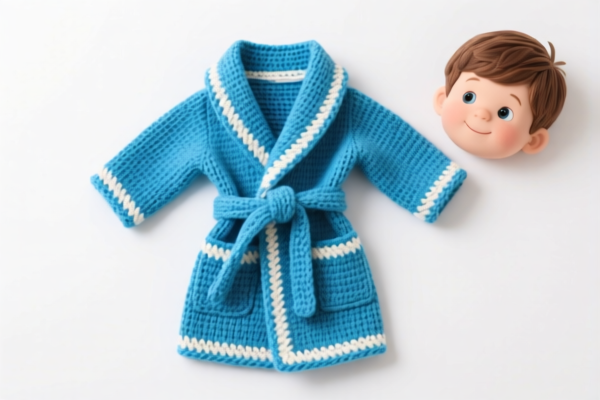
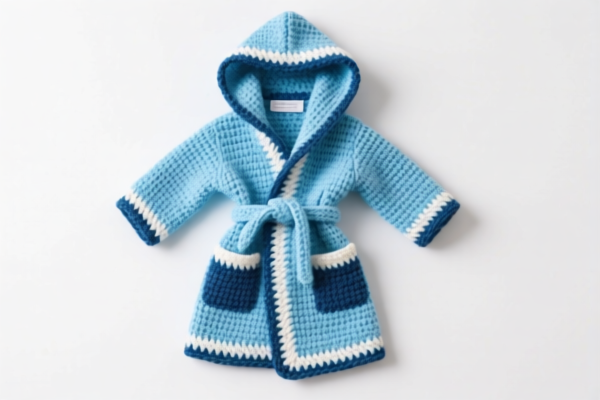
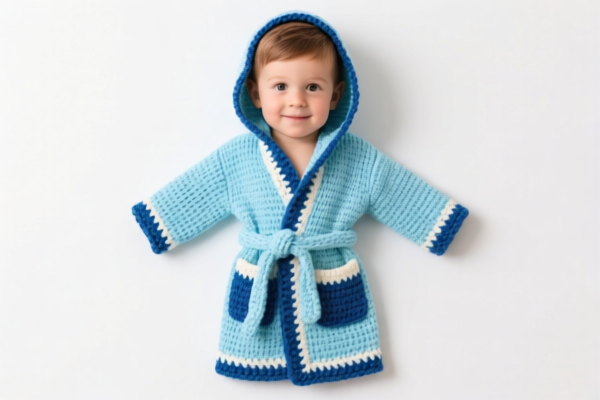
AI Analysis
🧸 Boys' Knitted/Crocheted Suits & Shirts: HS Code Classification & 2026 Tax Strategy
🌐 HS Code Reference & Customs Clearance Guide | 2026 Latest Tariff Analysis | Professional Entry Strategy
📌 I. Product Definition & Classification: Do You Really Understand "Boys' Knitted Suit"?
In international trade, "Boys' Knitted/Crocheted Suit" is often a misnomer. Strictly speaking, under the Harmonized System (HS), a "Suit" (Chapter 61/62) refers to a set of garments (Jacket/Trousers) sold together. However, in retail and common parlance, parents often refer to a Knitted Shirt + Pants or just a Knitted Shirt as a "suit."
Crucial Distinction: * Knitted Shirt (Jumper/Polo/T-shirt style): Classified under Heading 6105 (Men’s/Boys' Shirts) or 6109 (T-shirts, singlets, and other vests). * Knitted Sweater/Pullover: Classified under Heading 6110 (Sweaters, pullovers, cardigans, etc.). * True "Suit" (Set): If jacket and trousers are packed together as one unit, they might be classified as a set, but individual components are usually declared separately for accuracy and tax optimization.
⚠️ Key Classification Point: The HS Code depends entirely on the Fiber Material (Cotton vs. Synthetic vs. Other) and the Garment Type (Shirt vs. Sweater). The data provided indicates these are primarily Shirts or T-shirt-like knitted garments for boys.
📦 II. HS Code Classification Details (2026 Latest Tariff Authority)
Based on the provided data, here are the specific HS Codes for Boys' Knitted/Crocheted Garments, categorized by material and type:
| HS Code | Product Description | Material Inference | Tax Detail Breakdown |
|---|---|---|---|
| 6105.20.20.30 | Boys' Knitted/Crocheted Shirt | Synthetic Fibers (e.g., Polyester, Nylon) | Total: 49.5% Base: 32.0% + Add'l: 7.5% + Sec 301: 10% |
| 6109.90.10.09 | Boys' Knitted Shirt (Other) | Other Textile Materials (e.g., Wool, Blends, Acrylic) | Total: 49.5% Base: 32.0% + Add'l: 7.5% + Sec 301: 10% |
| 6105.10.00.30 | Boys' Knitted Shirt | Cotton | Total: 37.2% Base: 19.7% + Add'l: 7.5% + Sec 301: 10% |
| 6109.10.00.14 | Boys' Knitted Shirt | Cotton (Specific Classification) | Total: 34.0% Base: 16.5% + Add'l: 7.5% + Sec 301: 10% |
| 6110.20.20.15 | Boys' Knitted Shirt (Sweater Type) | Cotton or Similar Fibers | Total: 34.0% Base: 16.5% + Add'l: 7.5% + Sec 301: 10% |
🔍 Important Note: - 6105 generally refers to Men's or Boys' Shirts (button-down, polo, etc.). - 6109 refers to T-shirts, Singlets, and Other Vests (knitted/crocheted). - 6110 refers to Sweaters, Pullovers, and Cardigans. - The term "Suit" in the user input likely refers to a Set or just the Shirt component. If declaring a full set (Jacket + Pants), you must split the declaration to avoid misclassification penalties.
💰 III. 2026 Latest Tariff Rate Details (Including Surtaxes & Policy Add-ons)
✅ Applicable Country: United States (US) ✅ Country of Origin: China (CN) ✅ Effective Date: 2025/2026 (Current Trade Policy)
🎯 1. 6105.20.20.30 – Boys' Shirt, Synthetic Fiber
| Item | Content |
|---|---|
| Base Duty Rate | 32.0% (Ad Valorem) |
| Section 301 Surtax | +7.5% (Specific for certain textile categories) |
| Section 122 Tariff | +10% (Under Section 122 provisions) |
| Total Tariff Rate | 49.5% |
| Tax Calculation | CIF Value × 49.5% |
| De Minimis Exemption | ❌ Not Eligible (Section 301/122 taxes often override $800 de minimis for specific HS codes, or require rigorous origin proof. Note: Check current CBP enforcement on Section 321 for this specific HTS.) |
| Legal Basis Path | USITC:6105.20.20.30 → Section 301: Footnote 9903.88.01 → Section 122: 19 U.S.C. 1677j |
📌 Explanation: - Synthetic fibers (polyester/nylon) attract higher base duties (32%) compared to cotton. - The 7.5% and 10% add-ons are non-negotiable for China-origin goods in this category. - Total 49.5% is a significant cost burden. Consider pricing strategy or supply chain adjustments.
🎯 2. 6109.90.10.09 – Boys' Shirt (Other Textile Materials)
| Item | Content |
|---|---|
| Base Duty Rate | 32.0% |
| Section 301 Surtax | +7.5% |
| Section 122 Tariff | +10% |
| Total Tariff Rate | 49.5% |
| Tax Calculation | CIF Value × 49.5% |
| De Minimis Exemption | ❌ Not Eligible |
| Legal Basis Path | USITC:6109.90.10.09 → Section 301 → Section 122 |
📌 Explanation: - "Other textile materials" (wool, acrylic, blends not specified elsewhere) face the same high base rate as synthetics. - This code is a catch-all for non-cotton, non-synthetic-specific knitted shirts.
🎯 3. 6105.10.00.30 – Boys' Shirt, Cotton
| Item | Content |
|---|---|
| Base Duty Rate | 19.7% |
| Section 301 Surtax | +7.5% |
| Section 122 Tariff | +10% |
| Total Tariff Rate | 37.2% |
| Tax Calculation | CIF Value × 37.2% |
| De Minimis Exemption | ❌ Not Eligible |
| Legal Basis Path | USITC:6105.10.00.30 → Section 301 → Section 122 |
📌 Explanation: - Cotton shirts enjoy a lower base duty (19.7%) compared to synthetics (32%). - This is a more cost-effective option if the product is 100% cotton. - Total 37.2% is still high, but ~12% cheaper than synthetic alternatives.
🎯 4. 6109.10.00.14 – Boys' T-Shirt/Vest, Cotton (Specific)
| Item | Content |
|---|---|
| Base Duty Rate | 16.5% |
| Section 301 Surtax | +7.5% |
| Section 122 Tariff | +10% |
| Total Tariff Rate | 34.0% |
| Tax Calculation | CIF Value × 34.0% |
| De Minimis Exemption | ❌ Not Eligible |
| Legal Basis Path | USITC:6109.10.00.14 → Section 301 → Section 122 |
📌 Explanation: - This code is for Cotton T-shirts/Vests under Heading 6109. - It has the lowest base duty (16.5%) among the listed codes. - Best Option: If the "suit" includes T-shirts or casual knitted tops, classify as 6109.10.00.14 for optimal tax efficiency.
🎯 5. 6110.20.20.15 – Boys' Sweater/Pullover, Cotton
| Item | Content |
|---|---|
| Base Duty Rate | 16.5% |
| Section 301 Surtax | +7.5% |
| Section 122 Tariff | +10% |
| Total Tariff Rate | 34.0% |
| Tax Calculation | CIF Value × 34.0% |
| De Minimis Exemption | ❌ Not Eligible |
| Legal Basis Path | USITC:6110.20.20.15 → Section 301 → Section 122 |
📌 Explanation: - If the "suit" includes a cardigan, pullover, or sweater made of cotton, use this code. - Same tax rate as
6109.10.00.14(34.0%). - Note: Ensure the item is indeed a "sweater/pullover" and not a shirt (6105) to avoid misclassification.
🛠️ IV. Customs Clearance Practical Advice (Avoid Pitfalls)
✅ 1. Essential Documentation Checklist
| Document | Required? | Purpose |
|---|---|---|
| ✅ Fabric Composition Certificate | ✔️ | Crucial for distinguishing Cotton (34-37.2%) vs. Synthetic (49.5%). |
| ✅ Product Photos (Front/Back/Label) | ✔️ | To confirm it's a "Shirt" (6105), "T-shirt" (6109), or "Sweater" (6110). |
| ✅ Commercial Invoice | ✔️ | Must specify "Boys' Knitted Cotton Shirt" or similar, not just "Clothes." |
| ✅ Packing List | ✔️ | Detail items separately if declaring a set (e.g., 1 Shirt + 1 Pants). |
| ✅ Origin Certificate | ✔️ | To prove China origin and apply correct Section 301/122 rates. |
✅ 2. Declaration Strategy (Key Mantra)
🔥 "Material Defines Base, Type Defines Code, Set Split Avoids Risk!"
| Scenario | Correct Declaration | Incorrect Action |
|---|---|---|
| 100% Cotton T-Shirt | 6109.10.00.14 (34.0%) |
Misclassify as Shirt (6105) → 37.2% |
| 100% Cotton Polo Shirt | 6105.10.00.30 (37.2%) |
Misclassify as Sweater (6110) → 34.0% (Risk of Audit) |
| Synthetic Shirt | 6105.20.20.30 (49.5%) |
Claim Cotton → 100% Penalty + Fraud |
| Knitted Suit Set | Split Declaration Shirt: 6105...Pants: 6103/6104... |
Declare as "Suit" without code → Delay/Rejection |
✅ 3. Special Cases
| Case | Handling Advice |
|---|---|
| Mixed Material (e.g., 80% Cotton, 20% Polyester) | Classify based on principal material. If cotton is >50%, use Cotton code (34-37.2%). |
| "Suit" as a Set | Do not declare as a single HS code unless it's a specific "set" HS code. Usually, declare each item individually to avoid ambiguity. |
| Embroidered/Printed Garments | No change in HS code, but provide clear images to avoid "Accessory" classification. |
🌍 V. Global Market Comparison (2026)
| Country/Region | Recommended HS Code | Tariff (China Origin) | Notes |
|---|---|---|---|
| 🇺🇸 USA | 6109.10.00.14 (Cotton T-shirt) |
34.0% | Lowest tax for cotton knits. Avoid synthetics (49.5%). |
| 🇺🇸 USA | 6105.20.20.30 (Synthetic Shirt) |
49.5% | High cost. Consider sourcing from Vietnam/India for lower duties. |
| 🇪🇺 EU | 6109.10.00.14 |
0% - 12% | No Section 301/122. Standard MFN rate applies. |
| 🇨🇳 China | 6109.10.00.14 |
0% | Import into China is tax-free or low duty. |
| 🇯🇵 Japan | 6109.10.00.14 |
10% - 15% | No Section 301/122. Standard rate applies. |
📌 Conclusion: - USA is the most expensive market due to Section 301 and Section 122 tariffs. - Cotton products (34-37.2%) are significantly cheaper than synthetics (49.5%). - Strategy: Maximize cotton content and classify as 6109 (T-shirts/vests) or 6110 (Sweaters) if applicable, to achieve the 34.0% rate.
📌 VI. Common Mistakes & Pitfalls (Lessons Learned)
❌ Mistake 1: Declaring a Cotton Shirt as 6105.20.20.30 (Synthetic)
👉 Consequence: Paying 49.5% instead of 37.2% → 12.3% overpayment!
❌ Mistake 2: Declaring a Synthetic T-Shirt as 6109.10.00.14 (Cotton)
👉 Consequence: Seizure, Fine, and Penalty for fraud.
❌ Mistake 3: Ignoring Section 122 tariffs 👉 Consequence: Under-declaring taxes by 10%. CBP will audit and recover back-taxes + interest.
✅ Correct Practice:
"Boys' 100% Cotton Knitted T-Shirt, Crew Neck, Size 4-5, Model XYZ" → HS Code:
6109.10.00.14→ Total Tax: 34.0%
🎯 VII. Conclusion: Professional Declaration, Cost Efficiency
🎯 Remember the Mantra:
🔹 "Cotton is King: 34-37%, Synthetic is Pain: 49.5%." 🔹 "Section 301 + 122: 17.5% Extra Tax on China Origin." 🔹 "Split the Set, Save the Cost!"
📌 Pro Tip:
If your boys' suit is 100% Cotton, prioritize
6109.10.00.14or6110.20.20.15for the 34.0% rate. If using Synthetics, prepare for 49.5%. Consider Vietnam/India sourcing to avoid Section 301/122 tariffs (if applicable under current free trade agreements).
📣 Immediate Action:
📞 Contact Customs Broker + Provide Fabric Swatch + Confirm HS Code Pre-Ruling 🚀 Ensure Smooth Clearance, Minimize Tax Burden, Maximize Profit!
✨ Professional Customs Clearance Starts with Accurate Classification! 💼 Every Percent Saved is Pure Profit!
Customer Reviews
About HS Code Classification
The Harmonized System (HS) is an internationally standardized nomenclature developed by the World Customs Organization (WCO) to classify traded products. Over 200 countries use the HS system as the basis for customs tariffs, trade statistics, and import/export regulations.
Each HS code follows a hierarchical structure:
- Chapter (2 digits) — Broad category of goods (e.g., Chapter 84: Machinery and Mechanical Appliances)
- Heading (4 digits) — More specific grouping within the chapter
- Subheading (6 digits) — Internationally standardized breakdown, used by all WCO member countries
- National subdivisions (8-10 digits) — Country-specific extensions for further classification, such as US HTSUS 10-digit codes
Correct HS code classification is essential for smooth customs clearance, accurate duty payment, and compliance with trade regulations. Misclassification can lead to customs delays, overpayment of duties, or penalties.
When importing from CN to US, the applicable tariff rates may include:
- Most-Favored-Nation (MFN) rate — The standard duty rate applied to WTO members
- General rate — Applied to countries without trade agreements
- Trade remedy duties — Additional tariffs such as Section 301 (anti-dumping), Section 232 (national security), or countervailing duties
The information provided on this page is for reference purposes only. For official classification, please consult with your local customs authority or a licensed customs broker.