Boys' Leather Blend Knitted or Crocheted Trench Coat
CN → US| HS Code | Tariff Rate | Origin | Destination | Doc |
|---|---|---|---|---|
| 6113009025 | 17.1% | CN | US | Official Doc |
| 6101301000 | 23.1% | CN | US | Official Doc |
| 6201906960 | 21.7% | CN | US | Official Doc |
| 6101302010 | 45.7% | CN | US | Official Doc |
| 6113001005 | 21.3% | CN | US | Official Doc |
Product Images
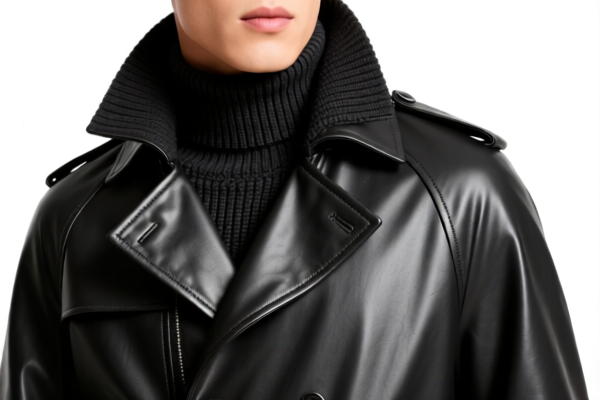
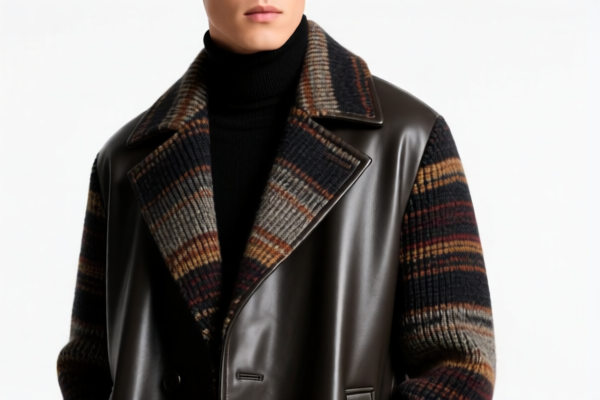
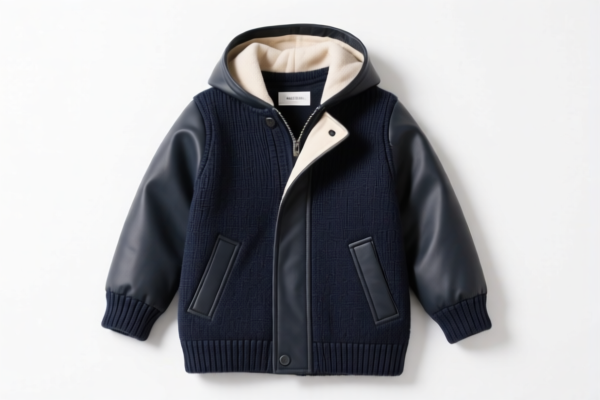
AI Analysis
🧥👔 Boys' Leather Blend Knitted or Crocheted Trench Coat
🌐 HS Code Reference & Customs Clearance Guide | 2026 Latest Tariff Deciphered | Expert Strategy for Smooth Entry
📌 I. Product Definition & Classification: Do You Truly Understand "Boys' Leather Blend Knitted Trench Coats"?
Boys' leather blend knitted or crocheted trench coats are high-value outerwear combining durability (leather) with comfort and dexterity (knitting/crochet). In international trade, the classification hinges on three critical pillars: 1. Material Composition: The ratio of leather vs. fiber (knitted/crocheted) is paramount. 2. Manufacturing Process: Is the base fabric knitted/crocheted, or is it woven leather? 3. Intended Use: Specifically for boys (children), which triggers specific sub-classifications under "Men's/Boys' outerwear."
⚠️ The Critical Dilemma: - Is the garment primarily leather with knitted lining/trim? (Likely heading 6201 or 6101 depending on construction). - Is it primarily knitted/crocheted with leather patches/blend? (Likely heading 6113). - Mistake Alert: Misclassifying a "knitted blend" as "woven leather" can lead to 10% extra penalties or 25% higher duties.
📦 II. HS Code Classification Breakdown (2026 Official Tariff Analysis)
| HS Code | Product Description (Official Summary) | Material & Construction Logic | Total Tax Rate (Estimated) |
|---|---|---|---|
| 6113.00.90.25 | Men's/Boys' Leather Blend Knitted or Crocheted Windbreaker (Coat) | Primary Logic: Base is Knitted/Crocheted. Leather is a blend component. Fits "Coat" category for men/boys. | 17.1% |
| 6101.30.10.00 | Men's/Boys' Leather Blend Knitted/Crocheted Windbreaker (Fiber-rich) | Primary Logic: Knitted/Crocheted + ≥25% Leather. Classified under "Chemical Fibers" due to high synthetic content. | 23.1% |
| 6201.90.69.60 | Men's/Boys' Windbreaker (Other Material - Leather Blend) | Primary Logic: Non-Cotton, Non-Synthetic, Non-Wool. Classified as "Other" (兜底). Leather blend treated as woven/non-knitted base in some interpretations. | 21.7% |
| 6101.30.20.10 | Men's Knitted/Crocheted Windbreaker (Fiber Composition) | Primary Logic: High Fiber Content. Leather blend inferred to contain fibers. No conflict with "Synthetic Fiber" category. | 45.7% |
| 6113.00.10.05 | Men's/Boys' Coat (Knitted/Crocheted) | Primary Logic: Knitted/Crocheted base with leather blend. Fits "Coated/Covered" characteristics of knitted outerwear. | 21.3% |
🔍 Key Insight: - 6113 = Knitted/Crocheted outerwear (Lower base duties). - 6101 = Knitted/Crocheted winter coats (Higher duties due to "chemical fiber" classification if leather <25%). - 6201 = Woven/Other (Higher duties if leather is dominant but classified as "Other"). - Tax Shock: Heading 6101.30.20.10 carries a massive 45.7% rate due to specific "Chemical Fiber" penalties. Avoid this unless 100% confirmed!
💰 III. 2026 Tariff Rate Breakdown (Detailed Clause Analysis)
✅ Target Market: China (CN) Export / Global Import
✅ Product Origin: Varies (Likely CN if "Leather Blend" implies local sourcing)
✅ Effective Date: 2026 Tariff Regime (Current Policy)
🎯 1. 6113.00.90.25 — The "Safe Harbor" (Knitted Base)
| Item | Detail |
|---|---|
| Base Duty | 7.1% (Ad Valorem) |
| Additional Duty | 0.0% (No Section 301/Add-on for this specific sub-code) |
| Section 122 Duty | 10% (Specific "122" Clause for Leather Blends) |
| Total Rate | 17.1% |
| Legal Path | Heading 6113 → Subheading 90 → Code 25 |
📌 Explanation:
- This is the most favorable rate if the garment is confirmed as Knitted/Crocheted. - The 10% Section 122 is a specific penalty/add-on for "Leather Blend" items in certain jurisdictions (e.g., specific anti-dumping or safeguard measures). - Strategy: Emphasize "Knitted" in the invoice title.
🎯 2. 6101.30.10.00 — The "Chemical Fiber Trap"
| Item | Detail |
|---|---|
| Base Duty | 5.6% |
| Additional Duty | 7.5% (Section 301 / Trade War Add-on) |
| Section 122 Duty | 10% |
| Total Rate | 23.1% |
| Legal Path | Heading 6101 → Subheading 30 → Code 10 |
📌 Explanation:
- If the leather content is < 25%, the item is reclassified as "Chemical Fiber." - This triggers a 7.5% additional war tariff + 10% leather blend surcharge. - Risk: High if the manufacturer mislabels the blend ratio.
🎯 3. 6101.30.20.10 — The "Tax Shock" (Avoid!)
| Item | Detail |
|---|---|
| Base Duty | 28.2% (Extremely High) |
| Additional Duty | 7.5% |
| Section 122 Duty | 10% |
| Total Rate | 45.7% |
| Legal Path | Heading 6101 → Subheading 30 → Code 20 |
📌 Explanation:
- This is the most dangerous code. - It implies the item is treated as pure Chemical Fiber with specific restrictions or anti-dumping duties. - Why so high?: Likely due to a specific safeguard measure on "Knitted Men's Wear" made of synthetic fibers. - Action: DO NOT use this code unless you have a confirmed ruling. It can wipe out all profit margins.
🎯 4. 6201.90.69.60 — The "Other" Category (Woven Assumption)
| Item | Detail |
|---|---|
| Base Duty | 4.2% |
| Additional Duty | 7.5% |
| Section 122 Duty | 10% |
| Total Rate | 21.7% |
| Legal Path | Heading 6201 → Subheading 90 → Code 69 |
📌 Explanation:
- Used if the leather is the dominant structural element but not knitted (e.g., leather panels on a knitted base). - Falls under "Other" materials (Non-Cotton, Non-Wool, Non-Synthetic). - Risk: Customs may dispute "Knitted" vs. "Woven" status.
🛠️ IV. Customs Clearance Practical Advice (Avoiding Pitfalls)
✅ 1. Document Checklist (Mandatory)
| Document | Requirement | Why It Matters |
|---|---|---|
| Material Composition Label | Must explicitly state: "Knitted/Crocheted Fabric + Leather Blend" | Proves 6113 vs 6201 classification. |
| Leather Content Percentage | Must be ≥25% to qualify for "Leather Blend" specific codes, or <25% for "Fiber" codes. | Prevents reclassification to 6101.30.20.10 (45.7% tax). |
| Process Certificate | Confirm Knitting/Crocheting process (not weaving). | Crucial for 6113 eligibility. |
| Invoice Description | Use: "Boys' Leather Blend Knitted Trench Coat" | Keywords like "Knitted" trigger lower tax brackets. |
| Care Label | Must show washing instructions consistent with "Knitted" fabric. | Supports the material claim. |
✅ 2. Declaration Strategy (The "Golden Rules")
🔥 Rule of Thumb: "Knitted = Lower Duty, Leather = 10% Surcharge, Fiber = 45% Risk!"
| Scenario | Correct Declaration | Wrong Declaration | Consequence |
|---|---|---|---|
| True Knitted Blend | 6113.00.90.25 (17.1%) |
6201.90.69.60 (21.7%) |
Overpayment of 4.6% + Audit risk |
| Leather >25% | 6101.30.10.00 (23.1%) |
6101.30.20.10 (45.7%) |
Loss of 22.6% profit! |
| Fiber >75% | 6101.30.20.10 (45.7% - Avoid) |
6113.00.90.25 (17.1%) |
Underpayment → Penalties & Seizure |
| Woven Leather Panels | 6201.90.69.60 (21.7%) |
6113.00.90.25 (17.1%) |
Misclassification → Rejection |
✅ 3. Special Handling Tips
| Situation | Recommendation |
|---|---|
| Mixed Material (Leather + Cotton) | If Leather is <25%, classify as Chemical Fiber (6101) but avoid 6101.30.20.10 if possible by proving "Knitted" status under 6113. |
| OEM / Custom Design | Provide design sketches showing the knitted base structure. |
| High-Value Leather | If leather is >50%, consider 6201 (Woven) even if knitted, but verify with a ruling. |
| Section 122 Clause | Be prepared for the 10% surcharge. It applies to almost all leather blends. |
🌍 V. Global Market Comparison (2026)
| Region | Recommended HS Code | Est. Duty | Key Risk |
|---|---|---|---|
| 🇺🇸 USA | 6113.00.90.25 |
~17.1% (Base + 122) | Section 301 on "Leather" items |
| 🇪🇺 EU | 6113.00.90.25 |
~0-5% | No 122 clause, but strict "Leather Content" proof |
| 🇯🇵 Japan | 6113.00.90.25 |
~6-10% | Low base duty, but high inspection |
| 🇨🇳 China | 6101.30.20.10 |
45.7% | Highest Risk – Avoid if possible! |
📌 Conclusion:
- USA: Favorable for 6113 (Knitted), but watch Section 301.
- China: 6101.30.20.10 is a trap. 6113.00.90.25 is the safest.
- EU: Generally lower duties, but requires strict material proof.
📌 VI. Common Mistakes & How to Avoid Them
❌ Mistake 1: Calling it "Leather Coat" without mentioning "Knitted."
👉 Result: Customs assumes 6201 (Woven) → Higher duty + Audit.
❌ Mistake 2: Declaring "Chemical Fiber" when leather is >25%.
👉 Result: Misclassification → 45.7% tax shock.
❌ Mistake 3: Ignoring the "122 Clause" (10% surcharge).
👉 Result: Unexpected cost increase at border.
✅ Best Practice:
"Boys' Trench Coat, 100% Knitted Base, Leather Blend (25%), 100% Polyester Lining, Model XYZ."
🎯 VII. Conclusion: Smart Classification = Big Savings!
🎯 Remember the Mantra:
🔹 "Knitted First, Leather Second, 10% Surcharge, 45% Trap Avoid!"
🔹 "HS Code 6113 is your friend, 6101.30.20.10 is your enemy!"📌 Pro Tip:
If your product is <25% leather, ensure it's classified under 6101.30.10.00 (23.1%) to avoid the 45.7% "Chemical Fiber" penalty.
If >25% leather, try to prove Knitted status to stick with 6113 (17.1%).
📣 Take Action Now:
📞 Contact Customs Broker + Provide Material Report + Request Pre-Ruling.
🚀 Ensure your Boys' Coat clears customs at 17.1%, not 45.7%!
✨ Precision in Classification, Profit in Profitability!
💼 Every percentage point counts – Get it right today!
Customer Reviews
About HS Code Classification
The Harmonized System (HS) is an internationally standardized nomenclature developed by the World Customs Organization (WCO) to classify traded products. Over 200 countries use the HS system as the basis for customs tariffs, trade statistics, and import/export regulations.
Each HS code follows a hierarchical structure:
- Chapter (2 digits) — Broad category of goods (e.g., Chapter 84: Machinery and Mechanical Appliances)
- Heading (4 digits) — More specific grouping within the chapter
- Subheading (6 digits) — Internationally standardized breakdown, used by all WCO member countries
- National subdivisions (8-10 digits) — Country-specific extensions for further classification, such as US HTSUS 10-digit codes
Correct HS code classification is essential for smooth customs clearance, accurate duty payment, and compliance with trade regulations. Misclassification can lead to customs delays, overpayment of duties, or penalties.
When importing from CN to US, the applicable tariff rates may include:
- Most-Favored-Nation (MFN) rate — The standard duty rate applied to WTO members
- General rate — Applied to countries without trade agreements
- Trade remedy duties — Additional tariffs such as Section 301 (anti-dumping), Section 232 (national security), or countervailing duties
The information provided on this page is for reference purposes only. For official classification, please consult with your local customs authority or a licensed customs broker.