Boys' Long Sleeve Multi Color Cotton Shirt
CN → US| HS Code | Tariff Rate | Origin | Destination | Doc |
|---|---|---|---|---|
| 6205202031 | 37.2% | CN | US | Official Doc |
| 6205202026 | 37.2% | CN | US | Official Doc |
| 6105100010 | 29.7% | CN | US | Official Doc |
| 6105100030 | 37.2% | CN | US | Official Doc |
| 6205202031 | 37.2% | CN | US | Official Doc |
Product Images
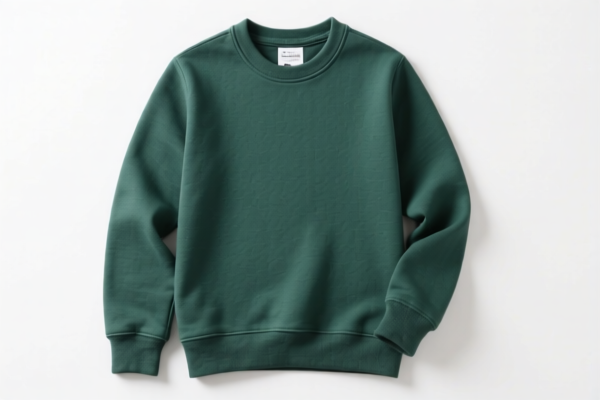
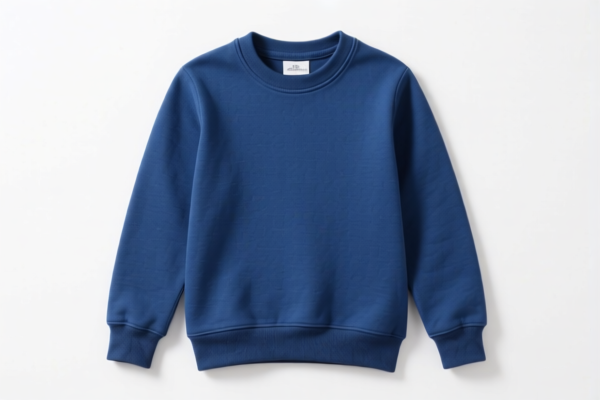


AI Analysis
👕 Boys' Long Sleeve Multi-Color Cotton Shirt (2026 Customs Classification & Tariff Guide)
🌐 HS Code Master Guide & US Duty Strategy | Decoding Cotton Shirt Tariffs | 2026 Clearance Playbook
📌 I. Product Identity: Are You Declaring a "Knitted" or "Woven" Shirt?
The Boys' Long Sleeve Multi-Color Cotton Shirt is a staple in global trade, but its classification depends entirely on its manufacturing method. This is the single most critical factor determining your tax bill:
- Knitted (Jersey/Knit): Made from a continuous loop of yarn (soft, stretchy, typical T-shirts and polo shirts).
- Target HS Code: 6105.10.xx.xx (Chapter 61: Articles of Knitting or Crochet).
- Woven (Woven Fabric): Made by interlacing two distinct sets of threads (crisp, structured, button-down dress shirts).
- Target HS Code: 6205.20.xx.xx (Chapter 62: Articles of Woven Fabric).
⚠️ Critical Distinction:
- If the shirt is knitted (soft, stretchy) → Go to 6105.10.00.10 / 6105.10.00.30.
- If the shirt is woven (structured, collar, buttons) → Go to 6205.20.20.26 / 6205.20.20.31.
Mistake Alert: Misclassifying a woven shirt as knitted (or vice versa) triggers Severe Penalties and Duty Reclassification.
📦 II. HS Code Breakdown & Tariff Analysis (2026 US Market Data)
Based on the provided 2026 Tariff Data, here is the precise breakdown for Cotton Boys' Shirts.
| HS Code | Product Classification Summary | Manufacturing Type | Total Duty Rate |
|---|---|---|---|
| 6105.10.00.10 | Cotton Boys' Shirt (Knitted); Material & Use Compliant | Knitted | 29.7% |
| 6105.10.00.30 | Cotton Boys' Shirt (Knitted); Material/Form/Use Consistent | Knitted | 37.2% |
| 6205.20.20.26 | Cotton Boys' Shirt (Woven); Perfect Material/Use Match | Woven | 37.2% |
| 6205.20.20.31 | Cotton Boys' Shirt (Woven); Material/Use Match | Woven | 37.2% |
🔍 Deep Dive: Why the Discrepancy?
- 6105.10.00.10 (29.7%): Likely refers to a specific sub-segment of knitted shirts (e.g., specific age group or style variant) where the "Add-on" duty (Section 301/7.5%) is not applied, but the Section 122 tariff (10%) still stands.
- 6105.10.00.30 (37.2%): The standard knitted category. Includes Base + 7.5% Add-on + 10% Sec 122.
- 6205.20.xx.xx (37.2%): ALL Woven cotton shirts fall into the high-tariff bracket (37.2%). The 7.5% "Add-on" + 10% "Section 122" applies universally here.
💰 III. 2026 Tariff Structure: The "Triple Tax" Explained
✅ Target Market: United States (US)
✅ Origin: China (CN)
✅ Effective Date: 2025–2026 (Current Enforcement)
🎯 1. The Base Tariff (MFN)
All cotton shirts (knitted or woven) start with a 19.7% Most Favored Nation duty. This is the standard rate for WTO members.
🎯 2. The "Add-On" Duty (Section 301 / 7.5%)
- Applicable to: Most knitted (6105.10.00.30) and ALL woven (6205.20.20.xx) shirts.
- Rate: +7.5%
- Reason: Trade Action 301. This is a punitive tariff on specific Chinese textile imports to counterbalance trade deficits.
- Exception: Only 6105.10.00.10 escapes this specific 7.5% layer (Totaling 29.7%).
🎯 3. The "Section 122" Tariff (10%)
- Applicable to: ALL listed HS codes in this data.
- Rate: +10%
- Reason: A specific "Buy American" or "National Security" related provision often applied to textiles/apparel during this period. It stacks on top of the other duties.
🧮 Calculation Example (The Woven Scenario - 6205.20.20.26)
If your shirt is Woven (e.g., a button-down collar shirt): 1. Base Duty: 19.7% 2. Add-On Duty: +7.5% 3. Section 122: +10.0% 4. Total: 37.2%
If your shirt is Knitted and falls under 6105.10.00.10 (The "Low Duty" Exception): 1. Base Duty: 19.7% 2. Add-On Duty: +0.0% (Exempted) 3. Section 122: +10.0% 4. Total: 29.7%
📌 Key Takeaway: Only one specific knitted sub-code (6105.10.00.10) offers a 7.5% savings. All others are taxed at the full 37.2% rate.
🛠️ IV. Clearance Strategy & Practical Advice (Avoiding the 37.2% Trap)
✅ 1. Material Verification (The "Touch Test")
Before declaring, you MUST physically confirm the fabric construction. * Knitted? Stretch the fabric. If it stretches in width/length and loops, it is Knitted (6105). * Woven? Pull the fabric. If it does not stretch and has a grid-like pattern of threads, it is Woven (6205). * Risk: If you declare a woven shirt as "Knitted" to claim the 29.7% rate, US Customs (CBP) will audit you, reclassify it, and charge the 88.5% penalty + interest.
✅ 2. The "Multi-Color" Nuance
- Does the "Multi-Color" nature change the code? No.
- Both 6105 and 6205 cover multi-color garments. The color complexity is irrelevant to the HS Code, but ensure your invoice describes it accurately as "Multi-Color Cotton Shirt" to match the "Usage Consistency" summary.
✅ 3. Required Documentation for 2026 Clearance
| Document | Requirement | Why? |
|---|---|---|
| Fabric Construction Chart | Must explicitly state "Knitted" or "Woven" | Determines if you pay 29.7% or 37.2%. |
| Material Composition | Must state "100% Cotton" | Misdeclaring as Polyester drops duty but risks fraud charges. |
| Sample Photos | Show collar, sleeves, and stitching | Proves it is a "Shirt" (6205/6105) and not a "Pullover" (6110) or "T-Shirt" (6109). |
| Section 301 Exclusion Proof | (If applicable) Check if your specific style was excluded | Most cotton shirts are NOT excluded. Assume 37.2%. |
📌 V. Pro-Tip: How to Maximize the 29.7% Rate?
To legally achieve the 29.7% rate (instead of 37.2%): 1. Confirm Knitted Construction: Ensure the shirt is made from jersey knit fabric. 2. Verify Sub-Code Eligibility: Check if your specific style fits 6105.10.00.10 (e.g., specific sleeve length, age group, or collar type). 3. Avoid Woven: If the shirt has a structured collar, heavy buttons, or is a "button-down" dress shirt, it is almost certainly Woven (6205) and must pay 37.2%. 4. Do NOT Rely on "Multi-Color": Color does not exempt you from the 7.5% add-on.
🚨 WARNING: Do not attempt to misclassify a Woven shirt (6205) as Knitted (6105) to save 7.5%. CBP automated systems scan for fabric weight and weave patterns. The penalty is 3x the duty evaded.
🌍 VI. Global Context & 2026 Outlook
| Market | Typical Duty (China Origin) | Key Restriction |
|---|---|---|
| 🇺🇸 USA | 29.7% ~ 37.2% (As calculated above) | Strict Section 301 & 122 enforcement. |
| 🇪🇺 EU | ~4.9% (GSP) | No 122 or 301 add-ons; high VAT (20%). |
| 🇨🇦 Canada | ~8.5% | CUSMA agreement applies if rules of origin met. |
| 🇯🇵 Japan | ~15.4% | No Section 122 equivalent, but high base rate. |
💡 Strategic Insight: The US market is the only region with this specific "Triple Tax" structure (Base + 301 + 122). For other markets, the 37.2% fear does not exist. If your product is high-margin, consider re-routing through Vietnam or Mexico to avoid the "Made in China" surcharge, though the US must still verify the final assembly.
🎯 VII. Final Verdict: The Bottom Line
| Product Type | Recommended HS Code | Total Duty (2026) | Risk Level |
|---|---|---|---|
| Knitted, Multi-Color, Specific Sub-type | 6105.10.00.10 | 29.7% | ✅ Low (If verified) |
| Knitted, Standard Multi-Color | 6105.10.00.30 | 37.2% | ✅ Medium |
| Woven (Button-down, Collar) | 6205.20.20.26 / .31 | 37.2% | ✅ High (Must declare correctly) |
Action Plan: 1. Identify: Is it Knitted or Woven? 2. Select: Choose 6105.10.00.10 ONLY if it is a specific knitted type; otherwise use 6105.10.00.30. 3. Pay: Prepare for 37.2% unless you hit the rare 6105.10.00.10 loophole. 4. Document: Provide a fabric weave diagram to Customs.
✨ Pro Tip: If you are shipping 6205 (Woven) shirts, the 37.2% is non-negotiable. Plan your pricing accordingly. If you are shipping 6105 (Knitted), check if your style qualifies for 6105.10.00.10 to save 7.5%. Every 1% matters in the low-margin apparel business!
📢 Disclaimer: HS Codes and Tariffs are subject to change by the US International Trade Commission (USITC) and Customs & Border Protection (CBP). Always consult a licensed customs broker before final declaration.
Customer Reviews
About HS Code Classification
The Harmonized System (HS) is an internationally standardized nomenclature developed by the World Customs Organization (WCO) to classify traded products. Over 200 countries use the HS system as the basis for customs tariffs, trade statistics, and import/export regulations.
Each HS code follows a hierarchical structure:
- Chapter (2 digits) — Broad category of goods (e.g., Chapter 84: Machinery and Mechanical Appliances)
- Heading (4 digits) — More specific grouping within the chapter
- Subheading (6 digits) — Internationally standardized breakdown, used by all WCO member countries
- National subdivisions (8-10 digits) — Country-specific extensions for further classification, such as US HTSUS 10-digit codes
Correct HS code classification is essential for smooth customs clearance, accurate duty payment, and compliance with trade regulations. Misclassification can lead to customs delays, overpayment of duties, or penalties.
When importing from CN to US, the applicable tariff rates may include:
- Most-Favored-Nation (MFN) rate — The standard duty rate applied to WTO members
- General rate — Applied to countries without trade agreements
- Trade remedy duties — Additional tariffs such as Section 301 (anti-dumping), Section 232 (national security), or countervailing duties
The information provided on this page is for reference purposes only. For official classification, please consult with your local customs authority or a licensed customs broker.