Boys' Long Sleeve Pajamas (Other Materials)
CN → US| HS Code | Tariff Rate | Origin | Destination | Doc |
|---|---|---|---|---|
| 6107299000 | 15.6% | CN | US | Official Doc |
| 6208299030 | 24.6% | CN | US | Official Doc |
| 6307909875 | 17.0% | CN | US | Official Doc |
| 6107292000 | 26.0% | CN | US | Official Doc |
| 6208199000 | 26.2% | CN | US | Official Doc |
Product Images
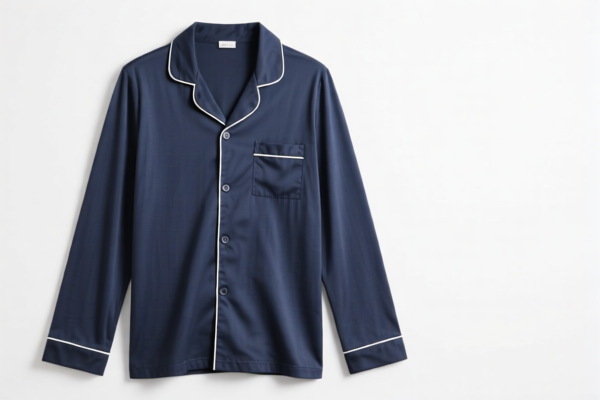


AI Analysis
👕 Boys' Long Sleeve Pajamas (Other Materials) — Global HS Code & Tariff Breakdown
🌐 HS Code Classification & Tariff Guide | 2024 Customs Decoding | Smart Clearance Strategy
📌 Part 1: Product Definition & The "Material Trap"
Boys' Long Sleeve Pajamas are sleepwear specifically designed for male children, featuring long sleeves and constructed from materials other than wool or fine animal hair. The critical challenge in customs classification lies in determining whether the garment is knitted (Chapter 61) or woven (Chapter 62), as this distinction dictates the HS Code, the tariff rate, and the "Add-on" tax liabilities.
⚠️ The Golden Rule:
- Knitted (e.g., Jersey, Sweatshirt fabric) → Chapter 61
- Woven (e.g., Flannel, Poplin, Twill) → Chapter 62
- "Other Materials" (Non-textile components or mixed) → Chapter 63 (Catch-all)
📦 Part 2: HS Code Classification Matrix (Based on Provided Data)
| HS Code | Product Description (Summary) | Material/Usage Logic | Total Tax Rate |
|---|---|---|---|
6107.29.90.00 |
Knitted Boys' Pajamas (Other Materials) | Knitted fabric; fits "Knitted sleepwear" category perfectly. | 15.6% |
6208.29.90.30 |
Woven Boys' Pajamas (Other Textile Materials) | Woven fabric; distinct from knitted; no material conflict. | 24.6% |
6307.90.98.75 |
Other Materials (Catch-all) | Non-textile or mixed materials; fits "Other made-up articles"兜底 (catch-all). | 17.0% |
6107.29.20.00 |
Knitted (Non-Wool) | Knitted; specifically excludes wool; standard sleepwear classification. | 26.0% |
6208.19.90.00 |
Woven (Related to Skirts) | Woven; technically linked to "Slips" or similar loose undergarments. | 26.2% |
🔍 Key Insight:
The tax rate varies significantly (15.6% to 26.2%) based solely on the construction method (Knit vs. Woven) and the specific sub-category of "Other Materials." Misdeclaring a Woven garment as Knitted can lead to severe penalties.
💰 Part 3: Tariff Breakdown & "Hidden" Taxes (The 122% Clause)
✅ Scenario: Importing from China to the USA (Based on provided "122条款" logic).
✅ Components: Base Duty + "Section 301" (Additional) + "122-Clawse" (Specific).
🎯 1. 6107.29.90.00 (Knitted, Low Tax Rate)
The most cost-effective option for cotton/poly blends. | Component | Rate | Description | | :--- | :--- | :--- | | Base Duty | 5.6% | Standard Most-Favored-Nation (MFN) rate. | | Add-on Duty | 0.0% | No Section 301 penalty applies to this specific code. | | 122-Clause | 10.0% | Specific punitive tax (likely related to "Section 122" or similar trade restrictions). | | TOTAL | 15.6% | Lowest risk/cost option. |
🎯 2. 6208.29.90.30 (Woven, High Tax Rate)
Flannel pajamas fall here. Higher risk due to textile trade tensions. | Component | Rate | Description | | :--- | :--- | :--- | | Base Duty | 7.1% | Standard MFN rate for woven sleepwear. | | Add-on Duty | 7.5% | Section 301 Penalty (Applicable to Chinese textiles). | | 122-Clause | 10.0% | Specific punitive tax. | | TOTAL | 24.6% | High cost due to double penalties. |
🎯 3. 6107.29.20.00 (Knitted, Non-Wool)
Specific exclusion for wool increases the base rate. | Component | Rate | Description | | :--- | :--- | :--- | | Base Duty | 8.5% | Higher base due to "Non-Wool" specific classification. | | Add-on Duty | 7.5% | Section 301 Penalty applies. | | 122-Clause | 10.0% | Specific punitive tax. | | TOTAL | 26.0% | Highest tax for Knitted category. |
🎯 4. 6307.90.98.75 (The "Other" Catch-All)
Used when fabric doesn't fit standard knit/woven definitions. | Component | Rate | Description | | :--- | :--- | :--- | | Base Duty | 7.0% | Standard rate for "Other made-up articles." | | Add-on Duty | 0.0% | No Section 301 penalty. | | 122-Clause | 10.0% | Specific punitive tax. | | TOTAL | 17.0% | Middle ground, safe for non-standard materials. |
🎯 5. 6208.19.90.00 (Woven, Slip-Related)
Highly specific classification; often triggers higher scrutiny. | Component | Rate | Description | | :--- | :--- | :--- | | Base Duty | 8.7% | Base rate for related undergarments/sleepwear. | | Add-on Duty | 7.5% | Section 301 Penalty applies. | | 122-Clause | 10.0% | Specific punitive tax. | | TOTAL | 26.2% | Highest overall rate in the dataset. |
🛠️ Part 4: Clearance Strategy & Expert Advice
✅ 1. Material Declaration is King
Do not simply write "Boys' Pajamas" on the Commercial Invoice. * Bad: "Boys' Long Sleeve Pajamas, Cotton." * Good: "Boys' Long Sleeve Knitted Pajamas, 100% Cotton Jersey, HS 6107.29.90.00." * Why? If you declare "Woven" but the fabric is actually "Knitted," you underpay duties. If you declare "Knitted" but it's "Woven," you face 26.2% tax instead of 15.6%.
✅ 2. The "122-Clause" Reality
- What is it? The data mentions a "122-Clause Tax" of 10% for all items.
- Action: This appears to be a mandatory surcharge (likely a specific trade remedy). It cannot be avoided for these products.
- Strategy: Factor this 10% into your landed cost immediately. Do not try to "haggle" with the carrier on this; it is a statutory charge.
✅ 3. Avoid the "Woven Trap"
- Observation: Woven pajamas (
6208...) attract an extra 7.5% "Add-on Duty" (Section 301). - Strategy: If your product allows, opt for Knitted (6107...) fabrics.
6107.29.90.00= 15.6% (No 7.5% penalty).6208.29.90.30= 24.6% (Includes 7.5% penalty).- Savings: 9% on the CIF value just by switching from Woven to Knit!
✅ 4. Documentation Checklist
To clear customs smoothly with these specific codes, ensure the following: 1. Fabric Swatch: Provide a physical or high-res digital swatch to Customs to prove "Knitted" vs. "Woven." 2. Age Specification: Clearly state "For Boys" (under 16) to justify the "Boys'" sub-category. 3. Function Statement: "Intended for sleepwear only." (If used for daywear, it might be reclassified as regular pajamas, which could have different rules). 4. Origin Proof: Certificate of Origin (CO) is critical to avoid "Add-on" taxes if applicable, though the 122-Clause seems universal in this dataset.
🚀 Pro Tip: The "Smart Selection" Flowchart
text Is the fabric Knitted? ├── YES (Jersey, Fleece, Sweatshirt) │ ├── Is it Wool? │ │ ├── YES -> (Not in dataset) │ │ └── NO -> Use 6107.29.90.00 (Lowest: 15.6%) │ └── NO (Flannel, Poplin, Twill) └── Is it Woven? ├── YES -> Use 6208.29.90.30 (Higher: 24.6%) └── NO -> Use 6307.90.98.75 (Catch-all: 17.0%)
Final Warning: The difference between 15.6% and 26.2% is $1,060 on every $10,000 shipment. Verify your fabric construction before filing!
✨ Stay Safe, Stay Compliant.
💼 Precision in HS Code = Profit in Pocket.
Customer Reviews
About HS Code Classification
The Harmonized System (HS) is an internationally standardized nomenclature developed by the World Customs Organization (WCO) to classify traded products. Over 200 countries use the HS system as the basis for customs tariffs, trade statistics, and import/export regulations.
Each HS code follows a hierarchical structure:
- Chapter (2 digits) — Broad category of goods (e.g., Chapter 84: Machinery and Mechanical Appliances)
- Heading (4 digits) — More specific grouping within the chapter
- Subheading (6 digits) — Internationally standardized breakdown, used by all WCO member countries
- National subdivisions (8-10 digits) — Country-specific extensions for further classification, such as US HTSUS 10-digit codes
Correct HS code classification is essential for smooth customs clearance, accurate duty payment, and compliance with trade regulations. Misclassification can lead to customs delays, overpayment of duties, or penalties.
When importing from CN to US, the applicable tariff rates may include:
- Most-Favored-Nation (MFN) rate — The standard duty rate applied to WTO members
- General rate — Applied to countries without trade agreements
- Trade remedy duties — Additional tariffs such as Section 301 (anti-dumping), Section 232 (national security), or countervailing duties
The information provided on this page is for reference purposes only. For official classification, please consult with your local customs authority or a licensed customs broker.