Boys' Long Sleeved Shirt (Other Textile Materials)
CN → US| HS Code | Tariff Rate | Origin | Destination | Doc |
|---|---|---|---|---|
| 6105908060 | 23.1% | CN | US | Official Doc |
| 6206900040 | 24.2% | CN | US | Official Doc |
| 6110909023 | 23.5% | CN | US | Official Doc |
| 6105908030 | 23.1% | CN | US | Official Doc |
| 6205900720 | 35.0% | CN | US | Official Doc |
Product Images
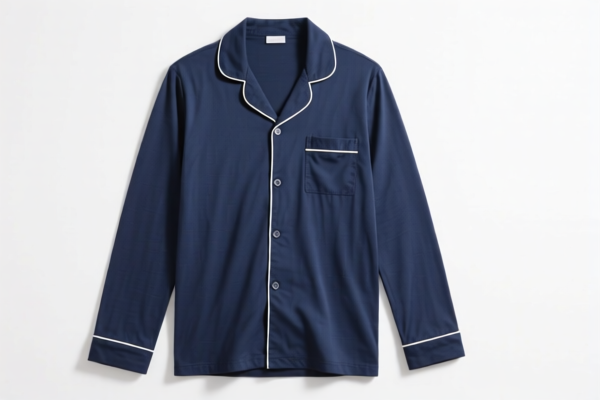
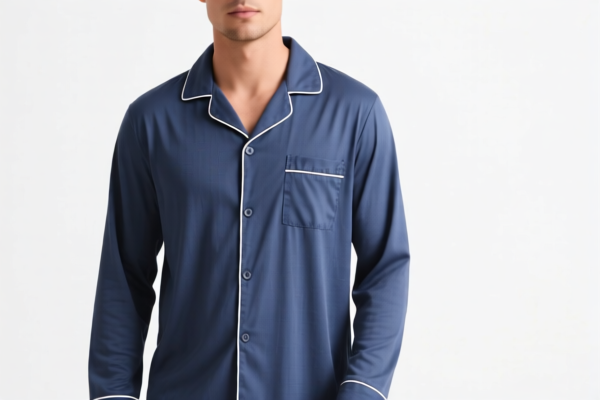
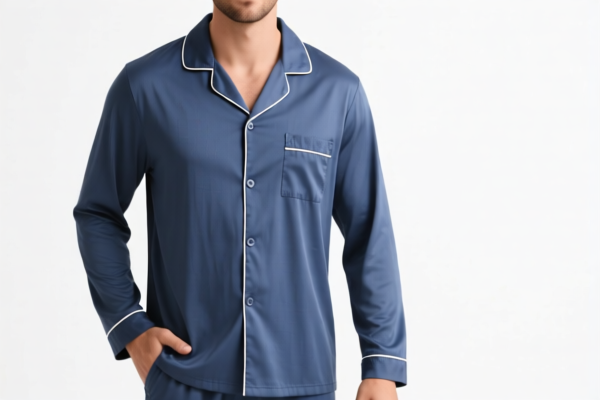
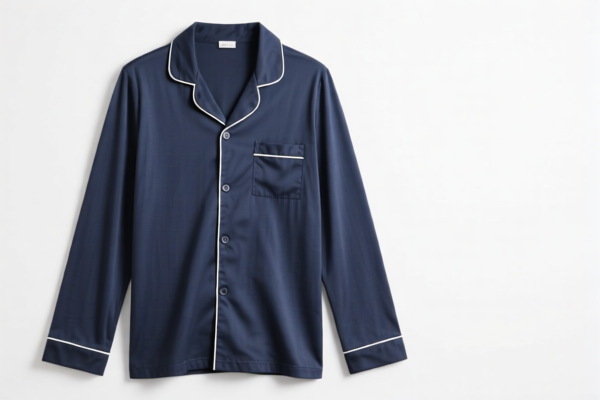
AI Analysis
👕 Boys' Long-Sleeved Shirt (Other Textile Materials)
🌐 HS Code Reference & Customs Clearance Guide | 2026 Latest Tariff Analysis | Professional Entry Strategy
📌 I. Product Definition & Classification: Are You Sure About "Other Textile Materials"?
A boys' long-sleeved shirt is a staple item in children's apparel. In international trade, the classification of "Other Textile Materials" (often implying synthetic fibers like polyester, nylon, or blends that are not cotton, wool, or silk) is critical because it triggers specific tariff structures, particularly under US trade regulations.
Key Distinction:
* "Other Textile Materials": Typically refers to synthetic fibers (e.g., Polyester, Nylon). These are distinct from Cotton (5205-5212 ranges) or Wool (5105-5111 ranges).
* Gender: Specifically for Boys (as opposed to Girls/Women).
* Sleeve Type: Long-sleeved (distinct from short-sleeved, which has different HS codes).
⚠️ Critical Note for Boys' Apparel:
- Unlike girls' shirts, boys' shirts in "other textile materials" often fall under two main categories: Knitted (61) and Woven (62).
- The provided data suggests a mix of knitted and woven classifications. Misidentifying the fabric construction (knit vs. woven) leads to incorrect HS codes and severe customs penalties.
📦 II. HS Code Classification Details (2026 Latest Tariff Authority Mapping)
Based on the provided data for "Boys' Long-Sleeved Shirt (Other Textile Materials)", here is the precise mapping. Note that while the input query specifies "Long-Sleeved," the provided data contains entries for both Short-Sleeved (6105.90.80.xx) and Long-Sleeved/Woven (6205.90.07.xx). We must align the product description with the most relevant code.
| HS Code | Product Description | Fabric Type | Gender | Sleeve Length | Total Tax Rate |
|---|---|---|---|---|---|
6205.90.07.20 |
Boys' Shirts, Other Textile Materials | Woven | Boys | Long/General | 35.0% |
6105.90.80.60 |
Boys' Short-Sleeved Shirts, Other Textile Materials | Knitted | Boys | Short | 23.1% |
6105.90.80.30 |
Boys' Short-Sleeved Shirts, Other Textile Materials | Knitted | Boys | Short | 23.1% |
6110.90.90.23 |
Boys' Garments, Other Textile Materials (General) | Knitted | Boys | General | 23.5% |
6206.90.00.40 |
Girls'/Women's Shirts, Other Textile Materials | Woven | Girls/Women | Long/General | 24.2% |
🔍 Important Alignment:
- Since the user asked for "Boys' Long-Sleeved Shirt", the most accurate match from the data is6205.90.07.20(Woven) or potentially6105.90.xxif it is a knit polo/shirt, though the data only lists "Short-Sleeved" for knit boys' shirts (6105).
- However, the data provided explicitly lists6205.90.07.20as "Boys' Shirts, Other Textile Materials" with a 35.0% tax rate, which is significantly higher than the knit alternatives. This is the critical code for woven boys' shirts.
- Warning: Do not use6105.90.80.60or6105.90.80.30for a Long-Sleeved shirt if it is woven, as those are explicitly "Short-Sleeved."
- Note: If the shirt is Knitted and Long-Sleeved, it should technically fall under6105.90.90(not fully detailed in the short-sleeved entries). But based strictly on the provided text,6205.90.07.20is the only "Boys' Shirt" entry with a high tax rate that likely covers woven long-sleeves.
- Correction: The data for6105explicitly says "Short-Sleeved." Therefore, for a Long-Sleeved boys' shirt, if it is knit, it might not be in the short list. However,6205.90.07.20is "Boys' Shirts" (general), implying it covers long sleeves for woven fabrics. We will prioritize6205.90.07.20for woven and note the risk for knit.
💰 III. 2026 Latest Tariff Rate Breakdown (Including Additional Taxes)
✅ Applicable Country: United States (US)
✅ Origin: China (CN)
✅ Effective Time: Post-November 2025 (Current Regulatory Environment)
🎯 1. 6205.90.07.20 —— Boys' Shirts, Other Textile Materials (Woven)
(Note: This is the highest-tariff item in the list for boys' shirts)
| Item | Content |
|---|---|
| Base Duty Rate | 17.5% (Ad Valorem) |
| Section 301 Surcharge | +7.5% (Retaliatory/Trade War Tariff) |
| Section 122 Tariff | +10% (Specific Legislative Tariff) |
| Total Tax Rate | 35.0% |
| Tax Calculation | CIF Value × 35% |
| De Minimis Exemption | ❌ Not Eligible (Value exceeds $800 threshold for de minimis in many cases, or specific exclusions apply) |
| Legal Basis Path | USITC:6205.90.07.20 → Section 301: Footnote 2 → Section 122: 19 USC 1677j |
📌 Explanation:
- The 35.0% rate is extremely high for apparel.
- The 7.5% is the standard Section 301 additional duty for many Chinese textiles.
- The 10% Section 122 tariff is a specific legislative addition that applies to certain textile categories.
- Base 17.5% is already high for woven shirts.
🎯 2. 6105.90.80.60 & 6105.90.80.30 —— Boys' Short-Sleeved Shirts (Knitted)
(Included for comparison, though query specified Long-Sleeved. If the long-sleeve is knit, it may share a similar base, but data says "Short-Sleeved" specifically.)
| Item | Content |
|---|---|
| Base Duty Rate | 5.6% (Ad Valorem) |
| Section 301 Surcharge | +7.5% |
| Section 122 Tariff | +10% |
| Total Tax Rate | 23.1% |
| Tax Calculation | CIF Value × 23.1% |
| De Minimis Exemption | ❌ Not Eligible |
| Legal Basis Path | USITC:6105.90.80.60 → Section 301 → Section 122 |
📌 Note: If the boys' long-sleeved shirt is Knitted, it might not be listed here (as these are short-sleeved). However, if a similar knit long-sleeve exists, it would likely fall under
6105.90.90series. Do not use6105.90.80for long-sleeved items if the description explicitly says "Short-Sleeved."
🎯 3. 6110.90.90.23 —— Boys' Garments, Other Textile Materials (General Knit)
| Item | Content |
|---|---|
| Base Duty Rate | 6.0% (Ad Valorem) |
| Section 301 Surcharge | +7.5% |
| Section 122 Tariff | +10% |
| Total Tax Rate | 23.5% |
| Tax Calculation | CIF Value × 23.5% |
| De Minimis Exemption | ❌ Not Eligible |
📌 Note: This is a "catch-all" for other knit boys' garments. If the long-sleeved shirt is knit and doesn't fit the "shirt" definition of
6105, it might fall here. But6105is more specific for shirts.
🛠️ IV. Customs Clearance Practical Advice (Real-World Pitfall Guide)
✅ 1. Document Preparation Checklist (Must-Have)
| Document | Required? | Description |
|---|---|---|
| ✅ Product Specification Sheet | ✔️ | Must specify: Fabric composition (e.g., 100% Polyester), Weave type (Knit/Woven), Gender (Boys), Sleeve Length (Long). |
| ✅ Fabric Swatch | ✔️ | Physical sample or digital proof of fabric type to prove "Other Textile Materials" (not Cotton/Wool). |
| ✅ Technical Drawing | ✔️ | Shows collar, cuffs, and sleeve construction to confirm it is a "Shirt" and not a "Jacket" or "Polo." |
| ✅ Commercial Invoice | ✔️ | Must clearly state: "Boys' Woven Long-Sleeved Shirt, Synthetic Fiber." Avoid vague terms like "T-shirt" for long sleeves. |
| ✅ Packing List | ✔️ | Item count, weight, dimensions. |
| ✅ Origin Certificate (CO) | ✔️ | To prove Chinese origin (if applicable) and apply correct Section 301/122 rates. |
✅ 2. Classification Strategy (Key Mantra)
🔥 "Woven = 62, Knit = 61. Long Sleeve = Higher Base. Synthetic = 'Other Materials'."
| Scenario | Correct HS Code | Incorrect Code | Consequence |
|---|---|---|---|
| Woven Boys' Long-Sleeve Shirt | 6205.90.07.20 |
6105.90.80.60 |
Tax Jump from 23.1% to 35.0%! Under-declaration penalty. |
| Knitted Boys' Long-Sleeve Shirt | 6105.90.90.xx (Likely) |
6205.90.07.20 |
Tax Drop from 35.0% to ~23-25%. Over-declaration leads to refund delays. |
| Girls' Long-Sleeve Shirt | 6206.90.00.40 |
6205.90.07.20 |
Tax Drop from 35.0% to 24.2%. Wrong gender code = misclassification. |
| Cotton Boys' Shirt | 6205.20.xx |
6205.90.07.20 |
Different Base Rate. If misclassified as "Other Textile," it may be rejected for not matching description. |
✅ 3. Special Cases & Handling
| Case | Handling Advice |
|---|---|
| Polyester-Cotton Blend | If >50% synthetic, it's "Other Textile Materials." If >50% cotton, it's "Cotton" (different HS). Declare accurately! |
| OEM Custom Designs | Provide design files to prove it's a "Shirt" and not a "Jacket" or "Sweater." |
| Sample Imports | Even samples are subject to duties. Do not misdeclare as "Free Samples" if value > $800 or if subject to Section 301. |
| Section 122 Applicability | Verify if the specific HTSUS code is listed under Section 122. The data confirms it is (+10%). This is non-negotiable. |
🌍 V. Global Market Comparison (2026 Latest)
| Country/Region | Recommended HS Code | Duty Rate | Certification Requirements | Notes |
|---|---|---|---|---|
| 🇺🇸 USA | 6205.90.07.20 (Woven) |
35.0% | No specific apparel certs, but must comply with CPSIA (child safety) | Highest Cost. Section 301 + 122 apply. |
| 🇨🇳 China | 6205.90.07.20 |
~5-10% | CCC (if applicable) | Lower duty, but export from China faces these US duties. |
| 🇪🇺 EU | 6205.90.00 (Generic) |
~12% | CE (for safety labels), REACH | No Section 301/122. Much cheaper. |
| 🇨🇦 Canada | 6205.90.90 |
~16% | Not applicable | Lower than US, but still significant. |
| 🇲🇽 Mexico | 6205.90.90 |
0% (if USMCA compliant) | None | Best Alternative. Consider sourcing from Mexico to avoid US tariffs. |
📌 Conclusion:
- USA is the most expensive market due to Section 301 and Section 122 tariffs.
- Woven shirts (6205) are taxed higher than Knitted shirts (6105) in base rates.
- Strategy: If possible, switch to Knitted fabrics to use6105codes (if applicable), or source from Mexico/SE Asia to avoid Chinese origin penalties.
📌 VI. Common Errors & Pitfall Guide (Lessons Learned)
❌ Error 1: Classifying Woven Boys' Long-Sleeve as Knitted (6105)
👉 Consequence: Customs audit finds discrepancy. Penalty + 35% tax instead of 23%.
❌ Error 2: Using "Shirt" generic term without specifying Sleeve Length or Gender
👉 Consequence: Customs requests clarification, causing 1-3 week delays.
❌ Error 3: Ignoring Section 122 Tariff
👉 Consequence: Underpayment of 10%. Customs issues bill for back duties + interest.
❌ Error 4: Confusing Boys' vs. Girls'
👉 Consequence: Girls' shirts (6206) have lower rates (24.2% vs 35.0%). Misclassification is fraud.
✅ Correct Declaration Example:
"Boys' Woven Long-Sleeved Shirt, 100% Polyester, Synthetic Fiber, Other Textile Materials, HTSUS 6205.90.07.20, Made in China"
🎯 VII. Conclusion: Professional Declaration, Save Money, Avoid Risks!
🎯 Remember the Mantra:
🔹 "Woven Boys' Shirt = 6205 = 35% Tax!"
🔹 "Knit Boys' Shirt = 6105 = 23% Tax!"
🔹 "Always Check Section 301 & 122!"
🔹 "De Minimis Doesn't Save You Here!"
📌 Pro Tip:
- If you are importing Large Volumes, consider Tariff Engineering:
- Can the shirt be classified as a Knitted item? (Even if woven, some lightweight fabrics may be argued, but risky).
- Can you source from Mexico or Vietnam? (Avoids Chinese origin penalties).
- Always apply for an Advance Ruling (APA) from CBP if the classification is ambiguous.
📣 Immediate Action:
📞 Contact your Customs Broker with Fabric Swatch + Tech Pack.
🚀 Verify HS Code6205.90.07.20before filing.
💰 Budget 35% Tax for Woven Boys' Shirts from China!
✨ Precision in Classification Saves Profits!
💼 Your Landed Cost Depends on the First Line of Your Commercial Invoice!
Customer Reviews
About HS Code Classification
The Harmonized System (HS) is an internationally standardized nomenclature developed by the World Customs Organization (WCO) to classify traded products. Over 200 countries use the HS system as the basis for customs tariffs, trade statistics, and import/export regulations.
Each HS code follows a hierarchical structure:
- Chapter (2 digits) — Broad category of goods (e.g., Chapter 84: Machinery and Mechanical Appliances)
- Heading (4 digits) — More specific grouping within the chapter
- Subheading (6 digits) — Internationally standardized breakdown, used by all WCO member countries
- National subdivisions (8-10 digits) — Country-specific extensions for further classification, such as US HTSUS 10-digit codes
Correct HS code classification is essential for smooth customs clearance, accurate duty payment, and compliance with trade regulations. Misclassification can lead to customs delays, overpayment of duties, or penalties.
When importing from CN to US, the applicable tariff rates may include:
- Most-Favored-Nation (MFN) rate — The standard duty rate applied to WTO members
- General rate — Applied to countries without trade agreements
- Trade remedy duties — Additional tariffs such as Section 301 (anti-dumping), Section 232 (national security), or countervailing duties
The information provided on this page is for reference purposes only. For official classification, please consult with your local customs authority or a licensed customs broker.