Boys' Man made Fiber Striped Pajamas
CN → US| HS Code | Tariff Rate | Origin | Destination | Doc |
|---|---|---|---|---|
| 6114303060 | 32.4% | CN | US | Official Doc |
| 6114303044 | 32.4% | CN | US | Official Doc |
| 6107220015 | 33.5% | CN | US | Official Doc |
| 6107220025 | 26.0% | CN | US | Official Doc |
| 6207220000 | 33.5% | CN | US | Official Doc |
Product Images
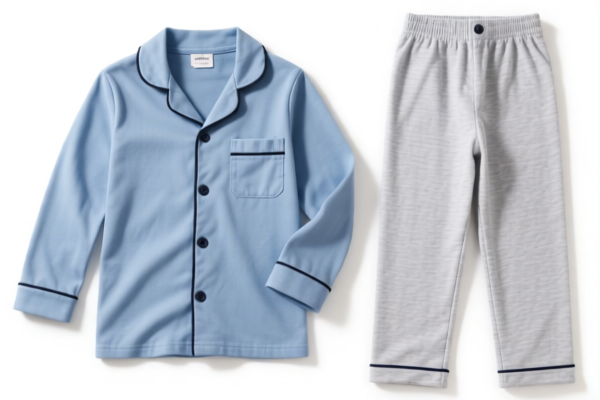
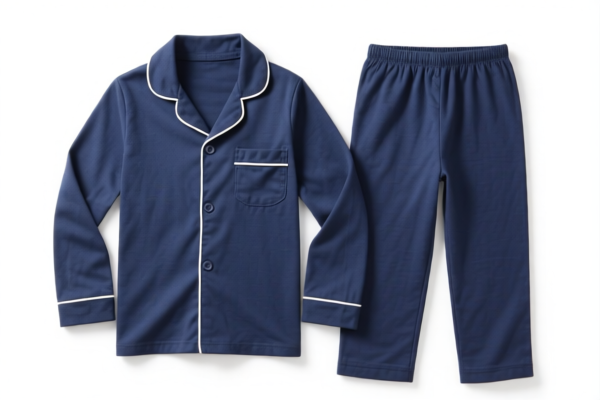
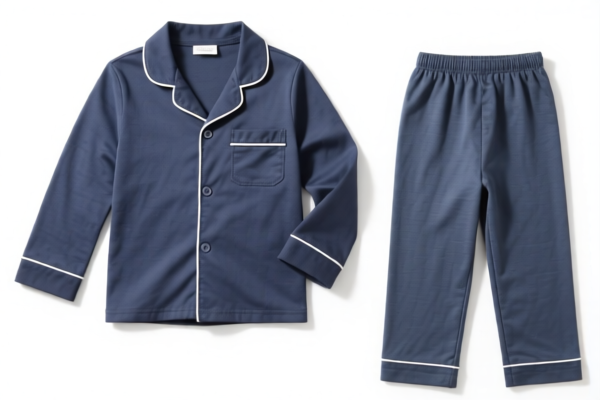
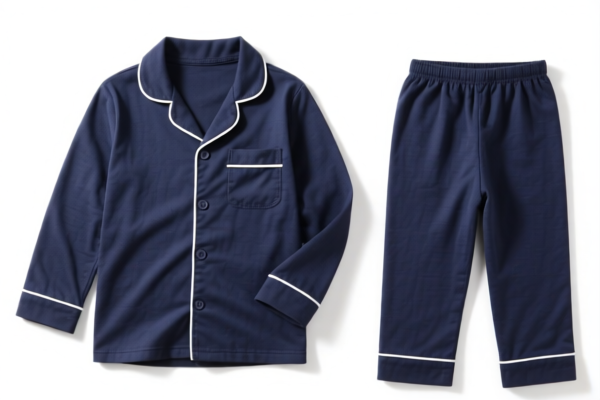
AI Analysis
🌙 Boys' Man-Made Fiber Striped Pajamas: HS Code Classification & US Customs Clearance Guide (2026)
🌐 HS Code Reference & Customs Strategy | Latest 2026 Tariff Breakdown | Professional Clearance Advice
📌 Product Definition: What Are We Actually Classifying?
Boys’ Man-Made Fiber Striped Pajamas are nightwear garments designed specifically for male children. They are manufactured from synthetic or regenerated fibers (e.g., polyester, rayon/viscose, nylon) rather than natural fibers like cotton or wool. The "striped" pattern is a design element but does not change the fundamental nature of the garment as sleepwear.
In international trade, pajamas are often confused with other types of men’s/children’s sleepwear or loungewear. The key distinction lies in: 1. Purpose: Specifically for sleeping. 2. Construction: Typically two-piece sets (jacket + pants) or one-piece suits, distinct from robes or blankets. 3. Material: Man-made fibers (Chapter 61 for knit/crochet, Chapter 62 for woven).
⚠️ Critical Distinction:
- If the garment is a two-piece set (top + bottom) or a one-piece suit designed for sleep → It is Pajamas.
- If it is a long robe → It is Bathrobe.
- If it is a knitted nightshirt without specific pajama construction → It may fall under Nightshirts/Nightdresses or Other Menswear.
📦 II. HS Code Classification Details (2026 Latest Tariff Authority Comparison)
Based on the provided data for "Boys' Man-Made Fiber Striped Pajamas", here are the possible HS Code classifications, their rationale, and associated tax rates.
| HS Code | Product Description & Rationale | Total Tax Rate | Tax Breakdown (US Import from China) |
|---|---|---|---|
| 6114.30.30.60 | Boys' Long-Sleeve Man-Made Fiber Pajamas Rationale: Classified under "Other men's or boys' knitted/crocheted garments of man-made fibers." Fits the broad category of pajamas that don't fit other specific sub-headings. |
32.4% | Base: 14.9% Section 301 (Add'l): 7.5% Section 122: 10% |
| 6114.30.30.44 | Boys' Long-Sleeve Man-Made Fiber Pajamas Rationale: Classified under "Onesies, workwear, and similar garments." If the pajamas are one-piece or considered "similar" to workwear/sleep-suits, this code may apply. |
32.4% | Base: 14.9% Section 301 (Add'l): 7.5% Section 122: 10% |
| 6107.22.00.15 | Boys' Long-Sleeve Man-Made Fiber Sleepwear Rationale: Specifically for boys' sleepwear of man-made fibers. This is a more precise fit if the item is strictly defined as sleepwear in the knitted category. |
33.5% | Base: 16.0% Section 301 (Add'l): 7.5% Section 122: 10% |
| 6107.22.00.25 | Boys' Long-Sleeve Man-Made Fiber Sleepwear Rationale: Same as above, but potentially excluding blanket pajamas. Note: This code has a lower additional tax component. |
26.0% | Base: 16.0% Section 301 (Add'l): 0.0% Section 122: 10% |
| 6207.22.00.00 | Boys' Long-Sleeve Man-Made Fiber Pajamas (Woven) Rationale: If the pajamas are woven (not knitted), they fall under Chapter 62. This code covers other men’s/boys’ nightshirts and pajamas. |
33.5% | Base: 16.0% Section 301 (Add'l): 7.5% Section 122: 10% |
🔍 Key Observation:
- Knitted vs. Woven: Most pajamas are knitted (Chapter 61). If your product is woven (e.g., flannel-like but synthetic), use 6207.22.00.00.
- Section 122 Impact: All listed codes include a 10% Section 122 tariff (likely related to specific trade enforcement or recent policy adjustments).
- Section 301 Variance: Code 6107.22.00.25 offers a 0% Section 301 rate, resulting in a significantly lower total tax (26.0%) compared to others (32.4%-33.5%). This makes it the most cost-effective classification if applicable.
💰 III. 2026 Latest Tariff Rate Breakdown (Detailed Analysis)
✅ Applicable Country: United States (US)
✅ Origin: China (CN)
✅ Effective Date: Current 2026 Tariff Schedule
🎯 1. 6114.30.30.60 & 6114.30.30.44 — General Men’s/Boys’ Knitted Garments
| Item | Detail |
|---|---|
| Base Duty | 14.9% |
| Section 301 Additional Duty | +7.5% |
| Section 122 Duty | +10% |
| Total Effective Rate | 32.4% |
| Calculation | CIF Value × 32.4% |
| De Minimis Exemption | ❌ Not Eligible (Section 321 de minimis does not apply to goods subject to Section 301/122 tariffs) |
| Legal Basis | USITC:6114.30.30.60 → IEEPA:9903.01.25 → USITC:Footnote |
📌 Explanation:
- These codes fall under general "other men’s/boys’ knitted garments."
- The 7.5% Section 301 rate applies to most Chinese textile imports.
- 10% Section 122 is a recent enforcement tariff, likely targeting specific trade practices or overcapacities.
🎯 2. 6107.22.00.15 & 6207.22.00.00 — Specific Sleepwear Categories
| Item | Detail |
|---|---|
| Base Duty | 16.0% |
| Section 301 Additional Duty | +7.5% |
| Section 122 Duty | +10% |
| Total Effective Rate | 33.5% |
| Calculation | CIF Value × 33.5% |
| De Minimis Exemption | ❌ Not Eligible |
| Legal Basis | USITC:6107.22.00.15 / 6207.22.00.00 → IEEPA:9903.01.25 → USITC:Footnote |
📌 Explanation:
- These codes are more specific to sleepwear, which often carries a slightly higher base duty (16.0% vs. 14.9%).
- The additional tariffs remain the same as above.
🎯 3. 6107.22.00.25 — OPTIMAL CLASSIFICATION (If Applicable)
| Item | Detail |
|---|---|
| Base Duty | 16.0% |
| Section 301 Additional Duty | 0.0% |
| Section 122 Duty | +10% |
| Total Effective Rate | 26.0% |
| Calculation | CIF Value × 26.0% |
| De Minimis Exemption | ❌ Not Eligible |
| Legal Basis | USITC:6107.22.00.25 → IEEPA:9903.01.24 (Different Footnote) |
📌 Explanation:
- This code appears to have a different legal footnote (9903.01.24vs.9903.01.25), resulting in 0% Section 301 tariff.
- This is the most tax-efficient classification, saving 7.5% on top duties.
- Condition: Must qualify under the specific criteria for this subheading (likely excluding blanket pajamas or fitting a specific "sleepwear" definition that exempts it from Section 301).
🛠️ IV. Customs Clearance Practical Advice (Avoid Pitfalls)
✅ 1. Required Documentation Checklist
| Document | Mandatory? | Purpose |
|---|---|---|
| ✅ Product Specification Sheet | ✔️ | Must state: Material (e.g., 100% Polyester), Construction (Knitted/Woven), Style (Pajama Set), Target Demographic (Boys). |
| ✅ Product Images | ✔️ | Show striped pattern, long sleeves, two-piece set (if applicable), and labels. |
| ✅ Commercial Invoice | ✔️ | Clearly describe as "Boys' Striped Pajamas, Man-Made Fiber, Knitted/Woven." Avoid vague terms like "Clothing." |
| ✅ Packing List | ✔️ | Confirm quantity, packaging method, and dimensions. |
| ✅ Labeling Compliance | ✔️ | US Customs requires Fiber Content, Country of Origin, and Manufacturer/Importer Info on garments. |
✅ 2. Classification Strategy (Key Tips)
🔥 “Describe Exactly, Don’t Guess!”
| Scenario | Correct Declaration | Risk if Incorrect |
|---|---|---|
| Knitted Pajama Set | 6107.22.00.25 (if eligible) or 6107.22.00.15 |
Misclassifying as general wear (6114) → Overpay or Underpay duties. |
| Woven Pajama Set | 6207.22.00.00 |
Misclassifying as knitted (61xx) → Rejection, Penalty, Delay. |
| One-Piece Sleepsuit | 6114.30.30.44 ("Similar Garments") |
If declared as pajamas but looks like a suit, Customs may question. |
| Blanket Pajamas | Not 6107.22.00.25 |
Must use other codes with higher taxes. |
✅ 3. Special Considerations
- Section 122 Tariff: All classified codes above include a 10% Section 122 tariff. Ensure your customs broker is aware of this additional charge, as it is recent and sometimes overlooked.
- De Minimis (Section 321): Since these goods are subject to Section 301 and Section 122 tariffs, they DO NOT QUALIFY for the $800 de minimis exemption. All shipments must be formally entered.
- Pre-Ruling Recommendation: Given the difference between 26.0% (Code .25) and 32.4-33.5% (other codes), apply for an Advance Ruling from US Customs and Border Protection (CBP) to confirm eligibility for 6107.22.00.25.
🌍 V. Global Market Clearance Comparison (2026)
| Country/Region | Recommended HS Code | Duty Rate | Key Certification | Notes |
|---|---|---|---|---|
| 🇺🇸 USA | 6107.22.00.25 (if eligible) |
26.0% | FCC (if electronic), CPSIA (Children’s Product) | High tariffs due to China origin. Verify Section 301 exemption. |
| 🇺🇸 USA | 6114.30.30.60 |
32.4% | CPSIA | Default if .25 not eligible. |
| 🇨🇳 China | 6107.22.00 |
~10-15% | CCC (if applicable) | Lower base duties, no Section 301/122. |
| 🇪🇺 EU | 6107.22 |
0-12% | CE, REACH, CPSR | No Section 301/122. Standard EU duty applies. |
| 🇬🇧 UK | 6107.22 |
0-12% | UKCA | Post-Brexit rules apply. |
📌 Conclusion:
- USA is the most challenging market due to high additional tariffs (Section 301 + 122).
- Optimizing HS Code to6107.22.00.25can save 7.5% on duties, a significant margin for low-margin apparel.
📌 VI. Common Mistakes & Pitfalls (Learn from Others’ Errors)
❌ Mistake 1: Declaring "Striped Pajamas" as "Children’s Clothing" generally.
👉 Consequence: May be misclassified under general headings, leading to incorrect duty assessment and potential audits.
❌ Mistake 2: Ignoring the Knitted vs. Woven distinction.
👉 Consequence: Knitted items go to Chapter 61, Woven to Chapter 62. Misclassification can lead to 100% penalty on duties.
❌ Mistake 3: Assuming De Minimis applies.
👉 Consequence: Shipments under $800 will be seized or delayed if not formally entered, as Section 301/122 goods are exempt from de minimis.
❌ Mistake 4: Using "Man-Made Fiber" without specifying Knitted/Woven.
👉 Consequence: CBP may request additional info, causing clearance delays. Always specify construction method.
✅ Best Practice Declaration Example:
"Boys' Knitted Striped Pajama Set, 100% Polyester, Long Sleeve, Two-Piece, Model XYZ, CPSIA Compliant"
🎯 VII. Conclusion: Precision in Classification Saves Money!
🎯 Remember the Strategy:
🔹 "Check Knitted/Woven first."
🔹 "Aim for 6107.22.00.25 (26% tax) if possible!"
🔹 "If not eligible, 6114.30.30.60/44 (32.4%) is the backup."
🔹 "Never use De Minimis for China-origin textiles under $800."
📌 Pro Tip:
If your pajamas are made of cotton, the tax structure changes completely. Ensure you are using the correct man-made fiber classification.
Consider applying for a CBP Advance Ruling to lock in the 26.0% rate for 6107.22.00.25 if your product qualifies.
📣 Immediate Action:
📞 Consult your customs broker with product images and material specs.
📄 Submit for CBP Advance Ruling to confirm eligibility for 6107.22.00.25.
🚀 Clearance is not just about speed—it’s about accuracy and cost optimization!
✨ Professional customs clearance starts with precise classification!
💼 Every percentage point saved is pure profit!
Customer Reviews
About HS Code Classification
The Harmonized System (HS) is an internationally standardized nomenclature developed by the World Customs Organization (WCO) to classify traded products. Over 200 countries use the HS system as the basis for customs tariffs, trade statistics, and import/export regulations.
Each HS code follows a hierarchical structure:
- Chapter (2 digits) — Broad category of goods (e.g., Chapter 84: Machinery and Mechanical Appliances)
- Heading (4 digits) — More specific grouping within the chapter
- Subheading (6 digits) — Internationally standardized breakdown, used by all WCO member countries
- National subdivisions (8-10 digits) — Country-specific extensions for further classification, such as US HTSUS 10-digit codes
Correct HS code classification is essential for smooth customs clearance, accurate duty payment, and compliance with trade regulations. Misclassification can lead to customs delays, overpayment of duties, or penalties.
When importing from CN to US, the applicable tariff rates may include:
- Most-Favored-Nation (MFN) rate — The standard duty rate applied to WTO members
- General rate — Applied to countries without trade agreements
- Trade remedy duties — Additional tariffs such as Section 301 (anti-dumping), Section 232 (national security), or countervailing duties
The information provided on this page is for reference purposes only. For official classification, please consult with your local customs authority or a licensed customs broker.