Boys' Other Material Underwear
CN → US| HS Code | Tariff Rate | Origin | Destination | Doc |
|---|---|---|---|---|
| 6109908030 | 33.5% | CN | US | Official Doc |
| 6109908010 | 33.5% | CN | US | Official Doc |
| 6208998020 | 20.3% | CN | US | Official Doc |
| 6117909095 | 32.1% | CN | US | Official Doc |
| 6117909075 | 32.1% | CN | US | Official Doc |
Product Images
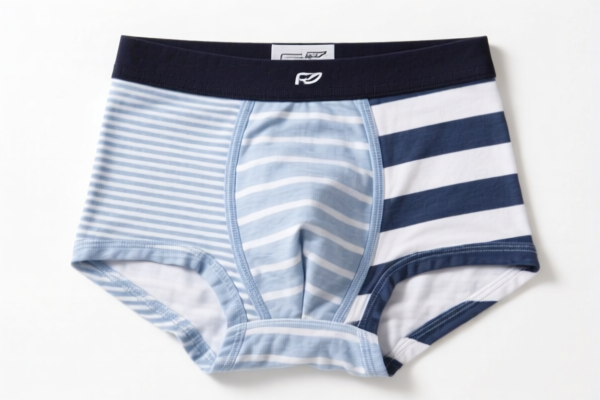


AI Analysis
👕 Boys' Other Material Underwear (Kids' Seamless Panties/Briefs)
🌐 HS Code Reference & Clearance Guide | 2026 Latest Tariff Analysis | Professional Customs Strategy
📌 I. Product Definition & Classification: Do You Really Know "Boys' Underwear"?
"Boys' Other Material Underwear" refers to intimate apparel for children (typically boys, though often categorized broadly under children's wear), characterized by being made from materials other than cotton, wool, or synthetic fibers like rayon/viscose in the primary sense, or falling under the "other textile materials" category. The key descriptors here are "Seamless" (无痕) and "Knitted/Weaved" structure.
In international trade, children's underwear is strictly divided based on: 1. Manufacturing Method: Knitted (610x) vs. Woven (620x). 2. Material Composition: Cotton (6111/6207) vs. Other Textile Materials (6109/6208). 3. Form Factor: Integral garment vs. Accessories/Parts.
⚠️ Key Distinction Points:
- If it is a knitted garment made of other textile materials (e.g., polyester blends, nylon, spandex mixtures not primarily cotton/wool) →归入 6109 or 6117.
- If it is a woven garment made of other textile materials →归入 6208.
- If classified as an accessory/part rather than a primary garment (less common for full underwear) →归入 6117.
📦 II. HS Code Classification Details (2026 Latest Tariff Authority Comparison)
| HS Code | Product Description | Application Scenario | Material/Structure Logic |
|---|---|---|---|
6109.90.80.30 |
Boys' Knitted Underwear, Other Textile Materials | Girls'/Children's seamless panties, knitted structure, non-wool, non-cotton primary material. | ✅ Knitted, Other Material |
6109.90.80.10 |
Children's Other Material Underwear, Similar Garment | Kids' underwear, inferred as knitted/woven elastic fabric, categorized as "other textile materials." | ✅ Knitted/Weaved, Other Material |
6208.99.80.20 |
Boys' Woven Underwear, Other Textile Materials | Woven seamless panties, inferred as textile material, falls under "other" category. | ✅ Woven, Other Material |
6117.90.90.95 |
Other Made-Up Clothing Accessories, Other Materials | Classified as garment accessory/part, non-cotton, non-synthetic fiber, non-wool fallback logic. | ❌ Accessory/Part Logic |
6117.90.90.75 |
Knitted/Crocheted Garment Accessories/Parts | Knitted garment accessories/parts, other materials, consistent classification logic for parts. | ❌ Accessory/Part Logic |
🔍 Important Reminder:
- Knitted (61xx) vs. Woven (62xx) is the primary divider. Most "seamless" underwear is Knitted due to the circular knitting process.
- If the material is not primarily cotton, wool, or synthetic fiber (rayon/viscose), it falls into "Other Textile Materials".
- Misclassification as an "accessory" (6117) instead of a "garment" (6109/6208) is a common error that can lead to different duty rates and compliance issues.
💰 III. 2026 Latest Tariff Rate Breakdown (Including Surcharge & Policy Add-ons)
✅ Applicable Country: United States (US)
✅ Origin: China (CN)
✅ Effective Date: Post-2025 (Includes Section 301 & IEEPA Add-ons)
🎯 1. 6109.90.80.30 & 6109.90.80.10 —— Knitted Underwear, Other Materials
| Item | Content |
|---|---|
| Base Duty Rate | 16.0% (Ad Valorem) |
| Section 301 Surcharge | +7.5% (Additional Tariff) |
| Section 122 Tariff | +10.0% (New Trade Barrier) |
| Total Duty Rate | 33.5% |
| Tax Calculation | CIF Value × 33.5% |
| De Minimis Exemption | ❌ Not Eligible (Denied for China-origin textile goods under current policies) |
| Legal Path | HTSUS:6109.90.80 → USITC:7.5% → Section 122:10% |
📌 Explanation:
- "Base Duty 16.0%" is the standard MFN rate for knitted other textile garments.
- "Section 301 7.5%" is the additional tariff on Chinese textile imports.
- "Section 122 10%" is a recent trade measure adding further cost.
- Total 33.5% is a significant cost burden. Accurate declaration of "Children's" status may offer slight protections but does not eliminate these surcharges.
🎯 2. 6208.99.80.20 —— Woven Underwear, Other Materials
| Item | Content |
|---|---|
| Base Duty Rate | 2.8% (Ad Valorem) |
| Section 301 Surcharge | +7.5% (Additional Tariff) |
| Section 122 Tariff | +10.0% (New Trade Barrier) |
| Total Duty Rate | 20.3% |
| Tax Calculation | CIF Value × 20.3% |
| De Minimis Exemption | ❌ Not Eligible |
| Legal Path | HTSUS:6208.99.80 → USITC:7.5% → Section 122:10% |
📌 Note:
- Woven underwear (6208) has a much lower base duty (2.8%) compared to knitted (16.0%).
- However, the surcharges remain the same, leading to a total of 20.3%.
- This is significantly cheaper than the knitted option (33.5%).
- Strategy: If the product can technically be classified as woven (e.g., elastic woven bands), this route saves ~13% in total duties.
🎯 3. 6117.90.90.95 & 6117.90.90.75 —— Accessories/Parts
| Item | Content |
|---|---|
| Base Duty Rate | 14.6% (Ad Valorem) |
| Section 301 Surcharge | +7.5% (Additional Tariff) |
| Section 122 Tariff | +10.0% (New Trade Barrier) |
| Total Duty Rate | 32.1% |
| Tax Calculation | CIF Value × 32.1% |
| De Minimis Exemption | ❌ Not Eligible |
| Legal Path | HTSUS:6117.90.90 → USITC:7.5% → Section 122:10% |
📌 Warning:
- Classifying full underwear as an "accessory" is highly risky and likely incorrect.
- The total rate (32.1%) is close to the knitted garment rate but higher than woven.
- Customs may reject this classification for primary garments, leading to penalties.
🛠️ IV. Clearance Practical Advice (Real-World Pitfall Avoidance Guide)
✅ 1. Preparation Checklist (Must-Have Documents)
| Document | Required | Notes |
|---|---|---|
| ✅ Product Specification Sheet | ✔️ | Must specify: Knitted vs. Woven, Material Composition (e.g., 95% Polyester, 5% Spandex), Age Group (Boys/Children). |
| ✅ Photos (Front/Back/Label) | ✔️ | Clear view of seams, tags, and "Made in China" label. |
| ✅ Bill of Lading & Invoice | ✔️ | Must match HS Code description exactly. Avoid vague terms like "Garments." |
| ✅ Material Test Report | ✔️ | Confirm fiber content to justify "Other Material" vs. Cotton/Synthetic. |
| ✅ Children's Product Certificate (CPC) | ✔️ | Mandatory for US import of children's apparel. |
✅ 2. Declaration Strategy (Key Mnemonics)
🔥 "Knit vs. Weave, Material First; Accessories Trap is the Worst!"
| Scenario | Correct HS Code | Risk of Misclassification |
|---|---|---|
| Knitted, Other Material | 6109.90.80.30 / 6109.90.80.10 |
High Duty (33.5%) |
| Woven, Other Material | 6208.99.80.20 |
Lower Duty (20.3%) – Optimal if applicable |
| Full Garment declared as Part | 6117.90.90.95 |
Rejection/Penalty – High Compliance Risk |
| Cotton Underwear | 6111.20 / 6207.11 |
Not in this dataset, but base duties differ. |
✅ 3. Special Handling Notes
| Situation | Recommendation |
|---|---|
| Seamless Technology | Ensure documentation states "Knitted Seamless" if using circular knitting. Woven seamless is rare. |
| "Other Material" Definition | If material is >50% Polyester/Nylon/Spandex, it is "Other." If >50% Cotton, it is not "Other." |
| Children's Age | Clearly state "Boys" or "Children" on invoice. Some policies may vary for infants vs. older kids. |
| De Minimis | Do not rely on $800 exemption. Current policies deny this for Chinese textile goods. Plan for full duty payment. |
🌍 V. Global Market Comparison (2026 Latest)
| Country/Region | Recommended HS Code | Duty Rate (China Origin) | Certification | Notes |
|---|---|---|---|---|
| 🇺🇸 USA | 6208.99.80.20 |
20.3% (Woven) / 33.5% (Knit) | CPC + Labeling | High tariffs due to Section 301 & 122. |
| 🇨🇳 China | 6208.99.80.20 |
8-13% (Import) | CCC (if applicable) | Domestic trade has different rules. |
| 🇪🇺 EU | 6208.91 / 6109.90 |
0-12% (MFN) | CE (if safety gear) | No Section 301/122 equivalents. |
| 🇯🇵 Japan | 6208.99 |
15-16% | FSC (if applicable) | Moderate duties, no high surcharges. |
📌 Conclusion:
- USA is the highest-cost market for Chinese textile underwear due to layered tariffs.
- Woven classification (6208) offers the best duty savings (20.3% vs. 33.5%).
- Compliance is critical: CPC and accurate material declaration are non-negotiable.
📌 VI. Common Mistakes & Pitfall Guide (Lessons from Blood & Tears)
❌ Mistake 1: Declaring Knitted Underwear as Woven to Save Duty
👉 Consequence: Customs inspection reveals knitting structure → Penalty + Back Taxes!
❌ Mistake 2: Using "Underwear" Generic Term Without Material Detail
👉 Consequence: Customs requests clarification → Delay in Clearance!
❌ Mistake 3: Ignoring "Section 122" Tariff
👉 Consequence: Underestimating cost by 10% → Profit Margin Erosion!
❌ Mistake 4: Misclassifying as Accessory (6117)
👉 Consequence: Shipment held for "Incorrect Classification" → Storage Fees + Legal Risk!
✅ Correct Approach:
"Boys' Knitted Seamless Underwear, 95% Polyester/5% Spandex, Other Textile Material, CPC Certified"
🎯 VII. Conclusion: Professional Declaration, Save Time, Cut Costs!
🎯 Remember the Mantra:
🔹 "Knit vs. Weave, Check Material; Accessory Trap is the Worst!"
🔹 "Woven Saves 13%, Knit Pays 33.5%; Compliance is Key!"
📌 Pro Tip:
If your product is originating from Vietnam, Mexico, or Thailand, you may be eligible for IEEPA Exemptions or FTAA Benefits, reducing rates to 0-5%.
Recommend Advance Ruling from CBP for high-volume shipments to avoid surprises.
📣 Immediate Action:
📞 Contact a Licensed Customs Broker + Provide Product Photos + Apply for HS Code Pre-Ruling
🚀 Let your Boys' Underwear Clear Smoothly, Maximize Profits, and Scale Efficiently!
✨ Professional Customs Clearance Starts with Accurate Classification!
💼 Every Cent of Cost Deserves Precise Calculation!
Customer Reviews
About HS Code Classification
The Harmonized System (HS) is an internationally standardized nomenclature developed by the World Customs Organization (WCO) to classify traded products. Over 200 countries use the HS system as the basis for customs tariffs, trade statistics, and import/export regulations.
Each HS code follows a hierarchical structure:
- Chapter (2 digits) — Broad category of goods (e.g., Chapter 84: Machinery and Mechanical Appliances)
- Heading (4 digits) — More specific grouping within the chapter
- Subheading (6 digits) — Internationally standardized breakdown, used by all WCO member countries
- National subdivisions (8-10 digits) — Country-specific extensions for further classification, such as US HTSUS 10-digit codes
Correct HS code classification is essential for smooth customs clearance, accurate duty payment, and compliance with trade regulations. Misclassification can lead to customs delays, overpayment of duties, or penalties.
When importing from CN to US, the applicable tariff rates may include:
- Most-Favored-Nation (MFN) rate — The standard duty rate applied to WTO members
- General rate — Applied to countries without trade agreements
- Trade remedy duties — Additional tariffs such as Section 301 (anti-dumping), Section 232 (national security), or countervailing duties
The information provided on this page is for reference purposes only. For official classification, please consult with your local customs authority or a licensed customs broker.