Boys' Other Textile Materials Knitted/Crocheted Suits Cotton Restrained Turtleneck Sweaters
CN → US| HS Code | Tariff Rate | Origin | Destination | Doc |
|---|---|---|---|---|
| 6103292058 | 0.0% | CN | US | Official Doc |
| 6110909010 | 23.5% | CN | US | Official Doc |
| 6111905020 | 24.9% | CN | US | Official Doc |
Product Images
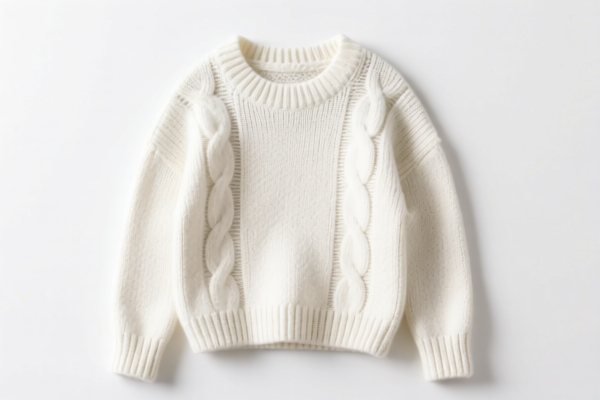
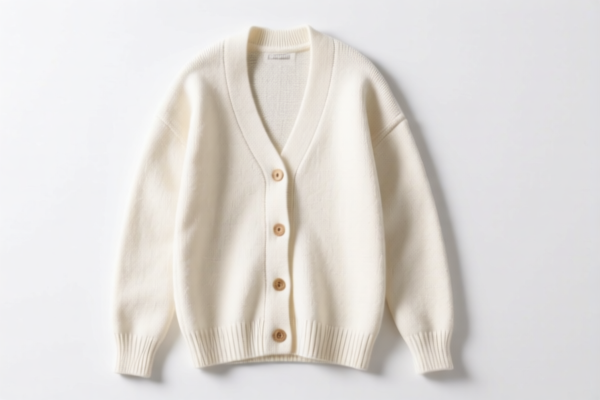


AI Analysis
👔 Boys' Knitted/Crocheted Textile Suits & Turtleneck Sweaters (Cotton) – HS Code & Customs Clearance Guide 2026
🌐 Global Trade Insight | Cotton Boys' Apparel Classification | Strategic Tariff Analysis
📌 Product Category: Boys' Knitted/Crocheted Suits, Ensemble Sweaters, and Matching Sets (Cotton)
🇺🇸 Target Market: United States (General Trade)
🏷️ Applicable HS Codes: 6103.29.20.58, 6103.10.90.10, 6111.90.50.20, 6110.90.90.10
🔍 1. Product Definition & Classification Logic
The product described involves boys' apparel made of cotton, specifically focusing on knitted or crocheted suits and restrained turtleneck sweaters. In international trade, the classification depends on the composition (Cotton), knitting method, garment type, and whether the items are sold as a set (ensemble) or separately.
⚠️ Critical Distinction:
- Ensembles (Suits): If a jacket and trousers (or a sweater and matching piece) are put up in a manner suitable for retail sale as a set, they may be classified under suits (6103) even if individual parts might fall under separate categories.
- Separate Items: If sold individually, a turtleneck sweater falls under 6110, while trousers/shorts might fall under 6103.
- Material: Pure cotton triggers specific tariff rates under the "Cotton" heading.
📦 2. HS Code Breakdown & Taxation Details (2026 Current Data)
Based on the provided dataset, here is the detailed classification for the specific scenarios encountered with boys' cotton knitted/crocheted suits and sweaters.
| HS Code | Product Description & Summary | Suitability Logic | Total Tariff Rate | Tax Component Details |
|---|---|---|---|---|
| 6103.29.20.58 | Boys' Knitted/Crocheted Suits (Cotton) + Turtleneck Sweater Scenario: Ensemble/Matched Set |
✅ Matched Success When a turtleneck sweater and matching trousers are sold as a coordinated "suit" ensemble. |
17.5% (Note: "The rate applicable to each garment in the ensemble if separately classified") |
• Base Duty: Calculated per garment if separated. • Additional Duty: 7.5% • Section 301 (122 Clause): 10% |
| 6103.10.90.10 | Boys' Knitted Suits (Cotton) - Jacket Components Scenario: Suit Parts (No Conflict) |
✅ No Conflict Used when classifying the jacket/blazer part of a boys' suit separately or as a component. |
23.1% | • Base Duty: 5.6% • Additional Duty: 7.5% • Section 301 (122 Clause): 10% |
| 6111.90.50.20 | Boys' Knitted Sets (Cotton) Scenario: Other Textile Materials & Sets |
✅ Compliant For general cotton knitted sets not fitting specific suit definitions, matching the "other textile materials" description. |
24.9% | • Base Duty: 14.9% • Additional Duty: 0.0% • Section 301 (122 Clause): 10% |
| 6110.90.90.10 | Boys' Knitted/Crocheted Turtleneck Sweaters (Cotton) Scenario: Individual Sweater |
✅ Attribute Match For high-neck (turtleneck) sweaters sold individually, fully compliant with attributes. |
23.5% | • Base Duty: 6.0% • Additional Duty: 7.5% • Section 301 (122 Clause): 10% |
💰 3. Deep Dive into Tariff Structure & Policy Clauses
To ensure compliance and accurate cost calculation, the following tax components must be understood:
🔸 1. Base Duty (基础关税)
- Source: The standard Most-Favored-Nation (MFN) rate applicable to the specific HS Code under normal trade conditions.
- Range in this dataset: 5.6% – 14.9%.
- Impact: This is the foundational cost before any trade wars or policy additions.
🔸 2. Additional Duty (加征关税 - "Section 301")
- Rate: 7.5% (Standard additional duty for Chinese textile products in this category).
- Context: This is a punitive tariff often applied to Chinese imports under US trade remedies (Section 301).
- Impact: Applies to almost all entries in this dataset.
🔸 3. "122 Clause" Tariff (122条款关税)
- Rate: 10%.
- Context: Refers to specific tariff exclusions or additional duties linked to Section 301 List 4 or related executive orders (often labeled under specific "122" clause identifiers in customs databases for textile/synthetic blends or specific country targets).
- Impact: A fixed 10% surcharge added to the CIF value for these specific cotton knitted items.
⚠️ Warning on "Ensemble" Rule (6103.29.20.58):
The total tax for the "Suit + Sweater" ensemble is listed as "The rate applicable to each garment... if separately classified" + the standard 17.5% (which likely implies the sum of Base + Additional + 122 Clause).
Strategy: If you sell the sweater and trousers separately, you might pay different base rates (e.g., 6.0% + 10% + 7.5% = 23.5% for sweater; 5.6% + 10% + 7.5% = 23.1% for suit part). However, if bundled, the classification shifts to 6103.29.20.58, and the tax calculation becomes complex based on the "highest value component" or a specific combined rate. Always verify if bundling lowers or raises the tax liability.
🛠️ 4. Customs Clearance Practical Recommendations
✅ 1. Documentation Checklist (Must-Haves)
| Document | Requirement | Why? |
|---|---|---|
| Detailed Composition Label | Must clearly state "100% Cotton" | To determine HS Code accuracy (Cotton vs. Synthetic). |
| Ensemble Proof | Photos of the set, retail packaging showing "Suit" or "Set" | To justify 6103 (Suits) vs. 6111/6110 (Separate items). |
| Construction Method | "Knitted" or "Crocheted" (Woven is different!) | Knitted items go under 61; Woven under 62. |
| Age Specification | "Boys" (Not Girls/Infants) | Different HS chapters exist for infant vs. boys' apparel. |
| Invoice Description | "Boys' Cotton Knitted Turtleneck Sweater" OR "Boys' Knitted Suit" | Must match the HS Code summary exactly to avoid "Misdeclaration". |
✅ 2. Declaration Strategy (How to Declare)
- Scenario A: Selling as a Set (Suits)
- Declare as: "Boys' Knitted/Crocheted Suits (Ensemble)".
- HS Code: Prioritize 6103.29.20.58 if the jacket/sweater and trousers are clearly a matching set.
- Risk: Customs may ask for "separate valuation" if the set includes high-cost accessories.
- Scenario B: Selling Separately
- Declare as: "Boys' Turtleneck Sweaters" OR "Boys' Knitted Trousers".
- HS Code: Use 6110.90.90.10 (Sweater) or 6103.10.90.10 (Suit component).
- Benefit: Often provides a clearer tax path, but total tariff might be higher (e.g., 23.5% vs. 17.5% effective rate depending on calculation method).
✅ 3. "122 Clause" & "Section 301" Optimization
- Check Exclusions: Verify if your specific product type or supplier country qualifies for any Section 301 exclusions (List 4A/4B).
- Third-Party Manufacturing: If the cotton is sourced from Vietnam or India, the 7.5% Additional Duty and 10% 122 Clause may be waived (provided no transshipment violation).
- Transshipment Risk: Do not route Chinese cotton goods through Vietnam just to avoid the 10% 122 Clause; CBP (US Customs) actively investigates this.
🚨 5. Common Pitfalls & Avoidance Guide
| ❌ Mistake | 📉 Consequence | ✅ Correct Action |
|---|---|---|
| Misclassifying "Sweater" as "Suit" | Paying 23.1% or 24.9% instead of the optimized 17.5% (or vice versa). | Clearly define if the item is a matching ensemble or a single garment. |
| Ignoring "Knitted" vs. "Woven" | If declared as "Woven" (6203) but actual product is Knitted, it triggers Re-classification & Penalties. | Ensure fabric samples confirm Knitted/Crocheted construction. |
| Vague Description "Kids' Clothes" | Customs assigns a default high rate or delays inspection. | Use precise terms: "Boys' Cotton Knitted Turtleneck Sweater". |
| Ignoring the "Set" Rule | If a set is sold, but declared as separate items to lower tax, Customs may re-classify as a single set and apply 6103 rates (which might be lower or higher). | Consistency is key: If sold as a set in retail, declare as a set in customs. |
📌 6. Summary of Tax Liability (Estimated)
| Item Type | HS Code | Base | Add. (7.5%) | 122 Clause (10%) | Total Est. Rate |
|---|---|---|---|---|---|
| Ensemble Suit | 6103.29.20.58 | Varies* | +7.5% | +10% | ~17.5% (if calculated on separate rates) |
| Suit Component | 6103.10.90.10 | 5.6% | +7.5% | +10% | 23.1% |
| Knitted Set | 6111.90.50.20 | 14.9% | 0.0% | +10% | 24.9% |
| Turtleneck Sweater | 6110.90.90.10 | 6.0% | +7.5% | +10% | 23.5% |
Note: The "17.5%" for the ensemble (6103.29.20.58) is unique. It suggests the duty is calculated on the individual components if separated, then summed. Always consult a customs broker for the exact calculation formula for this specific code.
🎯 7. Final Verdict & Action Plan
- Determine Sale Format: Are you selling the sweater and trousers as a matching set (Suits) or separately?
- If Set: Aim for 6103.29.20.58 but verify the "separate rate" calculation.
- If Separate: Use 6110.90.90.10 (Sweater) or 6103.10.90.10 (Suit parts).
- Verify Material: Confirm 100% Cotton. Blends (even small amounts of polyester) can shift the HS Code entirely.
- Prepare for "122 Clause": Budget for the 10% surcharge unless you qualify for a specific exclusion.
- Professional Consultation: Due to the complexity of the "Ensemble" tax rule, request a Binding Tariff Information (BTI) or pre-clearance ruling from your local customs broker before shipping.
🚀 Pro Tip: For Boys' Cotton Knitted/Crocheted Suits, the difference between declaring as a Set vs. Separate Items can save or cost thousands of dollars. Precision in your commercial invoice description is the #1 tool for cost control!
Disclaimer: Tax rates and HS Codes are subject to change based on US Customs & Border Protection (CBP) updates and trade policy shifts. Always verify with the latest Harmonized Tariff Schedule (HTS) before shipment.
Customer Reviews
About HS Code Classification
The Harmonized System (HS) is an internationally standardized nomenclature developed by the World Customs Organization (WCO) to classify traded products. Over 200 countries use the HS system as the basis for customs tariffs, trade statistics, and import/export regulations.
Each HS code follows a hierarchical structure:
- Chapter (2 digits) — Broad category of goods (e.g., Chapter 84: Machinery and Mechanical Appliances)
- Heading (4 digits) — More specific grouping within the chapter
- Subheading (6 digits) — Internationally standardized breakdown, used by all WCO member countries
- National subdivisions (8-10 digits) — Country-specific extensions for further classification, such as US HTSUS 10-digit codes
Correct HS code classification is essential for smooth customs clearance, accurate duty payment, and compliance with trade regulations. Misclassification can lead to customs delays, overpayment of duties, or penalties.
When importing from CN to US, the applicable tariff rates may include:
- Most-Favored-Nation (MFN) rate — The standard duty rate applied to WTO members
- General rate — Applied to countries without trade agreements
- Trade remedy duties — Additional tariffs such as Section 301 (anti-dumping), Section 232 (national security), or countervailing duties
The information provided on this page is for reference purposes only. For official classification, please consult with your local customs authority or a licensed customs broker.