Boys' Quick dry Breathable Sport Shirt
CN → US| HS Code | Tariff Rate | Origin | Destination | Doc |
|---|---|---|---|---|
| 6110303044 | 49.5% | CN | US | Official Doc |
| 6109901009 | 49.5% | CN | US | Official Doc |
| 6110301050 | 23.5% | CN | US | Official Doc |
| 6110202044 | 34.0% | CN | US | Official Doc |
| 6109100014 | 34.0% | CN | US | Official Doc |
Product Images


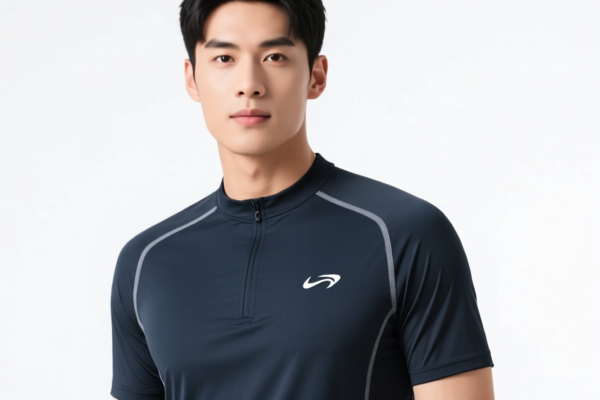

AI Analysis
👕 Boys' Quick-Dry Breathable Sport Shirt (男童速干透气运动衫)
🌐 HS Code Reference & Customs Clearance Guide | 2026 Latest Tariff Analysis | Professional Compliance Strategy
📌 I. Product Definition & Classification: Understanding the "Sport Shirt"
Boys' quick-dry breathable sport shirts are essential apparel for active youth. In international trade, classification depends heavily on knitting vs. weaving, specific garment type (T-shirt vs. Sweatshirt/Pullover), and fiber composition (Synthetic vs. Man-made vs. Cotton).
⚠️ Critical Distinction Points:
- Shape & Function: Is it a simple T-shirt (6109) or a heavier sweatshirt/pullover (6110)?
- Material: Is it "Synthetic" (e.g., Polyester, Nylon) or "Man-made" (e.g., Viscose, Rayon)? Note: In HS Code terms, "Synthetic Fibers" often refers to Polyester/Acrylic, while "Man-made" can include other chemical fibers.
- Target: Specifically for Boys (< 13 years).
📦 II. HS Code Classification Matrix (Based on Provided Data)
| HS Code | Product Description & Morphology | Inferred Material | Total Tax Rate | Key Tax Components |
|---|---|---|---|---|
6110.30.30.44 |
Boys' Sport Shirt (Sweatshirt/Pullover type) | Synthetic Fiber | 49.5% | Base 32% + Sect 301 7.5% + Section 122 10% |
6109.90.10.09 |
Boys' Sport Shirt (T-shirt type) | Man-made Fiber | 49.5% | Base 32% + Sect 301 7.5% + Section 122 10% |
6110.30.10.50 |
Boys' Sport Shirt (Sweatshirt/Pullover type) | Man-made Fiber | 23.5% | Base 6% + Sect 301 7.5% + Section 122 10% |
6110.20.20.44 |
Boys' Sport Shirt (Sweatshirt/Pullover type) | Synthetic Fiber or Cotton Blend | 34.0% | Base 16.5% + Sect 301 7.5% + Section 122 10% |
6109.10.00.14 |
Boys' Knitted Sport Shirt (T-shirt type) | Synthetic Fiber | 34.0% | Base 16.5% + Sect 301 7.5% + Section 122 10% |
🔍 Analysis Insight:
- The tax burden varies significantly based on whether the item is classified as a T-shirt (6109) or a Sweatshirt/Pullover (6110), and the specific fiber composition.
- Section 122 Tariff (10%) and Section 301 Tariff (7.5%) appear consistently, indicating this is likely an export to the USA from a country subject to these specific trade measures (often China).
💰 III. Detailed Tariff Breakdown & Legal Basis
✅ Applicable Market: USA (implied by Section 122 and 301 structure)
✅ Origin: Likely China (based on typical Section 122 application)
✅ Status: All items subject to additional duties.
🎯 1. High-Tax Scenario: 49.5%
Applicable HS Codes: 6110.30.30.44, 6109.90.10.09
| Component | Rate | Legal Basis / Description |
|---|---|---|
| Base MFN Rate | 32.0% | Standard Most-Favored-Nation duty for this specific subheading. |
| Section 301 Tariff | 7.5% | Additional duty imposed on Chinese goods under US Trade Act Section 301. |
| Section 122 Tariff | 10.0% | Note: Based on provided data. Often applies to specific textile/apparel categories or transitional rules. |
| Total Effective Rate | 49.5% | High Cost Barrier. |
📌 Explanation:
- This is the most expensive classification.
- It applies when the shirt is classified as a heavier "Sport Shirt/Sweatshirt" made of Synthetic Fiber (6110.30.30.44) OR a "T-shirt" made of Man-made Fiber (6109.90.10.09).
- Risk: Misclassifying a T-shirt as a Sweatshirt to get a lower base rate (6110) is risky if the product doesn't meet the structural definition of a sweatshirt (e.g., lack of heavy knit, cuffs, hoods).
🎯 2. Medium-High Tax Scenario: 34.0%
Applicable HS Codes: 6110.20.20.44, 6109.10.00.14
| Component | Rate | Legal Basis / Description |
|---|---|---|
| Base MFN Rate | 16.5% | Lower base duty for specific synthetic/cotton-blend subheadings. |
| Section 301 Tariff | 7.5% | Section 301 Additional Duty. |
| Section 122 Tariff | 10.0% | Section 122 Additional Duty. |
| Total Effective Rate | 34.0% | Moderate Cost. |
📌 Explanation:
-6109.10.00.14: Knitted T-shirts of Synthetic Fiber often have a lower base rate than Man-made equivalents in some classifications.
-6110.20.20.44: Sweatshirts of Synthetic or Cotton Blend fall into a different base bracket.
- Optimization Opportunity: If the material is purely synthetic polyester, check if6109.10.00.14(T-shirt) or6110.20.20.44(Sweatshirt) is more accurate for your product design.
🎯 3. Low-Tax Scenario: 23.5%
Applicable HS Code: 6110.30.10.50
| Component | Rate | Legal Basis / Description |
|---|---|---|
| Base MFN Rate | 6.0% | Significantly lower base duty for specific Man-made fiber sweatshirts. |
| Section 301 Tariff | 7.5% | Section 301 Additional Duty. |
| Section 122 Tariff | 10.0% | Section 122 Additional Duty. |
| Total Effective Rate | 23.5% | Most Cost-Effective Option. |
📌 Explanation:
- This is the lowest tax bracket in the provided data.
- It applies only if:
1. The garment is structurally a Sweatshirt/Pullover (HS6110), NOT a T-shirt (6109).
2. The material is inferred as Man-made Fiber (e.g., Viscose/Rayon blend, or specific chemical fibers distinct from "Synthetic" Polyester/Nylon).
3. Warning: "Quick-dry" often implies Polyester (Synthetic). If you classify a Polyester shirt as6110.30.10.50(Man-made), customs may reject it, claiming it should be6110.30.30.44(Synthetic, 49.5%). Accuracy is critical.
🛠️ IV. Customs Clearance Strategic Advice
✅ 1. Documentation Checklist (Mandatory)
| Document | Purpose | Key Detail Required |
|---|---|---|
| Product Specification Sheet | Prove Morphology | Clearly state: "T-shirt" vs. "Pullover/Sweatshirt". Define neckline, sleeve length, presence of hood/cuffs. |
| Fabric Composition Label | Prove Material | Exact fiber percentages (e.g., "100% Polyester" = Synthetic; "95% Viscose" = Man-made). |
| Tech Pack / Images | Verify Structure | Show seam construction, knit density, and hem details to distinguish 6109 (light) from 6110 (heavy). |
| Commercial Invoice | Valuation | Must match HS Code description precisely. |
| Country of Origin Certificate | Duty Application | Confirm origin to ensure correct Section 301/122 applicability. |
✅ 2. Classification Optimization Strategy
🔥 Key Insight: The difference between 23.5% and 49.5% is 26%. On a $10,000 shipment, this is $2,600 savings.
| Strategy | Action | Risk Level |
|---|---|---|
| Maximize Cost Savings | Aim for 6110.30.10.50 (23.5%) |
High Risk. Only use if the garment is truly a "Sweatshirt" AND made of "Man-made" fibers (not standard Polyester). |
| Balanced Approach | Aim for 6109.10.00.14 or 6110.20.20.44 (34.0%) |
Medium Risk. Ensure material is correctly labeled as "Synthetic" or "Cotton Blend". |
| Safe but Expensive | Accept 6110.30.30.44 / 6109.90.10.09 (49.5%) |
Low Risk. If the product is clearly Polyester (Synthetic) and either a T-shirt or heavy Sweatshirt, this is the accurate (but costly) route. |
✅ 3. Common Pitfalls & Red Flags
| Mistake | Consequence | Prevention |
|---|---|---|
| Mislabeling "Synthetic" as "Man-made" | Customs rejects declaration, demands higher duty + penalties. | Use standard HS fiber definitions: Polyester/Nylon = Synthetic; Viscose/Acrylic/Rayon = Man-made. Check your supplier's test report. |
Calling a T-shirt a "Sport Shirt" to fit 6110 |
If it lacks sweatshirt structure (heavy knit, cuffs), it may be reclassified to 6109 (T-shirt), potentially triggering different base rates. |
Be precise. If it's a light knit with short sleeves, use 6109. |
| Ignoring Section 122 | Unexpected 10% duty hit. | Always include Section 122 in cost calculations for these specific HS codes. |
✅ 4. Clearance Tips for "Quick-Dry" Products
- Marketing Claims: "Quick-Dry" is a functional claim. Ensure the fiber content matches the HS code material definition. If it's 100% Polyester, it is Synthetic. Do not try to classify it as "Man-made" to get the 23.5% rate unless it is a specific chemical fiber like Acetate or Viscose blend that legally qualifies as "Man-made" in the destination country's tariff book.
- Packaging: If shipping multiple sizes/colors, ensure the commercial invoice lists them correctly to avoid "Incomplete Shipment" delays.
🌍 V. Global Market Comparison (Hypothetical Context)
| Market | Typical Duty Trend | Note |
|---|---|---|
| USA | High (23.5% - 49.5%) | Driven by Base + Sect 301 + Sect 122. This data set is specific to US imports from China. |
| EU | Lower Base + VAT | No Section 122/301 equivalents. Duty usually 12% for synthetics. |
| China | Lower Base | Imports into China from ASEAN may have lower duties under RCEP. |
📌 Conclusion for This Data Set:
This is a US-China trade scenario. The goal is to accurately classify to avoid overpayment (if possible) or underpayment (which leads to penalties).
- Best Case:6110.30.10.50(23.5%)
- Worst Case:6110.30.30.44/6109.90.10.09(49.5%)
📌 VI. Final Recommendations
- Verify Material First: Get a lab test report. Is it Polyester (Synthetic) or Viscose/Rayon (Man-made)?
- Define Structure Second: Is it a T-shirt (
6109) or a Pullover/Sweatshirt (6110)? - Cross-Reference:
- If Polyester + T-shirt → Likely
6109.10.00.14(34.0%) - If Polyester + Pullover → Likely
6110.30.30.44(49.5%) - If Man-made + Pullover → Likely
6110.30.10.50(23.5%) - Consult a Broker: Before shipping, submit these 5 HS codes to a licensed customs broker for a Pre-Ruling if the value is significant.
🎯 Pro Tip:
"Material is King, Structure is Queen. Together they rule the Tax Rate!"
Don't guess the fiber. Test it. The difference between 23.5% and 49.5% is worth the cost of a lab test.
✨ Accurate Classification = Maximum Profit.
💼 Customs Compliance is not optional; it's your competitive advantage.
Customer Reviews
About HS Code Classification
The Harmonized System (HS) is an internationally standardized nomenclature developed by the World Customs Organization (WCO) to classify traded products. Over 200 countries use the HS system as the basis for customs tariffs, trade statistics, and import/export regulations.
Each HS code follows a hierarchical structure:
- Chapter (2 digits) — Broad category of goods (e.g., Chapter 84: Machinery and Mechanical Appliances)
- Heading (4 digits) — More specific grouping within the chapter
- Subheading (6 digits) — Internationally standardized breakdown, used by all WCO member countries
- National subdivisions (8-10 digits) — Country-specific extensions for further classification, such as US HTSUS 10-digit codes
Correct HS code classification is essential for smooth customs clearance, accurate duty payment, and compliance with trade regulations. Misclassification can lead to customs delays, overpayment of duties, or penalties.
When importing from CN to US, the applicable tariff rates may include:
- Most-Favored-Nation (MFN) rate — The standard duty rate applied to WTO members
- General rate — Applied to countries without trade agreements
- Trade remedy duties — Additional tariffs such as Section 301 (anti-dumping), Section 232 (national security), or countervailing duties
The information provided on this page is for reference purposes only. For official classification, please consult with your local customs authority or a licensed customs broker.