Boys' Reflective Workwear
CN → US| HS Code | Tariff Rate | Origin | Destination | Doc |
|---|---|---|---|---|
| 6210109010 | 26.0% | CN | US | Official Doc |
| 6210402540 | 24.6% | CN | US | Official Doc |
| 6203490190 | 26.0% | CN | US | Official Doc |
Product Images
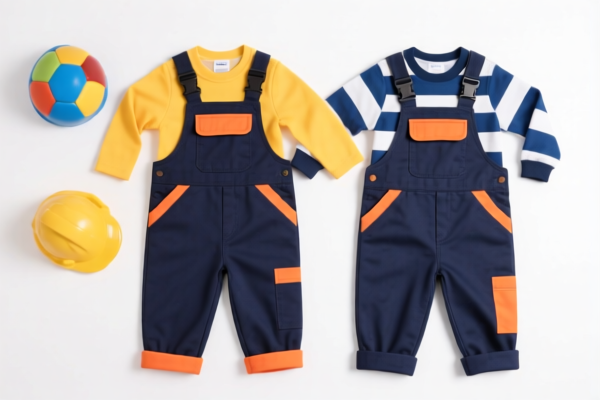


AI Analysis
👷♂️ Boys' Reflective Workwear (反光工作服)
🌐 HS Code Reference & Customs Clearance Guide | 2026 Latest Tariff Analysis | Professional Clearance Strategy
📌 1. Product Definition & Classification: Do You Really Understand "Boys' Reflective Workwear"?
Boys' reflective workwear refers to clothing designed for male minors (typically under 14 years old), featuring high-visibility reflective strips for safety in low-light conditions. In international trade, the classification depends heavily on material composition and manufacturing structure.
Key Distinction Points: * Standard Woven Garments: Made primarily of woven textiles without significant synthetic coating or fiber content that triggers different sub-headings. * Coated/Synthetic Garments: Made with artificial fibers, rubberized coatings, or plastic surfaces, often offering higher waterproof/windproof capabilities. * General Knitted/Weaved Garments: Standard textile-based children's trousers or sets without specific safety coating characteristics that push them into other chapters.
⚠️ Critical Classification Logic:
- If the garment is a simple woven fabric work shirt/pants → 6210.10.90.10 or 6203.49.01.90
- If the garment is coated or made of artificial fibers with specific safety features → 6210.40.25.40
📦 2. HS Code Classification Details (2026 Latest Tariff Authority Comparison)
| HS Code | Product Description | Applicable Scenario | Key Feature |
|---|---|---|---|
6210.10.90.10 |
Boys' Reflective Workwear, Form: Workwear, Material: Fabric | General woven safety clothing | Basic woven fabric, no heavy coating |
6210.40.25.40 |
Boys' Reflective Workwear, Form: Workwear, Contains Artificial Fibers or Coated Material | High-performance safety gear | Synthetic fibers or coated surface |
6203.49.01.90 |
Boys' Reflective Workwear, Use: Boys' Apparel, Material: Textile Material | General textile-based boys' clothing | Standard textile classification for boys |
🔍 Important Note:
- 6210.10 and 6210.40 belong to Chapter 62 (Articles of Apparel and Clothing Accessories, Not Knitted or Crocheted).
- 6203.49 refers to specific boys' trousers/pants under Chapter 62.
- The choice depends on the material composition certificate and product structure.
💰 3. 2026 Latest Tariff Rate Detailed Breakdown (Including Additional Taxes, Policy Additions)
✅ Applicable Country: United States (US)
✅ Country of Origin: China (CN)
✅ Effective Date: From 2025 November 10 (including subsequent imports)
🎯 1. 6210.10.90.10 – Boys' Reflective Workwear (Basic Woven Fabric)
| Item | Content |
|---|---|
| Base Tariff Rate | 16.0% |
| Section 301 Additional Tariff | 0.0% |
| Section 122 Tariff | 10.0% |
| Total Tax Rate | 26.0% |
| Tax Calculation | CIF Value × 26.0% |
| Can De Minimis Exemption Apply? | ❌ No (High tariff rate exceeds threshold) |
| Legal Basis Path | HTSUS:6210.10.90.10 → Section 122: 10% |
📌 Explanation:
- Base Tariff 16%: Standard rate for woven workwear.
- Section 122 Tariff 10%: Specific surcharge for certain safety/workwear items.
- Total 26%: High cost, must be factored into pricing.
- Note: Despite being "workwear," it does not fall under Section 301 (0%), but the Section 122 tariff still applies.
🎯 2. 6210.40.25.40 – Boys' Reflective Workwear (Coated/Artificial Fiber)
| Item | Content |
|---|---|
| Base Tariff Rate | 7.1% |
| Section 301 Additional Tariff | 7.5% |
| Section 122 Tariff | 10.0% |
| Total Tax Rate | 24.6% |
| Tax Calculation | CIF Value × 24.6% |
| Can De Minimis Exemption Apply? | ❌ No |
| Legal Basis Path | HTSUS:6210.40.25.40 → USITC: 7.5% → Section 122: 10% |
📌 Note:
- Base Tariff 7.1%: Lower than basic woven due to specific synthetic/coated classification.
- Section 301 Tariff 7.5%: Applies to certain synthetic/textile items.
- Section 122 Tariff 10%: Still applicable to workwear/safety gear.
- Total 24.6%: Slightly lower than6210.10.90.10, but includes Section 301.
🎯 3. 6203.49.01.90 – Boys' Reflective Workwear (General Textile)
| Item | Content |
|---|---|
| Base Tariff Rate | 8.5% |
| Section 301 Additional Tariff | 7.5% |
| Section 122 Tariff | 10.0% |
| Total Tax Rate | 26.0% |
| Tax Calculation | CIF Value × 26.0% |
| Can De Minimis Exemption Apply? | ❌ No |
| Legal Basis Path | HTSUS:6203.49.01.90 → USITC: 7.5% → Section 122: 10% |
📌 Note:
- This code is for general boys' textile apparel.
- If the item is clearly "workwear," customs may challenge this code and require6210codes.
- Total 26%: Same as6210.10.90.10, but risk of reclassification exists.
🛠️ 4. Customs Clearance Practical Advice (Practical Pitfall Avoidance Guide)
✅ 1. Required Document List (Non-negotiable)
| Document | Must Provide | Description |
|---|---|---|
| ✅ Product Specification Sheet | ✔️ | Material composition, reflective strip width/position, size chart |
| ✅ Material Certificate | ✔️ | Prove fabric type (woven vs. coated vs. synthetic) |
| ✅ Product Photos (Front/Back) | ✔️ | Clear view of reflective strips, labels, and structure |
| ✅ Commercial Invoice | ✔️ | Must specify "Boys' Reflective Workwear," HS Code, and Value |
| ✅ Packing List | ✔️ | Quantity, weight, dimensions |
| ✅ Origin Certificate | ✔️ | If not from China, may qualify for lower tariffs |
| ✅ Compliance Certificate | ✔️ | CPC (Children's Product Certificate) required for US minors' apparel |
✅ 2. Declaration Tips (Key Mantras)
🔥 “Material Defines Code, Workwear Needs Section 122, Boys' Apparel Needs CPC!”
| Scenario | Correct Declaration Method | Wrong Practice |
|---|---|---|
| Woven Fabric Workwear | 6210.10.90.10 |
Misdeclare as general pants → Risk of audit |
| Coated/Synthetic Workwear | 6210.40.25.40 |
Misdeclare as 6203.49.01.90 → Tariff mismatch |
| General Boys' Pants | 6203.49.01.90 |
Over-declare as "workwear" → Unnecessary Section 122 |
| Mixed Materials | Provide detailed composition | Vague description → Customs delay |
✅ 3. Special Situations Handling
| Situation | Handling Advice |
|---|---|
| OEM Custom Workwear | Provide design drawings + material specs to justify HS Code |
| Children's Product | MUST provide CPC (Children's Product Certificate) for CPSC compliance |
| High-Visibility Safety Gear | Ensure reflective material meets ANSI/ISEA standards; customs may inspect |
| Mixed Shipments | Clearly separate workwear from general apparel in invoice |
🌍 5. Global Market Customs Clearance Comparison (2026 Latest)
| Country/Region | Recommended HS Code | Tariff | Certification | Notes |
|---|---|---|---|---|
| 🇺🇸 United States | 6210.10.90.10 / 6210.40.25.40 |
24.6% – 26.0% | CPC + CPSC | High tariffs due to Section 122 & 301 |
| 🇨🇳 China | 6210.10.90.10 |
5% – 10% | CCC (if applicable) | Lower tariffs, standard textile rules |
| 🇪🇺 European Union | 6210.10.90 |
0% – 12% | CE + REACH | Varies by material; no Section 122 |
| 🇨🇦 Canada | 6210.10.90 |
0% – 18% | CCPSA | Check CSA standards for safety gear |
| 🇦🇺 Australia | 6210.10.90 |
5% – 10% | ACCC | Standard textile import |
📌 Conclusion:
- USA has the highest tariff burden for boys' workwear (24.6%–26.0%) due to Section 122 and Section 301.
- Children's apparel requires strict safety compliance (CPC).
- Clear material declaration is critical to avoid reclassification and penalties.
📌 6. Common Errors & Pitfall Avoidance Guide (Lessons Learned)
❌ Error 1: Misdeclaring "Workwear" as "General Apparel"
👉 Consequence: Avoids Section 122 temporarily, but customs will reclassify + penalize.
❌ Error 2: Ignoring CPC Requirement for Minors' Apparel
👉 Consequence: Goods detained or returned by CPSC. No CPC = No entry into US.
❌ Error 3: Vague Material Description ("Fabric")
👉 Consequence: Customs cannot determine if 6210.10 or 6210.40 applies → Delay in clearance.
❌ Error 4: Under-declaring Value
👉 Consequence: Heavy fines and potential fraud charges.
✅ Correct Practice:
“Boys’ Reflective Safety Workwear, Woven Cotton/Polyester Blend, ANSI Class 2 Compliant, CPC Certified, Model XYZ”
🎯 7. Conclusion: Professional Declaration, Save Time, Reduce Costs!
🎯 Remember the Mantra:
🔹 “Workwear + Children = CPC + Section 122 Tax!”
🔹 “Material Defines HS Code, Code Defines Tariff, Tax Defines Profit!”
📌 Tips:
- If the garment is not for safety but just "reflective style," consider if it qualifies as general apparel (
6203.49.01.90) to avoid Section 122, but ensure it meets definition.- Pre-classification ruling with CBP is recommended for high-volume shipments.
- Ensure CPC is issued by a CPSC-accepted laboratory.
📣 Immediate Action:
📞 Contact professional customs broker + Provide product photos + Get CPC certification
🚀 Let your boys' workwear clear customs smoothly, reduce costs, and boost profits!
✨ Professional Clearance Starts with Accurate Classification!
💼 Every cent of cost deserves precise calculation!
Customer Reviews
About HS Code Classification
The Harmonized System (HS) is an internationally standardized nomenclature developed by the World Customs Organization (WCO) to classify traded products. Over 200 countries use the HS system as the basis for customs tariffs, trade statistics, and import/export regulations.
Each HS code follows a hierarchical structure:
- Chapter (2 digits) — Broad category of goods (e.g., Chapter 84: Machinery and Mechanical Appliances)
- Heading (4 digits) — More specific grouping within the chapter
- Subheading (6 digits) — Internationally standardized breakdown, used by all WCO member countries
- National subdivisions (8-10 digits) — Country-specific extensions for further classification, such as US HTSUS 10-digit codes
Correct HS code classification is essential for smooth customs clearance, accurate duty payment, and compliance with trade regulations. Misclassification can lead to customs delays, overpayment of duties, or penalties.
When importing from CN to US, the applicable tariff rates may include:
- Most-Favored-Nation (MFN) rate — The standard duty rate applied to WTO members
- General rate — Applied to countries without trade agreements
- Trade remedy duties — Additional tariffs such as Section 301 (anti-dumping), Section 232 (national security), or countervailing duties
The information provided on this page is for reference purposes only. For official classification, please consult with your local customs authority or a licensed customs broker.