Boys' Rubber/Plastic Coated Casual Jacket
CN → US| HS Code | Tariff Rate | Origin | Destination | Doc |
|---|---|---|---|---|
| 6113001005 | 21.3% | CN | US | Official Doc |
| 3926206000 | 35.0% | CN | US | Official Doc |
| 6210401500 | 21.3% | CN | US | Official Doc |
| 6210205020 | 24.6% | CN | US | Official Doc |
| 6203322050 | 26.9% | CN | US | Official Doc |
Product Images
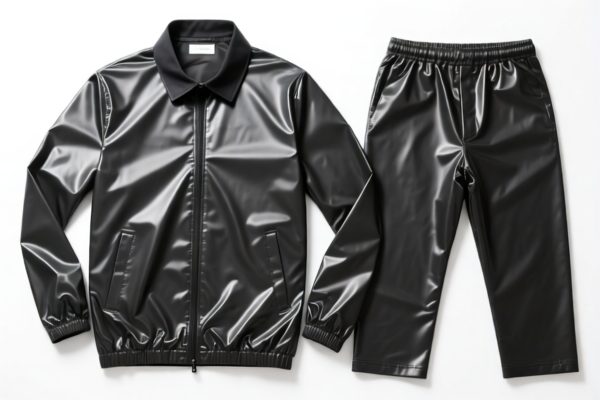
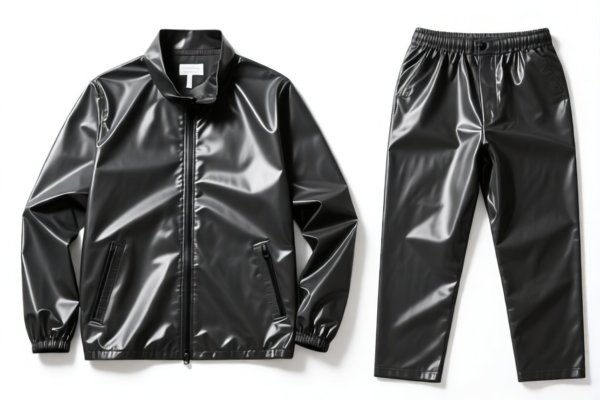
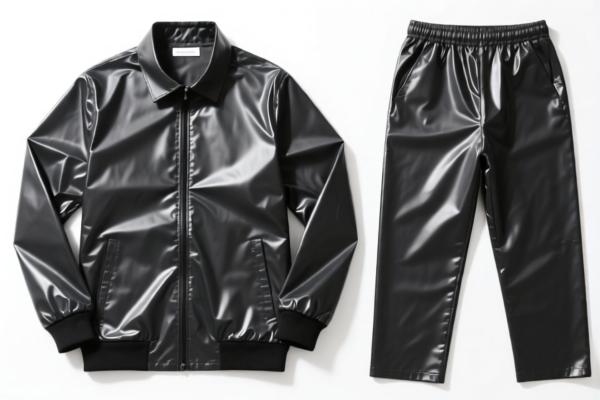

AI Analysis
🧥 Boys' Rubber/Plastic Coated Casual Jacket
🌐 HS Code Reference & Customs Clearance Guide | 2026 Latest Tariff Analysis | Professional Entry Strategy
📌 Part 1: Product Definition & Classification: Do You Truly Understand "Coated Jackets"?
Boys' rubber/plastic coated casual jackets are protective outer garments designed for wet or windy conditions. In international trade, the classification hinges critically on material composition and treatment method.
1. Textile-Based Coated Garments (HS Chapter 61/62)
These are fabrics (knitted or woven) impregnated, coated, covered, or laminated with rubber or plastic. The base structure is textile.
* Key Distinction: If the garment is essentially a "textile jacket" that has been weatherproofed, it falls under Chapters 61 (Knitted) or 62 (Woven).
2. Pure Plastic/Rubber Articles (HS Chapter 39)
These are garments made primarily of plastic or rubber sheets/foams, not textiles.
* Key Distinction: If the "jacket" is essentially a plastic raincoat without a textile backing (e.g., pure PVC rain suit), it falls under Chapter 39.
⚠️ Critical Classification Point:
- Textile Base + Coating → Chapter 61 or 62 (Tax rates vary by fiber type: Cotton, Synthetic, etc.)
- Pure Plastic/Rubber Material → Chapter 39 (Different tariff structure)
📦 Part 2: HS Code Classification Matrix (2026 Latest Tariff Authority)
Based on the provided data, here is the breakdown for Boys' Rubber/Plastic Coated Jackets:
| HS Code | Product Description | Material/Sub-type | Total Tax Rate | Key Tax Components |
|---|---|---|---|---|
| 6113.00.10.05 | Children's Rubber/Plastic Coated Jacket | Knitted/Fitted Style ("Tongzi Style") | 21.3% | Base: 3.8% + Sec 301: 7.5% + IEEPA: 10% |
| 3926.20.60.00 | Plastic Raincoat (Jacket/Coat) | Pure Plastic/Rubber Coated (No Textile Base) | 35.0% | Base: 0.0% + Sec 301: 25.0% + IEEPA: 10% |
| 6210.40.15.00 | Men's/Boys' Outdoor Garment | Man-Made Fiber + Rubber/Plastic Coating | 21.3% | Base: 3.8% + Sec 301: 7.5% + IEEPA: 10% |
| 6210.20.50.20 | Windproof Jacket | Man-Made/Synthetic + Rubber/Plastic Coating | 24.6% | Base: 7.1% + Sec 301: 7.5% + IEEPA: 10% |
| 6203.32.20.50 | Boys' Coat/Jacket | Cotton or Non-Conflict Material | 26.9% | Base: 9.4% + Sec 301: 7.5% + IEEPA: 10% |
🔍 Note:
- All codes include 10% IEEPA tariff (Section 122/IEEPA) and 7.5% or 25% Sec 301 tariff depending on the chapter.
- The Base Tariff varies significantly (0% to 9.4%) based on whether the item is viewed as a "plastic article" or a "textile garment."
💰 Part 3: Detailed Tariff Breakdown (2026 Latest)
✅ Applicable Country: United States (US)
✅ Origin: China (CN)
✅ Effective Time: Post-2025 regulations (including IEEPA additions)
🎯 1. 6113.00.10.05 – Children's Coated Jacket (Knitted/Fitted)
| Item | Details |
|---|---|
| Base Tariff | 3.8% |
| USITC (Sec 301) Surcharge | +7.5% |
| IEEPA Surcharge | +10.0% |
| Total Effective Rate | 21.3% |
| De Minimis Eligibility | ❌ No (Subject to strict anti-circumvention rules) |
| Legal Basis | HTSUS 6113.00 + Footnotes for Coated Textiles + IEEPA:9903.01.24 |
📌 Explanation:
- This code applies to knitted coated jackets for boys/children.
- The "Tongzi" (child/fitted) style often triggers this specific subheading.
- Total Cost: CIF Value × 21.3%.
🎯 2. 3926.20.60.00 – Pure Plastic Raincoat (Jacket)
| Item | Details |
|---|---|
| Base Tariff | 0.0% |
| USITC (Sec 301) Surcharge | +25.0% |
| IEEPA Surcharge | +10.0% |
| Total Effective Rate | 35.0% |
| De Minimis Eligibility | ❌ No |
| Legal Basis | HTSUS 3926.20 + IEEPA:9903.01.25 + USITC:8524.11.10.00 (via analogy for plastics) |
📌 Warning:
- If your jacket is not textile-based (e.g., pure PVC rainwear), it falls here.
- Higher Risk: The 25% Sec 301 surcharge is significantly higher than the 7.5% for textiles.
- Common Mistake: Misclassifying a textile-backed raincoat as a "plastic article" to avoid textile quotas, only to face penalties for incorrect classification.
🎯 3. 6210.40.15.00 – Boys' Outdoor Garment (Man-Made Fiber)
| Item | Details |
|---|---|
| Base Tariff | 3.8% |
| USITC (Sec 301) Surcharge | +7.5% |
| IEEPA Surcharge | +10.0% |
| Total Effective Rate | 21.3% |
| De Minimis Eligibility | ❌ No |
| Legal Basis | HTSUS 6210.40 + IEEPA:9903.01.24 |
📌 Applicability:
- Applies to woven jackets made from synthetic fibers (polyester, nylon) with rubber/plastic coating.
- Common for "Windbreakers" or "Outdoor Jackets."
🎯 4. 6210.20.50.20 – Windproof Jacket (Synthetic)
| Item | Details |
|---|---|
| Base Tariff | 7.1% |
| USITC (Sec 301) Surcharge | +7.5% |
| IEEPA Surcharge | +10.0% |
| Total Effective Rate | 24.6% |
| De Minimis Eligibility | ❌ No |
| Legal Basis | HTSUS 6210.20 + IEEPA:9903.01.24 |
📌 Differentiation:
- This code often applies to specific windproof classifications within Chapter 62.
- Slightly higher base tariff (7.1%) compared to general outdoor garments (3.8%).
🎯 5. 6203.32.20.50 – Boys' Cotton/Synthetic Jacket
| Item | Details |
|---|---|
| Base Tariff | 9.4% |
| USITC (Sec 301) Surcharge | +7.5% |
| IEEPA Surcharge | +10.0% |
| Total Effective Rate | 26.9% |
| De Minimis Eligibility | ❌ No |
| Legal Basis | HTSUS 6203.32 + IEEPA:9903.01.24 |
📌 Note:
- Applies if the jacket is not primarily defined by the coating but by its suit-style or cotton content.
- Highest base tariff among textile options (9.4%), leading to a higher total rate.
🛠️ Part 4: Customs Clearance Practical Advice (Pitfall Avoidance Guide)
✅ 1. Preparation Checklist (Non-Negotiable)
| Document | Required | Explanation |
|---|---|---|
| ✅ Product Specification Sheet | ✔️ | Must detail: Base material (Knitted/Woven/Cotton/Synthetic), Coating material (PVC/Rubber), Weight per square meter. |
| ✅ Material Composition Report | ✔️ | Crucial for distinguishing between 6113 (Knitted), 6210 (Woven Synthetic), and 6203 (Cotton/Suit-style). |
| ✅ High-Resolution Photos | ✔️ | Show inner lining, zipper, and coating texture. Prove it's a "garment" not just a "plastic sheet." |
| ✅ Commercial Invoice | ✔️ | Must state: "Boys' Coated Jacket, XX% Poly, XX% PVC Coating." |
| ✅ Packing List | ✔️ | Confirm no mixed items that could trigger scrutiny. |
✅ 2. Declaration Strategy (Key Mnemonics)
🔥 "Coat Base Dictates Code, Tax Rate Varies Widely!"
| Scenario | Correct HS Code | Incorrect Risk |
|---|---|---|
| Knitted + Coated (e.g., Fleece-lined rain jacket) | 6113.00.10.05 (21.3%) |
Misclassified as 3926 → 35.0% (Overpayment) |
| Woven Synthetic + Coated (e.g., Nylon Windbreaker) | 6210.40.15.00 (21.3%) or 6210.20.50.20 (24.6%) |
Misclassified as Cotton → 26.9% (Overpayment) |
| Pure Plastic Raincoat (No fabric backing) | 3926.20.60.00 (35.0%) |
Misclassified as Textile → Seizure for Misdeclaration |
| Cotton Suit-Style Coat (With minor coating) | 6203.32.20.50 (26.9%) |
Misclassified as General Outdoor → 21.3% (Underpayment Risk) |
✅ 3. Special Handling for "Coated" Items
| Issue | Handling Advice |
|---|---|
| Definition of "Coated" | Ensure the coating is integral to the garment. If it's a removable rain cover, it may be classified separately. |
| Material Mix | If the jacket has a cotton lining and synthetic shell, the outer surface material usually dictates classification (Chapter 62). |
| IEEPA 10% Applicability | All listed HS Codes are subject to the 10% IEEPA surcharge for Chinese-origin goods. No exemptions for small shipments. |
| De Minimis ($800) | ❌ Not Applicable. These goods are explicitly excluded from de minimis treatment due to Section 301 and IEEPA rules. |
🌍 Part 5: Global Market Comparison (2026)
| Market | Recommended HS Code | Est. Total Tax (China Origin) | Key Certification |
|---|---|---|---|
| 🇺🇸 USA | 6210.40.15.00 or 6113.00.10.05 |
21.3% - 26.9% | CPSIA (if <12 yrs), FDA (if food contact) |
| 🇪🇺 EU | 6210.40 or 6210.10 |
~4-7% | REACH, CE (if PPE) |
| 🇬🇧 UK | 6210.40 or 6210.10 |
~4-7% | UKCA, REUK |
| 🇨🇦 Canada | 6210.40 or 6210.10 |
~7-14% | Health Canada (if applicable) |
📌 Conclusion:
- USA is the most expensive market due to Section 301 (7.5-25%) and IEEPA (10%) add-ons.
- EU/UK have no such surcharges but may have strict REACH restrictions on plasticizers in coated fabrics.
📌 Part 6: Common Errors & Pitfalls (Lessons Learned)
❌ Mistake 1: Classifying a textile-backed raincoat as Plastic Article (Ch 39)
👉 Consequence: Wrong HS Code → Potential penalty for misdeclaration. If caught, you may face back-dated duties.
❌ Mistake 2: Ignoring the IEEPA 10% Surcharge
👉 Consequence: Under-declaration of value → Seizure of goods, fines, and loss of import privileges.
❌ Mistake 3: Assuming De Minimis ($800) applies to small batches
👉 Consequence: All these items are excluded from de minimis. Even 1 piece is subject to full duty and taxes.
❌ Mistake 4: Confusing Knitted (Ch 61) vs. Woven (Ch 62)
👉 Consequence:
- 6113 (Knitted) = 21.3%
- 6210 (Woven) = 21.3% - 26.9%
- Wrong classification leads to audit risks.
✅ Correct Practice:
"Boys' Synthetic Woven Jacket, Poly/Cotton Blend, PVC Coated, Windproof, Model XYZ, CPSIA Compliant"
🎯 Part 7: Conclusion: Precision Pays Off!
🎯 Remember:
🔹 "Coating ≠ Plastic Article. Base Material is Key!"
🔹 "Textile Coated = 21-27%. Pure Plastic = 35%."
🔹 "No De Minimis for Coated Jackets from China."
📌 Pro Tip:
- If you have a mixed shipment (e.g., some textile, some pure plastic), ensure clear separation in documentation.
- For boys' jackets, always verify CPSIA compliance (if under 12 years) to avoid CBP/CBP/CPSC holds.
📣 Immediate Action:
📞 Consult a Customs Broker for a Pre-Ruling if you are unsure about the "Knitted vs. Woven" or "Textile vs. Plastic" distinction.
🚀 Accurate Classification = Cost Savings + Smooth Clearance!
✨ Professional Customs Clearance Starts with Accurate Classification!
💼 Every Percent Matters in Cross-Border Trade!
Customer Reviews
About HS Code Classification
The Harmonized System (HS) is an internationally standardized nomenclature developed by the World Customs Organization (WCO) to classify traded products. Over 200 countries use the HS system as the basis for customs tariffs, trade statistics, and import/export regulations.
Each HS code follows a hierarchical structure:
- Chapter (2 digits) — Broad category of goods (e.g., Chapter 84: Machinery and Mechanical Appliances)
- Heading (4 digits) — More specific grouping within the chapter
- Subheading (6 digits) — Internationally standardized breakdown, used by all WCO member countries
- National subdivisions (8-10 digits) — Country-specific extensions for further classification, such as US HTSUS 10-digit codes
Correct HS code classification is essential for smooth customs clearance, accurate duty payment, and compliance with trade regulations. Misclassification can lead to customs delays, overpayment of duties, or penalties.
When importing from CN to US, the applicable tariff rates may include:
- Most-Favored-Nation (MFN) rate — The standard duty rate applied to WTO members
- General rate — Applied to countries without trade agreements
- Trade remedy duties — Additional tariffs such as Section 301 (anti-dumping), Section 232 (national security), or countervailing duties
The information provided on this page is for reference purposes only. For official classification, please consult with your local customs authority or a licensed customs broker.