Boys' Rubber/Plastic Coated Hiking Jacket
CN → US| HS Code | Tariff Rate | Origin | Destination | Doc |
|---|---|---|---|---|
| 6113001005 | 21.3% | CN | US | Official Doc |
| 3926206000 | 35.0% | CN | US | Official Doc |
| 6210401500 | 21.3% | CN | US | Official Doc |
| 6210205020 | 24.6% | CN | US | Official Doc |
| 6113001005 | 21.3% | CN | US | Official Doc |
Product Images
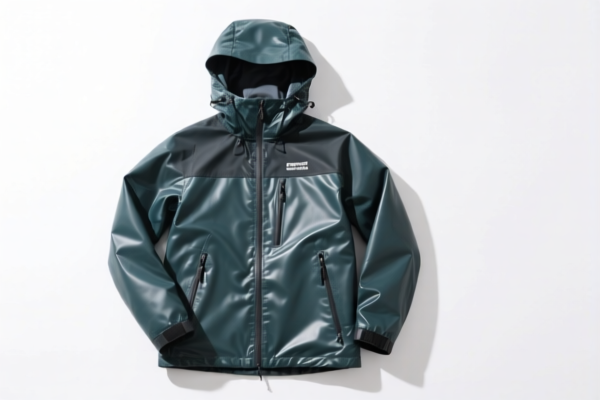
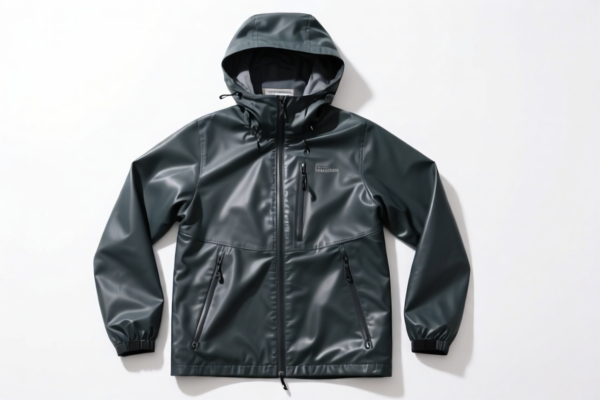
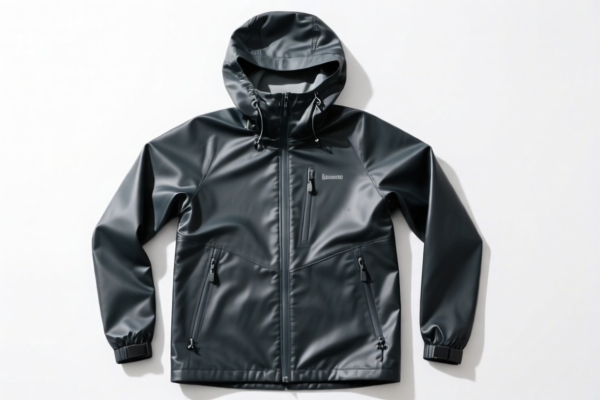
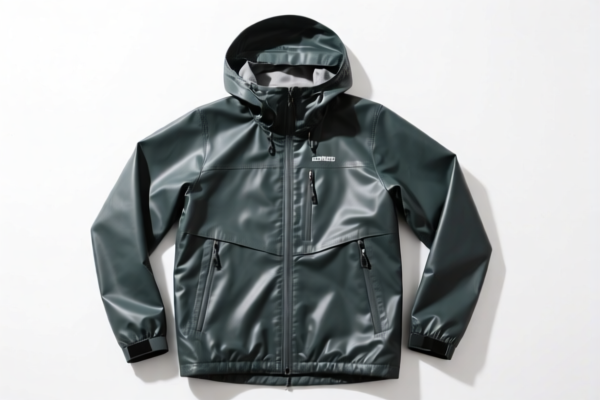
AI Analysis
🧥 Boys' Rubber/Plastic Coated Hiking Jacket
🌐 HS Code Reference & Customs Clearance Guide | 2026 Latest Tariff Breakdown | Professional Compliance Strategy
📌 I. Product Definition & Classification: Do You Really Know What You Are Shipping?
Boys' rubber/plastic coated hiking jackets are specialized outerwear designed for outdoor activities, featuring water-resistant or waterproof properties due to the application of rubber or plastic materials. In international trade, these products fall under specific headings depending on the fabric composition (knitted vs. woven) and the nature of the coating.
Key Classification Factors:
- Fabric Base: Is the underlying material knitted (Chapter 61) or woven (Chapter 62)?
- Coating Type: Is it impregnated, coated, covered, or laminated with rubber/plastic?
- Target Audience: Is it specifically for boys/children?
⚠️ Critical Distinction:
- If the jacket is knitted or crocheted (e.g., jersey, fleece) and coated →归入 6113.00.10.05
- If the jacket is woven (e.g., nylon, polyester ripstop) and coated →归入 6210.40.15.00 or 6210.20.50.20
- If the item is considered a plastic article rather than clothing (e.g., full plastic rain poncho/jacket without textile base) →归入 3926.20.60.00
📦 II. HS Code Classification Details (2026 Latest Tariff Authority对照)
Based on the provided data, here are the four potential HS Codes for Boys' Rubber/Plastic Coated Hiking Jackets, along with their tax implications.
| HS Code | Product Description | Applicable Scenario | Key Characteristics |
|---|---|---|---|
6113.00.10.05 |
Boys' Jackets, Impregnated/Coated with Rubber/Plastic | Knitted hiking jackets, outdoor sportswear, windbreakers | ✅ Knitted Base |
3926.20.60.00 |
Plastic Rainwear (Jackets & Coats) | Pure plastic/rubber raincoats, no textile backing | ❌ No Textile Base (Plastic Article) |
6210.40.15.00 |
Boys'/Men's Outdoor Wear, Man-Made Fiber Coated | Woven nylon/polyester hiking jackets, windbreakers | ✅ Woven Base, Man-Made Fiber |
6210.20.50.20 |
Windbreakers, Man-Made/Synthetic Material Coated | Woven windbreakers, synthetic outerwear | ✅ Woven Base, Specific Windbreaker |
🔍 重点提醒 (Key Reminders):
- Knitted vs. Woven: This is the most common mistake. Check the label. If it says "Knit," use Chapter 61 (6113...). If it says "Woven," use Chapter 62 (6210...).
- Pure Plastic vs. Coated Fabric: If the jacket is made entirely of plastic film/rubber sheets (like a disposable rain poncho), it goes to3926.... If it has a fabric layer with a coating, it goes to Chapter 61 or 62.
- "Boys'" Specificity: Codes6113.00.10.05and6210.40.15.00explicitly mention "Boys'" or "Children's," which can sometimes offer slight descriptive advantages, but the tax rate is determined by the tariff details below.
💰 III. 2026 Latest Tariff Rate Breakdown (Including Surtaxes & Policy Add-ons)
✅ Applicable Country: United States (US)
✅ Origin: China (CN)
✅ Effective Date: Current rates apply (based on 122 Terms & Section 301)
🎯 1. 6113.00.10.05 —— Knitted Boys' Jackets, Rubber/Plastic Coated
| Item | Detail |
|---|---|
| Product Summary | Boys' Jackets, impregnated/coated with rubber/plastic, suitable for windbreakers or outdoor wear. |
| Base Tariff | 3.8% |
| Section 301 Surtax | 7.5% |
| Section 122 Tariff | 10% |
| Total Tariff Rate | 21.3% |
| Tax Calculation | CIF Value × 21.3% |
| De Minimis Exemption | ❌ Not Eligible (High surtaxes prevent de minimis clearance for China origin) |
| Legal Basis Path | Base: 3.8% + 301: 7.5% + 122: 10% |
📌 Explanation:
- This is the lowest total tax rate among the options, making it the most cost-effective if the jacket is knitted.
- The 10% Section 122 tariff is a specific surtax often applied to certain textile/apparel items from China.
- Total 21.3% is relatively moderate compared to pure plastic items.
🎯 2. 3926.20.60.00 —— Plastic Rainwear (Jackets & Coats)
| Item | Detail |
|---|---|
| Product Summary | Plastic material rainwear, including jackets and coats, suitable for rubber/plastic coated windbreakers. |
| Base Tariff | 0.0% |
| Section 301 Surtax | 25.0% |
| Section 122 Tariff | 10% |
| Total Tariff Rate | 35.0% |
| Tax Calculation | CIF Value × 35.0% |
| De Minimis Exemption | ❌ Not Eligible |
| Legal Basis Path | Base: 0.0% + 301: 25.0% + 122: 10% |
📌 Explanation:
- Even though the base tariff is 0%, the Section 301 surtax is significantly higher at 25% (compared to 7.5% for textiles).
- This classification is only for pure plastic/rubber items without a textile backing.
- Total 35.0% is the highest tax rate in this dataset. Avoid this code unless the product is purely plastic.
🎯 3. 6210.40.15.00 —— Boys'/Men's Outdoor Wear, Man-Made Fiber Coated
| Item | Detail |
|---|---|
| Product Summary | Men's/Boys' outdoor wear, man-made fiber treated with rubber/plastic coating, suitable for windbreakers. |
| Base Tariff | 3.8% |
| Section 301 Surtax | 7.5% |
| Section 122 Tariff | 10% |
| Total Tariff Rate | 21.3% |
| Tax Calculation | CIF Value × 21.3% |
| De Minimis Exemption | ❌ Not Eligible |
| Legal Basis Path | Base: 3.8% + 301: 7.5% + 122: 10% |
📌 Explanation:
- Identical tax rate to the knitted version (6113...).
- Use this for woven jackets made of man-made fibers (nylon, polyester) with rubber/plastic coating.
- Common for high-quality hiking jackets where durability is key.
🎯 4. 6210.20.50.20 —— Windbreakers, Man-Made/Synthetic Material Coated
| Item | Detail |
|---|---|
| Product Summary | Windbreakers, material made of man-made fiber or synthetic material, treated with rubber/plastic coating. |
| Base Tariff | 7.1% |
| Section 301 Surtax | 7.5% |
| Section 122 Tariff | 10% |
| Total Tariff Rate | 24.6% |
| Tax Calculation | CIF Value × 24.6% |
| De Minimis Exemption | ❌ Not Eligible |
| Legal Basis Path | Base: 7.1% + 301: 7.5% + 122: 10% |
📌 Explanation:
- The base tariff is higher (7.1%) compared to other clothing codes (3.8%).
- This code is often used for specific "windbreaker" definitions that may not fit the broader "outdoor wear" or "rainwear" descriptions.
- Total 24.6% is higher than6113and6210.40, so prefer the other codes if your product description allows.
🛠️ IV. Customs Clearance Practical Advice (Avoid Pitfalls Guide)
✅ 1. Document Preparation Checklist (Essential Items)
| Document | Required | Explanation |
|---|---|---|
| ✅ Product Specification Sheet | ✔️ | Must detail: Fabric type (Knitted/Woven), Coating type (Rubber/Plastic), Thickness, Weight. |
| ✅ Technical Photos | ✔️ | Show the inside lining (to prove knit/woven) and the coating texture. |
| ✅ Commercial Invoice | ✔️ | Clearly state: "Boys' Outdoor Jacket, Knitted/Woven, Rubber Coated." Avoid vague terms like "Plastic Suit." |
| ✅ Material Composition Label | ✔️ | Photo of the care label showing % Cotton/Nylon/Polyester. |
| ✅ Origin Certificate | ✔️ | Confirm China origin to apply correct surtaxes. |
✅ 2. Declaration Tips (Key Mantra)
🔥 "Knit goes to 61, Woven to 62, Pure Plastic to 39! Choose wrong, pay double!"
| Scenario | Correct HS Code | Wrong Code & Consequence |
|---|---|---|
| Knitted Hiking Jacket | 6113.00.10.05 (21.3%) |
Misdeclare as 3926 → 35% Tax! ❌ |
| Woven Hiking Jacket | 6210.40.15.00 (21.3%) |
Misdeclare as 6210.20 → 24.6% Tax! ❌ |
| Pure Plastic Raincoat | 3926.20.60.00 (35.0%) |
Misdeclare as Clothing → Potential Fraud/Seizure! ⚠️ |
| Mixed Material (e.g., Cotton + Plastic) | Check Cotton % | If >50% Cotton, may not be "Man-Made Fiber" → Need different code! |
✅ 3. Special Handling Notes
| Situation | Recommendation |
|---|---|
| OEM Custom Orders | Provide design sheets to prove "Boys'" classification if size/fit differs from adults. |
| Samples vs. Bulk | Both are subject to same tariffs. Do not label as "Gift" or "Sample" to evade tax; CBP checks values strictly. |
| Packaging | Ensure packaging does not mislead (e.g., do not pack a knitted jacket in a clear plastic bag without labeling it as "Knitted"). |
🌍 V. Global Market Comparison (2026 Update)
| Country/Region | Recommended HS Code | Estimated Tax (China Origin) | Notes |
|---|---|---|---|
| 🇺🇸 USA | 6113.00.10.05 or 6210.40.15.00 |
21.3% | Best rate for coated textiles. |
| 🇺🇸 USA (Plastic Only) | 3926.20.60.00 |
35.0% | Avoid if possible due to high 301 tariff. |
| 🇨🇳 China | Same HS Codes | ~5-10% | Lower base tariffs, no 301/122 surtaxes. |
| 🇪🇺 EU | Check Chapter 61/62 | Varies | No Section 301, but VAT applies. |
| 🇨🇦 Canada | Same HS Codes | Varies | Check CUSMA eligibility if manufactured in NA. |
📌 Conclusion:
- For US Importers, the 21.3% rate (6113or6210.40) is the target.
- Avoid3926(35%) unless the product is unequivocally non-textile plastic.
- Ensure your Commercial Invoice matches the HS Code description exactly to avoid customs delays.
📌 VI. Common Mistakes & Pitfalls (Lessons Learned)
❌ Mistake 1: Calling a knitted jacket "Plastic Raincoat"
👉 Consequence: Misclassified under 3926 → 35% Tax instead of 21.3%. Overpayment!
❌ Mistake 2: Calling a woven jacket "Knitted"
👉 Consequence: Customs may reclassify to correct code, but could lead to audit or penalties for inaccurate declaration.
❌ Mistake 3: Ignoring the "Rubber/Plastic" Coating
👉 Consequence: If you declare it as standard cotton jacket, CBP will inspect and find the coating, leading to reclassification and back taxes.
✅ Correct Practice:
"Boys' Outdoor Jacket, 100% Nylon Knit, Rubber-Coated, Waterproof, Model XYZ, Designed for Hiking"
🎯 VII. Conclusion: Smart Classification, Lower Costs!
🎯 Remember the Mantra:
🔹 "Knit = 61, Woven = 62, Plastic = 39. Base 3.8%, Surtax 7.5%, 122 is 10%. Total 21.3% is the goal!"
🔹 "Don't pay 35% for a 21% product. Check the fabric!"
📌 Pro Tip:
If your supply chain allows, consider shifting production to Vietnam or Mexico for Section 301/122 exemptions (check latest trade rules). However, for direct China exports, precise classification is your best defense.
📣 Action Required:
📞 Confirm fabric type (Knit vs. Woven) with your supplier.
📄 Match description to6113or6210.
🚀 Clear customs smoothly, save 13.7% vs. plastic classification!
✨ Professional Customs Clearance Starts with Precise Classification!
💼 Every Percent Counts in Your Profit Margin!
Customer Reviews
About HS Code Classification
The Harmonized System (HS) is an internationally standardized nomenclature developed by the World Customs Organization (WCO) to classify traded products. Over 200 countries use the HS system as the basis for customs tariffs, trade statistics, and import/export regulations.
Each HS code follows a hierarchical structure:
- Chapter (2 digits) — Broad category of goods (e.g., Chapter 84: Machinery and Mechanical Appliances)
- Heading (4 digits) — More specific grouping within the chapter
- Subheading (6 digits) — Internationally standardized breakdown, used by all WCO member countries
- National subdivisions (8-10 digits) — Country-specific extensions for further classification, such as US HTSUS 10-digit codes
Correct HS code classification is essential for smooth customs clearance, accurate duty payment, and compliance with trade regulations. Misclassification can lead to customs delays, overpayment of duties, or penalties.
When importing from CN to US, the applicable tariff rates may include:
- Most-Favored-Nation (MFN) rate — The standard duty rate applied to WTO members
- General rate — Applied to countries without trade agreements
- Trade remedy duties — Additional tariffs such as Section 301 (anti-dumping), Section 232 (national security), or countervailing duties
The information provided on this page is for reference purposes only. For official classification, please consult with your local customs authority or a licensed customs broker.