Boys' Rubber/Plastic Coated Windbreaker Jacket
CN → US| HS Code | Tariff Rate | Origin | Destination | Doc |
|---|---|---|---|---|
| 6210205020 | 24.6% | CN | US | Official Doc |
| 6210401500 | 21.3% | CN | US | Official Doc |
| 3926206000 | 35.0% | CN | US | Official Doc |
| 3926209050 | 15.0% | CN | US | Official Doc |
| 6113001005 | 21.3% | CN | US | Official Doc |
| 6113009015 | 24.6% | CN | US | Official Doc |
Product Images

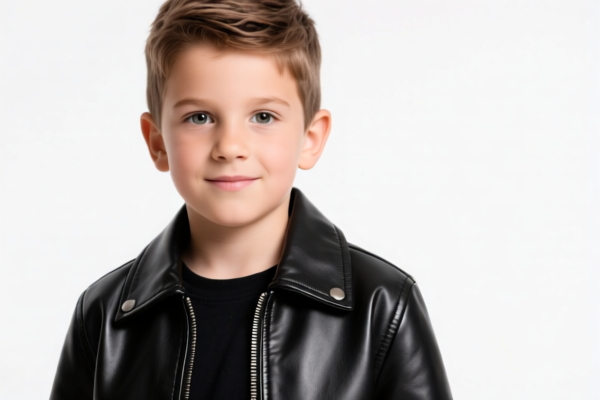
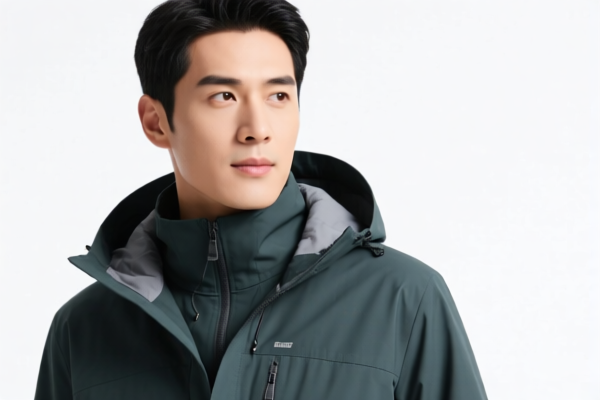
AI Analysis
🧥 Boys' Rubber/Plastic Coated Windbreaker Jacket
🌐 HS Code Reference & Customs Clearance Guide | 2026 Latest Tariff Analysis | Professional Clearance Strategy
📌 I. Product Definition & Classification: Do You Really Know Your "Coated Jacket"?
Boys' Rubber/Plastic Coated Windbreaker Jackets are specialized outerwear designed for wind and water resistance, commonly used for recreational, sports, or casual wear. The key distinguishing feature is the outer surface that is impregnated, coated, covered, or laminated with rubber or plastics, which completely obscures the underlying knitted/crocheted fabric.
In international trade, these garments fall under two primary categories based on their material composition and construction:
Category A: Knitted Garments (Heading 61) * Description: Knitted fabrics (Heading 5903, 5906, or 5907) that are coated/laminated with rubber/plastics. * Key Identifier: The base fabric is knitted/crocheted, but the coating is so thick it hides the fabric texture.
Category B: Woven/Technical Garments (Heading 62) * Description: Garments made from specific technical fabrics (Heading 5602, 5603, 5903, 5906, 5907) intended for recreational performance. * Key Identifier: Often classified as "Recreational Performance Outerwear" (e.g., Anoraks, Windbreakers).
⚠️ Critical Distinction: - If the garment is knitted and the coating obscures the fabric →归类 to 6113.00.10.05. - If the garment is woven/technical and designed for recreational performance (ski-jackets, windbreakers) →归类 to 6210.20.50.20 or 6210.40.15.00. - Note: If it is purely plastic rainwear (PVC shell) with no underlying knitted structure, it may fall under 3926.20.60.00.
📦 II. Detailed HS Code Breakdown (2026 Tariff Reference)
| HS Code | Product Description | Application Scenario | Key Material Feature |
|---|---|---|---|
6113.00.10.05 |
Garments made of knitted/crocheted fabrics (5903/5906/5907): Coats & Jackets (Men's/Boys') With outer surface impregnated/coated/laminated with rubber/plastics which completely obscures the underlying fabric |
Boys' winter windbreakers, heavy-duty rain jackets made of knitted base fabric. | Knitted Base + Opaque Coating |
6113.00.90.15 |
Garments made of knitted/crocheted fabrics (5903/5906/5907): Coats & Jackets (Men's/Boys') Of Cotton (Other) |
Boys' cotton windbreakers (uncoated or partially coated but not fully obscuring). | Cotton + Knitted |
3926.20.60.00 |
Articles of plastics (Headings 3901-3914): Articles of apparel... Plastic rainwear (jackets, coats, ponchos) featuring an outer shell of Polyvinyl Chloride (PVC) plastic |
Pure PVC raincoats, slickers, or ponchos with no significant fabric structure underneath. | PVC Shell (Plastic) |
3926.20.90.50 |
Articles of plastics: Articles of apparel... Other |
Other plastic rainwear not specifically described above. | Other Plastic |
6210.20.50.20 |
Garments made of fabrics (5602/5603/5903/5906/5907): Anoraks, Windbreakers, Similar Articles Recreational performance outerwear (Of man-made fibers) |
High-performance boys' ski jackets, windbreakers for sports. | Man-made Fiber + Technical Fabric |
6210.40.15.00 |
Garments made of fabrics (5602/5603/5903/5906/5907): Other Men's/Boys' Garments Recreational performance outerwear (Of man-made fibers): Having an outer surface impregnated/coated/laminated with rubber/plastics which completely obscures the underlying fabric |
Boys' performance windbreakers with heavy rubber/plastic coating obscuring the weave. | Man-made + Opaque Coating |
🔍 Focus Point: - 6113.00.10.05 and 6210.40.15.00 are the most critical codes for "Rubber/Plastic Coated" jackets. The distinction lies in the base fabric (Knitted vs. Technical/Woven) and the intent (General Coating vs. Recreational Performance). - 3926.20.60.00 is reserved if the jacket is essentially a piece of plastic (PVC) with minimal fabric backing.
💰 III. 2026 Tariff Rate Detailed Analysis (Including Surcharges & Policy Add-ons)
✅ Applicable Country: USA (US)
✅ Origin: China (CN)
✅ Effective Date: Nov 10, 2025 (and subsequent imports)
🎯 1. 6113.00.10.05 — Knitted Boys' Coated Coats/Jackets
| Item | Content |
|---|---|
| Base Duty | 0.0% (ad valorem) |
| Section 301 (Additional) | 0.0% (No surcharge listed in data) |
| Total Duty | 0.0% |
| Tax Detail | Base: 0.0%, Additional: 0.0% |
| Legal Path | 6113.00.10.05 |
📌 Interpretation: - This specific knitted category currently enjoys 0% duty in the provided data. - Crucial: This is highly favorable, but classification must be exact. If the fabric is woven or the coating description is inaccurate, it might shift to a higher tax bracket.
🎯 2. 6210.20.50.20 — Recreational Performance Windbreakers (Anoraks)
| Item | Content |
|---|---|
| Base Duty | 0.0% |
| Section 301 (Additional) | 0.0% |
| Total Duty | 0.0% |
| Tax Detail | Base: 0.0%, Additional: 0.0% |
| Legal Path | 6210.20.50.20 |
📌 Interpretation: - "Recreational performance outerwear" (ski-jackets, windbreakers) made of man-made fibers with specific fabric headings also carries 0% duty. - Benefit: Ideal for high-value technical wear.
🎯 3. 3926.20.60.00 — PVC Plastic Rainwear (Critical Risk Item)
| Item | Content |
|---|---|
| Base Duty | 0.0% |
| Section 301 (Additional) | +25.0% |
| Total Duty | 25.0% |
| Tax Detail | Base: 0.0%, Additional: 25.0% |
| Legal Path | 3926.20.60.00 |
📌 Interpretation: - WARNING: If your "jacket" is classified as pure PVC plastic rainwear (heading 3926), it triggers a 25% surcharge! - This is significantly higher than the knitted/textile categories (6113/6210). - Strategy: Avoid this code unless the product is 100% plastic with no substantial fabric structure.
🛠️ IV. Customs Clearance Practical Advice (Risk Avoidance Guide)
✅ 1. Preparation Checklist (Essential Documents)
| Document | Must Provide | Reason |
|---|---|---|
| Technical Spec Sheet | ✔️ | Must explicitly state: "Outer surface coated with rubber/plastics completely obscuring the fabric." |
| Material Composition | ✔️ | Clearly distinguish: Is the base Knitted (6113) or Woven/Technical (6210)? Is it PVC (3926)? |
| Product Photos | ✔️ | High-res images showing the coating texture to prove "opacity" (obscuring the fabric). |
| Labeling/Tags | ✔️ | Must show material percentages (e.g., "100% Polyester, PVC Coated"). |
| Commercial Invoice | ✔️ | Description must match HS Code description (e.g., "Boys' Knitted Windbreaker with Opaque Plastic Coating"). |
| Origin Certificate | ✔️ | To confirm Country of Origin for surcharge application. |
✅ 2. Classification Strategy (Golden Rules)
🔥 Rule: "Knitted + Opaque = 6113 (0%) / Woven + Performance = 6210 (0%) / Pure Plastic = 3926 (25%)"
| Scenario | Recommended HS Code | Risk if Misclassified |
|---|---|---|
| Knitted fabric base, thick plastic coating hiding the weave | 6113.00.10.05 | ❌ If declared as 3926 → 25% Penalty |
| Technical Woven fabric, "Performance Outerwear" | 6210.20.50.20 | ❌ If declared as general coat → Potential delay |
| Heavy Coating obscuring fabric, Recreational Use | 6210.40.15.00 | ❌ If declared as 3926 → 25% Penalty |
| PVC Raincoat (No fabric structure) | 3926.20.60.00 | ✅ Only if truly plastic (expect 25%) |
✅ 3. Special Considerations
- The "Obscuring" Test: The description explicitly requires the coating to completely obscure the underlying fabric. If you can still see the weave/knit through the coating, do not use 6113.00.10.05 or 6210.40.15.00; use the "Other" categories (which may be 6113.00.90.15).
- PVC Trap: Many "raincoats" look like plastic but are actually coated fabric. If they have a textile backing, they likely belong to Chapter 61 or 62 (0% duty) rather than Chapter 39 (25% duty).
- Age Group: Ensure the description clearly states "Boys'" (Men's or Boys') to align with the HS Code description. Using generic "Kids" or "Youth" may trigger questions.
🌍 V. Global Market Comparison (2026)
| Region | Recommended HS Code | Duty Rate (China Origin) | Notes |
|---|---|---|---|
| 🇺🇸 USA | 6113.00.10.05 / 6210.20.50.20 |
0.0% | Best Option: 0% if correctly classified as coated textiles. Avoid 3926. |
| 🇺🇸 USA (PVC) | 3926.20.60.00 |
25.0% | High Cost: Only for pure plastic rainwear. |
| 🇪🇺 EU | 6210.20 / 6113.00 |
Varies (Typically 10-12%) | No 301 surcharges, but standard MFN rates apply. |
| 🇨🇦 Canada | 6210.20 / 6113.00 |
Varies (Typically 0-18%) | Check CUSMA eligibility if applicable. |
📌 Conclusion: - The USA is the primary market here, and the 0% duty for coated knitted/textile jackets (
6113/6210) is a massive advantage. - The 25% surcharge on3926is a significant cost driver. Do not classify a textile-based windbreaker as PVC plastic unless it is purely plastic.
📌 VI. Common Mistakes & Pitfalls (Lessons Learned)
❌ Mistake 1: Calling a knitted, plastic-coated jacket "Plastic Rainwear" (3926). 👉 Consequence: 25% Duty instead of 0%. Loss of 25% margin!
❌ Mistake 2: Describing the product as "Coated" but not specifying "Completely Obscures".
👉 Consequence: Customs may classify it as "Other" (e.g., 6113.00.90.15) which might have different tariff implications or lack the specific "Performance" benefit.
❌ Mistake 3: Using generic terms like "Boys' Jacket" without specifying "Knitted" or "Coated". 👉 Consequence: Customs may request additional info, delaying clearance.
✅ Correct Action:
"Boys' Knitted Windbreaker Jacket, Outer Surface Impregnated with Rubber to Completely Obscure Fabric, Man-Made Fibers, Recreational Performance"
🎯 VII. Conclusion: Strategic Clearance for Maximum Profit
🎯 Remember the Rule:
🔹 "Knitted + Opaque Coating = 0% (6113)"
🔹 "Technical Woven + Performance = 0% (6210)"
🔹 "Pure PVC Plastic = 25% (3926)"
🎯 Strategic Tip:
If you are shipping Boys' Windbreakers to the US, ensure your product has a textile base and is coated sufficiently to hide the weave. This allows you to use the 0% duty channels (
6113.00.10.05or6210.20.50.20). Avoid the "Plastic" classification (3926) to save 25% on every unit.
📌 Pro Tip:
Always request a Pre-Decision Ruling from US Customs (CBP) if the coating thickness or fabric obscuration is borderline. It is cheaper than paying the 25% surcharge later.
📣 Action Now:
📞 Verify Material: Is it Knitted or Woven? 📞 Check Coating: Does it hide the fabric? 📞 Declare Accurately: Use
6113.00.10.05or6210.20.50.20for 0% Duty!
✨ Precision Classification Saves 25%!
💼 Your Profit Margin Depends on the First Digit of the HS Code!
Customer Reviews
About HS Code Classification
The Harmonized System (HS) is an internationally standardized nomenclature developed by the World Customs Organization (WCO) to classify traded products. Over 200 countries use the HS system as the basis for customs tariffs, trade statistics, and import/export regulations.
Each HS code follows a hierarchical structure:
- Chapter (2 digits) — Broad category of goods (e.g., Chapter 84: Machinery and Mechanical Appliances)
- Heading (4 digits) — More specific grouping within the chapter
- Subheading (6 digits) — Internationally standardized breakdown, used by all WCO member countries
- National subdivisions (8-10 digits) — Country-specific extensions for further classification, such as US HTSUS 10-digit codes
Correct HS code classification is essential for smooth customs clearance, accurate duty payment, and compliance with trade regulations. Misclassification can lead to customs delays, overpayment of duties, or penalties.
When importing from CN to US, the applicable tariff rates may include:
- Most-Favored-Nation (MFN) rate — The standard duty rate applied to WTO members
- General rate — Applied to countries without trade agreements
- Trade remedy duties — Additional tariffs such as Section 301 (anti-dumping), Section 232 (national security), or countervailing duties
The information provided on this page is for reference purposes only. For official classification, please consult with your local customs authority or a licensed customs broker.