Boys' Shirt (Other Textile Materials)
CN → US| HS Code | Tariff Rate | Origin | Destination | Doc |
|---|---|---|---|---|
| 6206900040 | 24.2% | CN | US | Official Doc |
| 6105908060 | 23.1% | CN | US | Official Doc |
| 6105908030 | 23.1% | CN | US | Official Doc |
| 6110909023 | 23.5% | CN | US | Official Doc |
| 6205903030 | 17.1% | CN | US | Official Doc |
Product Images
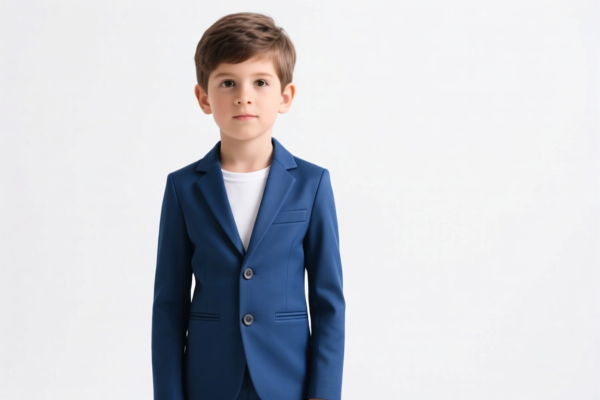
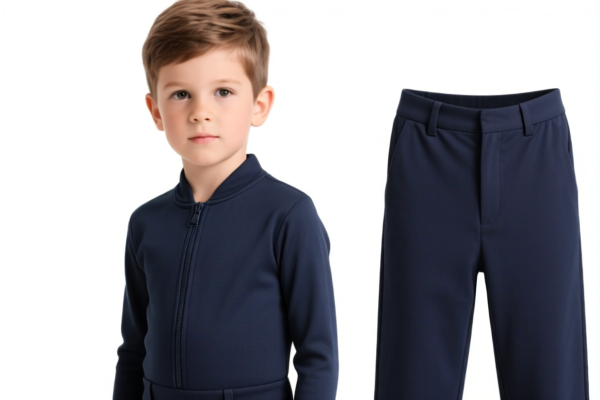
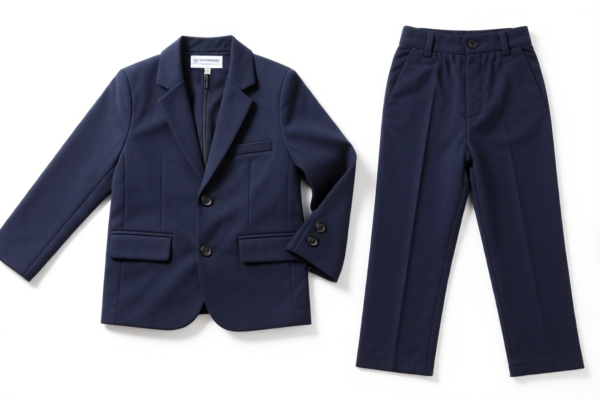
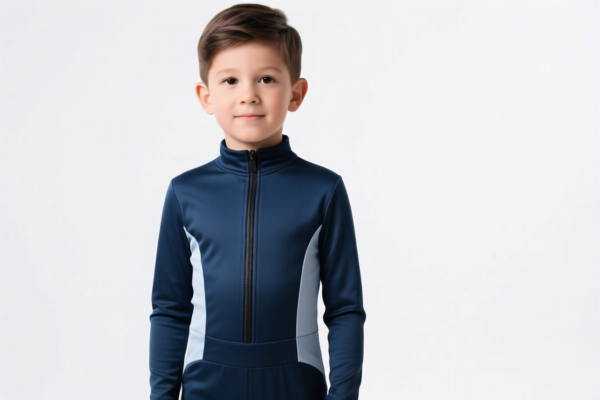
AI Analysis
👕 Boys' Shirts (Other Textile Materials)
🌐 HS Code Reference & Customs Clearance Guide | 2026 Latest Tariff Analysis | Professional Clearance Strategy
📌 I. Product Definition & Classification: Do You Really Understand "Boys' Shirts"?
In international trade, boys' shirts made from "other textile materials" (excluding cotton, wool, or standard synthetic fibers like polyester/nylon if not specified, or referring to mixed blends/specialty fabrics) are categorized strictly by fabric construction (Knitted vs. Woven) and gender-specific usage. The choice between knitting and weaving determines the entire tariff structure, including the punitive "Section 301" and "Section 122" tariffs applicable to Chinese imports.
⚠️ Key Distinction Point:
- If the fabric is Knitted or Crocheted (flexible, stretchy, looped structure) → Must fall under Chapter 61 (Knitted/Crocheted).
- If the fabric is Woven (flat, interlaced structure) → Must fall under Chapter 62 (Non-Knitted).
- Crucial Note: Misclassifying a woven shirt as knitted (or vice versa) is the most common customs error, leading to significant duty hikes and potential audits.
📦 II. HS Code Classification Details (2026 Latest Tariff Authority Comparison)
Based on the provided data for "Boys' Short-Sleeved Shirts - Other Textile Materials," here are the valid classifications. Note that 61xx codes (Knitted) generally offer lower base duties than 62xx codes (Woven) for this specific material category, but both are subject to high additional tariffs.
| HS Code | Product Description | Application Scenario | Fabric Type | Total Tax Rate |
|---|---|---|---|---|
6105.90.80.60 |
Boys' short-sleeved shirts, other textile materials, fully matching knitted shirt category | Standard knitted casual shirts, polo-style knits | ✅ Knitted | 23.1% |
6105.90.80.30 |
Boys' short-sleeved shirts, other textile materials, meets usage & material requirements for boys' shirts | Specific knit variants requiring precise material definition | ✅ Knitted | 23.1% |
6110.90.90.23 |
Boys' shirts, other textile materials, classified under men's knitwear/sweaters category | Thicker knitted shirts, cardigans, or sweater-shirts | ✅ Knitted | 23.5% |
6205.90.30.30 |
Boys' plaid shirts, other textile materials, meets usage & material restrictions | Woven plaid/checkered shirts (Common for school uniforms) | ❌ Woven | 17.1% |
6206.90.00.40 |
Boys' short-sleeved shirts, other textile materials, catch-all for women's/girl's shirts (Note: Data implies fallback/category mismatch) | Woven shirts misclassified or fallback category (High Risk) | ❌ Woven | 24.2% |
🔍 Critical Analysis:
- Knitted Options (61xx): Base duty is lower (5.6% - 6.0%), but with added tariffs, the total hits ~23-23.5%.
- Woven Option (6205.90.30.30): This is the most cost-effective option for plaid/woven shirts, with a total rate of 17.1% due to 0% Section 301 additional tariff.
- Woven Fallback (6206.90.00.40): This code has the highest total tax (24.2%). It is described as a "catch-all" or fallback category. Avoid this unless absolutely necessary, as it incurs a 10% Section 301 tariff.
💰 III. 2026 Latest Tariff Rate Breakdown (Including Surtaxes & Policy Add-ons)
✅ Applicable Country: United States (US)
✅ Origin: China (CN)
✅ Effective Time: 2025/2026 Import Cycle
🎯 1. Knitted Shirts (6105.90.80.60 / 6105.90.80.30 / 6110.90.90.23)
| Item | Content |
|---|---|
| Base Duty (MFN) | 5.6% - 6.0% (Ad Valorem) |
| Section 301 Tariff (USITC) | +7.5% |
| Section 122 Tariff | +10% |
| Total Tax Rate | 23.1% - 23.5% |
| Calculation | CIF Value × Total Rate |
| De Minimis Exemption | ❌ Not Eligible |
📌 Explanation:
- Section 122 Tariff (+10%): Imposed on certain textile/apparel imports to protect domestic manufacturing.
- Section 301 Tariff (+7.5%): Specific punitive tariff on Chinese goods in this subcategory.
- Total: These knitted items face a combined surtax of 17.5% on top of the base duty.
🎯 2. Woven Plaid Shirts (6205.90.30.30) - RECOMMENDED
| Item | Content |
|---|---|
| Base Duty (MFN) | 7.1% (Ad Valorem) |
| Section 301 Tariff (USITC) | 0.0% |
| Section 122 Tariff | +10% |
| Total Tax Rate | 17.1% |
| Calculation | CIF Value × 17.1% |
| De Minimis Exemption | ❌ Not Eligible |
📌 Why This is Better:
- Although the base duty is higher (7.1% vs 5.6%), the Section 301 tariff is 0%!
- Savings: Compared to the knitted options (23.1%), this saves ~6% on the total CIF value.
- Condition: Must be Woven and typically Plaid/Checked. If the fabric is knit, you cannot use this code.
🎯 3. Woven Fallback/Catch-All (6206.90.00.40)
| Item | Content |
|---|---|
| Base Duty (MFN) | 6.7% |
| Section 301 Tariff (USITC) | +7.5% |
| Section 122 Tariff | +10% |
| Total Tax Rate | 24.2% |
| De Minimis Exemption | ❌ Not Eligible |
📌 Warning:
- This code is described as a "fallback for women's/girls' shirts." Using this for boys' shirts is highly risky and may trigger a customs audit for misclassification.
- It has the highest total tax rate. Avoid this code unless no other classification fits perfectly.
🛠️ IV. Customs Clearance Practical Advice (Battle-Tested Pitfall Guide)
✅ 1. Documentation Checklist (Non-Negotiable)
| Document | Required? | Description |
|---|---|---|
| ✅ Product Spec Sheet | ✔️ | Must clearly state: "Short-Sleeved," "Boys'," Fabric Composition (e.g., 60% Rayon, 40% Nylon), and Knit/Woven status. |
| ✅ Fabric Swatch/Photo | ✔️ | Proof of knit vs. weave. Crucial for distinguishing 61xx vs 62xx. |
| ✅ Commercial Invoice | ✔️ | Must explicitly state: "Boys' Short-Sleeved Shirt, Woven/Knitted, Other Textile Material." |
| ✅ Packing List | ✔️ | Detailed count per style/color. |
| ✅ Labeling | ✔️ | Care label must match HS classification (e.g., "100% Polyester" or "Cotton Blend"). |
✅ 2. Declaration Tips (Key Mnemonic)
🔥 "Knit is 61, Weave is 62. Plaid Woven saves the most. Don't fallback if you can help it!"
| Scenario | Correct HS Code | Error Consequence |
|---|---|---|
| Knitted Shirt (Stretchy) | 6105.90.80.60 or 6105.90.80.30 |
If declared as Woven → 24.2% (Higher!) |
| Woven Plaid Shirt | 6205.90.30.30 |
If declared as Knitted → 23.1% (Higher!) |
| Woven Non-Plaid Shirt | 6206.90.00.40 (Fallback) |
High risk of audit; 24.2% rate. Try to find specific 6205 code if possible. |
| Sweater-Knit Shirt | 6110.90.90.23 |
Misclassified as regular shirt → Penalty |
✅ 3. Special Case Handling
| Situation | Recommendation |
|---|---|
| Mixed Fabric | If the shirt contains >5% wool or silk, HS Code changes completely. Ensure "Other Textile Materials" is accurate. |
| OEM/Custom Design | Provide design sketches showing sleeve length and collar type to prove "Short-Sleeved." |
| Plaid Verification | For 6205.90.30.30, provide proof of plaid pattern. If it's solid colored woven, you may not qualify for the 0% Section 301 rate if another code applies. |
| Section 122 Impact | Remember, ALL these codes incur a 10% Section 122 tariff. No exemption for boys' shirts. |
🌍 V. Global Market Comparison (2026 Latest)
| Country/Region | Recommended HS Code | Estimated Total Duty (China Origin) | Key Requirements | Notes |
|---|---|---|---|---|
| 🇺🇸 USA | 6205.90.30.30 (If Woven/Plaid) |
17.1% | Labeling: "Made in China" | Best Rate. If Knitted, expect ~23%. |
| 🇪🇺 EU | 6105.10.00 / 6205.20.00 (Typical) |
~12-16% | CE Labeling, REACH Compliance | EU has different base rates; check local tariff. |
| 🇨🇳 China | 6105.90.80 / 6205.90.30 |
5-7% | CCC (if applicable) | Lower duties, but not relevant for export. |
| 🇨🇦 Canada | 6105.90.80 / 6205.90.30 |
~12-15% | MSFTA/CUSMA if from Mexico/US | No Section 122, but high base MFN. |
| 🇦🇺 Australia | 6105.90.80 / 6205.90.30 |
~10-12% | Labeling Compliance | Moderate rates. |
📌 Conclusion for US Market:
- Woven Plaid Shirts (6205.90.30.30) are the most tariff-efficient option at 17.1% total.
- Knitted Shirts are unavoidable for stretchy fabrics, costing 23.1-23.5%.
- Avoid6206.90.00.40unless necessary; it is the most expensive and risky.
📌 VI. Common Errors & Pitfalls (Blood-Led Lessons)
❌ Error 1: Classifying a Knitted shirt as Woven (62xx) to avoid Section 301.
👉 Consequence: Customs inspection reveals knit structure → Penalty + Back Taxes + 25% Penalty.
❌ Error 2: Using 6206.90.00.40 for a Woven shirt when a specific 6205 code exists.
👉 Consequence: Higher duty (24.2% vs 17.1%) and potential misclassification audit.
❌ Error 3: Ignoring Section 122 Tariff.
👉 Consequence: Budgeting errors. All these codes have a 10% flat surtax. Do not forget to add it to your landed cost calculation.
❌ Error 4: Vague Description ("Shirt") on Invoice.
👉 Consequence: CBP may assess higher default duties or hold shipment for Product Identification.
✅ Correct Approach:
"Boys' Short-Sleeved Woven Plaid Shirt, 100% Polyester, Made in China, HS 6205.90.30.30"
🎯 VII. Conclusion: Professional Declaration, Time-Saving, Cost-Efficient!
🎯 Remember the Mantra:
🔹 "Knit is 61, Weave is 62."
🔹 "Plaid Woven saves 6% compared to Knit."
🔹 "Always add 10% for Section 122."
🔹 "Never use the fallback code if a specific one fits."
📌 Pro Tip:
If your shirts are Knitted, try to negotiate with suppliers for Woven Plaid alternatives if the design allows, as the 17.1% vs 23.1% difference is significant.
For Knitted, ensure the "Other Textile Material" is correctly declared (e.g., Rayon, Spandex blends) to match 6105.90.80.60.
📣 Immediate Action:
📞 Consult with a licensed US Customs Broker.
📤 Provide Fabric Swatches and Technical Packs.
🚀 Pre-Ruling: Consider applying for a Binding Ruling from CBP if volumes are high, to lock in the HS Code and duty rate.
✨ Professional clearance starts with precise classification!
💼 Every percent saved in duty is pure profit!
Customer Reviews
About HS Code Classification
The Harmonized System (HS) is an internationally standardized nomenclature developed by the World Customs Organization (WCO) to classify traded products. Over 200 countries use the HS system as the basis for customs tariffs, trade statistics, and import/export regulations.
Each HS code follows a hierarchical structure:
- Chapter (2 digits) — Broad category of goods (e.g., Chapter 84: Machinery and Mechanical Appliances)
- Heading (4 digits) — More specific grouping within the chapter
- Subheading (6 digits) — Internationally standardized breakdown, used by all WCO member countries
- National subdivisions (8-10 digits) — Country-specific extensions for further classification, such as US HTSUS 10-digit codes
Correct HS code classification is essential for smooth customs clearance, accurate duty payment, and compliance with trade regulations. Misclassification can lead to customs delays, overpayment of duties, or penalties.
When importing from CN to US, the applicable tariff rates may include:
- Most-Favored-Nation (MFN) rate — The standard duty rate applied to WTO members
- General rate — Applied to countries without trade agreements
- Trade remedy duties — Additional tariffs such as Section 301 (anti-dumping), Section 232 (national security), or countervailing duties
The information provided on this page is for reference purposes only. For official classification, please consult with your local customs authority or a licensed customs broker.