Boys' Silk Loungewear
CN → US| HS Code | Tariff Rate | Origin | Destination | Doc |
|---|---|---|---|---|
| 6107995015 | 18.3% | CN | US | Official Doc |
| 6107295000 | 18.4% | CN | US | Official Doc |
| 6117803090 | 12.3% | CN | US | Official Doc |
| 6207191000 | 19.2% | CN | US | Official Doc |
| 6207291000 | 18.6% | CN | US | Official Doc |
Product Images
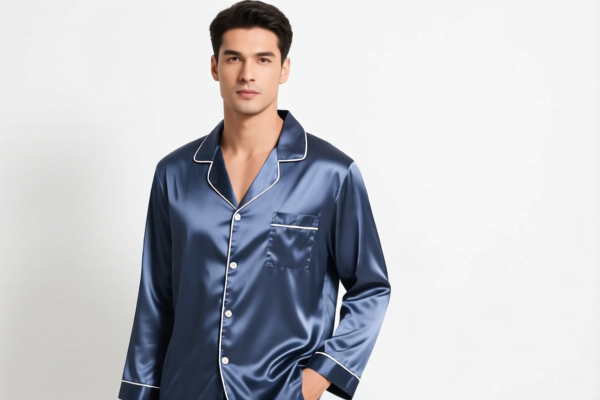
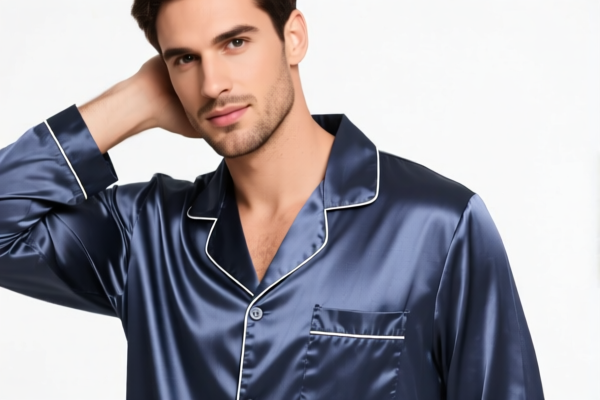
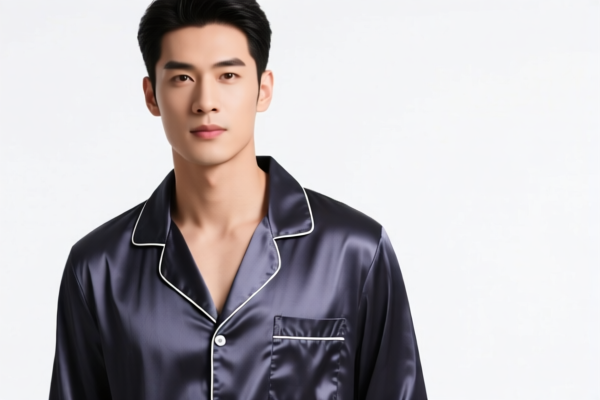
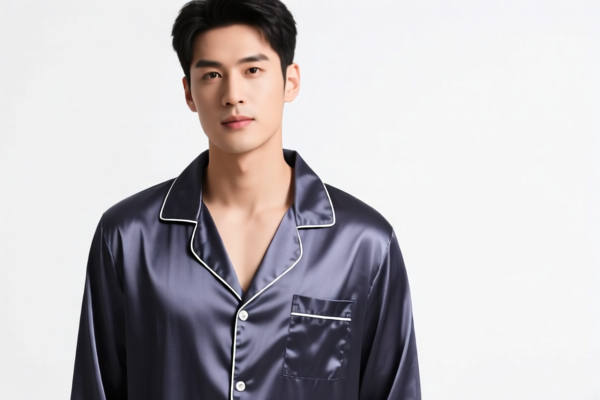
AI Analysis
👕 Boys' Silk Loungewear: The Ultimate HS Code Classification & Duty Strategy (2026 Guide)
🌐 HS Code Reference & Customs Clearance Guide | 2026 Latest Tariff Analysis | Professional Clearance Strategy
📌 I. Product Definition & Classification: Do You Really Know "Boys' Silk Loungewear"?
Boys' Silk Loungewear refers to garments designed for young males, primarily intended for sleep or relaxed home wear, made from or containing significant amounts of silk. In international trade, classification depends on three critical factors: 1. Knitting vs. Weaving: Is the fabric knitted (stretchy, looped) or woven (flat, structured)? 2. Garment Type: Is it underwear/nightwear, outer loungewear, or an accessory? 3. Silk Content: Does it meet the "Silk" threshold (usually ≥70%) or fall into generic fabric categories?
⚠️ Key Distinction Points:
- If knitted and generic "other men's boys' nightwear," it often falls under 6107.99.50.15 (lower duty).
- If woven and specifically "nightwear/pyjamas," it falls under 6207 series (higher duty).
- If it is an accessory (belt, scarf) rather than main apparel, it falls under 6117 or 6217 (significant savings).
📦 II. HS Code Classification Details (2026 Latest Tariff Authority Comparison)
| HS Code | Product Description | Application Scenario | Fabric Structure | Silk Content |
|---|---|---|---|---|
6107.99.50.15 |
Boys' knit or crocheted nightwear, other than underwear | Knitted silk loungewear sets, pajama tops/bottoms | ✅ Knitted | Meets standard |
6107.29.50.00 |
Boys' silk nightwear/pyjamas, specific shape (pyjama suit/nightgown) | High-quality silk pajama sets, nightgowns | ✅ Knitted | ≥70% |
6117.80.30.90 |
Boys' silk clothing accessories/parts | Silk belts, hairbands, cuffs, decorative trims | ✅ Knitted | ≥70% |
6207.19.10.00 |
Boys' silk underwear/nightwear (Woven) | Woven silk pajama sets, sleepwear | ❌ Woven | >70% |
6207.29.10.00 |
Boys' silk nightwear/loungewear (Woven) | Woven silk housecoats, robe-style loungewear | ❌ Woven | ≥70% |
🔍 Critical Reminder:
- Knitted (61xx) vs. Woven (62xx) is the primary split.
- Accessory (6117/6217) is often a hidden gem for cost reduction if the item is not a main garment.
- Silk Content ≥70% triggers specific "Silk" subcategories; below that, it may fall under generic fiber categories with different duties.
💰 III. 2026 Latest Tariff Rate Breakdown (Including Additional Duties & Policy Surcharges)
✅ Applicable Country: United States (US)
✅ Origin: China (CN)
✅ Effective Date: Includes subsequent imports post-2025 trade policies
🎯 1. 6107.99.50.15 – Boys' Knit Silk Loungewear (Generic)
| Item | Content |
|---|---|
| Base Duty | 0.8% (Ad Valorem) |
| Section 301 Duty | +7.5% (Trade War Surcharge) |
| Section 122 Duty | +10% (Recent Policy Surcharge) |
| Total Effective Rate | 18.3% |
| Calculation | CIF Value × 18.3% |
| De Minimis Eligibility | ❌ No (High value threshold; de minimis does not apply to textile/apparel from China in many contexts) |
| Legal Path | USITC:6107.99.50.15 → Section301:7.5% → Section122:10% |
📌 Explanation:
- This is the lowest duty option for knitted silk loungewear.
- The "122 Clause" (often referring to recent administrative measures on specific textile categories) adds 10%.
- Strategy: If the garment is knitted, aim for this code if it doesn't strictly qualify as "Pyjamas" under the narrower definition.
🎯 2. 6107.29.50.00 – Boys' Silk Nightwear (Knitted, ≥70% Silk)
| Item | Content |
|---|---|
| Base Duty | 0.9% (Ad Valorem) |
| Section 301 Duty | +7.5% (Trade War Surcharge) |
| Section 122 Duty | +10% (Recent Policy Surcharge) |
| Total Effective Rate | 18.4% |
| Calculation | CIF Value × 18.4% |
| De Minimis Eligibility | ❌ No |
| Legal Path | USITC:6107.29.50.00 → Section301:7.5% → Section122:10% |
📌 Note:
- Very close to the previous code (0.1% difference).
- Requires ≥70% Silk and specific Pyjama/Nightwear shape.
- Strategy: Ensure your product description clearly states "Silk Pyjamas" and provides fabric composition certificates.
🎯 3. 6117.80.30.90 – Boys' Silk Accessories/Parts (Knitted)
| Item | Content |
|---|---|
| Base Duty | 2.3% (Ad Valorem) |
| Section 301 Duty | +0.0% (No Section 301 for certain accessories) |
| Section 122 Duty | +10% (Recent Policy Surcharge) |
| Total Effective Rate | 12.3% |
| Calculation | CIF Value × 12.3% |
| De Minimis Eligibility | ❌ No |
| Legal Path | USITC:6117.80.30.90 → Section122:10% |
🌟 Cost-Saving Alert!
- This is the cheapest option at 12.3%.
- Crucial Condition: This code is for accessories (e.g., silk sleep masks, belts, detachable collars, hair ties) or parts (linings, trims) that are ≥70% Silk.
- Strategy: If you are exporting items that can be classified as "accessories" rather than main garments (e.g., a silk sleep set where the main garment is separate or if the item is purely an accessory), this code saves you ~6% in duties. Do not misclassify a full pajama set as an accessory!
🎯 4. 6207.19.10.00 – Boys' Silk Underwear/Nightwear (Woven)
| Item | Content |
|---|---|
| Base Duty | 1.7% (Ad Valorem) |
| Section 301 Duty | +7.5% (Trade War Surcharge) |
| Section 122 Duty | +10% (Recent Policy Surcharge) |
| Total Effective Rate | 19.2% |
| Calculation | CIF Value × 19.2% |
| De Minimis Eligibility | ❌ No |
| Legal Path | USITC:6207.19.10.00 → Section301:7.5% → Section122:10% |
📌 Explanation:
- Woven silk has a higher base duty (1.7% vs 0.8/0.9%).
- Applies to woven silk pajamas or underwear.
- Strategy: If your product is woven, you cannot use the lower 61xx codes. Ensure your invoice specifies "Woven Silk."
🎯 5. 6207.29.10.00 – Boys' Silk Loungewear/Pyjamas (Woven)
| Item | Content |
|---|---|
| Base Duty | 1.1% (Ad Valorem) |
| Section 301 Duty | +7.5% (Trade War Surcharge) |
| Section 122 Duty | +10% (Recent Policy Surcharge) |
| Total Effective Rate | 18.6% |
| Calculation | CIF Value × 18.6% |
| De Minimis Eligibility | ❌ No |
| Legal Path | USITC:6207.29.10.00 → Section301:7.5% → Section122:10% |
📌 Note:
- Intermediate duty rate for woven silk loungewear.
- Slightly higher than knitted (18.6% vs 18.3/18.4%).
- Strategy: Verify fabric construction. If it's a "woven robe" or "woven pajama set," this is the correct code.
🛠️ IV. Customs Clearance Practical Advice (Real-World Pitfall Guide)
✅ 1. Preparation Checklist (Missing Any = Delay)
| Document | Must Provide | Purpose |
|---|---|---|
| ✅ Fabric Composition Certificate | ✔️ | Must explicitly state "Silk ≥70%" or specific percentage. Without this, customs may default to higher generic textile duties. |
| ✅ Product Photos | ✔️ | Show the item clearly: Is it a full set? A single garment? An accessory? Does it look like pajamas or underwear? |
| ✅ Technical Specification Sheet | ✔️ | Detail: Knitted/Woven? Gender? Age group? Function (Sleep/Loungewear)? |
| ✅ Commercial Invoice | ✔️ | Description must match HS Code logic. E.g., "Boys' Knitted Silk Pajama Set" vs. "Silk Accessories." |
| ✅ Packing List | ✔️ | Ensure quantities match. Do not separate related items (e.g., top and bottom) if they are sold as a set. |
✅ 2. Declaration Tips (Key Mantras)
🔥 "Fabric Type First, Function Second, Accessory Loophole if Applicable!"
| Scenario | Correct Declaration | Wrong Action |
|---|---|---|
| Knitted Silk Pajamas | 6107.99.50.15 or 6107.29.50.00 |
Misdeclaring as Woven → 18.6-19.2% |
| Woven Silk Pajamas | 6207.19.10.00 or 6207.29.10.00 |
Misdeclaring as Knitted → Rejected/Inspected |
| Silk Sleep Mask/Belt | 6117.80.30.90 |
Declaring as "Clothing" → 18.3%+ |
| Silk Robe (Woven) | 6207.29.10.00 |
Declaring as "Underwear" → Incorrect classification |
⚠️ Critical Warning:
- Do NOT declare a full silk pajama set as "Silk Scarf" or "Silk Belt" to get the 12.3% rate. This is customs fraud.
- However, if you are exporting standalone accessories (e.g., silk eye masks, silk scrunchies for kids), always use the accessory code (6117/6217) to save costs.
✅ 3. Special Cases Handling
| Scenario | Handling Advice |
|---|---|
| Mixed Fabric (e.g., 60% Silk, 40% Polyester) | If <70% Silk, it may fall under generic synthetic blends. Check if the duty rate changes. Often, <70% silk loses the "Silk" preference but may still be subject to Section 301. |
| Set vs. Separate Items | If pajama top and bottom are packed together, they are declared as a set. If sent separately, each item is declared individually. |
| Sample Shipment | Even samples from China to the US are subject to these duties. Do not assume "Sample" means "Duty-Free." |
🌍 V. Global Market Comparison (2026)
| Country/Region | Recommended HS Code | Tariff (CN Origin) | Certification | Notes |
|---|---|---|---|---|
| 🇺🇸 USA | 6107.99.50.15 (Knit) |
18.3% | No specific cert | High additional duties (301+122) |
| 🇨🇳 China | 6107.19.00.00 |
~7-15% | N/A | Import duty logic differs |
| 🇪🇺 EU | 6107.20.00 |
~12% | CE/REACH | No Section 301/122 equivalent |
| 🇬🇧 UK | 6107.20.00 |
~12% | UKCA | Post-Brexit rules apply |
📌 Conclusion:
- USA is the most costly market for Chinese silk loungewear due to叠加 (stacked) tariffs.
- Accessory classification (6117) is the only significant way to reduce duty within the US framework (to 12.3%).
📌 VI. Common Mistakes & Pitfall Avoidance (Lessons Learned)
❌ Mistake 1: Declaring a woven pajama set as knitted.
👉 Consequence: Customs inspection reveals fabric structure → 100% duty adjustment + penalties.
❌ Mistake 2: Declaring a full garment (e.g., silk nightgown) as an accessory to get 12.3%.
👉 Consequence: Customs Fraud. Goods seized, fines imposed, and importer blacklisted.
❌ Mistake 3: Ignoring the 70% Silk Threshold.
👉 Consequence: If silk content is 69%, you lose the specific "Silk" subcategory and may be taxed under generic "Other Textiles," which might have different rates (often higher base duty).
❌ Mistake 4: Not specifying "Boys' Kids" in the description.
👉 Consequence: Customs may classify as "Men's" apparel, which has different HS codes and potentially higher duties.
✅ Correct Practice:
"Boys' Knitted Silk Pajama Set, 75% Silk, 25% Polyester, Size 4-10, for Home Sleepwear"
🎯 VII. Conclusion: Precision Classification Saves Money!
🎯 Remember the Mantra:
🔹 "Knitted is cheaper than Woven (18.3% vs 18.6-19.2%)."
🔹 "Accessory is cheapest (12.3%), but only for non-main garments."
🔹 "Always declare Silk Content ≥70% to qualify for specific subcodes."
📌 Pro Tip:
If your product is borderline (e.g., a silk robe that could be an accessory or a garment), consider splitting the shipment if feasible, or consult a customs broker for a Binding Tariff Information (BTI) or Advance Ruling for the US.
📣 Immediate Action:
📞 Contact your freight forwarder with the fabric certificate.
📋 Prepare accurate HS Code documentation before shipping.
🚀 Optimize your declaration to save up to 6% in duties!
✨ Professional Customs Clearance Starts with Accurate Classification!
💼 Every Percentage Point Counts in Cross-Border E-Commerce!
Customer Reviews
About HS Code Classification
The Harmonized System (HS) is an internationally standardized nomenclature developed by the World Customs Organization (WCO) to classify traded products. Over 200 countries use the HS system as the basis for customs tariffs, trade statistics, and import/export regulations.
Each HS code follows a hierarchical structure:
- Chapter (2 digits) — Broad category of goods (e.g., Chapter 84: Machinery and Mechanical Appliances)
- Heading (4 digits) — More specific grouping within the chapter
- Subheading (6 digits) — Internationally standardized breakdown, used by all WCO member countries
- National subdivisions (8-10 digits) — Country-specific extensions for further classification, such as US HTSUS 10-digit codes
Correct HS code classification is essential for smooth customs clearance, accurate duty payment, and compliance with trade regulations. Misclassification can lead to customs delays, overpayment of duties, or penalties.
When importing from CN to US, the applicable tariff rates may include:
- Most-Favored-Nation (MFN) rate — The standard duty rate applied to WTO members
- General rate — Applied to countries without trade agreements
- Trade remedy duties — Additional tariffs such as Section 301 (anti-dumping), Section 232 (national security), or countervailing duties
The information provided on this page is for reference purposes only. For official classification, please consult with your local customs authority or a licensed customs broker.