Boys' Silk Sweatpants
CN → US| HS Code | Tariff Rate | Origin | Destination | Doc |
|---|---|---|---|---|
| 6203490730 | 17.5% | CN | US | Official Doc |
| 6203490720 | 17.5% | CN | US | Official Doc |
| 6104194000 | 18.4% | CN | US | Official Doc |
| 6103107000 | 10.9% | CN | US | Official Doc |
| 6103494010 | 18.4% | CN | US | Official Doc |
Product Images
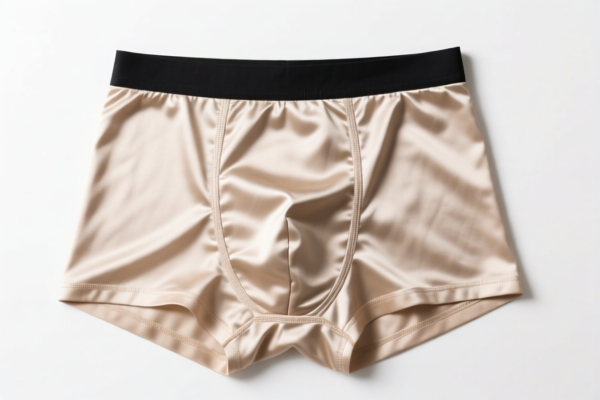

AI Analysis
👖 Boys' Silk Sweatpants (The "Sporty Silk" Paradox)
🌐 HS Code Masterclass & Customs Strategy | 2026 Silk Sportswear Edition | Decoding the "Sweat" in Silk
📌 I. Product Definition & The Fabric Dilemma: What Are "Silk Sweatpants"?
"Boys' Silk Sweatpants" presents a unique classification challenge. In strict technical terms, sweatpants are typically knitted (to allow stretch and comfort) and made of cotton or polyester fleece. However, when the material is specified as Silk, the classification logic shifts drastically depending on the construction and knit type.
The term "Sweatpants" in a commercial context often implies the style (loose, drawstring waist, cuffs), but customs classification relies on: 1. Material Composition: Is it >70% Silk? 2. Construction: Is it Knitted/ crocheted (Chapter 61) or Woven (Chapter 62)? * Real Silk "Sweatpants": Usually imply a Knitted silk fabric (silk jersey or similar stretch) to mimic the comfort of sweatpants. * Woven Silk Trousers: If the "sweatpants" style is cut from woven silk fabric, it falls under Woven Trousers.
⚠️ Critical Classification Fork:
- If the garment is Knitted/Crocheted with Silk content → Chapter 61 (e.g.,6103.49.40.10)
- If the garment is Woven (not knitted) with Silk content → Chapter 62 (e.g.,6203.49.07.30)
- If it is a Suit/Track Suit (Set of top and bottom) → Chapter 61 (e.g.,6104.19.40.00)
📦 II. HS Code Classification Breakdown (Detailed Analysis)
Based on the provided data, here is the authoritative mapping for "Boys' Silk Sweatpants" based on construction and composition:
| HS Code | Product Description | Construction Type | Silk Content Logic | Tax Detail (US) |
| :--- | :--- | :--- | :--- :--- |
| 6103.49.40.10 | Boys' Silk Trousers (Knitted) | Knitted / Crocheted | Must contain ≥70% Silk by weight. Fits "Sweatpant" style if made from silk jersey. | Total: 18.4%
• Base: 0.9%
• Sect 301: 7.5%
• Sec 122: 10% |
| 6203.49.07.30 | Boys' Silk "Sports" Trousers (Woven) | Woven | Woven silk fabric cut into "sports" style (track pants). Often mislabeled as sweatpants. | Total: 17.5%
• Base: 0.0%
• Sect 301: 7.5%
• Sec 122: 10% |
| 6203.49.07.20 | Boys' Silk Trousers (Outdoor/Leisure) | Woven | Silk trousers for "Outdoor" or "Leisure" use. Fits the "Sweatpants" usage but is Woven. | Total: 17.5%
• Base: 0.0%
• Sect 301: 7.5%
• Sec 122: 10% |
| 6103.49.40.10 | Silk Knitted Trousers | Knitted | Specific subcategory for knitted trousers with high silk content. | Total: 18.4%
• Base: 0.9%
• Sect 301: 7.5%
• Sec 122: 10% |
| 6103.10.70.00 | Boys' Silk Suits / Sets | Knitted | Full Sets (Top + Bottom). If "Sweatpants" are part of a matching Silk track suit. | Total: 10.9%
• Base: 0.9%
• Sect 301: 0.0%
• Sec 122: 10% |
| 6104.19.40.00 | Knitted Silk Suits | Knitted | Sets with ≥70% Silk. "Sweatpants" counted as part of a "Sports Suit" set. | Total: 18.4%
• Base: 0.9%
• Sect 301: 7.5%
• Sec 122: 10% |
🔍 Key Insight:
- The "Knitted" Advantage: If you can prove the silk fabric is knitted (stretches, uses loops), you fall into Chapter 61.
- The "Sweatpant" Trap: If the silk is woven (no stretch), even if it looks like sweatpants, it is legally Woven Trousers (6203).
- Set vs. Item: If selling as a Set (Jacket + Pants), the tax rate may drop to 10.9% (6103.10.70.00) because of the lower Section 301 rate on suits!
💰 III. 2026 Tariff Rate Deep Dive (China → USA)
✅ Origin: China (CN)
✅ Destination: United States (US)
✅ Effective: Post-November 2025 Policy
✅ Product: Boys' Silk Bottoms (Knitted or Woven)
🎯 Scenario A: Knitted Silk Sweatpants (6103.49.40.10)
| Component | Rate | Logic |
|---|---|---|
| Base Rate | 0.9% | Standard MFN rate for knitted silk trousers. |
| Section 301 (Add-on) | +7.5% | "China 301" tariff for textile/apparel. |
| Section 122 (Add-on) | +10.0% | Specific 122条款 (Section 122) tariff on silk/wool/apparel. |
| TOTAL EFFECTIVE RATE | 18.4% | High Cost Alert! |
| Legal Path | USITC:6103.49.40.10 → Sect301:Footnote → Sect122:China |
🎯 Scenario B: Woven Silk "Sweatpants" (6203.49.07.30)
| Component | Rate | Logic |
|---|---|---|
| Base Rate | 0.0% | Zero Duty on woven silk trousers! (Major savings opportunity). |
| Section 301 (Add-on) | +7.5% | Section 301 applies to almost all Chinese textiles. |
| Section 122 (Add-on) | +10.0% | Applies to woven silk apparel. |
| TOTAL EFFECTIVE RATE | 17.5% | Slightly lower than knitted due to 0% base. |
| Legal Path | USITC:6203.49.07.30 → Sect301:Footnote → Sect122:China |
🎯 Scenario C: Silk Track Suit Set (6103.10.70.00)
| Component | Rate | Logic |
|---|---|---|
| Base Rate | 0.9% | Knitted sets. |
| Section 301 (Add-on) | +0.0% | SUIT SETS are EXEMPT from Section 301! (Crucial loophole). |
| Section 122 (Add-on) | +10.0% | Still applies to the silk content. |
| TOTAL EFFECTIVE RATE | 10.9% | The Lowest Rate! (Save 7.5% vs individual pants). |
| Legal Path | USITC:6103.10.70.00 → Sect301:Exemption → Sect122:China |
📌 Strategic Note:
If you can sell the "Silk Sweatpants" as a complete suit (matching top + bottom) with the same fabric, you save 7.5% in Section 301 tariffs. This is the only way to drop the tax below 18.4%.
🛠️ IV. Customs Clearance Action Plan (Real-World Strategy)
✅ 1. The "Silk vs. Sweat" Documentation
Customs will scrutinize the Knit/Woven distinction immediately.
| Document | Requirement | Why It Matters |
|---|---|---|
| Fabric Swatch Test | Must show stretch (knitted) or crisp drape (woven). | Proves if it is 6103 (Knit) or 6203 (Woven). |
| Composition Label | Must explicitly state "100% Silk" or ">70% Silk". | Determines eligibility for 6103.49.40.10 vs generic silk codes. |
| Style Description | "Silk Jogger", "Silk Track Bottom", or "Silk Trousers". | Avoid using "Sweatpants" if the fabric is woven (misleading). |
| Set Declaration | If selling as a Set, label clearly: "2-Piece Silk Track Suit". | Allows use of 6103.10.70.00 to trigger the 0% Section 301 rate. |
✅ 2. The "122条款" (Section 122) Warning
⚠️ Special Alert: The 10% Section 122 Tariff is mandatory for all silk/apparel from China in this dataset. - It does not apply to cotton/wool blends. - It DOES apply to Silk. - Action: You cannot opt out. This 10% is a fixed cost on all the codes listed above.
✅ 3. Classification Cheat Sheet for the Broker
Bad Declaration: "Boys' Silk Sweatpants" (Ambiguous → Will be flagged).
Good Declaration (Knitted): "Boys' Knitted Silk Trousers, Style: Jogger, 100% Silk." → HS 6103.49.40.10
Good Declaration (Woven): "Boys' Woven Silk Trousers, Sports Style." → HS 6203.49.07.30
Best Declaration (Set): "Boys' 2-Piece Knitted Silk Track Suit (Top + Pants)." → HS 6103.10.70.00 (Tax: 10.9%)
🌍 V. Global Market Comparison (Silk Sportswear)
| Region | Recommended HS Code | Est. Total Duty | Strategy |
|---|---|---|---|
| 🇺🇸 USA | 6103.10.70.00 (Set) |
10.9% | Sell as Sets! Avoid individual pants if possible. |
| 🇨🇳 China | 6103.49.40.10 |
0% (Import) | Domestic market has no Section 301/122. |
| 🇪🇺 EU | 6103.49.40.10 |
~5-10% | No Section 301, but has anti-dumping checks on silk. |
| 🇦🇺 Aus | 6103.49.40.10 |
~5% | Generally lower tariffs, but strict origin rules. |
📌 VI. Common Pitfalls & "Do Not" List
❌ PITFALL 1: Calling Woven Silk Pants "Sweatpants"
👉 Consequence: If the fabric is woven, customs may reclassify as 6203. While the tax is similar (17.5%), the duty rate structure changes (Base 0% vs 0.9%). More importantly, Section 301 applies to both, so no savings, but the classification error can cause delays.
❌ PITFALL 2: Missing the "Set" Opportunity
👉 Consequence: Selling pants alone at 18.4% when a matching suit is available at 10.9%.
👉 Fix: Bundle with a matching silk hoodie or jacket. Save 7.5% per set.
❌ PITFALL 3: Ignoring the 70% Silk Rule
👉 Consequence: If the silk content is <70%, you cannot use 6103.49.40.10 or 6104.19.40.00. You fall into generic "Other Textile" categories with higher taxes.
👉 Fix: Ensure the fabric blend is ≥70% Silk.
✅ Pro Tip:
"Knit or Woven? Set or Single? Silk %?"
1. Knitted + Single = 18.4%
2. Woven + Single = 17.5%
3. Knitted + Set = 10.9% (The Winner!)
🎯 VII. Final Verdict: The "Silk Sweatpants" Strategy
- Maximize Value: Do not sell "Silk Sweatpants" as a single item if you can avoid it. Sell them as a "Silk Track Suit Set".
- Savings: 7.5% (Section 301 Exemption on Sets).
- Total Tax: 10.9% (vs 18.4% for single pants).
- Clarify Construction: Explicitly state "Knitted" in the description if using Chapter 61. If the fabric is woven, use "Woven Silk Trousers" to avoid "Sweatpants" confusion.
- Check Silk Content: Ensure ≥70% Silk to qualify for the specific high-value silk codes (
6103.49.40.10). If <70%, expect higher duties.
🔥 The Golden Rule for Silk Sportswear:
"If you can't knit it, don't call it a sweatpant; if you can't pair it, you pay the high tax!"
✨ Professional Customs Clearance Starts with the Right HS Code!
💼 Your Profit Margin Depends on This 7.5% Difference!
Customer Reviews
About HS Code Classification
The Harmonized System (HS) is an internationally standardized nomenclature developed by the World Customs Organization (WCO) to classify traded products. Over 200 countries use the HS system as the basis for customs tariffs, trade statistics, and import/export regulations.
Each HS code follows a hierarchical structure:
- Chapter (2 digits) — Broad category of goods (e.g., Chapter 84: Machinery and Mechanical Appliances)
- Heading (4 digits) — More specific grouping within the chapter
- Subheading (6 digits) — Internationally standardized breakdown, used by all WCO member countries
- National subdivisions (8-10 digits) — Country-specific extensions for further classification, such as US HTSUS 10-digit codes
Correct HS code classification is essential for smooth customs clearance, accurate duty payment, and compliance with trade regulations. Misclassification can lead to customs delays, overpayment of duties, or penalties.
When importing from CN to US, the applicable tariff rates may include:
- Most-Favored-Nation (MFN) rate — The standard duty rate applied to WTO members
- General rate — Applied to countries without trade agreements
- Trade remedy duties — Additional tariffs such as Section 301 (anti-dumping), Section 232 (national security), or countervailing duties
The information provided on this page is for reference purposes only. For official classification, please consult with your local customs authority or a licensed customs broker.