Boys' Ski Pants Components
CN → US| HS Code | Tariff Rate | Origin | Destination | Doc |
|---|---|---|---|---|
| 6112201060 | 45.7% | CN | US | Official Doc |
| 6112202010 | 25.8% | CN | US | Official Doc |
| 6211201525 | 24.6% | CN | US | Official Doc |
| 6112201060 | 45.7% | CN | US | Official Doc |
| 6112201090 | 45.7% | CN | US | Official Doc |
Product Images
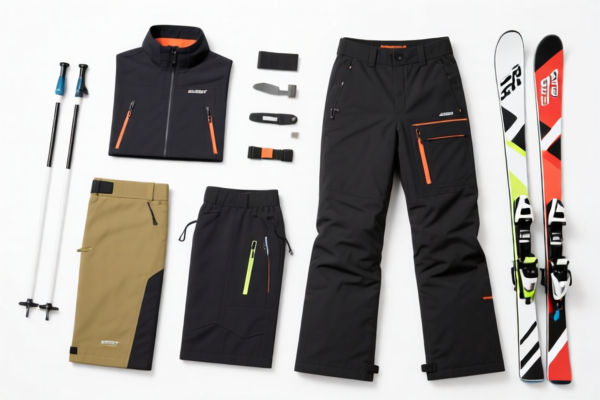
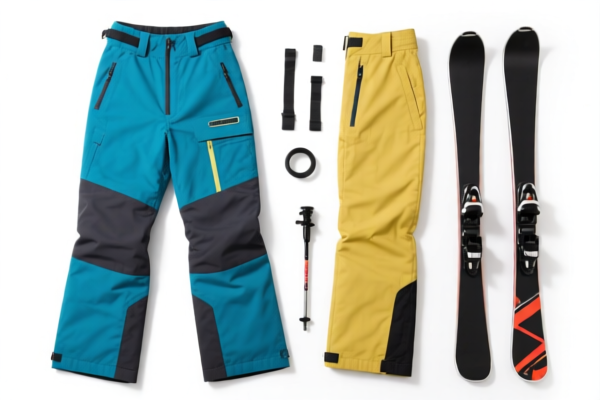
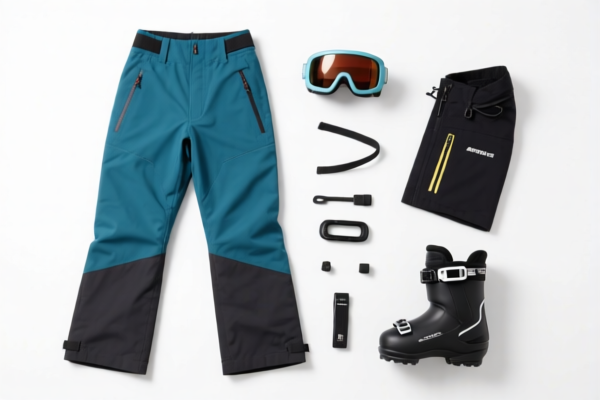
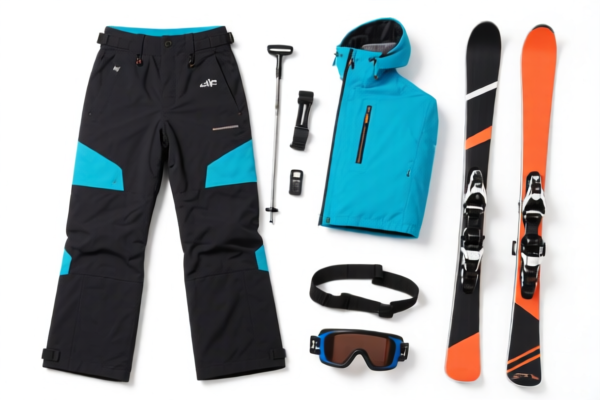
AI Analysis
❄️ Boys' Ski Pants Components: HS Code Classification & Customs Clearance Guide
🌐 HS Code Reference & Clearance Guide | 2026 Latest Tariff Analysis | Professional Clearance Strategy
📌 I. Product Definition & Classification: What Exactly Are "Boys' Ski Pants Components"?
"Ski Pants Components" is a misleading term in customs classification. Customs authorities do not classify items based on "components" unless they are parts/accessories specifically designed for a specific machine or identifiable as unassembled goods.
For Boys' Ski Pants, the classification depends entirely on the material composition and manufacturing process (Knitted vs. Woven). There is no single HS code for "components"; rather, you must classify the finished garment or fabric piece based on its primary material.
⚠️ Critical Distinction:
- If the item is a finished pair of pants (sewn, zipped, ready to wear) → Classified under Chapter 61 (Knitted/Crocheted) or Chapter 62 (Non-Knitted).
- If the item is unsewn fabric panels or patterns → Classified under Chapter 60 (Knitted Fabric) or Chapter 55/54 (Synthetic Fibers).
- "Components" cannot be declared as such if they constitute the essential character of the final product.
📦 II. HS Code Classification Details (2026 Latest Tariff Authority Comparison)
Based on the provided data, here are the specific HS Codes for Boys' Ski Pants, categorized by material and manufacturing method:
| HS Code | Product Description | Material Composition | Manufacturing Type | Total Tax Rate |
|---|---|---|---|---|
6112.20.10.60 |
Men's/Boys' Ski Pants | Knitted or Artificial Fiber | Knitted/Crocheted | 45.7% |
6112.20.20.10 |
Men's/Boys' Ski Pants | Cotton or Synthetic Fiber | Finished Garment | 25.8% |
6211.20.15.25 |
Ski Pants (Non-Cotton) | Waterproof Material (Polyester/Nylon) | Woven/Non-Knitted | 24.6% |
6112.20.10.60 |
Ski Pants | Knitted or Artificial Fiber | Trousers & Breeches Category | 45.7% |
6112.20.10.90 |
Ski Pants | Artificial Synthetic Fiber | Skiing Equipment Category | 45.7% |
🔍 Key Insight:
- Knitted Ski Pants (6112.20.10.xx) attract the highest tariff (45.7%) due to the high base rate (28.2%).
- Woven/Waterproof Ski Pants (6211.20.15.25) have the lowest total tax (24.6%) due to a lower base rate (7.1%).
- Cotton Blend Knitted Pants (6112.20.20.10) fall in the middle at 25.8%.
💰 III. 2026 Latest Tariff Rate Breakdown (Including Surtaxes & Policy Add-ons)
✅ Applicable Country: United States (US)
✅ Country of Origin: China (CN)
✅ Effective Date: November 10, 2025 (and subsequent imports)
🎯 1. 6112.20.10.60 / 6112.20.10.90 —— Knitted Ski Pants (High Risk)
| Item | Detail |
|---|---|
| Base Tariff | 28.2% (Ad Valorem) |
| Section 301 Surcharge | +7.5% |
| Section 122 Tariff | +10% |
| Total Tax Rate | 45.7% |
| Calculation | CIF Value × 45.7% |
| De Minimis Exemption? | ❌ No (Deny De Minimis) |
| Legal Basis Path | USITC:6112.20.10.60 → Section 301: 7.5% → Section 122: 10% |
📌 Explanation:
- Base 28.2%: Standard US import duty for knitted synthetic/artificial fiber garments.
- Section 301 (7.5%): Additional tariff on Chinese goods under Trade Act of 1974.
- Section 122 (10%): Tariff under 19 U.S.C. 1862, often applied to specific textile categories to protect domestic industry.
- Result: These items are subject to very high duties. Cost planning must include this ~46% overhead.
🎯 2. 6112.20.20.10 —— Knitted Cotton/Synthetic Blend Ski Pants
| Item | Detail |
|---|---|
| Base Tariff | 8.3% |
| Section 301 Surcharge | +7.5% |
| Section 122 Tariff | +10% |
| Total Tax Rate | 25.8% |
| Calculation | CIF Value × 25.8% |
| De Minimis Exemption? | ❌ No |
| Legal Basis Path | USITC:6112.20.20.10 → Section 301: 7.5% → Section 122: 10% |
📌 Note:
- The lower base rate (8.3%) significantly reduces the total burden compared to pure synthetic/artificial fiber knitted pants.
- If your product is a cotton-blend, ensure the cotton content is correctly declared to qualify for this lower base rate.
🎯 3. 6211.20.15.25 —— Woven/Non-Knitted Waterproof Ski Pants (Lowest Tax)
| Item | Detail |
|---|---|
| Base Tariff | 7.1% |
| Section 301 Surcharge | +7.5% |
| Section 122 Tariff | +10% |
| Total Tax Rate | 24.6% |
| Calculation | CIF Value × 24.6% |
| De Minimis Exemption? | ❌ No |
| Legal Basis Path | USITC:6211.20.15.25 → Section 301: 7.5% → Section 122: 10% |
📌 Advantage:
- Woven fabrics (like polyester/nylon waterproof shells) have a much lower base tariff (7.1%) than knitted ones.
- This is the most cost-effective classification for ski pants if the manufacturing process allows for woven construction.
🛠️ IV. Practical Customs Clearance Advice (Pitfall Avoidance Guide)
✅ 1. Required Documentation Checklist (Non-negotiable)
| Document | Mandatory? | Description |
|---|---|---|
| ✅ Product Specification Sheet | ✔️ | Must detail: Material composition (% Cotton, % Polyester, etc.), Knitted vs. Woven, Waterproof membrane details. |
| ✅ Technical Drawing/Sample Photo | ✔️ | Show zippers, pockets, waistband, and seams to prove it's a finished garment, not a "component." |
| ✅ Commercial Invoice | ✔️ | Must explicitly state: "Boys' Ski Pants, Knitted/Woven, Material: XXX%" – Do NOT use "Components". |
| ✅ Packing List | ✔️ | Include units, gross/net weight, and dimensions. |
| ✅ Certificate of Origin (CO) | ✔️ | Required for origin verification; helps apply correct Section 301/122 duties. |
| ✅ Third-Party Test Report | ✔️ | If claiming "Waterproof," provide ISO 811 or ASTM D737 test results to justify classification under 6211.20.15.25. |
✅ 2. Declaration Tips (Key Mantra)
🔥 "Material Defines Code, Not Function! Declare 'Pants', Not 'Parts'!"
| Scenario | Correct Declaration | Incorrect Declaration | Consequence |
|---|---|---|---|
| Finished Ski Pants | "Boys' Ski Pants, Knitted, Synthetic" | "Ski Pants Components" or "Parts of Ski Wear" | Misclassification → Penalty + Back Duties |
| Waterproof Woven Pants | "Ski Pants, Woven, Polyester, Waterproof" | "Ski Gear Accessories" | May face scrutiny if not proven waterproof |
| Knitted Synthetic Pants | "Boys' Ski Pants, Knitted, Artificial Fiber" | "Sportswear" (Too vague) | Customs may assign higher default rate |
| Cotton Blend Pants | "Ski Pants, Knitted, Cotton Blend" | "Textile Garments" | Lose eligibility for 6112.20.20.10 (25.8%) |
✅ 3. Special Cases Handling
| Situation | Handling Advice |
|---|---|
| "Components" are actually Kits | If sold as a "DIY Ski Pants Kit" (unsewn), declare as fabric pieces (Chapter 60/55). If sewn, declare as garments. |
| Waterproof Claim | If using 6211.20.15.25, ensure the product is waterproof (e.g., Gore-Tex, laminate). If not, customs may reclassify to a higher base rate. |
| Mixed Materials | Declare the principal material. If >50% synthetic → 6112.20.10.60/90. If >50% cotton → 6112.20.20.10. |
| Sample vs. Bulk | Samples for pre-sale are still subject to duty. Declare accurately to avoid delays. |
🌍 V. Global Market Comparison (2026 Latest)
| Country/Region | Recommended HS Code | Estimated Duty | Certification Required | Notes |
|---|---|---|---|---|
| 🇺🇸 USA | 6211.20.15.25 (Woven) |
24.6% (Lowest) | ASTM D737 (Waterproof) | Avoid 6112.20.10 if possible (45.7%) |
| 🇨🇳 China | 6211.20.15.25 |
~10-15% | CCC (if applicable) | No Section 122/301 |
| 🇪🇺 EU | 6211.40.39 |
~12% | CE Mark (if PPE) | Different subheading than US |
| 🇬🇧 UK | 6211.40.39 |
~12% | UKCA Mark | Post-Brexit rules apply |
| 🇯🇵 Japan | 6211.40.00 |
~18% | PSE (if electronic) | No special surcharges |
📌 Conclusion:
- USA is the most tax-sensitive market due to Section 301 and Section 122.
- Woven/Non-Knitted pants (6211.20.15.25) are the optimal choice for cost efficiency in the US.
- Knitted pants (6112.20.10.xx) should be avoided if possible due to 45.7% total tax.
📌 VI. Common Errors & Pitfall Guide (Lessons Learned)
❌ Error 1: Declaring "Ski Pants Components"
👉 Consequence: Customs will reject the declaration or assign a generic "Other Textile" code with high duty.
✅ Fix: Always declare as "Boys' Ski Pants" with material details.
❌ Error 2: Misidentifying Knitted vs. Woven
👉 Consequence: If you declare woven (6211) but it's knitted (6112), you face back duties + penalties.
✅ Fix: Verify manufacturing process. Knitted = stretchy, looped yarn (e.g., fleece). Woven = tight, non-stretchy (e.g., shell).
❌ Error 3: Ignoring Section 122 & 301 Surtaxes
👉 Consequence: Underestimating landed cost by ~17.5% (7.5% + 10%).
✅ Fix: Include 17.5% surtax in your pricing model for all Chinese-origin textiles.
❌ Error 4: Vague Material Description ("Polyester")
👉 Consequence: Customs may assign the highest base rate if composition is unclear.
✅ Fix: Specify "100% Polyester, Woven, Waterproof" or "65% Cotton, 35% Polyester, Knitted".
🎯 VII. Conclusion: Professional Classification Saves Money!
🎯 Key Takeaways:
🔹 "Woven Beats Knitted": If your ski pants can be made woven, do it! 24.6% vs. 45.7% is a massive difference.
🔹 "Declare 'Pants', Not 'Components'": Components is not a valid classification for garments.
🔹 "Factor in 17.5% Surtax": Always add Section 301 (7.5%) and Section 122 (10%) to your cost analysis.
🔹 "Waterproof Proof": If claiming6211.20.15.25, have test reports ready to prove waterproof status.
📌 Pro Tip:
If you are importing Knitted Synthetic Pants (6112.20.10.60/90), consider:
1. Pre-cutting to see if a different classification applies (risky).
2. Switching to Woven Fabric to benefit from the 24.6% rate.
3. Applying for Advance Ruling from CBP to confirm classification before shipment.
📣 Immediate Action:
📞 Contact Your Customs Broker + Provide Material Spec Sheets + Verify Knitted vs. Woven
🚀 Optimize Your HS Code to6211.20.15.25and Save Over 20% in Duties!
✨ Professional Clearance Starts with Accurate Classification!
💼 Every 1% of duty saved is pure profit!
Customer Reviews
About HS Code Classification
The Harmonized System (HS) is an internationally standardized nomenclature developed by the World Customs Organization (WCO) to classify traded products. Over 200 countries use the HS system as the basis for customs tariffs, trade statistics, and import/export regulations.
Each HS code follows a hierarchical structure:
- Chapter (2 digits) — Broad category of goods (e.g., Chapter 84: Machinery and Mechanical Appliances)
- Heading (4 digits) — More specific grouping within the chapter
- Subheading (6 digits) — Internationally standardized breakdown, used by all WCO member countries
- National subdivisions (8-10 digits) — Country-specific extensions for further classification, such as US HTSUS 10-digit codes
Correct HS code classification is essential for smooth customs clearance, accurate duty payment, and compliance with trade regulations. Misclassification can lead to customs delays, overpayment of duties, or penalties.
When importing from CN to US, the applicable tariff rates may include:
- Most-Favored-Nation (MFN) rate — The standard duty rate applied to WTO members
- General rate — Applied to countries without trade agreements
- Trade remedy duties — Additional tariffs such as Section 301 (anti-dumping), Section 232 (national security), or countervailing duties
The information provided on this page is for reference purposes only. For official classification, please consult with your local customs authority or a licensed customs broker.