Boys' Ski Shell Jacket
CN → US| HS Code | Tariff Rate | Origin | Destination | Doc |
|---|---|---|---|---|
| 6113009025 | 24.6% | CN | US | Official Doc |
| 6211201515 | 24.6% | CN | US | Official Doc |
| 6113001005 | 21.3% | CN | US | Official Doc |
| 6201402500 | 21.9% | CN | US | Official Doc |
| 6112201080 | 45.7% | CN | US | Official Doc |
Product Images
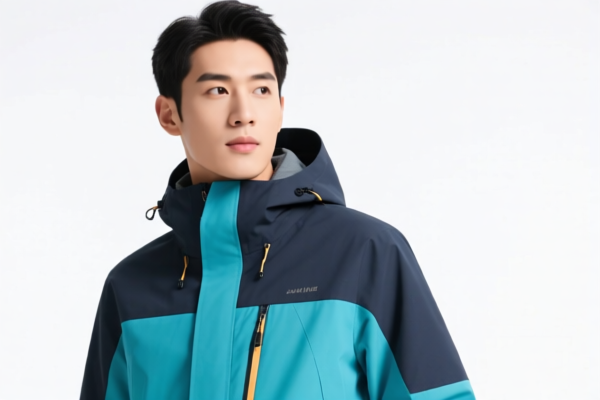


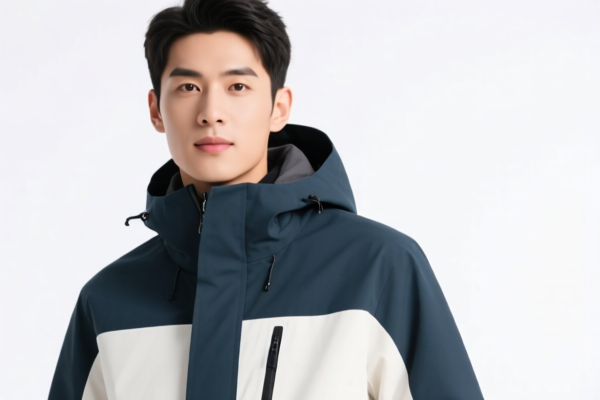
AI Analysis
🎿 Boys' Ski Shell Jacket (Outerwear)
🌐 HS Code Reference & Customs Clearance Guide | 2026 Latest Tariff Analysis | Professional Entry Strategy
📌 I. Product Definition & Classification: What Exactly is a "Ski Shell"?
A Boys' Ski Shell Jacket is a specialized outer garment designed for winter sports, specifically skiing. In international trade, its classification depends heavily on two factors: 1. Material Composition: Is it knitted (knitwear) or woven? Is it made of synthetic fibers, coated fabric, or natural fibers? 2. Construction: Is it a complete jacket, or a specific type of technical outerwear?
⚠️ Key Distinction Point: * Knitted/Synthetic Fiber Shell: Often falls under Chapter 61 (Knitted/Crocheted). * Woven/Coated/Waterproof Shell: Often falls under Chapter 62 (Non-Knitted/Not Crocheted). * Material Type: "Synthetic fiber" vs. "Coated/Impregnated" materials have different tariff implications.
📦 II. HS Code Classification Details (2026 Latest Tariff Authority)
Based on the provided data, here are the specific HS Codes for Boys' Ski Shells and their corresponding tax structures.
| HS Code | Product Description Summary | Material/Type | Total Tax Rate | Key Tariff Components |
|---|---|---|---|---|
6113.00.90.25 |
Boys' Ski Jacket, Synthetic Fiber Material | Non-cotton, Synthetic Fiber | 24.6% | Base: 7.1% Add'l: 7.5% Section 301: 10% |
6211.20.15.15 |
Boys' Ski Jacket/Outfit, Windbreaker/Jacket Type | Non-cotton, Woven | 24.6% | Base: 7.1% Add'l: 7.5% Section 301: 10% |
6113.00.10.05 |
Boys' Ski Jacket, Coated/Impregnated Material | Coated Synthetic | 21.3% | Base: 3.8% Add'l: 7.5% Section 301: 10% |
6201.40.25.00 |
Boys' Ski Jacket, Recreational Performance Wear | Non-natural Fiber | 21.9% | Base: 4.4% Add'l: 7.5% Section 301: 10% |
6112.20.10.80 |
Boys' Ski Suit, Fiber Material (Catch-all) | Other Fiber Category | 45.7% | Base: 28.2% Add'l: 7.5% Section 301: 10% |
🔍 Critical Insight: * Lowest Tax Rate (21.3%): Achieved by classifying as
6113.00.10.05(Coated/Impregnated Knitted Shell). The lower base duty (3.8%) offsets the additional tariffs. * Highest Tax Rate (45.7%): Applies to6112.20.10.80(General Fiber Ski Suit). The high base duty (28.2%) significantly increases costs. * Common Mistake: Assuming all ski jackets are the same. Knitted (Ch. 61) vs. Woven (Ch. 62) and Coated vs. Uncut matter immensely.
💰 III. 2026 Latest Tariff Rate Breakdown (Including Surcharges & Policy Add-ons)
✅ Applicable Country: United States (US)
✅ Country of Origin: China (CN)
✅ Effective Time: Current regulations apply
🎯 1. 6113.00.90.25 & 6211.20.15.15 —— Standard Synthetic/Woven Ski Shells
| Item | Detail |
|---|---|
| Base Duty Rate | 7.1% (Ad Valorem) |
| Section 301 Surcharge | +7.5% (Specific to certain synthetic/woven articles) |
| Additional Duty (122/301) | +10% (List 4 / Section 301 List 3) |
| Total Effective Tax Rate | 24.6% |
| Tax Calculation | CIF Value × 24.6% |
| De Minimis Exemption | ❌ Not Eligible (Value exceeds $800 threshold for duty-free entry) |
| Legal Basis | HTSUS 6113.00 / 6211.20 + USITC Footnote + Trade Remedy Orders |
📌 Explanation: * These codes represent standard synthetic fiber ski shells. * The 7.5% add-on is likely specific to certain sub-headings within Chapter 61/62 for outerwear. * The 10% is the standard Section 301 tariff on many Chinese goods.
🎯 2. 6113.00.10.05 —— Coated/Impregnated Knitted Shell (Most Cost-Effective)
| Item | Detail |
|---|---|
| Base Duty Rate | 3.8% (Lower due to "Coated/Impregnated" classification) |
| Section 301 Surcharge | +7.5% |
| Additional Duty (122/301) | +10% |
| Total Effective Tax Rate | 21.3% |
| Tax Calculation | CIF Value × 21.3% |
| De Minimis Exemption | ❌ Not Eligible |
| Legal Basis | HTSUS 6113.00.10 + USITC Footnote + Trade Remedy Orders |
📌 Explanation: * Coated/Impregnated fabrics often qualify for lower base duties because they are considered more "finished" or specialized. * This is the lowest tax option in the provided data. Ensure your product is indeed a coated/impregnated knit fabric to claim this.
🎯 3. 6201.40.25.00 —— Recreational Performance Wear (Woven)
| Item | Detail |
|---|---|
| Base Duty Rate | 4.4% |
| Section 301 Surcharge | +7.5% |
| Additional Duty (122/301) | +10% |
| Total Effective Tax Rate | 21.9% |
| Tax Calculation | CIF Value × 21.9% |
| De Minimis Exemption | ❌ Not Eligible |
| Legal Basis | HTSUS 6201.40 + USITC Footnote + Trade Remedy Orders |
📌 Explanation: * This code targets "Recreational Performance Outerwear". * If your jacket is marketed specifically for skiing performance (waterproof, breathable, technical features), this code may apply. * Base duty is slightly higher than the coated knit (
3.8%) but lower than standard woven (7.1%).
🎯 4. 6112.20.10.80 —— General Fiber Ski Suit (Catch-All)
| Item | Detail |
|---|---|
| Base Duty Rate | 28.2% (Very High) |
| Section 301 Surcharge | +7.5% |
| Additional Duty (122/301) | +10% |
| Total Effective Tax Rate | 45.7% |
| Tax Calculation | CIF Value × 45.7% |
| De Minimis Exemption | ❌ Not Eligible |
| Legal Basis | HTSUS 6112.20 + USITC Footnote + Trade Remedy Orders |
📌 Warning: * This is the "Other" / Catch-all category. * It applies if the product does not fit neatly into the more specific "Synthetic," "Coated," or "Performance" definitions. * Avoid this code if possible, as the tax rate is more than double the optimal option.
🛠️ IV. Customs Clearance Practical Advice (Avoid Pitfalls)
✅ 1. Preparation Checklist (Non-Negotiable)
| Document | Required? | Notes |
|---|---|---|
| ✅ Product Specifications | ✔️ | Must detail: Material composition (% polyester, % nylon, etc.), Fabric type (Knitted/Woven), Coating/Impregnation status. |
| ✅ Technical Sheet | ✔️ | Show if the jacket is "Coated" or "Impregnated" for waterproofing. This is key for 6113.00.10.05. |
| ✅ Product Photos | ✔️ | Clear images of the jacket, label, and any technical features (e.g., Gore-Tex logo, seam taping). |
| ✅ Commercial Invoice | ✔️ | Must clearly state "Boys' Ski Shell Jacket" and specify HS Code. |
| ✅ Country of Origin Certificate | ✔️ | Essential for proving Chinese origin (and applying surcharges). |
| ✅ Packaging List | ✔️ | Confirm quantity and packaging details. |
✅ 2. Declaration Strategy (Key Tips)
🔥 Golden Rule: "Material Matters, Coating Saves Money!"
| Scenario | Correct Declaration | Risk of Wrong Declaration |
|---|---|---|
| Knitted, Coated Shell | 6113.00.10.05 (21.3%) |
Misdeclaring as uncoated → 24.6% or 45.7% |
| Woven, Performance Shell | 6201.40.25.00 (21.9%) |
Misdeclaring as general wear → 45.7% |
| Standard Synthetic Shell | 6113.00.90.25 / 6211.20.15.15 (24.6%) |
Misdeclaring as performance → 21.9% (if eligible) or 45.7% |
| Generic "Ski Suit" | 6112.20.10.80 (45.7%) |
Avoid! Only use if no other code fits. |
✅ 3. Special Situations
| Situation | Advice |
|---|---|
| Dual Material (e.g., 60% Poly, 40% Cotton) | Check if "Non-cotton" requirement is met. If cotton >5%, HS Code changes completely (not in this list). |
| Waterproof Membrane (e.g., Gore-Tex) | Ensure documentation proves "Coated/Impregnated" status to qualify for 6113.00.10.05. |
| Set vs. Jacket | If selling as a set (Jacket + Pants), the entire set may be classified differently. Keep them separate if possible to optimize duty. |
| OEM Private Label | Ensure the product description matches the actual material, not just the brand name. |
🌍 V. Global Market Comparison (2026 Update)
| Market | Recommended HS Code | Est. Total Tax | Key Certification | Notes |
|---|---|---|---|---|
| 🇺🇸 USA | 6113.00.10.05 |
21.3% (Optimal) | CPC (Consumer Product Safety) | Highest Risk: Section 301 + Add'l Tariffs. Optimize material declaration. |
| 🇨🇳 China | 6113.00.10.05 |
Low/Zero (FTTP) | CCC (if applicable) | Preferential tariffs if under FTTP. |
| 🇪🇺 EU | 6113.00.10 |
0-12% | CE (if PPE) | No Section 301. Focus on REACH compliance. |
| 🇬🇧 UK | 6113.00.10 |
0-12% | UKCA | Post-Brexit rules apply. |
📌 Conclusion: * USA is the most complex market due to叠加 (stacked) tariffs. * Optimization Opportunity: By ensuring your ski shell is classified as Coated/Impregnated Knitted (
6113.00.10.05), you can save 3.3% - 24.4% in taxes compared to other classifications.
📌 VI. Common Errors & Pitfalls (Learn from Others)
❌ Error 1: Declaring all ski jackets as 6112.20.10.80
👉 Result: 45.7% Tax Rate. Huge cost increase.
👉 Fix: Check if the material is coated or performance-specific.
❌ Error 2: Ignoring the "Coated/Impregnated" feature
👉 Result: Missed opportunity for 6113.00.10.05 (21.3%).
👉 Fix: Provide technical specs proving the coating process.
❌ Error 3: Misclassifying Woven vs. Knitted
👉 Result: Wrong HS Code chapter (61 vs. 62).
👉 Fix: Know your fabric structure. Knitted = stretchy, looped. Woven = stable, non-stretchy.
❌ Error 4: Not declaring the "122/301" surcharge accurately
👉 Result: Customs audit, delays, or penalties.
👉 Fix: Always include the 10% Section 301 in your cost calculation for Chinese-origin goods.
🎯 VII. Conclusion: Optimize Classification, Maximize Profit!
🎯 Remember This:
🔹 "Coated Knit is King: 21.3% Tax!"
🔹 "Performance Woven: 21.9% Tax!"
🔹 "Standard Synthetic: 24.6% Tax!"
🔹 "Generic/Other: 45.7% Tax! Avoid!"
📌 Pro Tip:
If your product is not from China, Section 301 tariffs do not apply. Verify the Country of Origin carefully. If you can source from Vietnam or Malaysia, you may avoid the 7.5% + 10% surcharges, reducing the effective tax rate significantly.
📣 Immediate Action:
📞 Consult a Customs Broker to review your fabric composition report.
📄 Request a Pre-Ruling from US Customs if unsure about "Coated" status.
🚀 Optimize your BOM (Bill of Materials) to qualify for the lowest tax HS Code.
✨ Professional Clearance, Starts with Precise Classification!
💼 Every Percent Saved in Tax is Pure Profit!
Customer Reviews
About HS Code Classification
The Harmonized System (HS) is an internationally standardized nomenclature developed by the World Customs Organization (WCO) to classify traded products. Over 200 countries use the HS system as the basis for customs tariffs, trade statistics, and import/export regulations.
Each HS code follows a hierarchical structure:
- Chapter (2 digits) — Broad category of goods (e.g., Chapter 84: Machinery and Mechanical Appliances)
- Heading (4 digits) — More specific grouping within the chapter
- Subheading (6 digits) — Internationally standardized breakdown, used by all WCO member countries
- National subdivisions (8-10 digits) — Country-specific extensions for further classification, such as US HTSUS 10-digit codes
Correct HS code classification is essential for smooth customs clearance, accurate duty payment, and compliance with trade regulations. Misclassification can lead to customs delays, overpayment of duties, or penalties.
When importing from CN to US, the applicable tariff rates may include:
- Most-Favored-Nation (MFN) rate — The standard duty rate applied to WTO members
- General rate — Applied to countries without trade agreements
- Trade remedy duties — Additional tariffs such as Section 301 (anti-dumping), Section 232 (national security), or countervailing duties
The information provided on this page is for reference purposes only. For official classification, please consult with your local customs authority or a licensed customs broker.