Boys' Suit Sets
CN → US| HS Code | Tariff Rate | Origin | Destination | Doc |
|---|---|---|---|---|
| 6209303020 | 33.5% | CN | US | Official Doc |
| 6111305020 | 33.5% | CN | US | Official Doc |
| 6103106015 | 26.9% | CN | US | Official Doc |
| 6103421040 | 33.6% | CN | US | Official Doc |
| 6111205000 | 32.4% | CN | US | Official Doc |
Product Images


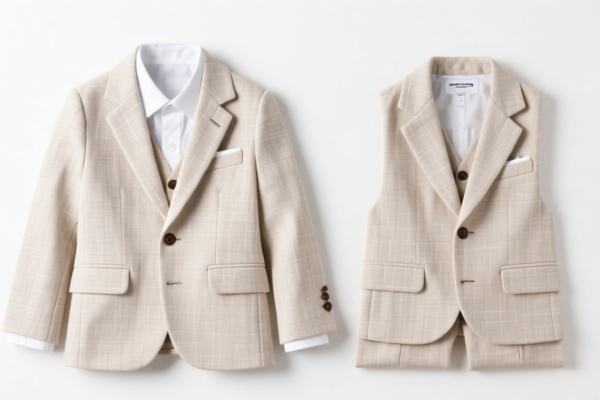

AI Analysis
👔👶 Boys' Suit Sets (Children's & Baby Suits)
🌐 HS Code Reference & Clearance Guide | 2026 Latest Tariff Breakdown | Professional Customs Strategy
📌 Part 1: Product Definition & Classification: Do You Really Know "Boys' Suit Sets"?
Boys' suit sets are a classic category in children's formal wear, often worn for weddings, ceremonies, school events, or holidays. In international trade, they are classified not just by "suit" but by fabric composition, knitted vs. woven, and intended age group (children vs. babies).
Key Distinctions in HS Code Classification:
-
Knitted vs. Woven:
- Knitted (e.g., jersey, sweatshirt fabric) → Classified under Chapter 61 (Articles of Knitting or Crocheting).
- Woven (e.g., cotton, wool, synthetic suit fabric) → Classified under Chapter 62 (Articles Not Knitted or Crocheted).
-
Material Composition:
- Synthetic Fibers (Polyester, Nylon, etc.): Higher tariff risks due to trade policies.
- Cotton/Blends: Generally lower base tariffs, but still subject to surcharges.
-
Age Group:
- Children's Sets (Age > 36 months): Typically 6209 or 6111/6103/6104.
- Infant Sets (Age ≤ 36 months): Often fall under specific infant classifications like 6111 or 6209.
⚠️ Critical Classification Point:
- Boys' Knitted Suit Sets (e.g., knitted jacket + trousers) → 6111.30 or 6103.10/6103.42.
- Woven Boys' Suit Sets → 6209.30.
- Fabric Matters: Synthetic fibers trigger higher "Add-on Tariffs" (122 Clause, Section 301) compared to cotton blends.
📦 Part 2: HS Code Classification Details (2026 Latest Tariff Reference)
Based on the provided data, here is the authoritative breakdown for Boys' Suit Sets:
| HS Code | Product Description | Fabric/Structure | Material Inference | Total Tariff Rate |
| :--- | :--- | :--- | :--- :--- |
| 6209.30.30.20 | Children's Suit Sets (Woven) | Woven, Set form | Synthetic Fibers | 33.5% |
| 6111.30.50.20 | Children's Suit Sets (Knitted) | Knitted, Set form | Synthetic Fibers | 33.5% |
| 6103.10.60.15 | Boys' Knitted Suits | Knitted Trousers | Synthetic/Blended | 26.9% |
| 6103.42.10.40 | Boys' Knitted Suits | Knitted Trousers | Cotton or Cotton Blend | 33.6% |
| 6111.20.50.00 | Boys' Knitted Suits | Knitted Pants | Cotton or Cotton Blend | 32.4% |
🔍 Deep Dive into the Codes:
-6209.30.30.20: Specifically for woven children's sets made of synthetic fibers. High tariff due to synthetic content + US trade policies.
-6111.30.50.20: Knitted children's sets, also synthetic. Same tariff as woven synthetics (33.5%).
-6103.10.60.15: Boys' knitted suit pants (specifically synthetic). Lowest base tax (9.4%) but still hit with surcharges.
-6103.42.10.40: Boys' knitted suit pants made of Cotton. Interestingly, the total tariff is slightly higher (33.6%) due to a higher base duty (16.1%).
-6111.20.50.00: Knitted pants (likely for younger boys or infants) made of Cotton. Total tax is 32.4%.
💰 Part 3: 2026 Tariff Rate Breakdown (Including Surcharges)
✅ Applicable Country: USA (US)
✅ Origin: China (CN)
✅ Effective Date: November 10, 2025 onwards (including subsequent imports)
🎯 1. Synthetic Fiber Suit Sets (6209.30.30.20 & 6111.30.50.20)
| Item | Detail |
|---|---|
| Base Duty (MFN) | 16.0% |
| Section 301 Surcharge | +7.5% |
| Section 122 Clause (China) | +10.0% |
| Total Tariff | 33.5% |
| Calculation | CIF Value × 33.5% |
| De Minimis Exemption? | ❌ No (Denied) |
| Legal Path | USITC:6209.30.30.20 → 301 Section 122 → IEEPA |
📌 Explanation:
- Why 33.5%? The base duty for synthetic children's wear is 16%.
- The "Triple Whammy": It is hit by Section 301 (7.5%) AND the specific China-specific "122 Clause" (10%).
- Risk: Synthetic fibers are the most heavily targeted material in the current trade war.
🎯 2. Cotton/Blend Knitted Sets (6111.20.50.00 & 6103.42.10.40)
| Item | Detail |
|---|---|
| Base Duty (MFN) | 14.9% – 16.1% |
| Section 301 Surcharge | +7.5% |
| Section 122 Clause (China) | +10.0% |
| Total Tariff | 32.4% – 33.6% |
| Calculation | CIF Value × Total Rate |
| De Minimis Exemption? | ❌ No (Denied) |
📌 Note:
- Even Cotton suits face high tariffs because the Section 301 and 122 Clause add-ons are applied on top of the base rate.
-6103.42.10.40has a higher base rate (16.1%) than6111.20.50.00(14.9%), making its total tax slightly higher.
🎯 3. Boys' Knitted Suit Pants (6103.10.60.15) - Synthetic
| Item | Detail |
|---|---|
| Base Duty (MFN) | 9.4% |
| Section 301 Surcharge | +7.5% |
| Section 122 Clause (China) | +10.0% |
| Total Tariff | 26.9% |
| Calculation | CIF Value × 26.9% |
📌 Advantage:
- This is the lowest tax rate in the list (26.9%) because the base duty for "Boys' Knitted Suits" (6103) is lower (9.4%) compared to "Children's Sets" (16.0%).
- Strategy: If the product can be classified as "Suits" rather than "Sets" or if the item count allows separation, the tariff drops significantly.
🛠️ Part 4: Customs Clearance Practical Advice (Avoiding Pitfalls)
✅ 1. Document Checklist (Must-Haves)
| Document | Requirement | Why It's Critical |
|---|---|---|
| ✅ Fabric Content Label | ✔️ Mandatory | Must explicitly state "100% Synthetic" or "60% Cotton, 40% Polyester". Mislabeling triggers penalties. |
| ✅ Product Photos (Flat & Wear) | ✔️ | Must clearly show "Suit Set" (jacket + pants) vs. "Pants only". |
| ✅ Size Chart | ✔️ | Crucial to prove it's "Children's/Baby" (6209/6111) vs. "Boys" (6103). |
| ✅ Commercial Invoice | ✔️ | Must use precise terminology: "Boys' Knitted Suit Set, 100% Polyester". |
| ✅ Packing List | ✔️ | Must match the invoice count exactly. |
✅ 2. Declaration Strategy (Key Mantra)
🔥 "Know the Fabric, Split the Set, Name it Right, Save the Tax!"
| Scenario | Correct Classification | Wrong Declaration | Consequence |
|---|---|---|---|
| Woven Suit Set (Synthetic) | 6209.30.30.20 (33.5%) |
"Boys' Pants" (6103) | Customs Penalty + Back Taxes |
| Knitted Suit Set (Synthetic) | 6111.30.50.20 (33.5%) |
"Boys' Suits" (6103) | Audit Risk (6103 is lower) |
| Separate Items (Jacket + Pants) | 6209.30.30.20 + 6103.10.60.15 |
"Suit Set" (Single Code) | Missed Optimization (Lower tax on pants) |
| Cotton Knitted Pants | 6111.20.50.00 (32.4%) |
"Synthetic" | Overpayment (33.6% vs 32.4%) |
✅ 3. Special Scenarios & Tips
| Scenario | Action |
|---|---|
| OEM Custom Suits | Provide design sketches to prove "suit" status (jacket + pants) vs. casual wear. |
| Mixed Material Sets | If a set has a synthetic jacket and cotton pants, split the shipment. Do not declare as one "Set" with mixed materials; it often defaults to the highest tax component. |
| Infant vs. Child | Ensure the age limit (36 months) is strictly defined on labels. "Infant" codes sometimes have different duty structures. |
| "122 Clause" Impact | This is a specific punitive tariff on Chinese goods. No exemption exists for children's clothing in this category. |
🌍 Part 5: Global Market Comparison (2026 Context)
| Region | Recommended HS Code | Base Duty | Additional Tax (China) | Total Cost | Note |
|---|---|---|---|---|---|
| 🇺🇸 USA | 6209.30.30.20 |
16.0% | +17.5% | 33.5% | High punitive taxes apply. |
| 🇨🇳 China | 6209.30.30.20 |
10% - 15% | 0% | ~15% | Domestic import duties lower. |
| 🇪🇺 EU | 6209.30.30.20 |
12% | 0% | ~12% | No Section 301/122. |
| 🇯🇵 Japan | 6209.30.30.20 |
12% | 0% | ~12% | No additional surcharges. |
| 🇦🇺 Aus | 6209.30.30.20 |
5% | 0% | ~5% | Very competitive. |
📌 Conclusion:
- The US is the most expensive market for Chinese-made boys' suit sets due to the 17.5% combined surcharge (301 + 122).
- Diversification: Consider manufacturing in Vietnam, Bangladesh, or Mexico to bypass the Section 301/122 surcharges (though Vietnam/Mexico may face other scrutiny).
📌 Part 6: Common Mistakes & Pitfalls (Lessons Learned)
❌ Mistake 1: Declaring a "Woven Suit Set" as "Knitted Pants" (6209 → 6103)
👉 Result: Customs Audit. If the fabric is woven, you cannot claim knitted rates.
❌ Mistake 2: Claiming "100% Cotton" on a polyester blend.
👉 Result: Seizure or Fine. Misdeclaration of material content is a felony in many jurisdictions.
❌ Mistake 3: Assuming "Infant" (0-24 months) gets a lower rate automatically.
👉 Result: Rejection. The code 6111 covers infants, but the material still dictates the surcharge.
❌ Mistake 4: Not separating "Jacket" and "Pants" in a set.
👉 Result: Higher Total Tax. Sometimes splitting the invoice (if legally distinct items) allows different classification, though "Set" rules often force a single code.
✅ Correct Practice:
"Boys' Knitted Suit Set, 100% Polyester, Age 3-5 Years, Includes 1 Jacket + 1 Trouser, Made in China"
HS Code:6111.30.50.20| Tax: 33.5%
🎯 Part 7: Final Conclusion
🎯 The Golden Rule:
"Material + Age + Form = Tax Rate"
- Synthetic = 33.5% (High Risk)
- Cotton = 32.4% - 33.6% (Still High)
- Pants Only = 26.9% (Best Rate)🚀 Action Plan:
1. Verify Fabric: Ensure labels match the HS Code.
2. Check Age: Confirm if it's "Children's" (6209/6111) or "Boys" (6103).
3. Calculate Landed Cost: Factor in the 33.5% US tariff immediately.
4. Consider Supply Chain Shift: If volume is high, look at non-China origins to avoid Section 122.
📣 Next Steps:
📞 Contact a Customs Broker: Verify the exact fabric composition before shipping.
📋 Request Pre-Ruling: Ask US Customs for a binding ruling on your specific suit set design.
💡 Optimize Packaging: If selling separately, consider shipping jackets and pants as separate SKUs to see if classification changes.
✨ Precision Classification = Profit Protection!
💼 Every dollar saved on duty is pure profit!
Customer Reviews
About HS Code Classification
The Harmonized System (HS) is an internationally standardized nomenclature developed by the World Customs Organization (WCO) to classify traded products. Over 200 countries use the HS system as the basis for customs tariffs, trade statistics, and import/export regulations.
Each HS code follows a hierarchical structure:
- Chapter (2 digits) — Broad category of goods (e.g., Chapter 84: Machinery and Mechanical Appliances)
- Heading (4 digits) — More specific grouping within the chapter
- Subheading (6 digits) — Internationally standardized breakdown, used by all WCO member countries
- National subdivisions (8-10 digits) — Country-specific extensions for further classification, such as US HTSUS 10-digit codes
Correct HS code classification is essential for smooth customs clearance, accurate duty payment, and compliance with trade regulations. Misclassification can lead to customs delays, overpayment of duties, or penalties.
When importing from CN to US, the applicable tariff rates may include:
- Most-Favored-Nation (MFN) rate — The standard duty rate applied to WTO members
- General rate — Applied to countries without trade agreements
- Trade remedy duties — Additional tariffs such as Section 301 (anti-dumping), Section 232 (national security), or countervailing duties
The information provided on this page is for reference purposes only. For official classification, please consult with your local customs authority or a licensed customs broker.