Boys' Summer Clothing Set
CN → US| HS Code | Tariff Rate | Origin | Destination | Doc |
|---|---|---|---|---|
| 6211325050 | 25.6% | CN | US | Official Doc |
| 6211335035 | 33.5% | CN | US | Official Doc |
| 6209303020 | 33.5% | CN | US | Official Doc |
| 6111305020 | 33.5% | CN | US | Official Doc |
| 6109100014 | 34.0% | CN | US | Official Doc |
| 6209205035 | 26.8% | CN | US | Official Doc |
Product Images
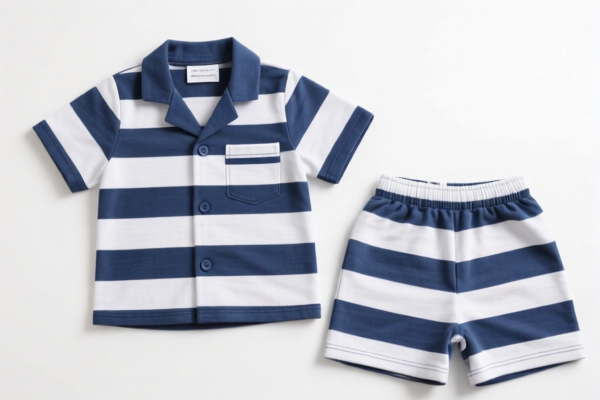
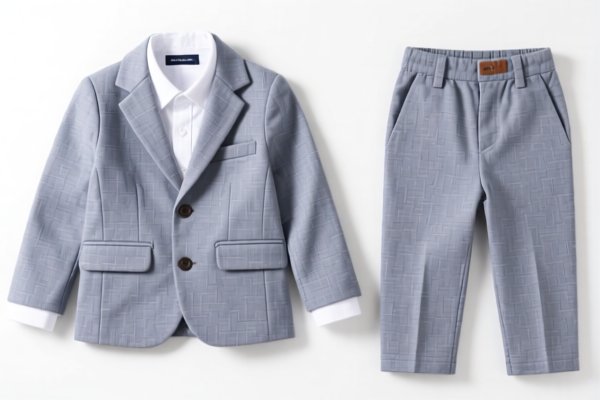
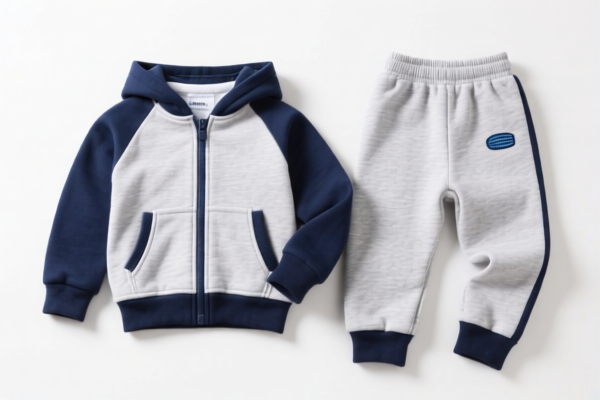
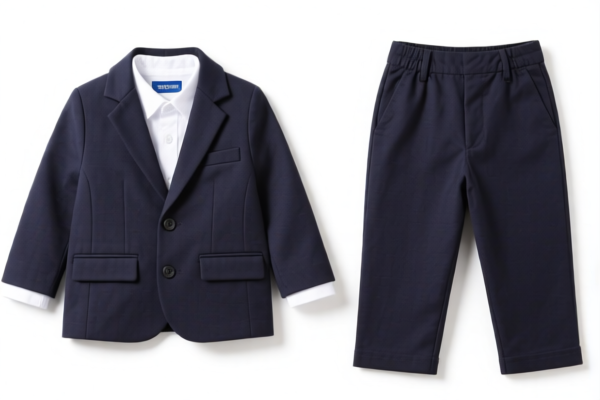
AI Analysis
🌞 Boys' Summer Clothing Set (Children's Sportswear)
🌐 HS Code Reference & Customs Clearance Guide | 2026 Tariff Rate Analysis | Professional Strategy
📌 I. Product Definition: What Exactly is "Boys' Summer Clothing Set"?
Boys' Summer Clothing Sets are coordinated two-piece (or more) garments designed for male children, specifically tailored for warm-weather activities, sports, or casual wear. In international trade, the classification depends heavily on: 1. Fabric Composition: Is it natural fiber (Cotton) or synthetic (Polyester/Spandex)? 2. Knitting Method: Is it knitted (Jersey/T-shirt style) or woven (Trousers/Shirt style)? 3. Target Audience: "Boys" vs. "Children" (HS codes often distinguish based on age/size, but "Boys' Set" generally falls under "Children" categories in the data provided).
⚠️ Critical Classification Logic: - Woven Sets (e.g., cotton pants + polo shirt): Typically fall under Chapter 62. - Knitted Sets (e.g., cotton t-shirt + shorts): Typically fall under Chapter 61. - Material Matters: Cotton (Chapter 6211/6111) vs. Synthetic (Chapter 6211/6111) triggers different tax rates.
📦 II. HS Code Classification Matrix (2026 Data Analysis)
Based on the provided trade data, here is the precise breakdown for Boys' Summer Clothing Sets:
| HS Code | Product Description | Material Type | Garment Construction | Total Tax Rate |
|---|---|---|---|---|
| 6211.32.50.50 | Boys'/Children's Sports Set (Woven) | Cotton or other natural fibers | Woven | 25.6% |
| 6211.33.50.35 | Boys'/Children's Sports Set (Woven) | Synthetic or Man-made fibers | Woven | 33.5% |
| 6209.30.30.20 | Children's Set (Woven) | Synthetic fibers | Woven | 33.5% |
| 6111.30.50.20 | Children's Set (Knitted) | Synthetic fibers | Knitted | 33.5% |
| 6109.10.00.14 | Children's Set (Knitted) | Synthetic fibers | Knitted | 34.0% |
🔍 Decoding the Codes: - 6211: Outer garments, including sports clothing (Woven). - 6209: Articles of apparel and clothing accessories, for babies/children (Woven). - 6111: Articles of apparel and clothing accessories, knitted or crocheted (Synthetic). - 6109: T-shirts, singlets, etc., knitted (often used for "sets" if a shirt is the main component).
💰 III. 2026 Tariff Rate Breakdown & Policy Details
✅ Applicable Market: USA (Import from China)
✅ Product Category: Children's Boys' Summer Clothing
✅ Effective Date: Current / 2026 Projection based on active Section 232 & 301 clauses.
The total tax rate is a cumulative sum of three distinct layers:
1. The "Base" Layer (MFN Tariff)
- Cotton Sets: 8.1% (e.g., 6211.32.50.50)
- Synthetic Sets: 16.0% - 16.5% (e.g., 6211.33.50.35, 6209.30.30.20, 6111.30.50.20, 6109.10.00.14)
- Note: Synthetic fibers attract a higher base tariff due to competition with domestic production.
2. The "Section 232" / "Added" Tariff (+7.5%)
- Rate: 7.5%
- Reason: This is the "Section 232" steel/aluminum or general trade safeguard tariff applied to specific textile categories to protect domestic industries or retaliate against unfair trade practices.
- Applicability: Mandatory for all items in the provided dataset.
3. The "Section 301" / "122 Clause" Tariff (+10%)
- Rate: 10%
- Reason: This refers to the "Section 301" retaliatory tariffs on Chinese imports (often categorized under "122 clauses" in specific customs filings or legacy data). It targets China-originating goods.
- Applicability: Mandatory for all items in the provided dataset.
📊 Total Tax Calculation Formula
| Item Category | Base Rate | + Added (7.5%) | + 122 Clause (10%) | TOTAL TAX |
|---|---|---|---|---|
| Cotton Boys' Set | 8.1% | 7.5% | 10% | 25.6% |
| Synthetic Boys' Set | 16.0% | 7.5% | 10% | 33.5% |
| Knitted Synthetic Set | 16.5% | 7.5% | 10% | 34.0% |
📌 Crucial Warning: - No De Minimis Exemption: The provided data explicitly states these items are not eligible for the $800 de minimis exemption. Every single item must be declared and taxed. - Cumulative Impact: The "122 Clause" (10%) and "Added" (7.5%) tariffs are additive, not percentage-of-percentage. They significantly increase the landed cost, especially for synthetic blends.
🛠️ IV. Customs Clearance Strategy (Pro Tips)
✅ 1. Preparation Checklist (Mandatory Documents)
To avoid delays at US Customs (CBP), ensure you have: | Document | Requirement | Why It Matters | | :--- | :--- | :--- | | Commercial Invoice | Must list HS Code, Country of Origin (China), and Value | Prevents "Valuation" disputes. | | Packing List | Must detail quantity per size/color | CBP checks against HS Code volume. | | Composition Label | Critical: Must explicitly state % Cotton vs. % Polyester | Determines if you pay 25.6% or 33.5%. | | Brand Authorization | If applicable | Avoids "Counterfeit" seizure. | | Child Safety Certs | CPSIA / ASTM F963 | Mandatory for children's wear in the US. |
✅ 2. Classification Strategy (How to Save Money)
- Strategy A: Fabric Optimization
- If possible, switch to 100% Cotton for boys' sets.
- Savings: 7.9% (33.5% vs 25.6% total tax).
- Trade-off: Cotton may be heavier/more expensive, but tax savings are significant.
- Strategy B: Avoid "Mixed" Ambiguity
- Do not label a set as "Polyester Blend" if it contains 49% Cotton.
- Risk: CBP may reclassify as synthetic (33.5%) if the synthetic content is deemed dominant or if the blend rule is misapplied. Be precise: "50% Cotton, 50% Polyester".
✅ 3. Declaration Language (The "Perfect" Phrase)
When filing, do not just write "Boys' Clothes." Use:
"Boys' Woven Sports Set (Two-Piece), 100% Cotton, Size 4-14, Origin: China. HS Code: 6211.32.50.50."
If Synthetic:
"Boys' Knitted Summer Set, 100% Polyester, Size 2-10, Origin: China. HS Code: 6111.30.50.20."
🚫 V. Common Pitfalls & "Red Flags"
| ❌ Mistake | 🚨 Consequence | 💡 Solution |
|---|---|---|
| Wrong Material Claim | Claiming "Cotton" but fabric is "Polyester" | Tax jumps from 25.6% → 33.5% + Potential Penalty |
| Ignoring Knitting vs. Woven | Misclassifying a Knitted Set as Woven (61xx vs 62xx) | Leads to 100% Audit and seizure of goods |
| Omitting "122 Clause" | Not declaring the 10% surcharge | CBP Fine + Interest on unpaid tax |
| Ignoring "Boys" vs "Children" | Some codes are gender-neutral, but "Boys" sets might fall under specific "Children" codes (6209/6111) if age/size dictates | Match the Gender Code: Use 6211/6111 for "Boys", 6209 for general "Children" if age < 2 (check specific size rules) |
🌍 VI. Market Comparison (USA vs. Rest of World)
| Market | Typical Base Tax | Additional Tariffs | Total Effective Rate (Synthetic) | Verdict |
|---|---|---|---|---|
| 🇺🇸 USA | 16.0% | +7.5% (Addl) + 10% (122) | 33.5% - 34.0% | 🔴 High Risk/High Cost |
| 🇪🇺 EU | ~12% | No Section 232/301 | ~12-15% | 🟢 Better for Exports |
| 🇨🇦 Canada | ~12% | No Section 232/301 | ~12-15% | 🟢 Better for Exports |
| 🇦🇺 Australia | ~10% | No Section 232/301 | ~10-12% | 🟢 Better for Exports |
💡 Insight: The USA is currently the most expensive market for Chinese boys' summer clothing due to the specific Section 232 and Section 301叠加 (stacking). - Recommendation: If your target is the US, consider Cotton options to minimize the 8.1% vs 16% base gap. - Alternative: If selling to the EU/Canada, avoid the "122 Clause" and "Added Tax" entirely.
📌 VII. Final Conclusion & Action Plan
🎯 Key Takeaway:
"Cotton saves you 8%, Synthetic hits you with 34%."
The 7.5% Added Tax and 10% 122 Clause Tax are unavoidable for China-origin goods, but the Base Tariff is your only lever to control costs.
✅ Action Checklist for Importers: 1. Verify Fabric: Confirm 100% Cotton vs. Synthetic % immediately. 2. Check Construction: Is it Knitted (61xx) or Woven (62xx)? 3. Calculate Landed Cost: Use the 33.5% rate for synthetic and 25.6% for cotton. 4. Prepare Safety Docs: Ensure CPSIA compliance is attached to the shipment. 5. Pre-Arrange: If shipping large volumes, apply for CBP Prior Ruling on the HS Code to avoid hold-ups.
✨ Pro Tip: For maximum savings, consider sourcing boys' sets from Vietnam or Bangladesh (if rules of origin allow) to potentially bypass the 10% "122 Clause" and 7.5% "Added Tax," though base rates may vary.
💼 Your Every Penny Counts!
Precision in HS Code = Precision in Profit.
🚀 Ship Smarter, Not Harder.
Customer Reviews
About HS Code Classification
The Harmonized System (HS) is an internationally standardized nomenclature developed by the World Customs Organization (WCO) to classify traded products. Over 200 countries use the HS system as the basis for customs tariffs, trade statistics, and import/export regulations.
Each HS code follows a hierarchical structure:
- Chapter (2 digits) — Broad category of goods (e.g., Chapter 84: Machinery and Mechanical Appliances)
- Heading (4 digits) — More specific grouping within the chapter
- Subheading (6 digits) — Internationally standardized breakdown, used by all WCO member countries
- National subdivisions (8-10 digits) — Country-specific extensions for further classification, such as US HTSUS 10-digit codes
Correct HS code classification is essential for smooth customs clearance, accurate duty payment, and compliance with trade regulations. Misclassification can lead to customs delays, overpayment of duties, or penalties.
When importing from CN to US, the applicable tariff rates may include:
- Most-Favored-Nation (MFN) rate — The standard duty rate applied to WTO members
- General rate — Applied to countries without trade agreements
- Trade remedy duties — Additional tariffs such as Section 301 (anti-dumping), Section 232 (national security), or countervailing duties
The information provided on this page is for reference purposes only. For official classification, please consult with your local customs authority or a licensed customs broker.