Boys' Sweater Sets
CN → US| HS Code | Tariff Rate | Origin | Destination | Doc |
|---|---|---|---|---|
| 6111305020 | 33.5% | CN | US | Official Doc |
| 6110202025 | 34.0% | CN | US | Official Doc |
| 6110202015 | 26.5% | CN | US | Official Doc |
| 6111206020 | 25.6% | CN | US | Official Doc |
Product Images

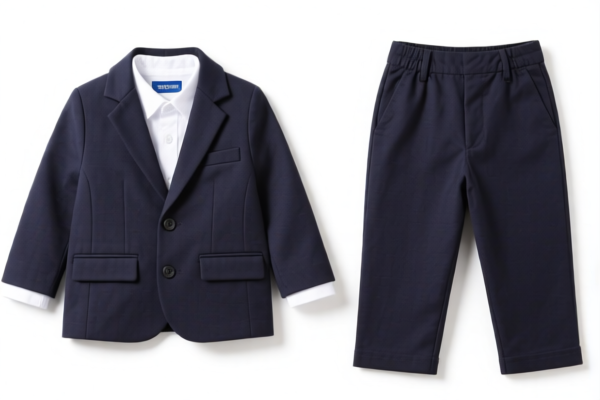
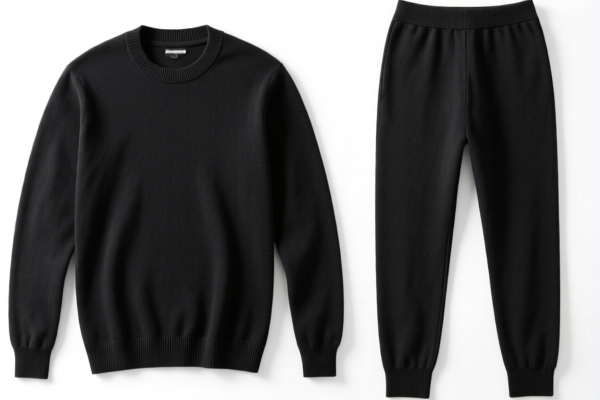
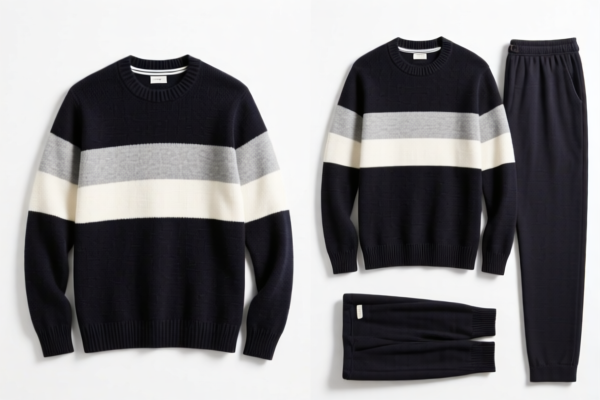
AI Analysis
👶🧶 Boys' Sweater Sets: The Ultimate HS Code & Tax Master Guide (2026)
🌐 HS Code Classification & Tariff Decoded | 2026 Trade Compliance | Strategic Customs Strategy
📌 Focus: Boys' Knitted & Crocheted Garments (Sets)
Boys' Sweater Sets are high-demand apparel items in global trade, typically consisting of a knitted top and matching bottom. However, the material composition (Cotton vs. Synthetic) dictates the HS Code and dramatically alters the total tax burden (ranging from 25.6% to 34.0%).
⚠️ Critical Insight:
- Cotton Sets (6110.20...): Generally face high base tariffs + Section 301/IEEPA add-ons, EXCEPT for specific sub-codes that enjoy a 0% add-on. - Synthetic/Blended Sets (6111.30/6111.20...): Often face high base tariffs (16%) or lower (8.1%) depending on the fiber, PLUS mandatory add-ons. - The "122 Clause": A mandatory +10% surcharge on all these codes (Section 122 of the Trade Act), applied regardless of material.
📦 II. Detailed HS Code Breakdown & Tax Analysis (2026)
| HS Code | Product Description & Material | Total Tax Rate | Tax Composition (The "Why") | Status |
|---|---|---|---|---|
| 6111.30.50.20 | Synthetic/Mixed Fiber Knitted Sets (e.g., Polyester, Acrylic blends) |
33.5% | Base (16.0%) + Add-on (7.5%) + Clause 122 (10%) | ⚠️ High Risk |
| 6110.20.20.25 | Cotton Knitted Sets (Standard 100% Cotton or High Cotton Content) |
34.0% | Base (16.5%) + Add-on (7.5%) + Clause 122 (10%) | ⚠️ Highest |
| 6110.20.20.15 | Cotton Knitted Sets (Optimized) (Specific sub-classification for Cotton) |
26.5% | Base (16.5%) + Add-on (0.0%) + Clause 122 (10%) | ✅ Best Rate |
| 6111.20.60.20 | Mixed Fiber (Cotton/Wool/Synthetic) Knitted Sets (Complex blends) |
25.6% | Base (8.1%) + Add-on (7.5%) + Clause 122 (10%) | ✅ Lowest Rate |
🔍 Deep Dive into Tax Logic: 1. Base Tariff: The standard Most-Favored-Nation (MFN) duty based on material (e.g., 16.5% for Cotton, 8.1% for specific blends). 2. "Add-on" (Section 301/Trade Act): A 7.5% surcharge applied to most textile categories from China, EXCEPT for
6110.20.20.15. 3. Clause 122 Surcharge: A mandatory 10% tariff applied universally to these specific sweater sets under recent trade enforcement actions.
💰 III. 2026 Tariff Strategy: How to Save Money
🎯 Scenario A: 100% Cotton Sets (The $7.50 Savings Strategy)
- Standard Path:
6110.20.20.25→ 34.0% Total - Optimized Path:
6110.20.20.15→ 26.5% Total - 💡 Savings: 7.5% (Avoids the 7.5% Add-on).
- Action: Ensure your Cotton Sets are classified under the specific subheading
.20.15. This requires precise material verification to prove it fits the "exempt from add-on" criteria.
🎯 Scenario B: Synthetic/Blended Sets (The Cost Trap)
- HS Code:
6111.30.50.20 - Total Tax: 33.5%
- Breakdown: 16% Base + 7.5% Add-on + 10% Clause 122.
- 💡 Insight: Even with a lower base tariff, the mandatory add-ons push the cost high.
🎯 Scenario C: Complex Blends (The Hidden Gem)
- HS Code:
6111.20.60.20 - Total Tax: 25.6%
- Breakdown: 8.1% Base + 7.5% Add-on + 10% Clause 122.
- 💡 Insight: Despite having "mixed fibers," the 8.1% Base Tariff is significantly lower than Cotton, resulting in the lowest total tax among the options.
🛠️ IV. Customs Clearance & Operational Strategy
✅ 1. Documentation Checklist (The "Must-Haves")
| Document | Requirement | Why It Matters |
|---|---|---|
| Material Composition Certificate | Critical | Must explicitly state % Cotton vs. Synthetic. Errors here lead to Re- classification and penalty fines. |
| Construction Diagram | Required | Proves it is a "Set" (top + bottom) vs. separate garments. |
| Knitting/Crochet Type | Required | Must confirm "Knitted" (Chapter 61) vs. "Woven" (Chapter 62). Sweater sets are Chapter 61. |
| Sample Photos | High Res | Must show tags, seams, and fabric texture for customs verification. |
✅ 2. Declaration Tactics (Pro Tips)
🚀 The "Set" Rule: If the top and bottom are sold separately but in the same package for retail, they MUST be declared as a set under 6111 or 6110. If declared separately, you risk higher individual tariffs.
🚀 The "Material Trap": - Do not write "Mixed Fabric" generically. - Write: "6110.20.20.15: 100% Cotton Boys' Knitted Sweater Set." - Write: "6111.20.60.20: 60% Cotton, 40% Polyester Boys' Knitted Set." - Ambiguity leads to the highest tax bracket (34.0%).
✅ 3. Special Clauses Explained
- 🔴 Clause 122 (10%): This is a mandatory surcharge on these specific HS codes. It is non-negotiable and applies to all four codes listed above. No duty drawback available for this portion.
- 🟡 Add-on (7.5%): This is the variable part. It applies to
6111.30.50.20,6110.20.20.25, and6111.20.60.20. Only6110.20.20.15is exempt. - 🟢 Base Tariff: The standard duty rate (8.1% - 16.5%) based on the material origin.
🌍 V. Global Market Comparison (2026)
| Region | Applicable HS Code | Base Duty | Add-ons | Total Est. | Strategy |
|---|---|---|---|---|---|
| 🇺🇸 USA | 6110/6111 Series | 8.1% - 16.5% | +7.5% / +10% | 25.6% - 34.0% | High Cost. Optimize for 6110.20.20.15. |
| 🇨🇳 China | 6110/6111 Series | 0% - 10% | None | 0% - 10% | Domestic market is cheap. |
| 🇪🇺 EU | 6110/6111 Series | 12% - 16% | None | 12% - 16% | No Section 301/122. Lower cost than US. |
| 🇯🇵 Japan | 6110/6111 Series | 14% - 17% | None | 14% - 17% | Stable. No hidden surcharges. |
📌 Conclusion: The US market is the most expensive due to the 7.5% Add-on + 10% Clause 122. For cotton sets, securing the
.15subcode is the single most important tax optimization step.
🎯 VI. Common Pitfalls & "Don'ts"
❌ Mistake 1: Declaring a Cotton Set as 6110.20.20.25 when it qualifies for 6110.20.20.15.
👉 Result: You pay an extra 7.5% on top of the 10% Clause 122. Overpaying 7.5% of CIF value.
❌ Mistake 2: Ignoring the 122 Clause. 👉 Result: Your calculator shows 25.6% or 33.5%, but you forget to add the 10%. Actual cost is 10% higher than expected.
❌ Mistake 3: Mixing "Knitted" (6111/6110) with "Woven" (6203/6204). 👉 Result: Sweater sets are knitted. If you declare them as woven, customs will reject the entry or force reclassification.
✅ Golden Rule:
"Cotton Check First! If 100% Cotton, aim for .20.15 to kill the 7.5% tax. If Synthetic, expect 33.5%."
📌 VII. Final Strategic Summary
| Goal | Recommended HS Code | Total Tax | Why? |
|---|---|---|---|
| 🏆 Lowest Cost | 6111.20.60.20 | 25.6% | Lowest base rate (8.1%) + Add-ons. |
| 🥈 Second Best | 6110.20.20.15 | 26.5% | Cotton exempt from 7.5% Add-on. |
| 🥉 Standard Cost | 6110.20.20.25 | 34.0% | Standard Cotton, high add-on. |
| ⚠️ High Cost | 6111.30.50.20 | 33.5% | Synthetic, high base + add-on. |
🚀 Action Plan:
1. Audit Materials: Verify if your sets are 100% Cotton, Synthetic, or Blended.
2. Select Code: Choose 6110.20.20.15 if Cotton (to save 7.5%).
3. Calculate Total: Add 10% Clause 122 to your budget immediately.
4. Prepare Docs: Have a material certificate ready to prove the composition.
📣 Pro Tip: If your production capacity allows, shift focus to the .15 (Cotton) or .20.60.20 (Blended) categories to maximize profit margins in the US market.
✨ Smart Trade = Correct HS Code + Full Tax Transparency. 💼 Don't let hidden surcharges eat your margins!
Customer Reviews
About HS Code Classification
The Harmonized System (HS) is an internationally standardized nomenclature developed by the World Customs Organization (WCO) to classify traded products. Over 200 countries use the HS system as the basis for customs tariffs, trade statistics, and import/export regulations.
Each HS code follows a hierarchical structure:
- Chapter (2 digits) — Broad category of goods (e.g., Chapter 84: Machinery and Mechanical Appliances)
- Heading (4 digits) — More specific grouping within the chapter
- Subheading (6 digits) — Internationally standardized breakdown, used by all WCO member countries
- National subdivisions (8-10 digits) — Country-specific extensions for further classification, such as US HTSUS 10-digit codes
Correct HS code classification is essential for smooth customs clearance, accurate duty payment, and compliance with trade regulations. Misclassification can lead to customs delays, overpayment of duties, or penalties.
When importing from CN to US, the applicable tariff rates may include:
- Most-Favored-Nation (MFN) rate — The standard duty rate applied to WTO members
- General rate — Applied to countries without trade agreements
- Trade remedy duties — Additional tariffs such as Section 301 (anti-dumping), Section 232 (national security), or countervailing duties
The information provided on this page is for reference purposes only. For official classification, please consult with your local customs authority or a licensed customs broker.