Boys' Synthetic Fiber Casual Pajamas
CN → US| HS Code | Tariff Rate | Origin | Destination | Doc |
|---|---|---|---|---|
| 6114303060 | 32.4% | CN | US | Official Doc |
| 6114303044 | 32.4% | CN | US | Official Doc |
| 6107220015 | 33.5% | CN | US | Official Doc |
| 6107220025 | 33.5% | CN | US | Official Doc |
| 6207220000 | 33.5% | CN | US | Official Doc |
Product Images
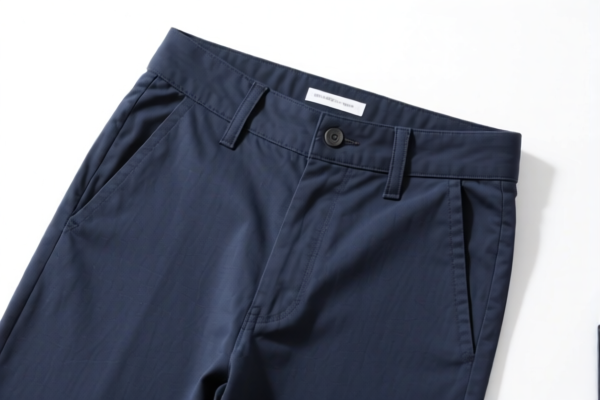
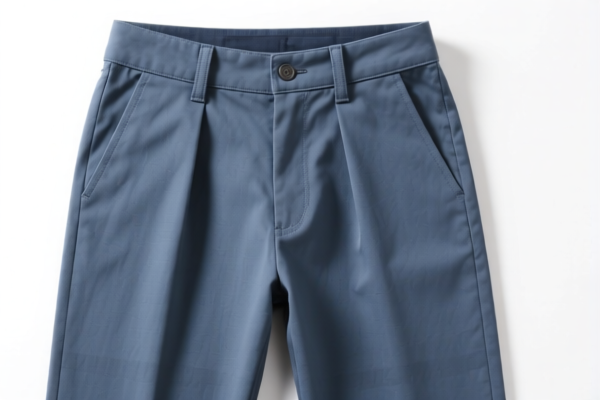
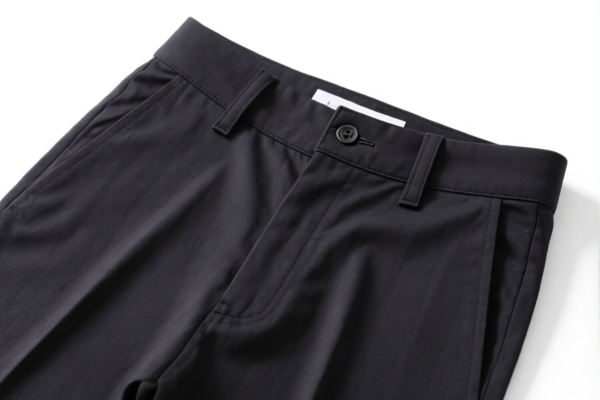
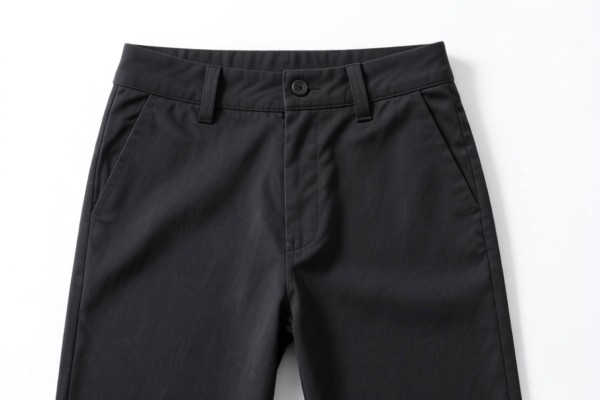
AI Analysis
👕 Boys' Synthetic Fiber Casual Pajamas (Long Sleeve)
🌐 HS Code Reference & Customs Clearance Guide | 2026 Latest Tariff Analysis | Professional Clearance Strategy
📌 I. Product Definition & Classification: Understanding "Synthetic Pajamas"
Boys' Long-Sleeve Synthetic Fiber Pajamas are garments specifically designed for sleepwear, made from man-made fibers (such as polyester, nylon, or acrylic). In international trade, the classification depends heavily on whether the garment is considered "Knitted" (Chapter 61) or "Woven" (Chapter 62), and its specific cut (Pajamas vs. One-piece/Sleepwear).
⚠️ Key Distinction:
- If the garment is Knitted/Knitted (common for casual pajamas) → Chapter 61
- If the garment is Woven (less common for standard pajamas, but possible for certain types) → Chapter 62
- Purpose: Must be clearly identified as "Pajamas" or "Sleepwear" to avoid misclassification as general loungewear or workwear.
📦 II. HS Code Classification Details (2026 Latest Tariff Authority Comparison)
Based on the provided data, here are the five possible HS Codes for Boys' Long-Sleeve Synthetic Fiber Pajamas, along with their specific classifications and tax implications.
| HS Code | Product Description Summary | Classification Logic | Total Tax Rate (China to US) |
|---|---|---|---|
| 6114.30.30.60 | Boys' long-sleeve synthetic pajamas; fits "Other men's/boys' knit clothing" category. | Knitted, Other | 32.4% |
| 6114.30.30.44 | Boys' long-sleeve synthetic pajamas; fits "Men's/boys' jumpsuits, workwear & similar garments." | Knitted, Jumpsuit-like | 32.4% |
| 6107.22.00.15 | Boys' long-sleeve synthetic pajamas; fits "Men's/boys' knitted pajamas." | Knitted, Pajamas | 33.5% |
| 6107.22.00.25 | Boys' long-sleeve synthetic pajamas; fits specific category, not blanket-style pajamas. | Knitted, Pajamas | 33.5% |
| 6207.22.00.00 | Boys' long-sleeve synthetic pajamas; purpose/object/material match completely. | Woven, Pajamas | 33.5% |
🔍 Important Note:
- The primary difference between 6114 and 6107/6207 is the construction method (Knitted vs. Woven) and the specific definition of the garment (General Clothing vs. Specific Sleepwear).
- 6114.30.30.60/44 and 6107.22.00.15/25 and 6207.22.00.00 all attract high tariffs due to additional duties.
💰 III. 2026 Latest Tariff Rate Breakdown (Including Surcharges & Policy Add-ons)
✅ Applicable Country: United States (US)
✅ Origin: China (CN)
✅ Effective Date: Includes subsequent imports from 2025 onwards
🎯 1. HS Code 6114.30.30.60 & 6114.30.30.44 — Knitted, Other/Similar Garments
| Item | Content |
|---|---|
| Basic Tariff | 14.9% (ad valorem) |
| Section 301 Surcharge | +7.5% |
| Section 122 Surcharge | +10% |
| Total Tax Rate | 32.4% |
| Tax Calculation | CIF Value × 32.4% |
| De Minimis Eligibility | ❌ No (High tariff items usually excluded from 800/2500 exemption) |
| Legal Basis Path | Section 301: 7.5% → Section 122: 10% → USITC: 6114.30.30.60/44 |
📌 Explanation:
- "Basic Tariff 14.9%": Standard MFN duty for knit synthetic garments.
- "Section 301 Surcharge 7.5%": Additional tariff under U.S. Trade Act Section 301 against China.
- "Section 122 Surcharge 10%": Additional tariff under IEEPA Section 122, often applied to specific textile categories.
- Combined Total: 32.4%. This is a high tariff level. Cost planning must account for this.
🎯 2. HS Code 6107.22.00.15 & 6107.22.00.25 — Knitted Pajamas (Men's/Boys')
| Item | Content |
|---|---|
| Basic Tariff | 16.0% (ad valorem) |
| Section 301 Surcharge | +7.5% |
| Section 122 Surcharge | +10% |
| Total Tax Rate | 33.5% |
| Tax Calculation | CIF Value × 33.5% |
| De Minimis Eligibility | ❌ No |
| Legal Basis Path | Section 301: 7.5% → Section 122: 10% → USITC: 6107.22.00.15/25 |
📌 Note:
- The basic tariff is slightly higher (16.0% vs. 14.9%) compared to 6114.
- Surcharges remain the same (7.5% + 10%).
- Total: 33.5%. This is the highest tax rate in the dataset. Misclassification here will increase costs.
🎯 3. HS Code 6207.22.00.00 — Woven Pajamas (Men's/Boys')
| Item | Content |
|---|---|
| Basic Tariff | 16.0% (ad valorem) |
| Section 301 Surcharge | +7.5% |
| Section 122 Surcharge | +10% |
| Total Tax Rate | 33.5% |
| Tax Calculation | CIF Value × 33.5% |
| De Minimis Eligibility | ❌ No |
| Legal Basis Path | Section 301: 7.5% → Section 122: 10% → USITC: 6207.22.00.00 |
📌 Note:
- If the pajamas are Woven (not knitted), they fall under Chapter 62.
- The tax structure is identical to the knitted pajamas (6107).
- Total: 33.5%. Ensure the fabric type (Woven vs. Knitted) is correctly declared.
🛠️ IV. Customs Clearance Practical Advice (Practical Pitfall Avoidance Guide)
✅ 1. Required Documentation Checklist (All are Mandatory)
| Document | Mandatory? | Explanation |
|---|---|---|
| ✅ Product Specification Sheet | ✔️ | Must include: Material composition (e.g., 100% Polyester), Knitted/Woven type, Gender (Boys'), Purpose (Sleepwear). |
| ✅ Garment Diagram/Pattern | ✔️ | To prove it is "Pajamas" and not "Workwear" or "General Loungewear." |
| ✅ Product Photos (Including Label) | ✔️ | Clear image of size tag, material tag, and care label. |
| ✅ Commercial Invoice | ✔️ | Must explicitly state "Boys' Synthetic Fiber Pajamas, Knitted/Woven, Long Sleeve." |
| ✅ Packing List | ✔️ | Confirm quantities and packaging details. |
| ✅ Certificate of Origin (CO) | ✔️ | If applicable for origin verification. |
✅ 2. Declaration Tips (Key Mantras)
🔥 “Fabric Type First, Purpose Clear, HS Code Precise, Tax Lowered!”
| Scenario | Correct Declaration | Error to Avoid |
|---|---|---|
| Knitted Pajamas | 6107.22.00.15 or 6114.30.30.60 |
Misdeclare as Woven (6207) → Potential penalty or delay |
| Woven Pajamas | 6207.22.00.00 |
Misdeclare as Knitted (6107) → Classification Error |
| Pajamas vs. Workwear | Clearly state "Sleepwear" or "Pajamas" | Declare as "Workwear" or "Jumpsuit" (6114.30.30.44) → May attract same tax but risk audit |
| Material Composition | Specify "Synthetic Fiber" (e.g., Polyester) | Vague terms like "Fabric" → Customs may reclassify or delay |
✅ 3. Special Case Handling
| Scenario | Handling Advice |
|---|---|
| OEM Custom Pajamas | Provide customer order + design drawings. Ensure "Boys' Sleepwear" is clearly marked. |
| Mixed Pack (Boys' & Girls') | Declare separately. Girls' pajamas may have different HS codes/tax rates. |
| Blanket-Style Pajamas | If it resembles a blanket (wearable blanket), it may fall under different categories. Ensure it fits "Pajamas" definition. |
| Samples for Clearance | Even samples may be subject to duties if not declared correctly. Ensure documentation matches commercial shipments. |
🌍 V. Global Main Market Clearance Comparison (2026 Latest)
| Country/Region | Recommended HS Code | Tariff Rate | Certification Requirements | Remarks |
|---|---|---|---|---|
| 🇺🇸 USA | 6107.22.00.15 / 6114.30.30.60 / 6207.22.00.00 |
32.4% - 33.5% | CPSIA, Prop 65, Flammability Standards | High tariffs due to Section 301 & 122. |
| 🇨🇳 China | 6107.22.00 / 6114.30.30 / 6207.22.00 |
~10-16% | CCC (if applicable), GB Standards | No additional surcharges. |
| 🇪🇺 EU | 6107.22 / 6114.30 / 6207.22 |
~12-16% | CE, REACH | No Section 301/122 surcharges. |
| 🇦🇺 Australia | 6107.22 / 6114.30 / 6207.22 |
~5-10% | ACCC Standards | Lower base rates. |
| 🇯🇵 Japan | 6107.22 / 6114.30 / 6207.22 |
~10-15% | PSE, STC | No additional surcharges. |
📌 Conclusion:
- The US is the most challenging market due to the 32.4%-33.5% total tariff.
- Other markets (EU, AU, JP) have lower base tariffs and no Section 301/122 surcharges.
- Cost Strategy: If targeting the US, consider supply chain adjustments (e.g., sourcing from non-China origins if possible) or price absorption.
📌 VI. Common Errors & Pitfall Avoidance Guide (Lessons Learned)
❌ Error 1: Declaring "Synthetic Fiber Garment" without specifying "Pajamas"
👉 Consequence: Customs may classify as general apparel (6114), leading to audits or delays.
✅ Fix: Always specify "Boys' Long-Sleeve Synthetic Fiber Pajamas."
❌ Error 2: Confusing Knitted vs. Woven
👉 Consequence: Incorrect HS Code selection (6107 vs. 6207). While tax rates are similar, classification errors can lead to penalties.
✅ Fix: Confirm fabric construction. Knitted = stretchy, looped. Woven = flat, no stretch.
❌ Error 3: Ignoring Section 301 & 122 Surcharges
👉 Consequence: Underestimating total landed cost.
✅ Fix: Always calculate CIF × (Basic + 301 + 122).
❌ Error 4: Missing Flammability Compliance
👉 Consequence: US Customs and CPSC may detain goods for non-compliance with sleepwear flammability standards.
✅ Fix: Ensure products meet 16 CFR Part 1610/1615/1616 standards.
🎯 VII. Conclusion: Professional Declaration, Cost Control, Efficiency!
🎯 Remember the Mantra:
🔹 "Fabric Type First, Purpose Clear, HS Code Precise, Tax Lowered!"
🔹 "301 & 122 Surcharges Add 17.5%, Plan Your Cost Wisely!"
🔹 "Sleepwear is Special, Don't Declare as General Apparel!"
📌 Pro Tip:
- If your pajamas are originating from Vietnam, Mexico, Thailand, or Malaysia, you may be eligible for lower or zero IEEPA/Section 301 surcharges.
- Consider Advance Ruling (Advance Classification Ruling) from US Customs (CBP) to confirm the exact HS Code and tax rate before shipment.
📣 Immediate Action:
📞 Contact a Professional Customs Broker + Provide Product Photos + Apply for HS Code Advance Ruling
🚀 Ensure Smooth Clearance, Efficient Overseas Shipping, and Maximized Profit!
✨ Professional Clearance Starts with Accurate Classification!
💼 Every Cent of Your Cost Deserves Precise Calculation!
Customer Reviews
About HS Code Classification
The Harmonized System (HS) is an internationally standardized nomenclature developed by the World Customs Organization (WCO) to classify traded products. Over 200 countries use the HS system as the basis for customs tariffs, trade statistics, and import/export regulations.
Each HS code follows a hierarchical structure:
- Chapter (2 digits) — Broad category of goods (e.g., Chapter 84: Machinery and Mechanical Appliances)
- Heading (4 digits) — More specific grouping within the chapter
- Subheading (6 digits) — Internationally standardized breakdown, used by all WCO member countries
- National subdivisions (8-10 digits) — Country-specific extensions for further classification, such as US HTSUS 10-digit codes
Correct HS code classification is essential for smooth customs clearance, accurate duty payment, and compliance with trade regulations. Misclassification can lead to customs delays, overpayment of duties, or penalties.
When importing from CN to US, the applicable tariff rates may include:
- Most-Favored-Nation (MFN) rate — The standard duty rate applied to WTO members
- General rate — Applied to countries without trade agreements
- Trade remedy duties — Additional tariffs such as Section 301 (anti-dumping), Section 232 (national security), or countervailing duties
The information provided on this page is for reference purposes only. For official classification, please consult with your local customs authority or a licensed customs broker.