Boys' Synthetic Fiber Casual Shirt
CN → US| HS Code | Tariff Rate | Origin | Destination | Doc |
|---|---|---|---|---|
| 6105201000 | 23.6% | CN | US | Official Doc |
| 6205302073 | 0.0% | CN | US | Official Doc |
| 6211335040 | 33.5% | CN | US | Official Doc |
| 6205302050 | 0.0% | CN | US | Official Doc |
| 6105202010 | 42.0% | CN | US | Official Doc |
Product Images
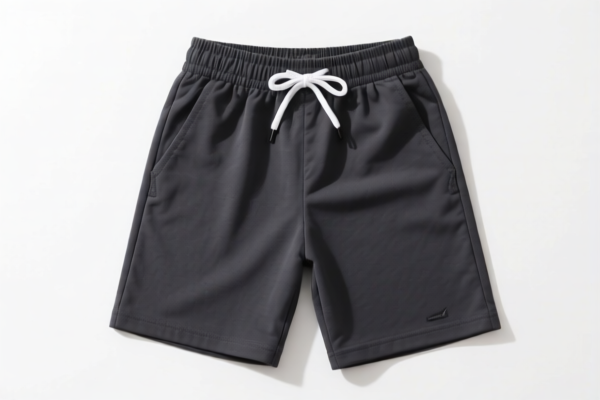
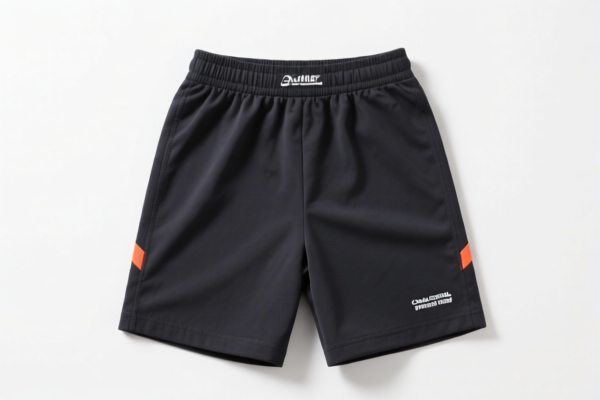
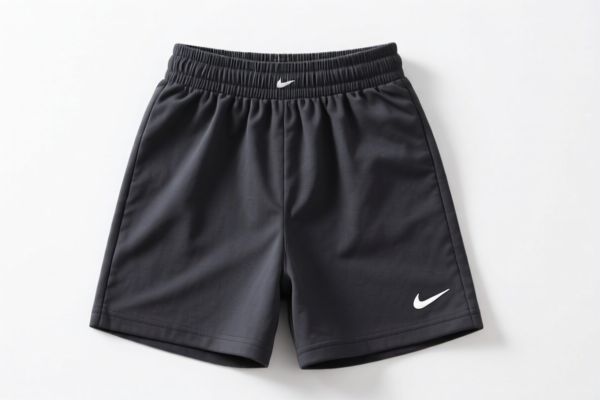
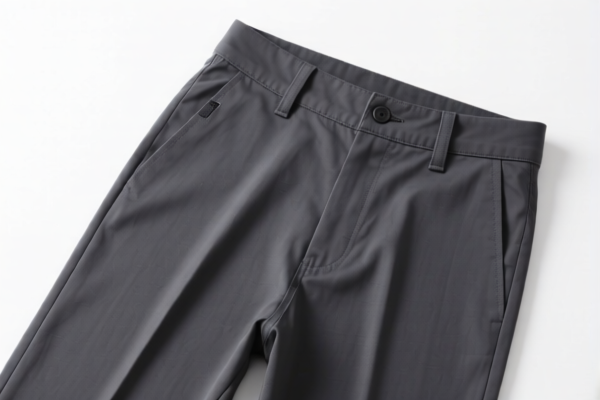
AI Analysis
👕 Boys' Synthetic Fiber Casual Shirts (The Ultimate HS Code & Tax Decoder)
🌐 HS Code Classification & US Customs Clearance Guide | 2025-2026 Tax Update | Strategic Tariff Analysis
📌 One, Product Definition & Classification: Is Your Shirt Really "Casual"?
Boys' Synthetic Fiber Casual Shirts are lightweight, durable garments primarily made from man-made fibers (e.g., polyester, rayon, nylon) designed for everyday wear. In US customs, the classification hinges on two critical factors:
1. Knitted vs. Woven: Knitted shirts fall under Chapter 61, Woven under Chapter 62.
2. Fiber Content: "Synthetic" or "Man-made" fibers trigger specific subheadings.
⚠️ Critical Distinction:
- Knitted (e.g., T-shirt style, jersey fabric) → HS 6105.xx (Men/Boys' Knitted)
- Woven (e.g., Button-down, Oxford, Dress shirt style) → HS 6205.xx or 6211.xx (Men/Boys' Woven)
- Material: If <100% cotton, it counts as "man-made" (Synthetic/Viscose).
📦 Two, HS Code Breakdown & Tax Rates (2025-2026 US Tariff Schedule)
✅ Target Market: United States (US)
✅ Origin: China (CN)
✅ Tax Effective Date: Current (Including 301 & 122 Clauses)
🎯 Group A: Knitted Synthetic Shirts (Chapter 61)
| HS Code | Product Description | Tax Rate | Base Tariff | 301 Additional (25%/15%) | Section 122 (10%) | Total Tax | Legal Basis |
|---|---|---|---|---|---|---|---|
6105.20.10.00 |
Men's/Boys' Knitted Shirts, Man-made Fiber, Synthetic | 23.6% | 13.6% | 0.0% | 10% | 23.6% | 13.6% Base + 10% Sec. 122 |
6105.20.20.10 |
Men's/Boys' Knitted Shirts, Man-made Fiber, Other Synthetic | 42.0% | 32.0% | 0.0% | 10% | 42.0% | 32.0% Base + 10% Sec. 122 |
📌 Key Insight:
-6105.20.10.00: Often applies to specific synthetic blends (e.g., certain polyester types) with a lower base tariff.
-6105.20.20.10: A "catch-all" or specific sub-category for other synthetic knitted shirts with a higher base tariff (32%), resulting in a massive 42% total tax.
- Section 122: This 10% tariff is an additional punitive measure targeting specific Chinese textile imports, applied on top of base tariffs.
🎯 Group B: Woven Synthetic Shirts (Chapter 62)
| HS Code | Product Description | Tax Rate | Base Tariff | 301 Additional (25%/7.5%) | Section 122 (10%) | Total Tax | Legal Basis |
|---|---|---|---|---|---|---|---|
6205.30.20.73 |
Men's/Boys' Woven Shirts, Man-made Fiber, Synthetic | 29.1¢/kg + 25.9% + 10% | 29.1¢/kg + 25.9% | 0.0% | 10% | 29.1¢/kg + 35.9% | Base + Sec. 122 |
6205.30.20.50 |
Men's/Boys' Woven Shirts, Man-made Fiber, Other Synthetic | 29.1¢/kg + 25.9% + 17.5% | 29.1¢/kg + 25.9% | 7.5% | 10% | 29.1¢/kg + 43.4% | Base + 7.5% 301 + Sec. 122 |
6211.33.50.40 |
Men's/Boys' Woven Shirts (Other), Man-made Fiber | 33.5% | 16.0% | 7.5% | 10% | 33.5% | Base + 7.5% 301 + Sec. 122 |
📌 Key Insight:
- Weight-Based Tax: Some codes (like6205.30.20.73&.50) apply a specific duty (¢/kg) PLUS ad valorem (percentage). This penalizes heavy fabrics more.
- The "7.5% Trap": Codes ending in.50and.40carry an additional 7.5% 301 tariff, pushing the total burden to 33.5%–43.4%.
- Section 122: Again, a flat 10% surcharge applies to all these Chinese-origin woven shirts.
💰 Three, Tax Clause Deep Dive: Why Are Rates So High?
🧩 1. Section 122 (The "New" 10% Penalty)
- Status: Active for specific Chinese textile products.
- Impact: Adds a flat 10% to the calculated duty. This is non-negotiable and applies to almost all synthetic shirts from China.
- Result: Even a "low" base tariff of 13.6% jumps to 23.6%.
🧩 2. Section 301 (The 7.5% – 25% Add-On)
- Status: Ongoing trade war measures.
- Impact:
- 0.0%: For some "low-risk" synthetic blends (e.g.,
6105.20.10.00). - 7.5%: For specific "Other Synthetic" woven items (e.g.,
6205.30.20.50). - 25.9%: This is part of the Base Tariff for specific sub-headings, not an add-on, but results in a high effective rate.
- Strategy: Avoid codes with the 7.5% add-on if possible by re-structuring fabric composition or knit type.
🧩 3. Specific Duty (¢/kg)
- Status: Applies to
6205.30.20.73and.50. - Impact: If your shirt is heavy (e.g., thick polyester), the ¢/kg rate can make the effective tax higher than the % rate.
- Example: A 200g shirt = $0.058 specific duty + high % tax.
🛠️ Four, Customs Clearance Strategy: How to Save Money & Avoid Delays
✅ 1. Preparation Checklist (Must-Have Documents)
| Document | Requirement | Purpose |
|---|---|---|
| 📄 Tech Pack | ✔️ Essential | Must clearly state: Knitted/Woven, 100% Synthetic (or % blend), GSM (weight). |
| 📸 Product Photos | ✔️ Essential | Show collar, cuffs, and fabric texture. Helps Customs confirm "Woven" vs. "Knitted". |
| 📝 Label Swatch | ✔️ Essential | Proof of fiber content (e.g., "100% Polyester"). |
| 📦 Packing List | ✔️ Essential | Must show Gross Weight (for ¢/kg calculation) and Quantity. |
| 📜 COO (Certificate of Origin) | ✔️ Essential | Proves origin is China (triggers Section 122/301). |
⚠️ Warning: If you cannot prove the fiber content, Customs may classify it as Cotton (lower tariff) or Other (higher tariff) arbitrarily.
✅ 2. Smart Classification Tips
| Scenario | Correct Action | Avoid |
|---|---|---|
| Knitted vs. Woven | Verify fabric structure under microscope. | Guessing → Misclassification → Audit/Fine. |
| Fiber Blend | If <10% cotton, classify as Synthetic. | Claiming "Cotton" if it's 90% Polyester → Fraud. |
| Weight-Based Tax | Opt for Lighter GSM fabric to reduce ¢/kg impact. | Heavy fabric on 6205.30.20.73 → High tax. |
| HS Code Selection | Use 6105.20.10.00 (23.6%) over 6105.20.20.10 (42%) if eligible. |
Always picking the first code without checking sub-category. |
✅ 3. Special Handling for Section 122 & 301
- Pre-Arrival Notification: Submit CBP Form 7501 with all tax components (Base + 301 + 122) clearly stated.
- Bond Requirement: Ensure your customs bond covers 4x the estimated duty to handle potential audits.
- De Minimis Exemption: NOT AVAILABLE. These items are excluded from the $800 de minimis exemption for China.
🌍 Five, Global Market Comparison (US vs. Others)
| Market | Recommended HS Code | Total Tax (China Origin) | Notes |
|---|---|---|---|
| 🇺🇸 USA | 6105.20.10.00 |
23.6% | High 122 + Base |
| 🇺🇸 USA | 6205.30.20.50 |
43.4% | Heavy tax due to 301+122 |
| 🇪🇺 EU | 6105.10.10 |
0% (MFN) | No Section 122/301 |
| 🇨🇳 China | 6105.10.10 |
0% | No export tax |
| 🇲🇽 Mexico | 6105.10.10 |
0% | NAFTA/USMCA benefits |
📌 Strategic Note:
- The US market is the most expensive for Chinese synthetic shirts due to Section 122 (10%) and 301 (7.5%–25%).
- Consider transshipment via Vietnam/Mexico (if rules of origin allow) to avoid Section 122.
🎯 Six, Conclusion: Final Checklist for Exporters
- Verify Fabric: Is it Knitted (6105) or Woven (6205)?
- Check Fiber: Is it 100% Synthetic? If yes, use 6105.20 or 6205.30.
- Calculate Total:
- Base + 301 + 122 = Total Duty.
- Example:
6105.20.10.00= 13.6% + 0% + 10% = 23.6%.
- Avoid Heavy Weight: If using
6205.30.20.73, keep fabric lightweight to minimize ¢/kg. - Document Everything: No photo, no proof, no clearance.
🔥 Final Tip:
"Don't let a 10% Section 122 tariff eat your profit margin. Classify correctly, document thoroughly, and ship smart!"
📢 Ready to Ship?
📞 Contact Your Customs Broker today to run a Pre-Classification Ruling for your specific shirt model.
🚀 Save Costs, Avoid Fines, and Keep Your Supply Chain Moving!
✨ Precision Classification = Profit Protection.
💼 Your Shirt's Journey Starts with the Right HS Code.
Customer Reviews
About HS Code Classification
The Harmonized System (HS) is an internationally standardized nomenclature developed by the World Customs Organization (WCO) to classify traded products. Over 200 countries use the HS system as the basis for customs tariffs, trade statistics, and import/export regulations.
Each HS code follows a hierarchical structure:
- Chapter (2 digits) — Broad category of goods (e.g., Chapter 84: Machinery and Mechanical Appliances)
- Heading (4 digits) — More specific grouping within the chapter
- Subheading (6 digits) — Internationally standardized breakdown, used by all WCO member countries
- National subdivisions (8-10 digits) — Country-specific extensions for further classification, such as US HTSUS 10-digit codes
Correct HS code classification is essential for smooth customs clearance, accurate duty payment, and compliance with trade regulations. Misclassification can lead to customs delays, overpayment of duties, or penalties.
When importing from CN to US, the applicable tariff rates may include:
- Most-Favored-Nation (MFN) rate — The standard duty rate applied to WTO members
- General rate — Applied to countries without trade agreements
- Trade remedy duties — Additional tariffs such as Section 301 (anti-dumping), Section 232 (national security), or countervailing duties
The information provided on this page is for reference purposes only. For official classification, please consult with your local customs authority or a licensed customs broker.