Boys' Synthetic Fiber Casual Wear
CN → US| HS Code | Tariff Rate | Origin | Destination | Doc |
|---|---|---|---|---|
| 6105202030 | 49.5% | CN | US | Official Doc |
| 6105202020 | 49.5% | CN | US | Official Doc |
| 6205302040 | 0.0% | CN | US | Official Doc |
| 6205302020 | 0.0% | CN | US | Official Doc |
| 6205302020 | 0.0% | CN | US | Official Doc |
Product Images
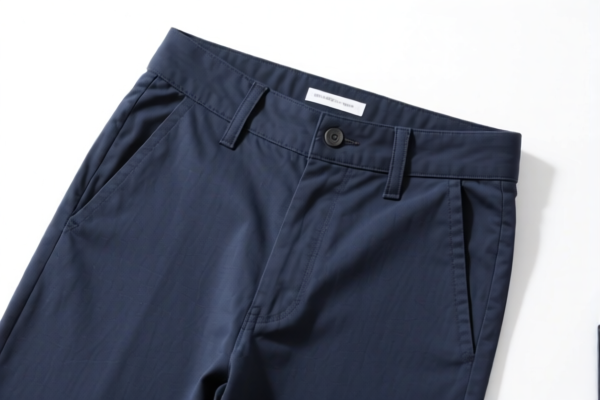
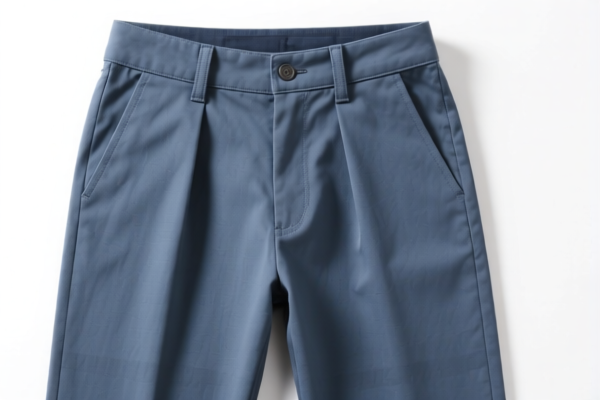
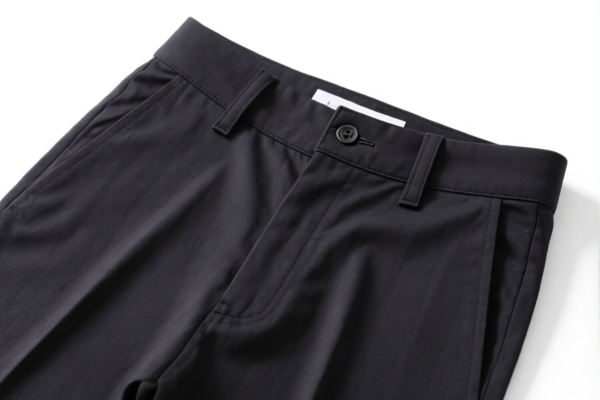
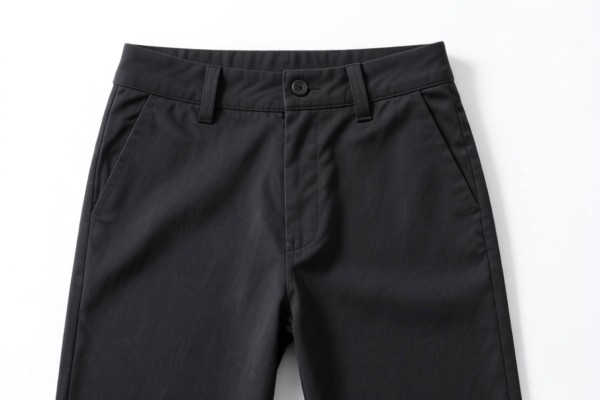
AI Analysis
👕 Boys' Synthetic Fiber Casual Wear (男童合成纤维衬衫)
🌐 HS Code Reference & Customs Clearance Guide | 2026 Latest Tariff Analysis | Professional Entry Strategy
📌 I. Product Definition & Classification: What Exactly Are We Dealing With?
Boys' shirts made from synthetic man-made fibers fall under Chapter 61 (Knitted/Crocheted) or Chapter 62 (Non-Knitted/Non-Crocheted) of the Harmonized System. The classification depends heavily on the fabric structure (knitted vs. woven) and the specific style (casual vs. formal/dress).
In the provided dataset, we see a mix of items, primarily focusing on boys' shirts made of man-made fibers. The key distinctions lie in whether they are general casual shirts or specific "formal/casual" dress shirts.
⚠️ Key Distinction Point:
- If the shirt is a general casual/regular shirt, it typically falls under Heading 6105 (if knitted) or Heading 6205 (if woven).
- If the shirt is specified as a "formal/dress shirt" (often used for ceremonial or smart-casual occasions), it may still fall under 6205, but the specific sub-heading and tariff implications differ significantly due to stricter classification rules for "dress shirts."
📦 II. HS Code Classification Details (Based on Provided Data)
The data provides specific HS codes for boys' synthetic fiber shirts. Here is the breakdown:
| HS Code | Product Description | Use Case | Tax Rate Structure |
|---|---|---|---|
6105.20.20.30 |
Boys' synthetic fiber shirt, material: man-made fiber, usage: boys' shirt | General Casual/Regular Shirt | 49.5% (32% Base + 7.5% Additional + 10% Sec 122) |
6105.20.20.20 |
Boys' synthetic fiber shirt, material: man-made fiber, usage: boys' shirt (classified under other category) | General Casual/Regular Shirt | 49.5% (32% Base + 7.5% Additional + 10% Sec 122) |
6205.30.20.40 |
Boys' synthetic fiber formal/casual shirt, material: man-made fiber, usage: boys' formal wear | Formal/Dress Shirt | 29.1¢/kg + 25.9% + 17.5% (Mixed Rate) |
6205.30.20.20 |
Boys' synthetic fiber formal/casual shirt, material: man-made fiber, usage: boys' formal wear | Formal/Dress Shirt | 29.1¢/kg + 25.9% + 17.5% (Mixed Rate) |
6205.30.20.20 |
Boys' synthetic fiber formal/casual shirt, material: man-made fiber, usage: boys' formal wear (Duplicate Match) | Formal/Dress Shirt | 29.1¢/kg + 25.9% + 17.5% (Mixed Rate) |
🔍 Important Note:
- 6105 usually refers to knitted or crocheted shirts.
- 6205 usually refers to woven shirts.
- The dataset includes both types, but the tariff structures are vastly different. 6105 items have a high percentage-based tariff, while 6205 items have a complex mixed tariff (specific duty + ad valorem).
💰 III. 2026 Latest Tariff Rate Breakdown (Including Additional Taxes & Policy Surcharges)
✅ Applicable Country: United States (US)
✅ Origin: China (CN) (Implied by the tax details: "Section 122" and "Additional Tariffs" are typical US-China trade war measures)
✅ Effective Time: Current (2025-2026 Period)
🎯 1. 6105.20.20.30 & 6105.20.20.20 —— Boys' Synthetic Fiber Shirts (General/Casual)
| Item | Content |
|---|---|
| Total Tariff Rate | 49.5% |
| Base Tariff | 32.0% |
| Section 301 Additional Tariff | 7.5% |
| Section 122 Tariff | 10% |
| Tax Detail Breakdown | 32.0% (Base) + 7.5% (Sec 301) + 10% (Sec 122) |
| Calculation Method | Ad Valorem (Based on CIF Value) |
| De Minimis Eligibility | ❌ Not Eligible (Due to high tariff rates and Section 301/122 inclusion) |
| Legal Basis Path | USITC:6105.20.20 → Section 301:7.5% → Section 122:10% |
📌 Explanation:
- The 32% base tariff is the standard MFN rate for men's/boys' shirts of synthetic fibers.
- The 7.5% additional tariff is likely under Section 301 of the Trade Act of 1974, targeting Chinese imports.
- The 10% tariff under Section 122 (often associated with national security or specific trade remedy investigations) adds another layer.
- Total: 49.5%. This is a very high effective tariff rate.
🎯 2. 6205.30.20.40 & 6205.30.20.20 —— Boys' Synthetic Fiber Formal/Casual Shirts (Dress Shirts)
| Item | Content |
|---|---|
| Total Tariff Structure | 29.1¢/kg + 25.9% + 17.5% |
| Base Tariff Component | 29.1¢/kg (Specific Duty) + 25.9% (Ad Valorem) |
| Additional Tariff Component | 17.5% (Sum of Section 301 and Section 122) |
| Tax Detail Breakdown | Base: 29.1¢/kg + 25.9% + Additional: 7.5% (Sec 301) + 10% (Sec 122) = 17.5% |
| Calculation Method | Mixed (Specific Duty per kg + Ad Valorem Percentage) |
| De Minimis Eligibility | ❌ Not Eligible |
| Legal Basis Path | USITC:6205.30.20 → Section 301 → Section 122 |
📌 Explanation:
- Mixed Tariff: Unlike the 6105 items, these have a specific duty (29.1 cents per kilogram) PLUS an ad valorem duty (25.9%).
- Additional Surcharges: The total additional tariff is 17.5% (7.5% + 10%).
- Complexity: Calculating the exact cost requires knowing the weight (kg) of the shipment. For light garments, the 29.1¢/kg might be negligible; for heavy fabrics, it adds up.
- Total Effective Rate: Will vary by weight but is generally high.
🛠️ IV. Customs Clearance Practical Advice (Real-World Pitfall Guide)
✅ 1. Documentation Checklist (Essential)
| Document | Required? | Note |
|---|---|---|
| ✅ Product Specification Sheet | ✔️ | Must specify: Fabric type (Synthetic/Man-made), Weave/Knit, Gender (Boys), Use (Casual/Formal). |
| ✅ Composition Label | ✔️ | Must clearly state % of synthetic fibers. |
| ✅ Commercial Invoice | ✔️ | Must match the HS Code description exactly. |
| ✅ Packing List | ✔️ | Include net weight (critical for 6205 mixed tariffs). |
| ✅ Country of Origin Certificate | ✔️ | To prove China origin (triggers Section 301/122). |
✅ 2. Declaration Tips (Crucial for Accuracy)
🔥 "Accurate Description Saves Money!"
| Scenario | Correct Declaration | Risk of Incorrect Declaration |
|---|---|---|
| Knitted Shirt | 6105.20.20.30 (Boys' Synthetic) |
If misclassified as 6205, you might overpay/underpay depending on weight. |
| Woven Dress Shirt | 6205.30.20.40 (Formal) |
If declared as casual (6205.30.20.20 or similar), ensure the "formal" nature is justified. |
| Fabric Type | Explicitly state "Synthetic Man-Made Fiber" | Vague terms like "Polyester" may still be okay, but "Synthetic" is the HS keyword. |
| Weight | Provide accurate Net Weight in KG | Critical for 6205: The 29.1¢/kg duty depends on this. Incorrect weight = penalty. |
✅ 3. Special Considerations
| Situation | Recommendation |
|---|---|
| Mixed Shipment (Knitted & Woven) | Declare separately! Do not combine 6105 and 6205 in one line item. |
| "Formal" vs. "Casual" Definition | Ensure the product description aligns with the HS sub-heading. If it's a dress shirt, use 6205.30.... If it's a polo/t-shirt style, it might still be 6105. |
| Section 122 Impact | This 10% tariff is mandatory for Chinese-origin goods in this category. No exemption is likely. |
| De Minimis (Section 321) | ⛔ Do NOT use De Minimis for these items. The high tariffs (49.5% or mixed rates) make it financially unviable and risky for enforcement. |
🌍 V. Global Market Comparison (2026 Snapshot)
| Country/Region | Recommended HS Code | Tariff Rate (China Origin) | Key Notes |
|---|---|---|---|
| 🇺🇸 USA | 6105.20.20.30 / 6205.30.20.40 |
49.5% or Mixed High Rate | High Section 301 & 122 tariffs. No De Minimis. |
| 🇨🇳 China | 6105.20.20.30 / 6205.30.20.40 |
Low/0% (Import Duty) | Domestic production friendly. |
| 🇪🇺 EU | 6105.20.20 / 6205.30.20 |
12% (Approx) | No Section 301/122. VAT applies separately. |
| 🇬🇧 UK | 6105.20.20 / 6205.30.20 |
12% (Approx) | Post-Brexit tariff regime. |
| 🇨🇦 Canada | 6105.20.20 / 6205.30.20 |
17.5% (Most Favored Nation) | CUSMA (USMCA) may apply if originating. |
📌 Conclusion:
- USA is the most expensive market for these goods due to Section 301 and Section 122.
- EU/UK/Canada offer significantly lower tariffs (~12-17.5%).
- Strategic Suggestion: If selling to the US, consider sourcing from non-China countries (e.g., Vietnam, Bangladesh, Cambodia) to avoid Section 301 and 122 tariffs.
📌 VI. Common Errors & Pitfalls (Lessons Learned)
❌ Error 1: Misclassifying Knitted Shirts as Woven (or vice versa)
👉 Consequence: Wrong HS Code → Potential duty miscalculation → Customs audit.
❌ Error 2: Ignoring the "Formal" vs. "Casual" distinction in 6205
👉 Consequence: If the product is a dress shirt but declared as casual, it may be flagged for misclassification. However, in the provided data, both 6205.30.20.40 and 6205.30.20.20 have the same tax rate, so the risk is mainly documentation accuracy rather than tax savings.
❌ Error 3: Using De Minimis for Shirts with High Tariffs
👉 Consequence: Package held, seized, or back-dutied with penalties. Always declare fully.
❌ Error 4: Not providing Net Weight for 6205 Items
👉 Consequence: Customs will estimate weight, leading to overpayment or disputes.
✅ Correct Approach:
"Boys' Synthetic Fiber Shirt, Knitted, Casual Style, HS Code 6105.20.20.30, CIF Value $1000, Net Weight N/A (Percentage Duty)."
vs.
"Boys' Synthetic Fiber Formal Shirt, Woven, HS Code 6205.30.20.40, CIF Value $1000, Net Weight 50kg."
🎯 VII. Conclusion: Professional Declaration, Cost Efficiency!
🎯 Remember the Key Rules:
🔹 "Knitted vs. Woven: Know your fabric!"
🔹 "Section 301 & 122: They are here to stay!"
🔹 "De Minimis: Not for High-Tariff Goods!"
🔹 "Weight Matters: For 6205, it's part of the tax!"
📌 Pro Tip:
If you are importing these goods into the USA, consider:
1. Sourcing from Vietnam/Bangladesh to avoid Section 301/122.
2. Applying for an Exclusion (if available for your specific product).
3. Using a Bonded Warehouse to defer duty payment if cash flow is tight.
📣 Immediate Action:
📞 Consult a licensed customs broker.
📄 Provide detailed product samples and fabric composition.
🚀 Ensure accurate HS Code classification to avoid costly delays and penalties.
✨ Precise Classification Starts Here!
💼 Every Dollar Saved is a Dollar Earned!
Customer Reviews
About HS Code Classification
The Harmonized System (HS) is an internationally standardized nomenclature developed by the World Customs Organization (WCO) to classify traded products. Over 200 countries use the HS system as the basis for customs tariffs, trade statistics, and import/export regulations.
Each HS code follows a hierarchical structure:
- Chapter (2 digits) — Broad category of goods (e.g., Chapter 84: Machinery and Mechanical Appliances)
- Heading (4 digits) — More specific grouping within the chapter
- Subheading (6 digits) — Internationally standardized breakdown, used by all WCO member countries
- National subdivisions (8-10 digits) — Country-specific extensions for further classification, such as US HTSUS 10-digit codes
Correct HS code classification is essential for smooth customs clearance, accurate duty payment, and compliance with trade regulations. Misclassification can lead to customs delays, overpayment of duties, or penalties.
When importing from CN to US, the applicable tariff rates may include:
- Most-Favored-Nation (MFN) rate — The standard duty rate applied to WTO members
- General rate — Applied to countries without trade agreements
- Trade remedy duties — Additional tariffs such as Section 301 (anti-dumping), Section 232 (national security), or countervailing duties
The information provided on this page is for reference purposes only. For official classification, please consult with your local customs authority or a licensed customs broker.