Boys' Synthetic Fiber Formal Casual Shirt
CN → US| HS Code | Tariff Rate | Origin | Destination | Doc |
|---|---|---|---|---|
| 6205302020 | 0.0% | CN | US | Official Doc |
| 6105202030 | 49.5% | CN | US | Official Doc |
| 6105202020 | 49.5% | CN | US | Official Doc |
| 6205302040 | 0.0% | CN | US | Official Doc |
| 6205302020 | 0.0% | CN | US | Official Doc |
Product Images
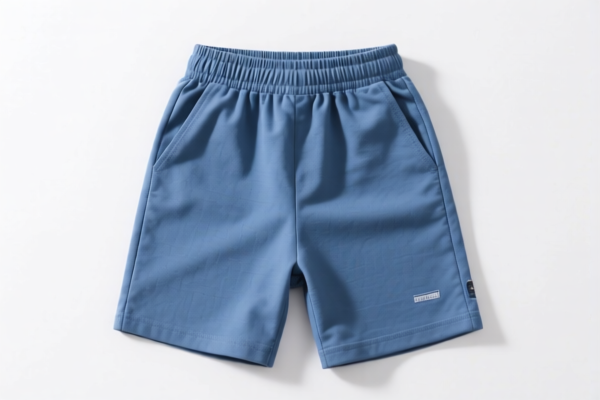
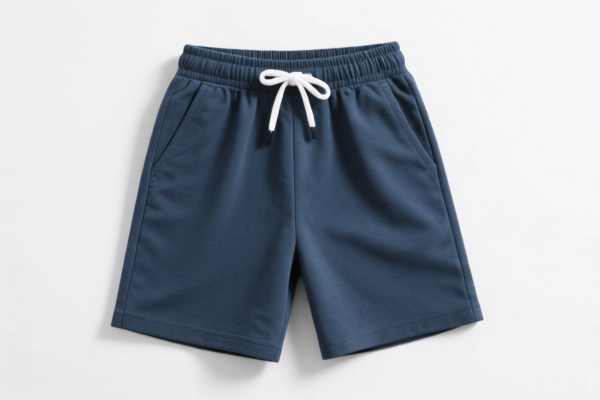
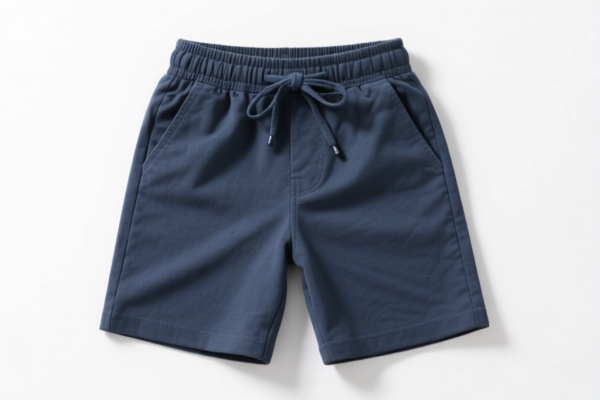
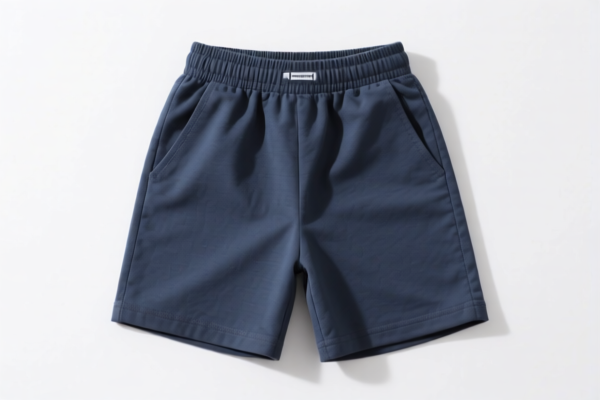
AI Analysis
👕 Boys’ Synthetic Fiber Formal Casual Shirts
🌐 HS Code Reference & Customs Clearance Guide | 2026 Latest Tariff Analysis | Professional Strategy
📌 One: Product Definition & Classification: Do You Really Understand "Boys' Shirts"?
Boys' synthetic fiber shirts are a critical category in the children's apparel import market. In international trade, the classification hinges on three key factors: 1. Gender: Specifically for "Boys" (not general/unisex). 2. Material: Synthetic fibers (e.g., Polyester, Nylon). 3. Use/Style: Defined as either "Formal" or "Casual" (often overlapping in classification).
⚠️ Key Distinction Point:
- Woven vs. Knitted: The items listed in the data are classified under Chapter 62 (Articles of Apparel and Clothing Accessories, Not Knitted or Crocheted). This implies they are woven shirts. If they were knitted, they would fall under Chapter 61 (e.g., 6105). - Formal vs. Casual: While distinct in retail, customs often group them under specific subheadings based on material and construction. The data highlights two primary tariff structures: one with Ad Valorem + Specific Duties and another with High Ad Valorem Duties.
📦 Two: HS Code Classification Details (2026 Latest Tariff Authoritative Comparison)
| HS Code | Product Description | Applicable Scenario | Total Tax Rate |
|---|---|---|---|
6205.30.20.20 |
Boys' Synthetic Fiber Formal/Casual Shirt | Woven, formal or casual style, synthetic material | 29.1¢/kg + 25.9% + 17.5% |
6205.30.20.40 |
Boys' Synthetic Fiber Formal Shirt | Woven, specifically formal style, synthetic material | 29.1¢/kg + 25.9% + 17.5% |
6105.20.20.30 |
Boys' Synthetic Fiber Shirt (Knitted/Other) | General boys' synthetic shirt, possibly knitted or "other" category fallback | 49.5% |
6105.20.20.20 |
Boys' Synthetic Fiber Shirt (Fallback) | General boys' synthetic shirt, determined by "other" category principles | 49.5% |
🔍 Key Observation:
- The Chapter 62 (Woven) codes (6205...) offer a significantly lower effective burden in some scenarios compared to the Chapter 61 (Knitted/Other) codes (6105...), despite having complex mixed duties. - The Chapter 61 codes carry a flat 49.5% ad valorem rate, which can be highly punitive if not carefully selected.
💰 Three: 2026 Latest Tariff Rate Breakdown (Including Surcharges & Policy Add-ons)
✅ Applicable Country: United States (US)
✅ Origin: China (CN)
✅ Effective Time: 2025/2026 Imports
🎯 1. 6205.30.20.20 & 6205.30.20.40 —— Woven Boys' Synthetic Shirts (Formal/Casual)
These codes fall under Section VII, Chapter 62, Heading 6205 (Men's or boys' shirts).
| Item | Detail |
|---|---|
| Total Tax Structure | 29.1¢/kg (Specific) + 25.9% (Ad Valorem) + 17.5% (Surcharges) |
| Breakdown of Surcharges | - Section 301 Surcharge: 7.5% - Section 122 Tariff: 10% - (Note: 7.5% + 10% = 17.5%) |
| Base Tariff | 25.9% (Ad Valorem) |
| Specific Duty | 29.1 cents per kilogram |
| Calculation Method | (CIF Value × 25.9%) + 25.9% Surcharges + (Weight in kg × $0.291) |
| Legal Basis Path | USITC:6205.30.20.20 → SECTION_301:7.5% → SECTION_122:10% |
📌 Explanation:
- "29.1¢/kg": This is a specific duty levied on the weight of the garment. For lightweight shirts, this may seem low, but for heavy fabrics, it adds up. - "25.9%": This is the base ad valorem duty. - "17.5%": This is the aggregated surcharge. It consists of: - 7.5% under Section 301 (Trade Policy related to China). - 10% under Section 122 (Additional tariffs for national security/economic reasons). - Total Effective Rate: Highly dependent on the value-to-weight ratio. Low-value, heavy items may be driven up by the specific duty; high-value, light items are driven up by the percentage.
🎯 2. 6105.20.20.30 & 6105.20.20.20 —— Boys' Synthetic Shirts (Knitted/Other)
These codes fall under Chapter 61 (Knitted or Crocheted) or "Other" footwear/apparel categories.
| Item | Detail |
|---|---|
| Total Tax Structure | 49.5% (Ad Valorem Only) |
| Breakdown of Surcharges | - Base Tariff: 32.0% - Section 301 Surcharge: 7.5% - Section 122 Tariff: 10% - (Note: 32.0% + 7.5% + 10% = 49.5%) |
| Base Tariff | 32.0% (Ad Valorem) |
| Specific Duty | None |
| Calculation Method | CIF Value × 49.5% |
| Legal Basis Path | USITC:6105.20.20.20 → SECTION_301:7.5% → SECTION_122:10% |
📌 Note:
- The 49.5% is a pure percentage. There is no weight-based component. - The base rate (32.0%) is higher than the Chapter 62 base rate (25.9%), leading to a higher total burden. - This classification is risky if the product is actually woven but misdeclared as knitted or "other."
🛠️ Four: Customs Clearance Practical Advice (Battle-Tested Pitfall Guide)
✅ 1. Essential Documentation Checklist (No Exceptions)
| Document | Required | Purpose |
|---|---|---|
| ✅ Product Specification Sheet | ✔️ | Must state: "Woven" vs. "Knitted," Material Composition (e.g., 100% Polyester), and Target Demographic ("Boys"). |
| ✅ Commercial Invoice | ✔️ | Must explicitly describe: "Boys' Woven Synthetic Fiber Shirt, Formal/Casual." Avoid vague terms like "Top" or "Shirt." |
| ✅ Packing List | ✔️ | Must include Net Weight and Gross Weight in kilograms. Crucial for calculating the 29.1¢/kg specific duty. |
| ✅ Brand & Logo Info | ✔️ | To verify no IP infringement, which could lead to seizure. |
| ✅ Certificate of Origin | ✔️ | To confirm Chinese origin (triggering Section 301 & 122). |
✅ 2. Declaration Strategy (Key Mantras)
🔥 "Weave it right, weigh it tight, name it precise, save your life!"
| Scenario | Correct Declaration | Wrong Practice |
|---|---|---|
| Woven Shirt | HS Code 6205.30.20.20 |
Declaring as Knitted (6105...) → 49.5% Rate |
| Knitted Shirt | HS Code 6105.20.20.30 |
Declaring as Woven → Classification Error |
| High Value/Low Weight | Use 6205... |
If misclassified, you pay 49.5% instead of ~26-43% |
| Low Value/High Weight | Check Specific Duty Impact | If weight is huge, specific duty (29.1¢/kg) may dominate |
✅ 3. Special Handling for Section 122 & 301
- Section 301 (7.5%): Applies to almost all Chinese-origin textiles. Ensure your HTSUS code supports this surcharge.
- Section 122 (10%): This is an additional national security/economic tariff. It is non-negotiable for most Chinese apparel imports.
- Exclusions: Check if your specific product type has any recent exclusions or exemptions. (As of 2026, most children's apparel remains taxed).
🌍 Five: Global Market Comparison (2026 Latest)
| Country/Region | Recommended HS Code | Estimated Duty | Certification | Remarks |
|---|---|---|---|---|
| 🇺🇸 USA | 6205.30.20.20 |
29.1¢/kg + 43.4% | No special certs | High complexity due to mixed duties |
| 🇨🇳 China | 6205.30.20.20 |
~9-13% | CCC (if applicable) | Lower base rate |
| 🇪🇺 EU | 6205.20.00.00 |
12% | CE (if functional) | No Section 122 equivalent |
| 🇨🇦 Canada | 6205.20.20.00 |
16-18% | Non-tariff barriers | FTA benefits if applicable |
📌 Conclusion:
- The USA market is the most complex due to the Specific Duty (29.1¢/kg) combined with Ad Valorem Duties and Multiple Surcharges. - Misclassification between Woven (Ch 62) and Knitted (Ch 61) is the #1 cause of overpayment (49.5% vs. ~43.4%).
📌 Six: Common Errors & Pitfall Guide (Blood & Tears Lessons)
❌ Error 1: Declaring a Woven shirt as Knitted (6105)
👉 Consequence: You might pay 49.5% if the base rate is higher, or face penalties for misdeclaration. Conversely, if you declare Knitted when it's Woven, you risk underpayment and audits.
❌ Error 2: Ignoring the Weight for 6205.30.20.20
👉 Consequence: Failing to declare accurate net weight in kg leads to estimated specific duties by CBP, which are often higher than the actual 29.1¢/kg, resulting in immediate payment demands and delays.
❌ Error 3: Using vague descriptions like "Boy's Top"
👉 Consequence: CBP may classify it under "Other" categories (6105.20.20.20), leading to the 49.5% flat rate or further scrutiny.
❌ Error 4: Not separating Formal vs. Casual if required
👉 Consequence: While 6205.30.20.20 covers both, some brokers might need clarity. If the shirt is clearly "Formal" (button-down, collar), 6205.30.20.40 might be more precise, though the tax is the same.
✅ Correct Practice:
"Boys' Woven Synthetic Fiber Shirt, Formal/Casual, 100% Polyester, Net Weight: 0.2kg, Model: XYZ"
🎯 Seven: Conclusion: Precision is Profit!
🎯 Remember Mantra:
🔹 "Woven is 62, Knitted is 61, Check Weight for 62, Avoid the 49.5% Trap!"
🔹 "Section 301 is 7.5%, Section 122 is 10%, Total Surcharges are 17.5%!"
📌 Pro Tip:
- If your shirts are lightweight (e.g., 0.1kg each), the 29.1¢/kg specific duty is negligible, and the percentage drives the cost.
- If your shirts are heavy (e.g., denim-style synthetics), the specific duty becomes significant. Calculate Value per kg to see which classification is cheaper.
- Always request a Pre-Ruling from CBP if your volume is high. It provides legal certainty and protects against retroactive audits.
📣 Take Action Now:
📞 Contact a Licensed Customs Broker + Provide Exact Fabric Type (Woven/Knitted) + Calculate Value/Weight Ratio
🚀 Ensure Your Shirts Clear US Customs Smoothly, Avoid 49.5% Traps, and Maximize Margins!
✨ Professional Clearance Starts with Accurate Classification!
💼 Your Cost, Precisely Calculated.
Customer Reviews
About HS Code Classification
The Harmonized System (HS) is an internationally standardized nomenclature developed by the World Customs Organization (WCO) to classify traded products. Over 200 countries use the HS system as the basis for customs tariffs, trade statistics, and import/export regulations.
Each HS code follows a hierarchical structure:
- Chapter (2 digits) — Broad category of goods (e.g., Chapter 84: Machinery and Mechanical Appliances)
- Heading (4 digits) — More specific grouping within the chapter
- Subheading (6 digits) — Internationally standardized breakdown, used by all WCO member countries
- National subdivisions (8-10 digits) — Country-specific extensions for further classification, such as US HTSUS 10-digit codes
Correct HS code classification is essential for smooth customs clearance, accurate duty payment, and compliance with trade regulations. Misclassification can lead to customs delays, overpayment of duties, or penalties.
When importing from CN to US, the applicable tariff rates may include:
- Most-Favored-Nation (MFN) rate — The standard duty rate applied to WTO members
- General rate — Applied to countries without trade agreements
- Trade remedy duties — Additional tariffs such as Section 301 (anti-dumping), Section 232 (national security), or countervailing duties
The information provided on this page is for reference purposes only. For official classification, please consult with your local customs authority or a licensed customs broker.