Boys' Synthetic Fiber Sun Protection Jacket
CN → US| HS Code | Tariff Rate | Origin | Destination | Doc |
|---|---|---|---|---|
| 6111305010 | 33.5% | CN | US | Official Doc |
| 6114303020 | 32.4% | CN | US | Official Doc |
| 6109100014 | 34.0% | CN | US | Official Doc |
| 6111206010 | 25.6% | CN | US | Official Doc |
| 6114200035 | 28.3% | CN | US | Official Doc |
Product Images
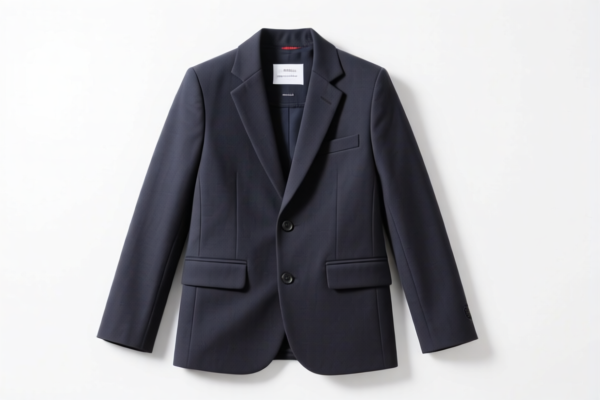
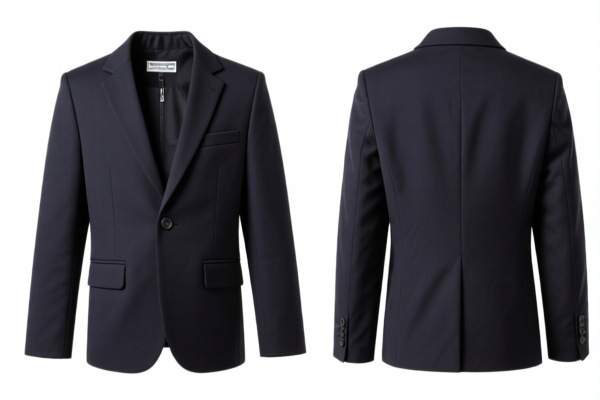
AI Analysis
👶 Boys' Synthetic Fiber Sun Protection Jacket (UV Protection Jumpsuit/Rash Guard)
🌐 HS Code Reference & Customs Clearance Guide | 2026 Latest Tariff Full Analysis | Professional Compliance Strategy
📌 I. Product Definition & Classification: Do You Really Understand "Sun Protection Gear"?
A Boys' Synthetic Fiber Sun Protection Jacket is not just a regular piece of clothing; it is a specialized functional garment designed for outdoor activities (swimming, surfing, beach play) to protect children from UV radiation. In international trade, its classification depends heavily on:
1. Form: Is it a "jumpsuit" (连体衣), "t-shirt/shirt" (针织衫), or "other garments"?
2. Material: Primarily synthetic fibers (polyester, nylon/spandex).
3. Function: Sun protection often implies tighter weave or special coating, but HS codes are based on material and form, not function (unless specified).
⚠️ Critical Distinction:
- If it is a one-piece suit (jumpsuit/连体衣) → Likely 6111 or 6114.
- If it is a separate top (shirt/jacket) → Likely 6109 or 6114.
- Material Assumption: Based on common market standards, "Synthetic Fiber" usually refers to Polyester (涤纶) or Nylon (锦纶).
📦 II. HS Code Classification Details (2026 Latest Tariff Authority Cross-Reference)
Based on the provided data, here are the five possible HS codes, ranked by likelihood and tax implications:
| HS Code | Product Description (Inferred) | Application Scenario | Tax Rate (China-US) | Key Classification Logic |
|---|---|---|---|---|
6111.30.50.10 |
Boys' Synthetic Fiber Sun Jumpsuit | One-piece swimsuits/rash guards for boys | 33.5% | Best Fit for "Jumpsuit": Explicitly covers boys' (Boys') synthetic fiber garments. "Sun protection" implies functional wear, often categorized here if one-piece. |
6114.20.00.35 |
Boys' Cotton/Synthetic Knitted Jumpsuit | General children's knitwear/jumpsuits | 28.3% | Lower Tax Option: If classified as "Other knitted/crocheted garments" (6114) and assumed cotton or specific synthetic blend. Note: Data says "Cotton or Synthetic", but title says "Synthetic". |
6114.30.30.20 |
Boys' Synthetic Fiber Other Garments | Separate tops/jackets not specified elsewhere | 32.4% | Generic Category: If it's a separate jacket/top, it falls under "Other garments, knitted/crocheted". |
6109.10.00.14 |
Boys' T-Shirts, Singlets (Synthetic Fiber) | Basic t-shirts/rash guards (separate top) | 34.0% | Highest Tax for Tops: If considered a "T-shirt" (6109), taxes are higher. Often used for simple knit tops. |
6111.20.60.10 |
Boys' Cotton/Synthetic Jumpsuit | Babies'/young boys' cotton/synthetic suits | 25.6% | Lowest Tax Option: If the product is deemed "Cotton" (common for lower-end sun suits) or falls under this specific subheading. Risk: Misdeclaration if actually 100% polyester. |
🔍 Key Insight:
- 6111 is typically for babies' garments and swimsuits/jumpsuits. If your "Sun Protection Jacket" is a one-piece jumpsuit, this is the most accurate functional category.
- 6114 is a "catch-all" for other knitted garments.
- 6109 is specifically for T-shirts.
- Material Misclassification Risk: Declaring "Synthetic" but classifying under6111.20(often Cotton) or6114.20(Cotton/Synthetic mix) can lead to audits if the actual fabric is 100% Polyester.
💰 III. 2026 Latest Tariff Rate Breakdown (Including Surtaxes)
✅ Applicable Country: United States (US)
✅ Origin: China (CN)
✅ Effective Date: November 10, 2025 (and onwards)
🎯 1. 6111.30.50.10 — Boys' Synthetic Fiber Sun Jumpsuit (Recommended for 1-Piece)
| Item | Detail |
|---|---|
| Base Tariff | 16.0% |
| Section 301 Surtax | 7.5% |
| Section 122 Tariff | 10.0% |
| Total Tariff | 33.5% |
| Calculation | CIF Value × 33.5% |
| De Minimis Exemption | ❌ NOT Eligible (High value items > $800 are scrutinized; even under $800, Section 122 often blocks de minimis for textiles from China) |
| Legal Path | Section 122: 10% → Section 301: 7.5% → Base: 16.0% |
📌 Explanation:
- Section 301 (7.5%): Standard additional tariff on Chinese textiles.
- Section 122 (10%): Recent trade remedy tariffs targeting specific textile categories to protect US domestic production.
- Base (16%): Standard MFN rate for boys' synthetic jumpsuits.
- Total: 33.5%. This is a high-cost classification.
🎯 2. 6114.20.00.35 — Boys' Knitted Jumpsuit (Lower Tax Strategy)
| Item | Detail |
|---|---|
| Base Tariff | 10.8% |
| Section 301 Surtax | 7.5% |
| Section 122 Tariff | 10.0% |
| Total Tariff | 28.3% |
| Calculation | CIF Value × 28.3% |
| De Minimis Exemption | ❌ NOT Eligible (Textiles from China rarely qualify) |
| Legal Path | Section 122: 10% → Section 301: 7.5% → Base: 10.8% |
📌 Warning:
- This rate is lower (28.3%), but only applies if the product can be legitimately classified as 6114.20 (Other knitted garments).
- If the item is a swimsuit/jumpsuit, customs may reject this and reclassify to 6111 (33.5%).
- Risk: Misclassification penalty + back taxes.
🎯 3. 6111.20.60.10 — Lowest Tax Scenario (Cotton Assumption)
| Item | Detail |
|---|---|
| Base Tariff | 8.1% |
| Section 301 Surtax | 7.5% |
| Section 122 Tariff | 10.0% |
| Total Tariff | 25.6% |
| Calculation | CIF Value × 25.6% |
| Legal Path | Section 122: 10% → Section 301: 7.5% → Base: 8.1% |
📌 Critical Note:
- This code often applies to Cotton babies' garments.
- If your product is 100% Synthetic (as stated in the prompt), declaring this code is high risk for customs audit.
- Only use if the product is actually cotton or a cotton-blend that qualifies.
🎯 4. 6114.30.30.20 & 6109.10.00.14 — Higher Risk/Higher Tax
| HS Code | Total Rate | Key Issue |
|---|---|---|
6114.30.30.20 |
32.4% | Generic "Other Garments". Acceptable if not a jumpsuit. |
6109.10.00.14 |
34.0% | Classified as T-shirt. Highest base rate (16.5%). Avoid if possible. |
🛠️ IV. Customs Clearance Practical Advice (Pitfall Avoidance Guide)
✅ 1. Required Documentation Checklist
| Document | Must Provide | Description |
|---|---|---|
| ✅ Product Specification Sheet | ✔️ | Crucial: Must state Fabric Composition (e.g., 95% Polyester, 5% Spandex) and UPF Rating (if claimed). |
| ✅ Photos | ✔️ | Clear images showing seams, labels, and overall shape. Is it one-piece (jumpsuit) or separate top? |
| ✅ Commercial Invoice | ✔️ | Must clearly describe item as "Boys' Synthetic Fiber Sun Protection Jumpsuit/Rash Guard". Avoid vague terms like "Clothes". |
| ✅ Label Content | ✔️ | Must match invoice exactly. Include size, country of origin ("Made in China"), and fiber content. |
| ✅ Test Report (Optional but Recommended) | ✔️ | UPF test report to justify "Sun Protection" claims if questioned, though HS code is based on material/form. |
✅ 2. Declaration Tips (Key Mnemonic)
🔥 "Form Dictates Code, Material Dictates Tax, One-Piece = 6111, Separate = 6114/6109!"
| Scenario | Correct HS Code | Wrong Code | Consequence |
|---|---|---|---|
| One-Piece Suit (Jumpsuit) | 6111.30.50.10 (33.5%) |
6114.20.00.35 (28.3%) |
Customs may reclassify, charge difference + penalty. |
| Separate Top (T-shirt/Jacket) | 6114.30.30.20 (32.4%) |
6109.10.00.14 (34.0%) |
Minor difference, but 6114 is safer for "jackets". |
| 100% Polyester | Must NOT use 6111.20 (Cotton) |
6111.20.60.10 |
High Audit Risk: Misdeclaration of material. |
| Cotton Blend | Can use 6111.20 or 6114.20 |
6111.30 (Synthetic) |
Lower tax, but must be accurate. |
✅ 3. Special Situations
| Situation | Handling Advice |
|---|---|
| "Sun Protection" Claim | Customs does not have a specific HS code for "Sun Protection". It is classified by material and form. Do not expect a lower tax rate due to "function". |
| De Minimis ($800) | Avoid using De Minimis for high-value batches. Section 122 and Section 301 often override de minimis for Chinese textiles. File formal entry. |
| Labeling | Ensure labels say "Boys" and "Synthetic Fiber" (e.g., Polyester). If label says "Kids" or "Unisex", it may be scrutinized. |
| Packaging | If sold as a set (e.g., hat + suit), declare the highest value item or set appropriately. Usually, the suit dominates. |
🌍 V. Global Market Comparison (2026 Latest)
| Country/Region | Recommended HS Code | Tariff (China) | Certification | Note |
|---|---|---|---|---|
| 🇺🇸 USA | 6111.30.50.10 |
33.5% | CPSIA, Prop 65 | High Tax. Section 122 is key. |
| 🇨🇳 China | 6111.30.50.10 |
~8% | CCC (if applicable) | No Surtax. |
| 🇪🇺 EU | 6111.30.50 |
0-4% | CE, REACH | Low Tax, but strict chemical regulations. |
| 🇬🇧 UK | 6111.30.50 |
0-4% | UKCA, REACH | Similar to EU. |
| 🇦🇺 Australia | 6111.30.50 |
5% | ACCC | Moderate Tax. |
📌 Conclusion:
- USA is the most expensive market for Chinese textile imports due to Section 301 + Section 122.
- No Tariff Advantage for "Sun Protection": You cannot get lower taxes by claiming "UV Protection". The cost is driven by HS Code.
📌 VI. Common Mistakes & Pitfall Guide (Blood & Tears)
❌ Mistake 1: Declaring a Jumpsuit as a T-Shirt (6109) to avoid 6111 complexities.
👉 Result: Customs inspection reveals one-piece design → Reclassification to 6111 → Back Taxes + Penalty.
❌ Mistake 2: Using 6111.20 (Cotton) for a 100% Polyester suit.
👉 Result: Customs lab tests fabric → Finds Polyester → Misdeclaration Penalty + Higher Tariff (33.5% vs 25.6%).
❌ Mistake 3: Using De Minimis for large volume shipments.
👉 Result: Section 122 (10%) may block de minimis entry → Shipment held at port → Demurrage fees.
❌ Mistake 4: Vague Description: "Boys' Clothes".
👉 Result: Customs asks for clarification → Delay in Clearance → Late Delivery.
✅ Correct Approach:
"Boys' 100% Polyester Sun Protection Rash Guard (Jumpsuit), UPF 50+, Size 2T-5T, Made in China"
🎯 VII. Conclusion: Precise Classification Saves Money!
🎯 Remember the Mnemonic:
🔹 "One-Piece = 6111 (33.5%), Separate = 6114 (32.4%), Cotton = 25.6% (Risk if Wrong)."
🔹 "Sun Protection is not a HS Code, it's a Feature. Material and Form Rule All!"
🔹 "Section 122 + 301 = High Cost. Accurate Declaration is Your Best Shield."
📌 Pro Tip:
If your product is 100% Cotton, use 6111.20.60.10 for 25.6% tax.
If it is 100% Synthetic, you must use 6111.30.50.10 for 33.5% tax. Do not lie about material.
For separate tops, 6114.30.30.20 (32.4%) is a safer, slightly cheaper alternative to 6109 (34.0%).
📣 Immediate Action:
📞 Confirm Fabric Composition (Polyester vs. Cotton).
📦 Confirm Garment Form (Jumpsuit vs. Separate Top).
🚀 Select the Correct HS Code to avoid customs delays and unexpected taxes.
✨ Professional Clearance Starts with Precise Classification!
💼 Every Penny Saved is Profit Gained!
Customer Reviews
About HS Code Classification
The Harmonized System (HS) is an internationally standardized nomenclature developed by the World Customs Organization (WCO) to classify traded products. Over 200 countries use the HS system as the basis for customs tariffs, trade statistics, and import/export regulations.
Each HS code follows a hierarchical structure:
- Chapter (2 digits) — Broad category of goods (e.g., Chapter 84: Machinery and Mechanical Appliances)
- Heading (4 digits) — More specific grouping within the chapter
- Subheading (6 digits) — Internationally standardized breakdown, used by all WCO member countries
- National subdivisions (8-10 digits) — Country-specific extensions for further classification, such as US HTSUS 10-digit codes
Correct HS code classification is essential for smooth customs clearance, accurate duty payment, and compliance with trade regulations. Misclassification can lead to customs delays, overpayment of duties, or penalties.
When importing from CN to US, the applicable tariff rates may include:
- Most-Favored-Nation (MFN) rate — The standard duty rate applied to WTO members
- General rate — Applied to countries without trade agreements
- Trade remedy duties — Additional tariffs such as Section 301 (anti-dumping), Section 232 (national security), or countervailing duties
The information provided on this page is for reference purposes only. For official classification, please consult with your local customs authority or a licensed customs broker.