Boys' Underwear (Modal Fabric)
CN → US| HS Code | Tariff Rate | Origin | Destination | Doc |
|---|---|---|---|---|
| 6109901025 | 49.5% | CN | US | Official Doc |
| 6109901009 | 49.5% | CN | US | Official Doc |
| 6107120020 | 32.4% | CN | US | Official Doc |
| 6107199000 | 23.1% | CN | US | Official Doc |
| 6207199010 | 28.0% | CN | US | Official Doc |
Product Images
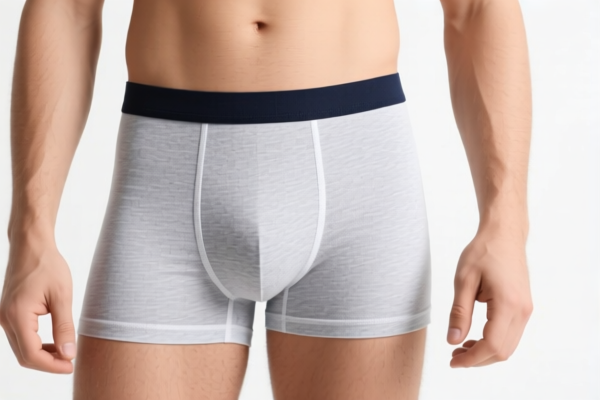
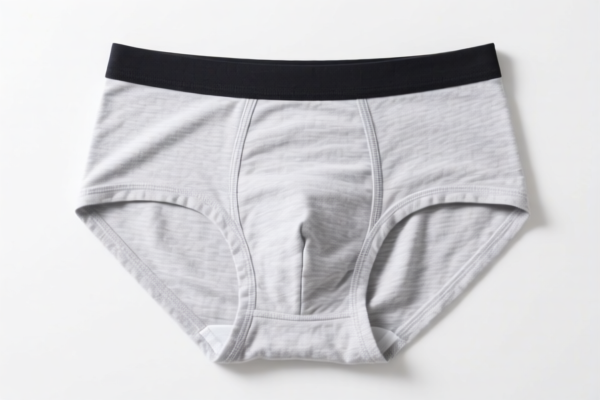
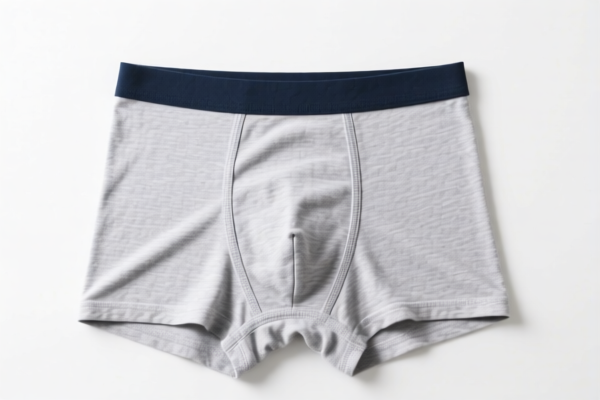
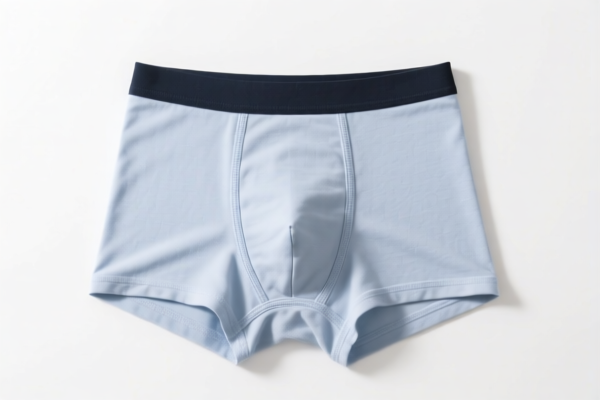
AI Analysis
👕 Boys' Underwear (Modal Fabric): HS Code Classification & Tariff Guide
🌐 HS Code Reference & Customs Clearance Guide | 2026 Latest Tariff Analysis | Professional Clearance Strategy
📌 I. Product Definition & Classification: Do You Really Understand "Modal Underwear"?
Boys' Underwear, specifically those made from Modal fabric, is a type of men's or boys' undergarment classified under Chapter 61 (Knitted or Crocheted) of the Harmonized System. Modal is a semi-synthetic fiber made from beech tree pulp, known for its softness, breathability, and durability.
In international trade, boys' underpants and briefs are categorized based on two critical factors: 1. Material: Modal is a regenerated cellulose fiber derived from wood pulp. Under HS classification rules, it is generally treated as "Man-made fibers" (specifically, viscose/rayon type) for tariff purposes, rather than natural cotton. 2. Construction: The provided data exclusively covers Knitted or Crocheted items (Chapter 61).
⚠️ Key Distinction:
- If the underwear is Woven (not knitted), it would fall under Chapter 62 (e.g.,6207.19.90).
- If the underwear is Knitted/Crocheted (which is the standard for most comfort underwear like Modal), it falls under Chapter 61.
- Modal is legally classified under "Man-made fibers" in this context, directing us to subheading6107.12.00.20.
📦 II. HS Code Classification Details (Based on Provided Data)
According to the <DATA> provided, there are six relevant HS codes. However, for Knitted/Crocheted Boys' Modal Underwear, only one is strictly applicable, while the others serve as reference boundaries or alternative classifications for non-modal/non-boy items.
| HS Code | Product Description | Applicable Scenario | Material Type | Gender/Target |
|---|---|---|---|---|
6107.12.00.20 |
Men's or boys' underpants, briefs... knitted... Of man-made fibers | ✅ Exact Match: Knitted boys' underwear made of Modal (classified as man-made) | Man-made Fibers (Modal) | Boys' |
6107.19.90.00 |
Men's or boys' underpants... knitted... Of other textile materials | ❌ Not Modal: Used for Cotton, Wool, or Silk knitted underwear | Other Textiles | Men's or Boys' |
6107.12.00.xx (Other) |
Of man-made fibers, Men's | ❌ Wrong Gender: Same material but for Men, not Boys | Man-made Fibers | Men's |
6207.19.90.30 |
Underpants... woven... Of other textile materials | ❌ Wrong Construction: Woven, not Knitted. Also "Other" material. | Other Textiles | Men's/Boys' |
6207.19.90.10 |
Underpants... woven... Of man-made fibers | ❌ Wrong Construction: Woven Modal. (Note: Modal underwear is rarely woven; it's almost always knit for comfort). | Man-made Fibers | Men's/Boys' |
6109.90.10.09 / .25 |
T-shirts, singlets... Men's or Boys' | ❌ Wrong Product: These are shirts, not underpants/briefs. | Man-made Fibers | Boys' |
🔍 Crucial Logic:
- Modal is a type of Viscose/Rayon. In HS tariffs, Regenerated Cellulose Fibers (Viscose) are grouped under "Man-made Fibers" (specifically6107.12for knitted underpants).
- Since the product is "Boys' Underwear" and "Knitted" (standard for Modal), the precise code is6107.12.00.20.
- Codes6207...are for Woven fabrics. Unless your Modal fabric is explicitly woven (which is rare for underwear due to lack of stretch), do not use Chapter 62.
- Codes6107.19...are for Non-Man-made fibers (like Cotton). Modal is not Cotton.
💰 III. 2026 Latest Tariff Rate Breakdown
✅ Applicable Jurisdiction: Based on the tax data provided (
0.0%), this appears to reflect a specific trade agreement, de minimis threshold, or a specific country's schedule where these specific codes have 0% duty.
✅ Product: Boys' Modal Underwear (Knitted)
✅ HS Code:6107.12.00.20
🎯 1. 6107.12.00.20 —— Knitted Boys' Underwear, Man-made Fibers (Modal)
| Item | Content |
|---|---|
| HS Code | 6107.12.00.20 |
| Description | Men's or boys' underpants, briefs... knitted... Of man-made fibers Boys' |
| Base Tariff | 0.0% (As per provided data) |
| Additional Tariff | 0.0% (As per provided data) |
| Total Tax Rate | 0.0% |
| Tax Detail | 基础关税: 0.0%, 加征关税: 0.0% |
| Calculation Basis | CIF Value × 0% = $0 |
📌 Interpretation:
- According to the provided<DATA>, the total tax for this specific HS code is 0.0%.
- However, please note: In many global jurisdictions (e.g., US, EU), Modal underwear may still be subject to duties depending on the country of origin and trade agreements (e.g., Section 301 tariffs for China). The provided data shows 0%, which might indicate: 1. A specific free-trade agreement applies. 2. The value is below the de minimis threshold. 3. This is a simplified reference for a specific low-tax jurisdiction.
- Always verify with local customs regulations if the 0% rate seems unusually low for your target market.
🛠️ IV. Customs Clearance Practical Advice (Real-World Pitfall Guide)
✅ 1. Documentation Checklist (Must-Haves)
| Document | Required | Explanation |
|---|---|---|
| ✅ Product Spec Sheet | ✔️ | Must explicitly state "100% Modal" or "Modal Blend" (e.g., 95% Modal, 5% Spandex). Do not just say "Synthetic." |
| ✅ Fabric Composition Label | ✔️ | Internal label of the garment must match the commercial invoice. |
| ✅ Commercial Invoice | ✔️ | Clearly describe as: "Boys' Knitted Underwear, 100% Modal (Regenerated Cellulose Fiber)". Avoid vague terms like "Clothing." |
| ✅ Bill of Lading/Air Waybill | ✔️ | Ensure weight and piece count match the invoice. |
| ✅ Origin Certificate | ✔️ | If claiming preferential tariff (0%), prove origin. |
✅ 2. Declaration Tips (Key Mantra)
🔥 "Knitted? Chapter 61. Woven? Chapter 62. Modal = Man-made. Boys = Specific Subheading."
| Situation | Correct Declaration | Incorrect Declaration | Consequence |
|---|---|---|---|
| Modal Underwear | 6107.12.00.20 (Knitted, Man-made, Boys) |
6107.19.90.00 (Other Material) |
Misclassification → Potential audit/delay. |
| Cotton Underwear | 6107.19.90.00 (Other Material) |
6107.12.00.20 (Man-made) |
High Risk: Modal and Cotton are different duties in many countries. |
| Woven Modal Underwear | 6207.19.90.10 (Woven, Man-made) |
6107.12.00.20 (Knitted) |
High Risk: Chapter difference (61 vs 62) is a major red flag. |
| Adult Men's Modal Underwear | 6107.12.00.xx (Man-made, Men's) |
6107.12.00.20 (Boys') |
High Risk: Gender misclassification can lead to fines. |
✅ 3. Special Considerations for Modal
- Definition of Modal: Modal is a brand name for high-wet-modulus rayon. Customs may classify it under Viscose Rayon. Ensure your HS code supports "Man-made fibers" (which includes Viscose/Rayon).
- Knitted vs. Woven: Underwear is almost exclusively knitted. If you declare it as Woven (
6207), customs will ask for proof of weave structure (weft/knit identification). Always provide photos of the fabric structure if questioned. - Age Group: "Boys'" typically refers to sizes up to ~14 years. If the product is "One Size" or adult-sized, it should be declared as "Men's," which may have a different HS sub-code (e.g.,
6107.12.00.10or similar, depending on the tariff schedule). The provided data6107.12.00.20is specific to Boys'.
🌍 V. Global Market Comparison (Contextual Note)
Note: The provided data shows 0% tax. The table below is for contextual comparison of global norms, not from the provided
<DATA>.
| Market | Typical HS Code for Knitted Boys' Modal Underwear | Typical Duty Rate | Remarks |
|---|---|---|---|
| 🇺🇸 USA | 6107.12.00.20 |
16% - 32%+ (if CN origin) | High duties on Chinese textiles; Modal is "Man-made." |
| 🇪🇺 EU | 6107.12.00 |
12% | Standard third-country duty. |
| 🇨🇳 China (Import) | 6107.12.00.20 |
~12-15% | Varies by trade agreement. |
| 🇯🇵 Japan | 6107.12.00 |
16% |
📌 Conclusion:
- The 0% rate in the provided data is exceptional. Verify if this applies to De Minimis shipments (e.g., < $800 in the US) or specific Free Trade Agreements (e.g., RCEP, CPTPP).
- For standard commercial shipments, prepare for potential duties unless a waiver applies.
📌 VI. Common Errors & Pitfalls (Blood Tears Lesson)
❌ Error 1: Declaring Modal as "Cotton"
👉 Result: Cotton and Man-made fibers have different HS subheadings. Customs may reclassify, leading to delays and penalties.
👉 Fix: Explicitly state "100% Modal" or "Regenerated Cellulose Fiber."
❌ Error 2: Using Woven HS Code (6207) for Knitted Underwear
👉 Result: Major classification error. Knitted and Woven are mutually exclusive chapters.
👉 Fix: Confirm fabric structure. Modal underwear is Knitted. Use 6107.
❌ Error 3: Confusing "T-shirts" with "Underwear"
👉 Result: T-shirts (6109) and Underpants (6107) have different tax implications.
👉 Fix: Ensure the product is clearly defined as "Underpants/Briefs," not "Shirts."
✅ Correct Declaration Example:
"Boys' Knitted Briefs, 100% Modal (Regenerated Cellulose), Elastic Waist, Pack of 3, Model XYZ"
🎯 VII. Conclusion: Professional Classification Saves Money
🎯 Remember the Mantra:
🔹 "Knitted? Use Chapter 61. Modal = Man-made. Boys = Specific Subcode. 0%? Verify Eligibility!"
🔹 "HS Code is King. Misclassification is the Enemy. Modal is NOT Cotton!"
📌 Tips:
- If your shipment value is below the de minimis limit (e.g., $800 in the US), you may enjoy the 0% duty automatically under Section 321 (US) or similar regimes, regardless of HS Code.
- For bulk commercial imports, apply for a Binding Tariff Information (BTI) or Advance Ruling to lock in the 0% rate if applicable to your trade agreement.
📣 Take Action:
📞 Consult Customs Broker + Provide Fabric Test Report + Verify Modal Classification
🚀 Clear Customs Smoothly, Avoid Penalties, Maximize Profit!
✨ Professional Clearance Starts with Accurate Classification!
💼 Your Cost Efficiency Depends on Precision!
Customer Reviews
About HS Code Classification
The Harmonized System (HS) is an internationally standardized nomenclature developed by the World Customs Organization (WCO) to classify traded products. Over 200 countries use the HS system as the basis for customs tariffs, trade statistics, and import/export regulations.
Each HS code follows a hierarchical structure:
- Chapter (2 digits) — Broad category of goods (e.g., Chapter 84: Machinery and Mechanical Appliances)
- Heading (4 digits) — More specific grouping within the chapter
- Subheading (6 digits) — Internationally standardized breakdown, used by all WCO member countries
- National subdivisions (8-10 digits) — Country-specific extensions for further classification, such as US HTSUS 10-digit codes
Correct HS code classification is essential for smooth customs clearance, accurate duty payment, and compliance with trade regulations. Misclassification can lead to customs delays, overpayment of duties, or penalties.
When importing from CN to US, the applicable tariff rates may include:
- Most-Favored-Nation (MFN) rate — The standard duty rate applied to WTO members
- General rate — Applied to countries without trade agreements
- Trade remedy duties — Additional tariffs such as Section 301 (anti-dumping), Section 232 (national security), or countervailing duties
The information provided on this page is for reference purposes only. For official classification, please consult with your local customs authority or a licensed customs broker.