Boys' Underwear (Multi pack) Other Textile Materials
CN → US| HS Code | Tariff Rate | Origin | Destination | Doc |
|---|---|---|---|---|
| 6207199010 | 28.0% | CN | US | Official Doc |
| 6207199030 | 28.0% | CN | US | Official Doc |
| 6107199000 | 23.1% | CN | US | Official Doc |
| 6115999000 | 27.4% | CN | US | Official Doc |
| 6115298040 | 26.0% | CN | US | Official Doc |
Product Images
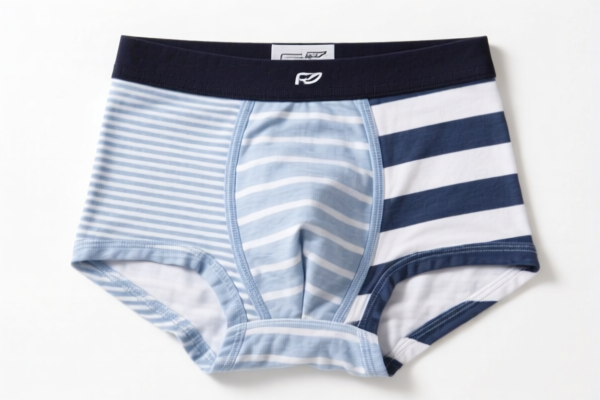


AI Analysis
👙 Boys' Underwear (Multi-Pack) | Other Textile Materials
🌐 HS Code Reference & Customs Clearance Guide | 2026 Latest Tariff Analysis | Specialized Strategy for Children's Apparel
📌 I. Product Definition & Classification: What Exactly Is "Other Textile Materials"?
Boys' underwear is a high-volume, high-compliance category in international trade. The key determinant for classification is the knitting vs. weaving distinction and the specific fabric composition. The phrase "Other Textile Materials" typically excludes cotton, wool, silk, and synthetic fibers like polyester or nylon that have their own specific subheadings, pointing instead to blends, rayon, viscose, or other specialty fibers.
Key Distinctions in the Data: 1. Woven (Non-Knitted): Generally falls under Chapter 62. These are often boxers, briefs, or trunks with elastic waistbands but no knitting structure. 2. Knitted/Tricot: Generally falls under Chapter 61. These are stretchier, often tighter-fitting (like briefs or boxer-briefs), made via circular knitting machines. 3. Specific Categories: Some items may fall under "Tights," "Leggings," or "Socks" if they cover the leg extensively, though standard underwear usually does not.
⚠️ Critical Classification Point:
- Woven Fabric → Chapter 62 (6207)
- Knitted/Looped Fabric → Chapter 61 (6107,6115)
- "Other Textile" → Must verify if it is Rayon, Bamboo, Hemp, or a blend not listed in standard Cotton/Poly headings.
📦 II. HS Code Classification Matrix (2026 Latest Tariff Data)
Based on the provided data, here are the five specific HS Codes applicable to "Boys' Underwear, Other Textile Materials":
| HS Code | Product Description (Summary) | Type | Total Tax Rate | Key Characteristic |
|---|---|---|---|---|
6207.19.90.10 |
Boys' Underwear, Other Textile Materials | Woven | 28.0% | General woven underwear (e.g., woven boxers/trunks) |
6207.19.90.30 |
Boys' Underwear, Other Textile Materials | Woven | 28.0% | Specific subtype of woven underwear (often distinguished by cut or style in national subheadings) |
6107.19.90.00 |
Boys' Underwear, Knitted/Tricot, Other Textile Materials | Knitted | 23.1% | Standard knitted briefs/bokser-briefs (Lower base tariff) |
6115.99.90.00 |
Boys' Underwear, Knitted/Weared Close-Fitting, Other Textile | Knitted | 27.4% | Considered "Close-Fitting" hosiery-like items |
6115.29.80.40 |
Boys' Underwear, Socks/Tights Category, Other Textile | Knitted | 26.0% | Treated as hosiery/tights due to leg coverage or material density |
🔍 Detailed Breakdown of Tax Components:
All items above include additional duties beyond the Base Tariff: - Section 301 Tariff: 7.5%
- Section 122 Tariff: 10%
- Base Tariff: Varies by HS Code (5.6% to 16.0%)
💰 III. 2026 Tariff Rate Breakdown & Legal Basis
✅ Jurisdiction: United States (US)
✅ Origin: China (CN)
✅ Status: Active Duties for 2026
🎯 1. Woven Underwear: 6207.19.90.10 & 6207.19.90.30
These codes apply to woven fabrics (non-stretch or low-stretch).
| Component | Rate | Legal Basis |
|---|---|---|
| Base Tariff | 10.5% | HTSUS General Column 1 / MFN |
| Section 301 Tariff | +7.5% | USITC Footnote 9903.88.01 (Trade Remedy) |
| Section 122 Tariff | +10.0% | 19 U.S.C. § 1677j (Section 122 Authority) |
| TOTAL TAX | 28.0% |
📌 Note:
- The 7.5% and 10% are add-on duties.
- Woven items generally face higher base tariffs than knitted items in some categories, but the add-ons are uniform here.
🎯 2. Knitted Underwear: 6107.19.90.00
This is the most common code for standard knitted briefs or boxer-briefs.
| Component | Rate | Legal Basis |
|---|---|---|
| Base Tariff | 5.6% | HTSUS General Column 1 / MFN |
| Section 301 Tariff | +7.5% | USITC Footnote 9903.88.01 |
| Section 122 Tariff | +10.0% | 19 U.S.C. § 1677j |
| TOTAL TAX | 23.1% | Lowest Total Rate in this set |
📌 Why Lower?
The base tariff for knitted underwear (6107) is significantly lower (5.6%) than woven (6207at 10.5%), resulting in a lower total landed cost despite identical add-on duties.
🎯 3. Close-Fitting/Hosiery-Style: 6115.99.90.00 & 6115.29.80.40
These codes apply if the underwear is considered "close-fitting" or falls under the "socks/tights" classification logic.
| Code | Base | Sec 301 | Sec 122 | Total | Note |
|---|---|---|---|---|---|
6115.99.90.00 |
9.9% | +7.5% | +10.0% | 27.4% | Classified as "Other knitted/weared close-fitting" |
6115.29.80.40 |
16.0% | +0.0% | +10.0% | 26.0% | Special Case: No Section 301 (7.5%) but Higher Base (16.0%) |
⚠️ Critical Insight for
6115.29.80.40:
- It has a high base tariff (16.0%) but NO Section 301 tax (0%).
- It still includes the Section 122 tax (10%).
- Strategy: If you can classify under6115.29.80.40, you save 7.5% compared to the standard 28.0% rate, bringing it down to 26.0%. However, if the 16% base is hard to justify,6107(23.1%) is the safest low-cost option.
🛠️ IV. Customs Clearance Practical Advice
✅ 1. Documentation Requirements (Must-Haves)
| Document | Requirement | Why It Matters |
|---|---|---|
| Commercial Invoice | Must state "Boys' Underwear, Knitted/Woven, Other Textile Material" | Vague descriptions like "Clothing" lead to re-classification and delays. |
| Product Composition | Exact % of fibers (e.g., 80% Rayon, 20% Spandex) | Determines "Other Textile" vs. Cotton/Polyester. Critical for HS code accuracy. |
| Knit vs. Woven Proof | Swatch or fabric specification sheet | Distinguishes Chapter 61 (Knit) from Chapter 62 (Woven). |
| Gender & Age | "Boys" + Age Range (e.g., 6-12 years) | Chapter 61/62 distinguishes between boys', girls', and infants' clothing. |
| Country of Origin | CN (China) | Triggers the 301 and 122 tariffs. |
✅ 2. Classification Strategy & Pitfalls
| Scenario | Recommended HS Code | Risk of Error |
|---|---|---|
| Standard Boxers (Woven) | 6207.19.90.10 / 30 |
Low. Just ensure it's not knitted. |
| Stretchy Briefs/Boxer-Briefs | 6107.19.90.00 |
High Risk: If misclassified as woven, you pay 28.0% instead of 23.1%. |
| Long-Legged Underwear (Bodysuit style) | 6115.29.80.40 |
Medium Risk: Requires proof it fits "tights/socks" criteria. Saves 2% vs. Woven. |
| Very Tight, Hosiery-like Fabric | 6115.99.90.00 |
High Risk: If deemed "regular underwear," it should be 6107. |
🔥 Pro Tip:
"Knit is King for Cost Savings!"
If your product is knitted (stretchy), aim for6107.19.90.00(23.1%). It is the most cost-effective and straightforward classification for standard boys' underwear.
✅ 3. Special Considerations for "Other Textile Materials"
- Define "Other": Ensure the fabric is NOT cotton (< 85%), wool, silk, or synthetic filament fiber with specific subheadings. Common "Other" materials include:
- Rayon/Viscose (Regenerated cellulose)
- Bamboo fiber (if processed as rayon)
- Hemp blends
- Modal/Tencel blends
- Multi-Pack Reporting:
- Declare the per-unit value if possible, or declare the pack as a single unit with the aggregate value.
- Warning: If declared as "sets," ensure the principal character is underwear, not gift packaging.
🌍 V. Global Market Comparison (Contextual)
| Market | HS Code Focus | Total Duty Est. | Notes |
|---|---|---|---|
| 🇺🇸 USA | 6107.19.90.00 |
23.1% | Includes 7.5% (301) + 10% (122). |
| 🇨🇳 China (Export) | N/A | 0% | China exports with 0% duty, but importers pay duties in destination. |
| 🇪🇺 EU | 6107.22 / 6207.11 |
~12-16% | No Section 301 or 122 tariffs. Base duty varies by fiber. |
| 🇬🇧 UK | Similar to EU | ~12-16% | Post-Brexit, follows UK Tariff Book. |
📌 Conclusion:
The US is the most expensive market for Chinese-made boys' underwear due to the 17.5% additive tariffs (301 + 122).
Strategy: Optimize for6107.19.90.00(Knitted) to minimize base duty, ensuring accurate fiber declaration to avoid misclassification penalties.
📌 VI. Common Errors & Red Flags
❌ Error 1: Declaring Knitted Underwear as Woven (6207)
👉 Result: Pay 28.0% instead of 23.1%. Overpayment of 4.9%.
❌ Error 2: Vague Description "Boy's Shorts"
👉 Result: Customs may classify as "Shorts" (6103.43/6203.43), which may have different tax rates or higher scrutiny. Use "Underwear/Briefs/Boxers".
❌ Error 3: Ignoring Section 122 Tariff
👉 Result: Budgeting errors. Always include the 10% in your landed cost calculation.
✅ Correct Declaration Example:
"Boys' Underwear, Knitted, Rayon/Spandex Blend, Brief Style, Multi-Pack (10 pcs), HS: 6107.19.90.00"
🎯 VII. Final Recommendation
- Prioritize Knitted Goods: If your product allows, use knitted fabrics (elastic) to qualify for
6107.19.90.00(23.1%). - Verify Fabric: Confirm it is truly "Other Textile" (not cotton/polyester) to justify the specific HS subheadings.
- Budget for 23-28%: Factor in the full 28% for woven or 23.1% for knitted into your FOB pricing.
- Pre-Audit: If shipping large volumes, consider a Binding Ruling with US CBP if your product is on the edge between
6107(Knitted Underwear) and6115(Hosiery/Tights).
📣 Act Now:
📦 Optimize your supply chain.
📉 Reduce duty burden by 4.9% through correct Knitted classification.
🚀 Ensure smooth customs clearance with precise fiber descriptions.
✨ Precision in Classification = Profit in Your Pocket!
💼 Don't let tariff complexity cost you your margin.
Customer Reviews
About HS Code Classification
The Harmonized System (HS) is an internationally standardized nomenclature developed by the World Customs Organization (WCO) to classify traded products. Over 200 countries use the HS system as the basis for customs tariffs, trade statistics, and import/export regulations.
Each HS code follows a hierarchical structure:
- Chapter (2 digits) — Broad category of goods (e.g., Chapter 84: Machinery and Mechanical Appliances)
- Heading (4 digits) — More specific grouping within the chapter
- Subheading (6 digits) — Internationally standardized breakdown, used by all WCO member countries
- National subdivisions (8-10 digits) — Country-specific extensions for further classification, such as US HTSUS 10-digit codes
Correct HS code classification is essential for smooth customs clearance, accurate duty payment, and compliance with trade regulations. Misclassification can lead to customs delays, overpayment of duties, or penalties.
When importing from CN to US, the applicable tariff rates may include:
- Most-Favored-Nation (MFN) rate — The standard duty rate applied to WTO members
- General rate — Applied to countries without trade agreements
- Trade remedy duties — Additional tariffs such as Section 301 (anti-dumping), Section 232 (national security), or countervailing duties
The information provided on this page is for reference purposes only. For official classification, please consult with your local customs authority or a licensed customs broker.