Boys' Underwear Multi Pack
CN → US| HS Code | Tariff Rate | Origin | Destination | Doc |
|---|---|---|---|---|
| 6111206070 | 25.6% | CN | US | Official Doc |
| 6111305070 | 33.5% | CN | US | Official Doc |
| 6107110010 | 24.9% | CN | US | Official Doc |
| 6207199010 | 28.0% | CN | US | Official Doc |
| 6107110020 | 24.9% | CN | US | Official Doc |
Product Images
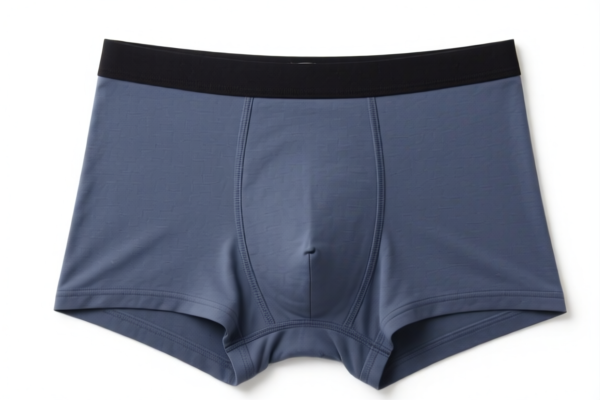
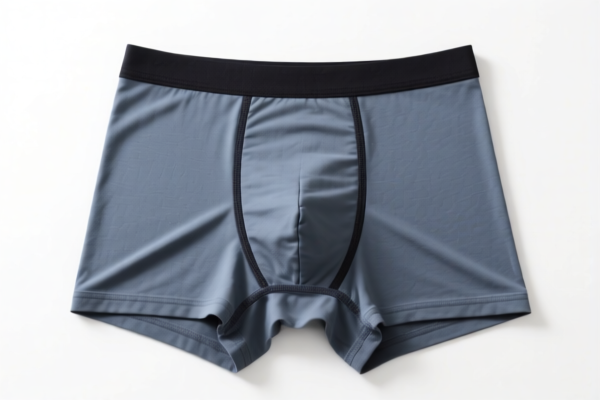
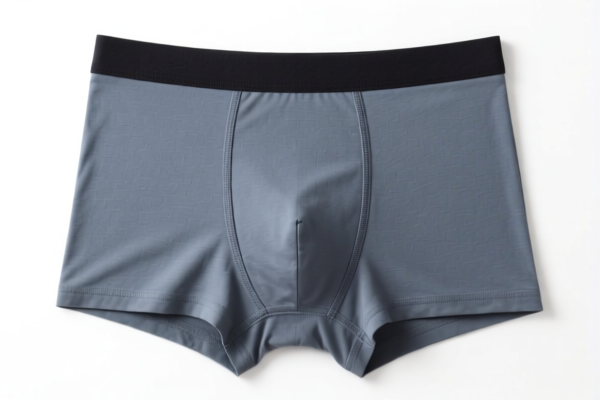
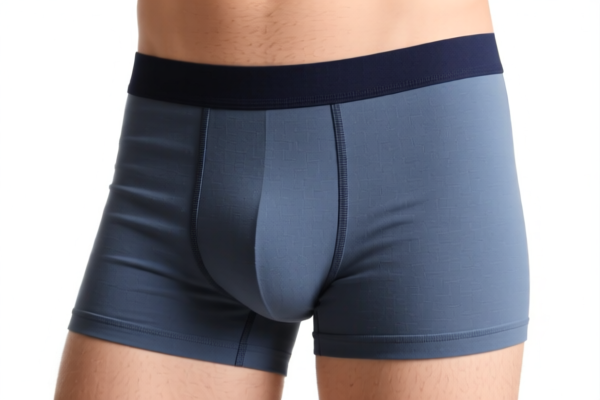
AI Analysis
👕 Boys' Underwear Multi-Pack (Knitted & Non-Knitted)
🌐 HS Code Reference & Customs Clearance Guide | 2026 Latest Tariff Analysis | Professional Clearance Strategy
📌 I. Product Definition & Classification: Do You Really Know "Boys' Underwear"?
Boys' underwear multi-packs are essential daily wear items for children. In international trade, they are strictly categorized based on knitting method and material composition. Misclassification can lead to significant duty differences, especially under current US-China trade policies (Section 122 and Tariff 301).
Key Distinctions: 1. Knitted vs. Woven: Is the fabric stretchy and looped (knitted) or structured (woven)? This is the primary divider. 2. Material: Cotton vs. Synthetic Fibers (Polyester, Nylon, etc.) drastically changes the base tariff rate. 3. Age Group: Specifically for boys or children (under 16), distinct from men's adult underwear.
⚠️ Critical Identification Point:
- If the fabric is cotton-rich and knitted, it likely falls under 6107.11 or 6111.20.
- If the fabric is synthetic or man-made fiber, it falls under 6111.30 or 6207.19.
- "Multi-pack" does not change the HS code but may affect packaging descriptions for customs declaration.
📦 II. HS Code Classification Matrix (2026 Latest Tariff Data)
Based on the provided dataset, here are the precise classifications for boys' underwear multi-packs:
| HS Code | Product Description | Material Inference | Construction |
|---|---|---|---|
6107.11.00.10 |
Boys' Underwear | Cotton | Knitted |
6107.11.00.20 |
Boys' Underwear | Cotton | Knitted |
6111.20.60.70 |
Men's/Boys' Underwear | Cotton or Blended | Knitted |
6111.30.50.70 |
Men's/Boys' Underwear | Synthetic or Cotton Fiber | Knitted |
6207.19.90.10 |
Boys' Underwear | Artificial/Man-Made Fiber | Non-Knitted (Woven) |
🔍 Detailed Explanation for Each Code:
-6107.11.00.10&6107.11.00.20: Specifically target boys (not men) who are knitted and made of cotton. These are the most common high-volume categories for children's basic underwear.
-6111.20.60.70: A broader category for knitted underwear for men or boys. Inferred as cotton or blended fabrics. Often used for slightly older boys or transitional products.
-6111.30.50.70: For knitted underwear for men or boys made of synthetic fibers (e.g., polyester, spandex blends) or cotton fibers that don't meet the specific "100% cotton" criteria of 6107.
-6207.19.90.10: Specifically for boys' underwear that is not knitted (i.e., woven fabric) and made of artificial/man-made fibers. Less common for standard briefs but possible for specialized woven boxers or shorts.
💰 III. 2026 Tariff Rate Breakdown (Including Surcharges)
✅ Applicable Country: United States (US)
✅ Origin: China (CN)
✅ Effective Date: Current US-China Trade Policy (Includes Section 122 & 301)
🎯 1. Cotton Knitted Underwear (6107.11.00.10 / 6107.11.00.20)
| Item | Content |
|---|---|
| Base Tariff | 7.4% (ad valorem) |
| Surtax (Section 301) | 7.5% |
| Section 122 Tariff | 10% |
| Total Duty Rate | 24.9% |
| Calculation Basis | CIF Value × 24.9% |
| De Minimis Exemption | ❌ Not Eligible (Value must be declared properly) |
| Legal Path | USITC:6107.11.00.10 → Section 301: 7.5% → Section 122: 10% |
📌 Explanation:
- 7.4% is the standard Most Favored Nation (MFN) rate for knitted cotton men's/boys' underwear.
- 7.5% is the additional tariff under Section 301 (List 4B).
- 10% is the specific Section 122 tariff applied to certain apparel items from China.
- Total: 24.9%. This is a moderate-high duty for basic apparel.
🎯 2. Blended/Cotton Knitted Underwear (6111.20.60.70)
| Item | Content |
|---|---|
| Base Tariff | 8.1% |
| Surtax (Section 301) | 7.5% |
| Section 122 Tariff | 10% |
| Total Duty Rate | 25.6% |
| Calculation Basis | CIF Value × 25.6% |
| De Minimis Exemption | ❌ Not Eligible |
| Legal Path | USITC:6111.20.60.70 → Section 301: 7.5% → Section 122: 10% |
📌 Note:
- Slightly higher base rate (8.1%) than pure cotton (6107.11) due to blended nature.
- Same surcharges apply. Total 25.6%.
🎯 3. Synthetic/Other Knitted Underwear (6111.30.50.70)
| Item | Content |
|---|---|
| Base Tariff | 16.0% |
| Surtax (Section 301) | 7.5% |
| Section 122 Tariff | 10% |
| Total Duty Rate | 33.5% |
| Calculation Basis | CIF Value × 33.5% |
| De Minimis Exemption | ❌ Not Eligible |
| Legal Path | USITC:6111.30.50.70 → Section 301: 7.5% → Section 122: 10% |
📌 Warning:
- Highest duty rate in the dataset. Synthetic fibers (polyester, nylon) are heavily taxed.
- 33.5% significantly impacts profit margins. Consider sourcing materials from non-China origins if possible.
🎯 4. Non-Knitted/Woven Artificial Fiber Underwear (6207.19.90.10)
| Item | Content |
|---|---|
| Base Tariff | 10.5% |
| Surtax (Section 301) | 7.5% |
| Section 122 Tariff | 10% |
| Total Duty Rate | 28.0% |
| Calculation Basis | CIF Value × 28.0% |
| De Minimis Exemption | ❌ Not Eligible |
| Legal Path | USITC:6207.19.90.10 → Section 301: 7.5% → Section 122: 10% |
📌 Note:
- Woven fabrics (non-knitted) have a higher base rate (10.5%) than knitted cotton (7.4%).
- Total 28.0%.
🛠️ IV. Customs Clearance Practical Advice (Battle-Tested Pitfall Avoidance)
✅ 1. Required Documentation Checklist (Non-Negotiable)
| Document | Required? | Description |
|---|---|---|
| ✅ Commercial Invoice | ✔️ | Must clearly state "Boys' Underwear," material composition (e.g., "95% Cotton, 5% Spandex"), and HS Code. |
| ✅ Packing List | ✔️ | Specify number of packs, units per pack, and total quantity. |
| ✅ Product Composition Sheet | ✔️ | Critical for distinguishing between 6107.11 (Cotton) and 6111.30 (Synthetic). |
| ✅ Labeling/Tag Photos | ✔️ | Show fiber content labels (e.g., "Cotton Knit") to support HS classification. |
| ✅ Origin Certificate (CO) | ✔️ | If claiming preferential treatment under other FTAs (though unlikely for China-US), or to verify origin for Section 122. |
| ✅ Brand Authorization Letter | ✔️ | Required if the brand is registered; prevents IP seizure. |
✅ 2. Declaration Strategy (Key Mantra)
🔥 "Material Defines Duty, Knit vs. Wove, Age Group Matters, Avoid Ambiguity!"
| Scenario | Correct Declaration | Risk of Error |
|---|---|---|
| 100% Cotton Knitted Briefs | 6107.11.00.10 (Boys) |
Misclassifying as Men's (6107.11) may lead to scrutiny but same tax; misclassifying as Woven (6207) leads to 28% instead of 24.9% + potential penalties. |
| Polyester Blend Knitted Boxers | 6111.30.50.70 |
33.5% duty. If misdeclared as Cotton (6107.11), risk of 33.5% - 24.9% = 8.6% underpayment + fines. |
| Woven Cotton Trunks | 6207.19.90.10 |
28.0% duty. Woven is rare for underwear but if it is woven, it must be 6207, not 6107. |
| Mixed Pack (Cotton + Synthetic) | Split Declaration | Do NOT mix different HS codes in one line. Declare each material separately if possible, or use the highest duty rate if indistinguishable. |
✅ 3. Special Handling Notes
| Situation | Recommendation |
|---|---|
| "Multi-Pack" Definition | Ensure the invoice lists the total CIF value of the pack. Do not under-declare by only listing one unit price. |
| Section 122 Coverage | All listed HS codes fall under Section 122 (10% surcharge). No exemption for small quantities. |
| De Minimis (Section 321) | ❌ Not Applicable. Apparel items from China are explicitly excluded from the $800 de minimis exemption under Section 321. Full customs declaration is mandatory. |
| Labeling Compliance | Ensure all packages have fiber content labels in English per FTC rules. Missing labels can lead to seizure or re-export. |
🌍 V. Global Market Comparison (2026 Context)
| Country/Region | Recommended HS Code | Base Duty | Surcharges | Total Est. Duty | Notes |
|---|---|---|---|---|---|
| 🇺🇸 USA | 6107.11.00.10 |
7.4% | +17.5% (301+122) | 24.9% | High regulatory scrutiny on origin. |
| 🇺🇸 USA | 6111.30.50.70 |
16.0% | +17.5% | 33.5% | Synthetic fibers hit hardest. |
| 🇨🇳 China | 6107.11.00.10 |
5.0% | 0% | 5.0% | Import tax lower, but export restrictions may apply. |
| 🇪🇺 EU | 6107.11.00 |
8.0% | 0% | 8.0% | No Section 122/301 equivalents. VAT applies separately. |
| 🇨🇦 Canada | 6107.11.00 |
16.5% | 0% | 16.5% | MFN rate applies. CUSMA benefits if originating. |
📌 Conclusion:
- USA has the most complex duty structure due to Section 122 and 301.
- EU and Canada offer simpler, lower duty structures but require strict origin compliance.
- Cost Advantage: If possible, sourcing synthetic underwear from Vietnam or Bangladesh for US import may avoid Section 122, but still subject to Section 301 (check latest lists).
📌 VI. Common Mistakes & Pitfall Guide (Lessons Learned)
❌ Mistake 1: Declaring "Men's Underwear" for Boys' Items
👉 Result: HS code may be similar (6107.11), but if the fabric composition differs, the duty changes. Also, Section 122 applies to both, so no savings.
👉 Fix: Always specify "Boys" or "Children" if applicable, as 6107.11.00.10/20 are specifically for boys.
❌ Mistake 2: Ignoring Fiber Content in Multi-Packs
👉 Result: If a pack contains both cotton and synthetic items, customs may assess the entire shipment at the higher duty rate (6111.30.50.70 at 33.5%).
👉 Fix: Separate packs by material type or declare each line item with its own HS code.
❌ Mistake 3: Assuming De Minimis Exemption for Multi-Packs
👉 Result: Under $800 shipments from China are not exempt for apparel. Full duty (24.9% - 33.5%) will be charged.
👉 Fix: Prepare for full customs entry and duty payment. Do not use informal entry methods.
✅ Correct Declaration Example:
"Men's/Boys' Knitted Cotton Underwear, Multi-Pack, 95% Cotton 5% Spandex, HS Code: 6107.11.00.10, Origin: China, Duty: 24.9%"
🎯 VII. Conclusion: Precision in Classification Saves Money!
🎯 Remember the Mantra:
🔹 "Cotton Knit: 24.9% | Blend Knit: 25.6% | Synthetic Knit: 33.5% | Woven: 28.0%"
🔹 "Section 122 is Non-Negotiable: +10% on All Apparel from China"
🔹 "No De Minimis: Full Duty on Every Pack"
📌 Pro Tip:
- Always request a Fiber Content Declaration from your supplier.
- Verify if the product is knitted (stretchy) or woven (structured).
- Consult a customs broker to pre-classify high-value multi-packs to avoid delays.
📣 Immediate Action:
📞 Contact Customs Broker + Provide Material Spec Sheet + Confirm HS Code
🚀 Optimize your supply chain to minimize duty leakage!
✨ Professional Clearance Starts with Accurate Classification!
💼 Your Profit Margin Depends on Every Percent!
Customer Reviews
About HS Code Classification
The Harmonized System (HS) is an internationally standardized nomenclature developed by the World Customs Organization (WCO) to classify traded products. Over 200 countries use the HS system as the basis for customs tariffs, trade statistics, and import/export regulations.
Each HS code follows a hierarchical structure:
- Chapter (2 digits) — Broad category of goods (e.g., Chapter 84: Machinery and Mechanical Appliances)
- Heading (4 digits) — More specific grouping within the chapter
- Subheading (6 digits) — Internationally standardized breakdown, used by all WCO member countries
- National subdivisions (8-10 digits) — Country-specific extensions for further classification, such as US HTSUS 10-digit codes
Correct HS code classification is essential for smooth customs clearance, accurate duty payment, and compliance with trade regulations. Misclassification can lead to customs delays, overpayment of duties, or penalties.
When importing from CN to US, the applicable tariff rates may include:
- Most-Favored-Nation (MFN) rate — The standard duty rate applied to WTO members
- General rate — Applied to countries without trade agreements
- Trade remedy duties — Additional tariffs such as Section 301 (anti-dumping), Section 232 (national security), or countervailing duties
The information provided on this page is for reference purposes only. For official classification, please consult with your local customs authority or a licensed customs broker.